

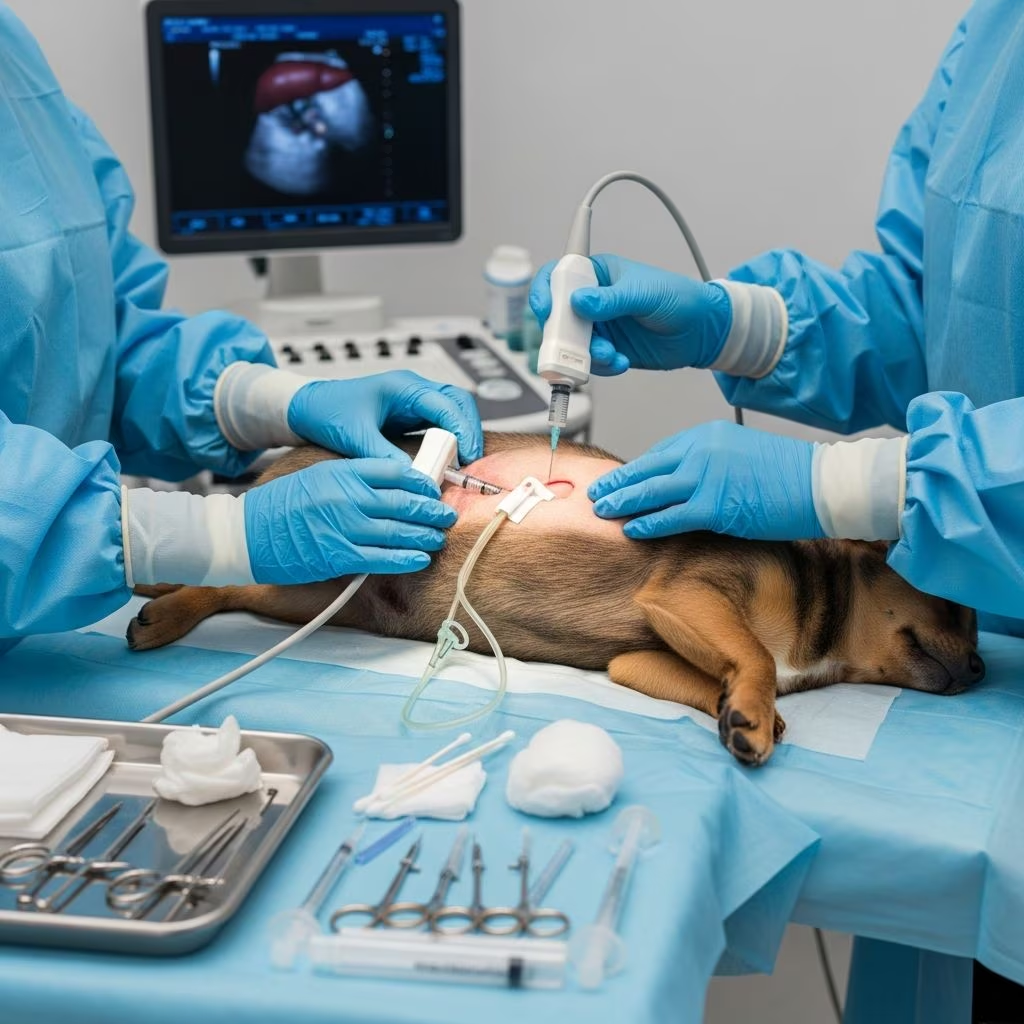
Liver biopsies play a crucial role in diagnosing hepatic disorders in dogs and cats, providing tissue samples for detailed pathological analysis. These procedures range from simple needle aspirations to advanced laparoscopic methods, each offering unique advantages in terms of sample quality, safety, and invasiveness.
Why Perform a Liver Biopsy?
Obtaining a liver biopsy is essential when blood tests, imaging, or clinical signs suggest liver dysfunction but do not pinpoint the cause. Common indications include elevated liver enzymes, jaundice, unexplained weight loss, or abdominal distension. By examining tissue under a microscope, veterinarians can identify infections, inflammation, tumors, fibrosis, or metabolic issues that other diagnostics miss.
Accurate sampling requires targeting multiple liver lobes, especially when focal lesions are present. Biopsying both affected and normal-appearing areas helps confirm diagnoses and rule out concurrent diseases.
Preparation for Liver Biopsy Procedures
Proper preparation minimizes complications and ensures high-quality samples. Patients undergo pre-procedure blood work to assess clotting times, platelet counts, and organ function. Coagulopathies must be corrected with plasma transfusions or vitamin K if needed.
Animals receive fasting for 12-24 hours, and sedation or general anesthesia is tailored to their health status. Ultrasound imaging guides most procedures, identifying safe entry points and avoiding major vessels or the gallbladder.
- Pre-anesthetic evaluation: Complete blood count, chemistry panel, coagulation profile.
- Imaging: Abdominal ultrasound to map liver lobes and pathology.
- Antibiotics: Prophylactic dose for invasive procedures.
- Patient positioning: Dorsal recumbency for most techniques.
Non-Surgical Biopsy Methods
Minimally invasive techniques are preferred for initial diagnostics due to lower risks and quicker recovery.
Fine Needle Aspiration (FNA)
FNA is the least invasive option, ideal for rapid cytological evaluation. Under light sedation and ultrasound guidance, a thin needle (similar to a vaccine needle) extracts cells from the liver parenchyma. The sample is smeared onto slides, stained, and examined for neoplasia, inflammation, or infection.
Advantages: Quick, low cost, minimal bleeding risk.
Limitations: Cytology only; no architecture assessment, small sample size prone to error.
Percutaneous Core Needle Biopsy
This method uses a larger gauge needle (14-16G) to obtain a cylindrical core of tissue, approximately 1-2 cm long. Ultrasound ensures precise targeting, and a spring-loaded device cuts the sample cleanly.
Post-biopsy monitoring for hemorrhage is critical, as bleeding can occur internally. Samples should include 12-15 portal triads for reliable chronic hepatitis scoring.
| Method | Sample Size | Anesthesia | Complication Rate |
|---|---|---|---|
| FNA | Cells only | Light sedation | Low |
| Percutaneous Core | 1-2 cm core | Sedation | Moderate (bleeding) |
Surgical and Laparoscopic Approaches
For superior sample quality and visualization, surgical methods are gold standards.
Laparoscopic Biopsy
Laparoscopy provides excellent visualization via a camera inserted through small ports. Cup biopsy forceps or wedge excision yield samples the size of a small gum piece from multiple lobes. Surgeons assess gross liver appearance, control bleeding with cautery, and inspect the abdomen.
Lift laparoscopy, using abdominal wall retractors without gas insufflation, offers MIS benefits like reduced pain and faster recovery. A 2-5 cm incision accommodates the laparoscope and forceps; biopsies from various lobes ensure representativeness.
- Abdominal clipping and aseptic prep with chlorhexidine.
- Wall lift to 15% body weight for optimal exposure.
- Hemostasis via pressure or electrocautery.
Exploratory Laparotomy
Open surgery via ventral midline incision exposes the entire abdomen, allowing biopsies from liver and other organs if needed. Extend the incision to the xiphoid for full access.
Though effective, it involves longer recovery and higher infection risk, reserved for cases requiring concurrent interventions.
Sample Handling and Laboratory Analysis
Fresh biopsies are gently blotted, not rinsed, to preserve architecture. Imprints for cytology, Gram stains for bacteria, H&E for routine histology, and reticulin stains for fibrosis are standard.
Fix in 10% formalin (1 mm thickness per 10 min fixation). Multiple samples from different lobes increase diagnostic yield, especially for microvascular dysplasia.
Risks and Complications
Bleeding is the primary concern, occurring in 5-10% of percutaneous biopsies. Monitor vital signs, packed cell volume, and ultrasound for free fluid post-procedure. Other risks include bile peritonitis, infection, or pneumothorax if intercostal access is used.
Laparoscopic methods reduce these risks through direct visualization.
| Complication | Percutaneous | Laparoscopic | Open Surgery |
|---|---|---|---|
| Hemorrhage | Moderate | Low | Low |
| Infection | Low | Low | Moderate |
| Recovery Time | 1-2 days | 2-3 days | 7-10 days |
Post-Procedure Care
Patients receive IV fluids, pain management (opioids, NSAIDs), and activity restriction. Serial bloodwork and ultrasounds detect complications early. Most resume normal eating within 24-48 hours.
Interpreting Biopsy Results
Pathologists score lesions for inflammation, fibrosis, and nodular regeneration. Chronic hepatitis, lipidosis, or neoplasia guide therapy. Normal biopsies in abnormal livers suggest sampling error, warranting repeat procedures.
FAQs
Q: Is liver biopsy painful for my pet?
A: Procedures use anesthesia; post-op pain is managed effectively with medications.
Q: How long until results are available?
A: Cytology in 1-2 days; full histology in 3-7 days.
Q: Can all dogs/cats undergo biopsy?
A: No; severe coagulopathy or instability contraindicates it.
Q: What’s the best biopsy method?
A: Laparoscopy balances safety, sample quality, and recovery.
Q: Does biopsy cure liver disease?
A: No, it’s diagnostic only; treatment follows based on findings.
Advances in Veterinary Liver Biopsy
Emerging lift laparoscopy expands access to MIS for general practitioners without insufflation equipment. 3D-printed retractors and refined forceps improve outcomes.
Integration with advanced imaging like contrast-enhanced ultrasound enhances precision.
References
- How to Biopsy a Liver — Animal Medical Center. 2017-07-12. https://www.amcny.org/blog/2017/07/12/how-to-biopsy-a-liver/
- Lift Laparoscopy for Liver Biopsy in Dogs — University of Florida College of Veterinary Medicine. Accessed 2026. https://research.vetmed.ufl.edu/research-programs/clinical-trials/small-animal/lift-laparoscopy-for-liver-biopsy-in-dogs/
- Liver Biopsy Procedure in Cattle — Michigan State University College of Veterinary Medicine. Accessed 2026. https://cvm.msu.edu/vdl/laboratory-sections/nutrition/mineral-and-vitamin-testing-sample-collection-and-handling/liver-biopsy-procedure-in-cattle
- Liver Biopsy in Small Animals — Merck Veterinary Manual. Accessed 2026. https://www.merckvetmanual.com/digestive-system/laboratory-analyses-and-imaging-in-hepatic-disease-in-small-animals/liver-biopsy-in-small-animals
- Liver Biopsy of the Dog – Diagnostic Update — IDEXX Laboratories. Accessed 2026. https://www.idexx.no/files/liver-biopsy-diagnostic-update-en-eu.pdf
- How to perform a surgical hepatic biopsy — dvm360. Accessed 2026. https://www.dvm360.com/view/how-perform-surgical-hepatic-biopsy



