

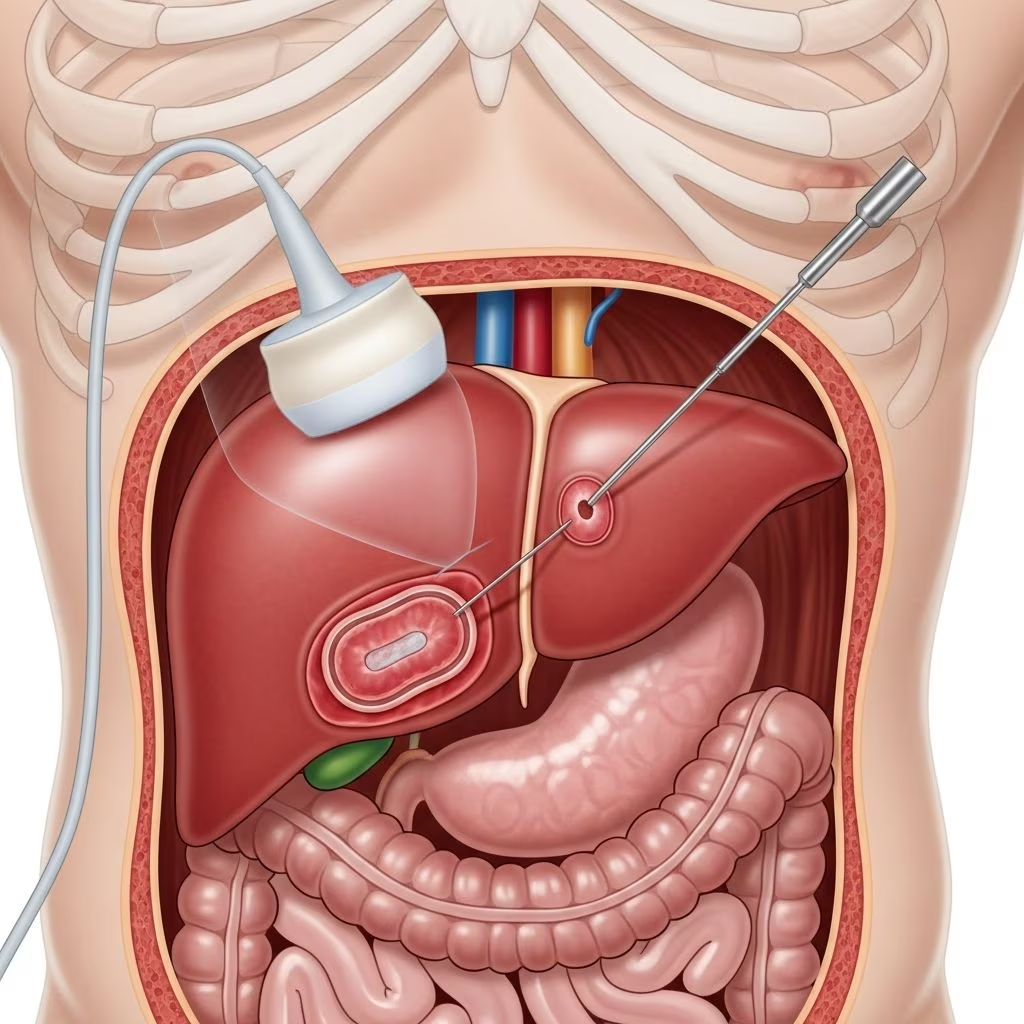
A liver biopsy involves extracting a small tissue sample from the liver to examine under a microscope, aiding in the diagnosis of various liver conditions such as hepatitis, cirrhosis, or cancer. This procedure remains a cornerstone in hepatology for providing definitive pathological insights.
Why Perform a Liver Biopsy?
Liver biopsies help identify the cause of elevated liver enzymes, assess the extent of fibrosis or inflammation, and guide treatment decisions. Conditions like non-alcoholic fatty liver disease, viral hepatitis, and autoimmune disorders often necessitate this test when imaging or blood tests are inconclusive.
- Evaluate chronic liver diseases for staging and grading.
- Detect malignancies or infections within liver tissue.
- Monitor treatment efficacy in ongoing therapies.
Pathologists analyze the sample for cellular changes, fat accumulation, or scarring, offering more precision than non-invasive alternatives like FibroScan in complex cases.
Types of Liver Biopsy Procedures
Several techniques exist, each suited to patient anatomy, condition, and risk factors. Selection depends on factors like clotting disorders or obesity.
| Type | Description | Best For |
|---|---|---|
| Percutaneous | Needle inserted through the skin into the liver, often ultrasound-guided. | Most common; suitable for diffuse liver disease. |
| Transjugular | Needle passed through a neck vein to the liver. | Patients with bleeding risks or ascites. |
| Laparoscopic | Surgical visualization via small abdominal incisions. | Focal lesions or when larger samples needed. |
| Surgical (Open) | Direct access during laparotomy. | Intraoperative sampling. |
Percutaneous biopsies account for the majority due to their minimally invasive nature.
Preparation Before the Procedure
Adequate preparation minimizes complications. Patients undergo blood tests to check clotting factors (PT/INR, platelets) and may need to discontinue anticoagulants days prior.
- Fasting: No food or drink for 6-8 hours beforehand.
- Medications: Inform providers of all drugs, especially blood thinners.
- Allergies and History: Disclose anesthesia reactions or prior biopsies.
- Consent: Review risks like bleeding or pain with the physician.
Sedation or local anesthesia is planned, and imaging like ultrasound confirms the liver’s position.
Step-by-Step Percutaneous Liver Biopsy
This outpatient procedure typically lasts 15-30 minutes. The patient lies on their back with the right hand over the head.
- Site Identification: Percuss the abdomen or use ultrasound to mark the 8th-10th intercostal space on the right side.
- Skin Prep: Cleanse with antiseptic (e.g., Betadine) and drape sterilely.
- Anesthesia: Inject 1% lidocaine into skin, subcutaneous tissue, and liver capsule. Advance needle parallel to the floor, cephalad angle.
- Incision: Make a small 3-4 mm nick with a scalpel for needle passage.
- Needle Insertion: Use a Jamshidi or Tru-Cut needle. Patient exhales fully, holds breath; advance needle 2-3 cm into liver and snap for sample.
- Sample Retrieval: Withdraw needle quickly; apply pressure to site.
Multiple passes may be needed for adequate tissue.
Laparoscopic Liver Biopsy Technique
Ideal for veterinary or human cases needing visualization, this uses CO2 insufflation and ports.
- Position patient in dorsal or lateral recumbence.
- Insert primary trocar caudal to umbilicus; insufflate to 10-12 mmHg.
- Explore lobes with probe; select biopsy sites from normal and abnormal areas.
- Deploy Gelfoam pre-biopsy for hemostasis via introducer.
- Use cup forceps: close on margin, twist, hold 30 seconds, extract.
- Inspect for bleeding post-procedure.
This method allows larger samples and direct hemostasis.
Transjugular Approach for High-Risk Patients
Avoids abdominal puncture by accessing via jugular vein. Under fluoroscopy, catheterize hepatic vein, then deploy needle.
Sedation is used; local anesthetic numbs the neck. Risks are lower for bleeding, making it suitable for coagulopathy. Post-procedure, monitor for neck hematoma.
Immediate Aftercare and Monitoring
Patients lie flat on the right side for 2-4 hours to tamponade the biopsy tract. Vital signs are checked frequently.
- Observe for hypotension, tachycardia, or shoulder pain (diaphragmatic irritation).
- Discharge after 4-6 hours if stable; avoid heavy lifting for 24-48 hours.
- Pain management with acetaminophen; report severe pain or black stools.
Hospitalization follows if complications arise.
Potential Risks and Complications
Overall, serious issues occur in <1% of cases, but awareness is crucial.
| Complication | Frequency | Management |
|---|---|---|
| Bleeding | Common (mild); rare severe. | Pressure, transfusion if needed. |
| Pain | 50-70%. | Analgesics, rest. |
| Infection | Rare. | Antibiotics. |
| Pneumothorax | <0.5%. | Chest tube if significant. |
| Gallbladder Injury | Uncommon. | Surgical intervention. |
Transjugular reduces bleeding risk significantly.
Understanding Biopsy Results
Samples go to pathology for H&E staining, special stains (e.g., iron, trichrome for fibrosis), and possibly cultures. Results classify disease stage (F0-F4 fibrosis) and activity.
Expect reports in 3-7 days; discuss with hepatologist for implications on therapy like antivirals or transplant evaluation.
Alternatives to Traditional Biopsy
Non-invasive options like elastography, MRI, or serum biomarkers (ELF test) are gaining traction but lack biopsy’s gold-standard accuracy for architecture.
Biopsy remains essential for confirming malignancy or grading inflammation.
Frequently Asked Questions (FAQs)
Is liver biopsy painful?
Local anesthesia minimizes discomfort; post-procedure soreness is common but manageable with meds.
How long does recovery take?
Most resume normal activities in 1-2 days; full healing in a week.
Can I drive home after?
No, sedation requires a companion.
Who should avoid biopsy?
Those with uncorrectable coagulopathy or uncooperative patients.
Does insurance cover it?
Typically yes, as medically necessary.
References
- Laparoscopic Liver Biopsy: Step-by-Step Guide for Vets — Clinician’s Brief. 2023. https://www.cliniciansbrief.com/article/laparoscopic-liver-biopsy
- Liver Biopsy: how it is performed — NATAP. 2004-10-06. https://natap.org/2004/HCV/100604_08.htm
- STANDARDIZED PROCEDURE LIVER BIOPSY (Adult, Peds) — UCSF Medical Affairs. N/A. https://medicalaffairs.ucsf.edu/media/1146
- Liver biopsy — Mayo Clinic. 2023-08-15. https://www.mayoclinic.org/tests-procedures/liver-biopsy/about/pac-20394576
- Liver Biopsy — NIDDK (NIH). 2023-06-28. https://www.niddk.nih.gov/health-information/diagnostic-tests/liver-biopsy
- Liver Biopsy — Cleveland Clinic. 2023-09-26. https://my.clevelandclinic.org/health/procedures/9503-liver-biopsy



