

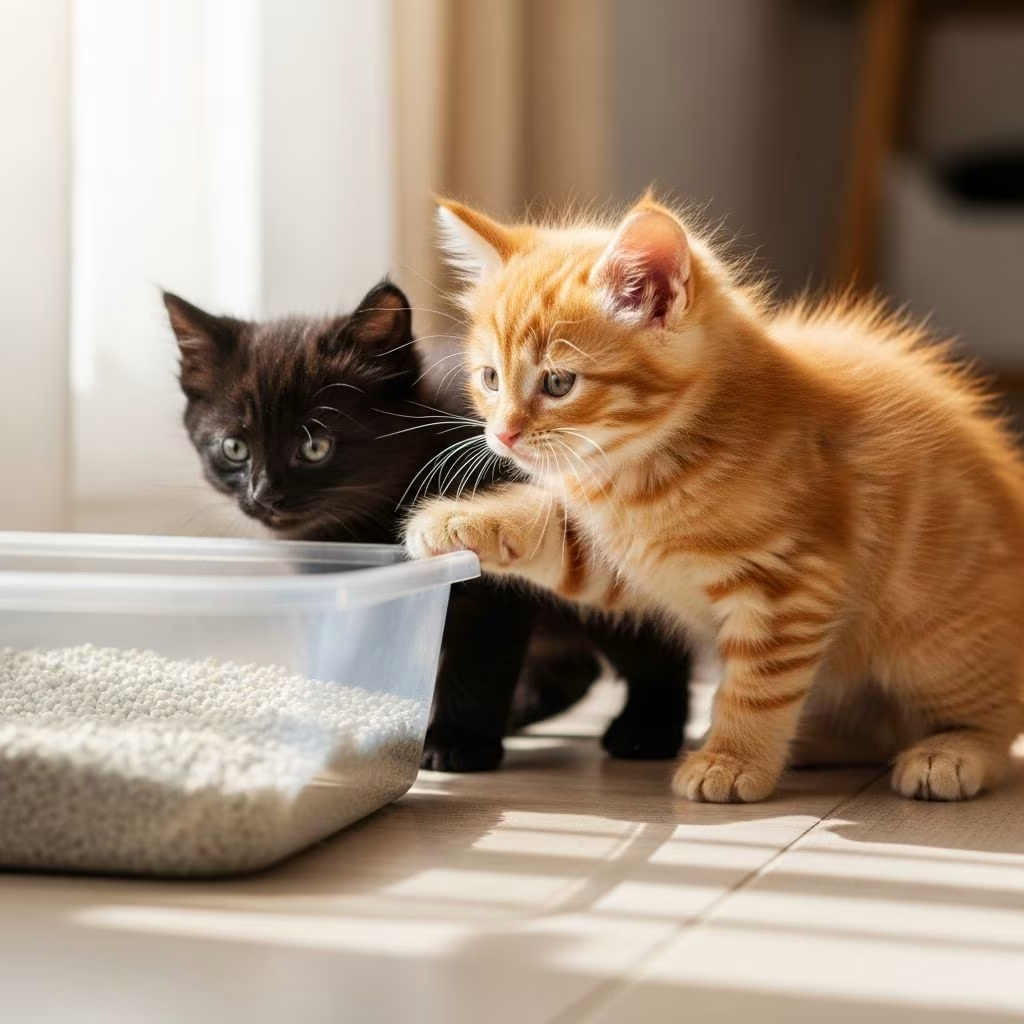
Bringing a new kitten home brings joy, but ensuring proper litter habits is essential for a harmonious household. Most kittens instinctively gravitate toward litter boxes due to their natural digging behaviors, yet young ones often require guidance to establish consistent routines. This guide outlines everything needed for successful litter training, drawing from veterinary insights to help your kitten master the process swiftly.
Understanding Kitten Development for Training Readiness
Kittens rely on their mothers for elimination stimulation in the first few weeks of life, making litter boxes unnecessary initially. Around 3-4 weeks, as weaning begins, their control develops, allowing introduction to litter training. By 4 weeks, place them in a shallow box after meals or naps to encourage use. Adoption typically happens at 8-12 weeks, when most kittens already mimic maternal behaviors, but reinforcement solidifies habits.
For older kittens or adults, begin training immediately upon arrival. Confinement to a small, equipped space accelerates learning by limiting accidents. Patience is key, as individual temperaments vary; some adapt overnight, others need weeks.
Selecting Optimal Supplies for Success
Gathering appropriate tools prevents frustration. Essential items include:
- Low-sided litter box: Ideal for tiny legs; easy entry without high walls.
- Non-clumping litter: Safe for kittens under 8-10 weeks to avoid ingestion risks.
- Scooper and mat: For daily cleaning and scatter control.
- Enzymatic cleaner: Removes odors completely, discouraging repeat accidents.
Choose fine, sandy-textured litter mimicking soil, but monitor for eating. For multi-cat homes, provide one box per cat plus one extra to reduce competition.
| Supply | Why It Matters | Best For |
|---|---|---|
| Low-sided box | Accessibility for young kittens | 4-12 weeks old |
| Non-clumping litter | Prevents digestive issues | Kittens <10 weeks |
| Litter mat | Contains tracking litter | All ages |
| Enzymatic spray | Eliminates scents fully | Accident cleanup |
Strategic Placement of Litter Boxes
Location influences usage profoundly. Position boxes in quiet, accessible spots away from food, water, and high-traffic areas to minimize stress. In multi-level homes, install one per floor for convenience—kittens avoid long treks.
Space boxes apart; clustering mimics one large box, sparking territorial disputes. For initial training, confine kittens to a single room with the box, toys, food, and beds to build association quickly. Experiment with a ‘litter cafeteria’—multiple adjacent boxes with varied litters—to identify preferences if issues arise.
- Proximity to sleeping/eating spots but not adjacent.
- One per cat +1 rule.
- Every floor, low-traffic zones.
Step-by-Step Introduction Techniques
Once supplies are ready, guide your kitten gently. First, display all boxes, allowing sniffing without interference. Place the kitten inside post-meal, nap, or play—prime elimination times. Simulate digging by pawing litter with their front paws if needed.
- Show and sniff boxes upon home arrival.
- Gently deposit in box after waking, eating, or activity.
- Observe for sniffing/crouching cues; relocate promptly.
- Confine to box-equipped space initially.
Many kittens self-discover, but persistence ensures reliability. Avoid distractions during visits.
Positive Reinforcement and Habit Building
Reward successes immediately with treats or praise to link box use positively. Timing is crucial—offer within seconds of exit. Never punish accidents; it fosters fear and avoidance. Clean calmly with enzymatic products to erase traces.
Maintain cleanliness: Scoop after each use for kittens, daily for adults. Refill to 2-3 inches depth. Weekly full washes with mild soap, monthly deep scrubs. Replace boxes yearly as scratches harbor bacteria.
Cleaning Schedules for Long-Term Hygiene
Immaculate boxes prevent aversions. Follow this routine:
- Daily: Scoop clumps, top off litter.
- Weekly: Empty, wash with hot water/soap.
- Monthly: Thorough scrub, inspect for wear.
- Annually: New box replacement.
Frequent maintenance during training builds trust.
Troubleshooting Common Litter Box Challenges
Accidents happen; diagnose systematically. Possible causes:
| Issue | Potential Cause | Solution |
|---|---|---|
| Eliminating outside box | Dirty box, wrong litter, medical issue | Clean thoroughly, try litter varieties, vet check |
| Avoiding box entirely | Stress, poor location | Relocate, add boxes, reduce household stress |
| Multi-cat conflicts | Insufficient boxes | One per cat +1, separate locations |
Place temporary boxes near accident spots. Consult vets for persistent problems, ruling out UTIs or parasites. Substrate trials help if preferring rugs over litter.
Advanced Tips for Multi-Cat Households
Competition demands extras: n+1 boxes, spread out. Monitor for bullying; isolated boxes aid shy cats. Different litters per cat if preferences clash.
FAQs
When should I start litter training my kitten?
Around 3-4 weeks, aligning with weaning. Adopted kittens train upon arrival.
What if my kitten ignores the litter box?
Ensure cleanliness, correct placement, and try litter cafeteria. Vet visit for health checks.
How many litter boxes for two cats?
Three: one per cat plus one extra, on different floors if applicable.
Can I use clumping litter for kittens?
No for under 8-10 weeks; risk of ingestion blocks intestines.
What cleaner for accidents?
Enzymatic cleaners break down proteins odors attract re-marking.
References
- How To Litter Train a Kitten — PetMD. 2023. https://www.petmd.com/cat/general-health/how-to-litter-train-kitten
- House Training for Kittens and Cats — VCA Animal Hospitals. 2023. https://vcahospitals.com/know-your-pet/kitten-behavior-and-training—litter-box-training
- How to Litter Train a Kitten — Hill’s Pet. 2023. https://www.hillspet.com/cat-care/training/how-to-litter-box-train-a-kitten



