

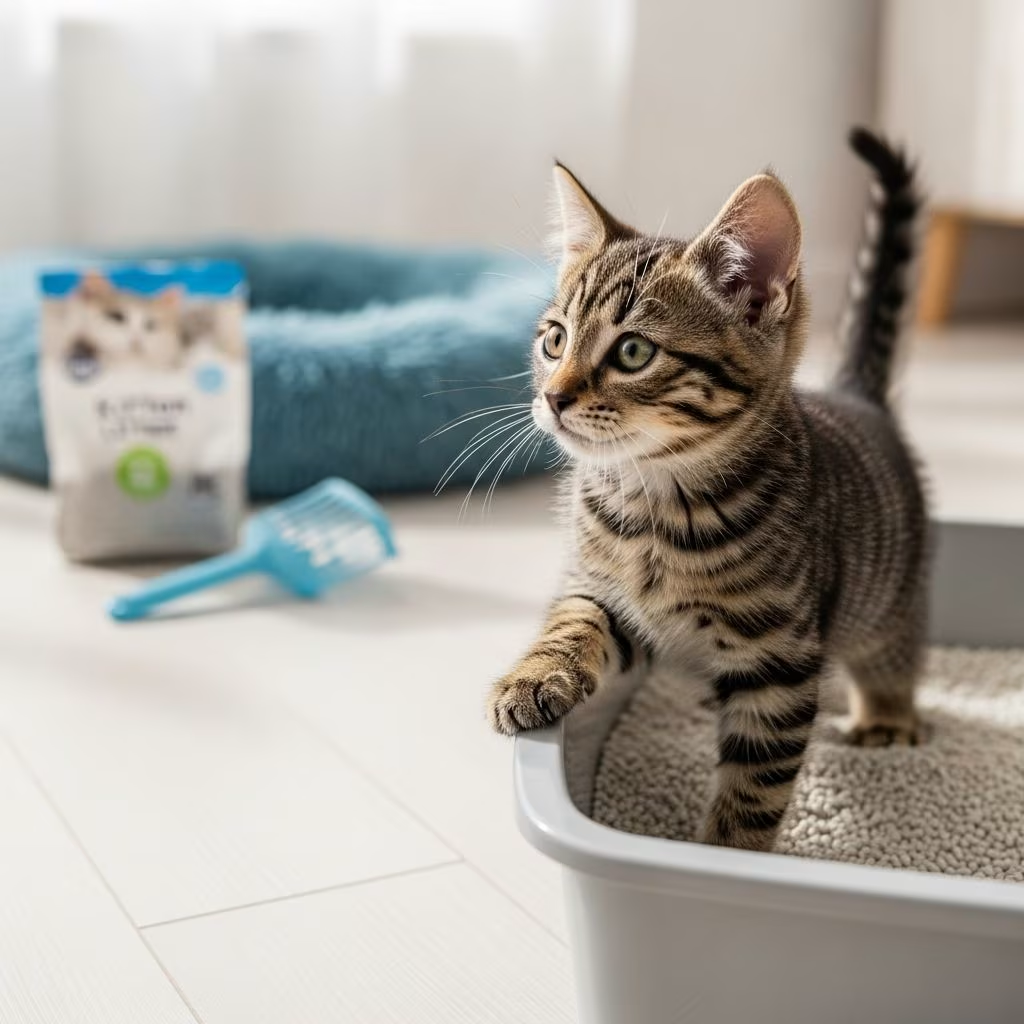
Bringing a new kitten into your home is an exciting adventure, but establishing proper litter habits is a foundational step for a harmonious living environment. Kittens possess a natural instinct to bury their waste, mimicking behaviors observed in wild felines, which makes litter training relatively straightforward when approached correctly. This guide draws from veterinary insights and experienced caregivers to outline a comprehensive approach, ensuring your kitten adapts swiftly and maintains cleanliness throughout its life.
Understanding the Natural Instincts of Kittens
Kittens are born with an innate drive to seek out soft, diggable substrates for elimination, a survival mechanism that helps conceal scents from predators. In the wild, this involves scratching at soil or sand. Domestic litter boxes replicate this environment, tapping into that primal urge. Mother cats play a crucial role in the early weeks, stimulating newborns to urinate and defecate by licking their genital areas, then consuming the waste to maintain hygiene. Around 3-4 weeks of age, as kittens become more mobile and begin weaning, they start exploring solid surfaces independently. This developmental milestone marks the ideal window to introduce litter training, aligning with their growing curiosity and physical coordination.
Research from veterinary sources confirms that most kittens can be reliably trained by 4 weeks if provided with appropriate tools. Delaying introduction beyond this period may lead to confusion, but even older kittens or adults from shelters respond well to consistent guidance. Patience and consistency are paramount, as forcing the process can create aversions.
Essential Supplies for Successful Training
Gathering the right equipment sets the stage for effortless training. Start with a shallow litter box, ideally one with low sides—no higher than 1-2 inches—to accommodate a kitten’s limited mobility. Cardboard trays from canned food cans serve as inexpensive, disposable starters, allowing easy access without intimidation.
- Litter Box: Uncovered, low-entry design for young kittens; transition to standard boxes later.
- Litter: Non-clumping for kittens under 8-10 weeks to prevent ingestion hazards; fine-grained textures mimic soil best.
- Scooper and Mats: Durable scooper for daily maintenance; absorbent mats catch scatter.
- Cleaning Agents: Enzymatic cleaners to neutralize odors completely.
- Optional Aids: Pheromone diffusers or attractants to encourage use.
Investing in quality, kitten-safe products minimizes risks like litter ingestion, which can cause digestive blockages in tiny felines.
Selecting the Perfect Litter Type
Litter choice influences acceptance rates dramatically. Fine, soft particles are preferred by most cats for their paw-friendly texture. For very young kittens, opt for non-clumping varieties to avoid dangers if they ingest particles while grooming. Brands like premium non-clumping options provide safety without sacrificing absorbency.
| Litter Type | Pros | Cons | Best For |
|---|---|---|---|
| Non-Clumping (Clay/Paper) | Safe for ingestion, affordable, dust-free options available | Requires full changes, less odor control | Kittens under 10 weeks |
| Clumping (Fine Grain) | Easy scooping, superior clumping | Risk of ingestion in young kittens | Kittens over 10 weeks |
| Natural (Pine/Walnut) | Biodegradable, low dust | May have stronger scent | Eco-conscious owners |
Test small amounts initially; if rejection occurs, switch gradually by mixing new litter into the old over a week.
Strategic Placement of Litter Boxes
Location profoundly impacts usage. Position boxes in quiet, accessible spots away from high-traffic areas and food/water stations—cats instinctively separate elimination from eating zones. In multi-room homes, follow the “n+1” rule: one box per cat plus one extra. For training, confine kittens to a single room or playpen with the box nearby, expanding access as reliability grows.
- Proximity to sleeping/eating areas but not adjacent.
- Multiple boxes spaced out to prevent territorial disputes.
- Elevated or enclosed options only after basic training.
Avoid basements or laundry rooms initially; visibility reassures kittens during learning.
Step-by-Step Introduction Process
Begin training around 3-4 weeks or upon adoption. Gently place the kitten in the box after meals, naps, or play sessions—these trigger elimination. Allow sniffing and exploration; many paw instinctively. If not, lightly scratch the litter surface with your fingers or guide a paw to demonstrate digging.
- Show all box locations first.
- Place kitten inside post-activity; never force.
- Observe without hovering to build confidence.
- Repeat 4-6 times daily until self-initiated.
For litters, leverage peer learning—one trained kitten often inspires others through imitation.
Positive Reinforcement Techniques
Reward-based methods yield the fastest results. Immediately upon exit from a successful use, offer gentle praise, pets, or a small treat. Timing is critical; delays weaken associations. Punishment is counterproductive, fostering fear and avoidance. Instead, ignore accidents stoically.
Proven strategies include verbal encouragement in a cheerful tone and tactile affection, reinforcing the box as a positive space.
Maintaining Cleanliness for Lasting Habits
Cleanliness prevents aversions. Scoop solids after each use, topping off litter to 2-3 inches depth. Perform full washes weekly with mild soap, avoiding harsh chemicals. Enzymatic sprays on accidents eliminate pheromonal cues that attract repeats.
Daily routines during training transition to once-daily scooping as habits solidify.
Troubleshooting Common Challenges
Accidents happen; address systematically rather than reactively.
- Accidents Outside Box: Clean thoroughly; confine to small area; check for medical issues like parasites or UTIs via vet visit.
- Box Avoidance: Experiment with box styles (open vs. hooded), litter scents, or add pheromone products.
- Overly Shallow Digging: Demonstrate covering; use attractants.
- Multi-Cat Tensions: Add boxes; observe interactions.
If issues persist beyond two weeks, consult a veterinarian to rule out health concerns, though rare in kittens.
Long-Term Maintenance and Transitions
Once proficient (typically 1-2 weeks), gradually introduce larger boxes or clumping litter. Monitor during life changes like moves or new pets. Annual vet check-ups ensure no underlying conditions disrupt habits. Spaying/neutering around 4-6 months often stabilizes behaviors further.
Frequently Asked Questions (FAQs)
When is the best time to start litter training a kitten?
Around 3-4 weeks, coinciding with weaning, though older kittens train quickly upon arrival.
What if my kitten keeps having accidents?
Clean with enzymatic cleaners, ensure box accessibility, and rule out medical issues with a vet.
Can I use clumping litter for a 6-week-old kitten?
No; wait until 8-10 weeks to avoid ingestion risks.
How many litter boxes do I need for one kitten?
At least two during training, placed in separate areas.
What to do if my kitten doesn’t cover waste?
Gently demonstrate by guiding paws; praise covering attempts.
References
- How To Litter Train a Kitten — PetMD. 2023-10-15. https://www.petmd.com/cat/general-health/how-to-litter-train-kitten
- Litter Training — Kitten Lady. 2022-05-20. http://www.kittenlady.org/litter
- Preventing and solving litter box problems — Animal Humane Society. 2024-01-12. https://www.animalhumanesociety.org/resource/preventing-and-solving-litter-box-problems
- Kitten Training: How to Litter-Box Train Your Cat — IAMS. 2023-08-05. https://www.iams.com/cat/cat-articles/kitten-training-how-litter-box-train-your-cat
- How to Litter Train a Kitten or Cat: Tips for Cat Owners — HumaneWorld. 2024-02-10. https://www.humaneworld.org/en/resources/how-litter-train-kitten-or-cat



