

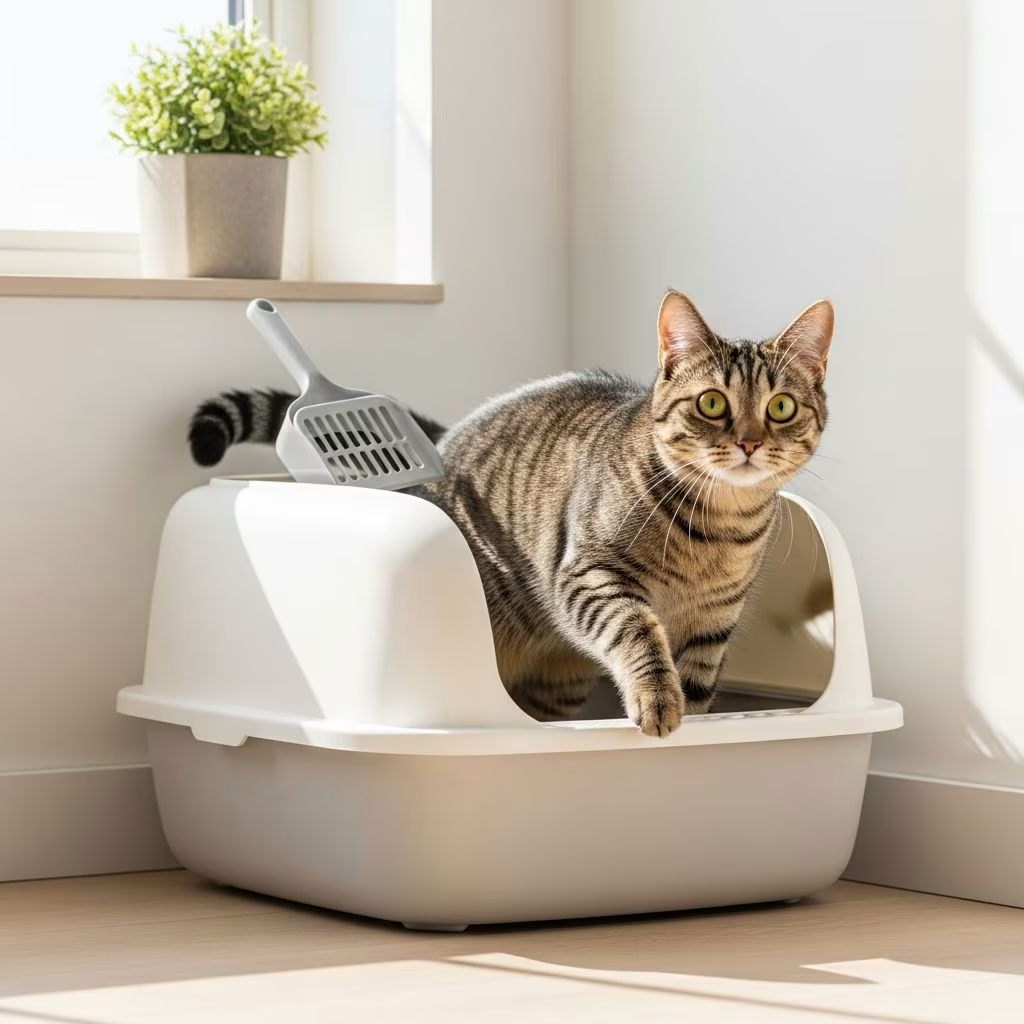
One of the most important aspects of cat ownership is ensuring your feline companion understands where and how to use the litter box appropriately. The good news is that cats possess a strong natural inclination to eliminate waste in appropriate substrates, making litter training significantly easier than many pet owners initially assume. Whether you’re bringing home a kitten, adopting an adult cat, or transitioning an outdoor cat to indoor living, understanding the fundamentals of litter box training will set you and your cat up for long-term success.
Understanding Your Cat’s Natural Instincts
Cats have been genetically programmed to bury their waste as a survival mechanism. This instinct drives them to seek out loose, diggable materials where they can eliminate and cover their waste. When you provide a litter box filled with appropriate litter material, you’re essentially offering your cat the perfect environment to satisfy this deeply ingrained behavior. This natural predisposition means that most cats will gravitate toward the litter box with minimal intervention from their owners.
Understanding this fundamental aspect of feline behavior is crucial because it shifts the training paradigm. Rather than trying to teach your cat something completely foreign, you’re simply directing them toward the appropriate location and medium for a behavior they already want to perform. This knowledge should give you confidence that litter training is absolutely achievable, regardless of your cat’s age or background.
Timeline Expectations: How Long Does Training Actually Take?
The duration of litter training varies considerably depending on multiple interconnected factors. A cat’s age plays a significant role, with younger cats often learning faster than older animals. An individual cat’s personality also matters tremendously—some cats are naturally more adaptable and eager to please, while others may be more independent or stubborn. Previous experience with litter boxes influences the timeline substantially, particularly for cats transitioning from outdoor living or those with established elimination habits elsewhere in the home.
Most cats can become reliably litter box trained within a few weeks to a month with consistent effort. Some particularly quick learners may establish the behavior within just days, while others might require several weeks of patient reinforcement. Rather than fixating on achieving results by a specific date, focus on consistency and patience. The investment you make during the training period pays dividends throughout your cat’s entire life.
Preparing Your Environment for Success
Selecting the Ideal Location
Location selection represents one of the most critical decisions in the litter training process. Your chosen spot will significantly impact how quickly and thoroughly your cat adopts the litter box habit. The ideal location is quiet, private, and away from high-traffic household areas. Avoid placing litter boxes in hallways, kitchens, or laundry rooms where noise and frequent human activity might startle or stress your cat.
Separation from feeding and water stations is particularly important. Cats instinctively prefer to eliminate far away from where they eat and drink, mimicking their wild behavior of keeping their toilet area separate from their feeding ground. Place food and water bowls in a location completely distinct from the litter box, ideally at least several feet away.
Ensure the path to the litter box is unobstructed and easily accessible. Remove any barriers, pet gates, or obstacles that might require your cat to navigate around or squeeze through. Accessibility directly impacts usage frequency, and the easier you make reaching the litter box, the more likely your cat will use it consistently.
Creating a Confined Training Space
Starting your cat in a confined space dramatically accelerates the litter training process. A small room like a bathroom is ideal because it provides containment while preventing your cat from retreating to hidden corners or alternative elimination sites throughout your home. The limited space naturally encourages your cat to use the litter box since it becomes their primary option for elimination.
Equip this space with everything your cat needs: food and water bowls (positioned away from the litter box), comfortable bedding or a cat bed, toys for enrichment, and of course, the litter box. The bathroom approach works particularly well because bathrooms typically feature non-absorbent tile flooring, making cleanup easier if accidents occur, and bathrooms are spaces family members naturally access regularly, ensuring your cat receives frequent check-ins without feeling abandoned.
Litter Box Selection and Maintenance
The type and size of litter box matters more than many pet owners realize. Most cats prefer boxes that are large enough for them to turn around comfortably without their tail touching the sides. The general guideline suggests a box that’s approximately 1.5 times the length of your cat from nose to tail base.
Cleanliness cannot be overstated in litter box management. Cats are naturally fastidious animals and may refuse to use a box they perceive as dirty. Scoop waste daily, and completely change out and clean the litter box weekly. If your cat has had elimination accidents elsewhere in your home, transfer a small amount of their waste into the litter box—the familiar scent helps draw them to the correct elimination location.
Adding catnip to clean litter can make the box more enticing to some cats, though individual preferences vary significantly. Experiment to determine what works best for your specific feline companion.
Step-by-Step Training Methodology
Initial Observation and Timing
Before actively training, observe when your cat naturally needs to eliminate. Most cats feel the urge after meals, upon waking from naps, and during periods of increased activity. Identifying these patterns allows you to position your cat in or near the litter box at optimal moments, increasing the likelihood of successful elimination in the correct location.
Active Placement Technique
Gently place your cat directly into the litter box during these opportune moments. Avoid forcing or rough handling; gentle placement with a calm demeanor prevents stress-related aversion to the box. Once placed, allow your cat to naturally investigate and potentially eliminate. Immediately follow any successful elimination with positive reinforcement.
Positive Reinforcement Strategy
Positive reinforcement is the cornerstone of effective cat training. When your cat successfully uses the litter box, reward them immediately with verbal praise, gentle petting, or small treats. The reinforcement must occur within seconds of the behavior to create the proper association. Some cats respond better to certain rewards than others—food treats work well for food-motivated cats, while praise and affection suffice for others. Observe your cat’s preferences and tailor your rewards accordingly.
Gradual Expansion of Territory
Once your cat reliably uses the litter box in the confined space for several consecutive days, begin gradually expanding their access to other areas of your home. Start with adjacent rooms, allowing supervised access while maintaining the confined space as their primary territory. Gradually increase freedom as confidence and reliability increase. This measured approach prevents overwhelming your cat and reduces the likelihood of accidents in unfamiliar areas.
Special Considerations for Adult and Senior Cats
Adult cats may require a modified training approach, particularly if they have established elimination habits in specific locations. When retraining an adult cat, patience and persistence are essential. The process typically requires the same confinement and positive reinforcement strategies but may take longer as you’re essentially breaking established patterns and creating new ones.
For older cats, consider providing multiple litter boxes to reduce competition and travel distance. Senior cats may have mobility issues, so ensure boxes are easily accessible without requiring jumping or navigating stairs. If your older cat has previously had litter box problems, extra attention to box cleanliness and accessibility becomes even more critical.
Transitioning Outdoor Cats to Indoor Living
Converting an outdoor cat to indoor living requires additional considerations beyond standard litter training. A cat accustomed to outdoor elimination may need time to adjust to using an indoor litter box. Begin by allowing supervised outdoor access in a confined, secure area like an enclosed patio or catio. Gradually reduce outdoor time while simultaneously implementing indoor litter training using the confinement method.
An outdoor cat should first feel safe and secure in their new home before complete indoor transition. Rushing this adjustment can create stress-related behavioral issues. Take time to help them acclimate to indoor living generally before expecting flawless litter box usage.
Common Challenges and Troubleshooting
Addressing Accidents Outside the Box
If your cat eliminates outside the litter box, first ensure there are no underlying medical issues by consulting a veterinarian. Once medical causes are ruled out, the problem is typically environmental or behavioral. Clean accident spots thoroughly with enzymatic cleaners to eliminate scent markers that might encourage repeated use of those locations. Transfer small amounts of the cat’s waste into the litter box to reinforce that location as appropriate.
Insufficient Litter Box Numbers
A general guideline suggests having one more litter box than the number of cats in your household. Even for single-cat homes, having two boxes prevents situations where a box is dirty and inaccessible. Multiple boxes also reduce stress and provide options if your cat has location preferences.
Training Session Management
When actively working on training behaviors, keep sessions short and engaging. Five to fifteen minute sessions prevent boredom and frustration. If your cat shows signs of stress or disinterest, end the session and try again later. Allow your cat the choice to participate—forcing interaction can create negative associations with training.
Key Success Principles
- Consistency—Maintain the same routine, location, and reinforcement strategy throughout training
- Patience—Every cat learns at their own pace; avoid rushing or becoming frustrated
- Cleanliness—Maintain impeccable litter box hygiene to encourage usage
- Accessibility—Ensure the litter box is easily reachable without obstacles or barriers
- Privacy—Provide a quiet, low-traffic location for the litter box
- Appropriate Rewards—Use positive reinforcement that your specific cat values
- Environmental Setup—Separate feeding, drinking, and elimination areas
Frequently Asked Questions
Can adult cats be litter trained?
Absolutely. While kittens may learn slightly faster, adult cats can be litter trained successfully using the same methods and principles. Consistency and patience are essential, and training may require a few additional weeks compared to kittens.
What if my cat refuses to use the litter box?
First, consult a veterinarian to rule out medical issues like urinary tract infections or digestive problems. If your cat is physically healthy, evaluate whether the box location is appropriate, whether cleanliness meets your cat’s standards, or whether the litter type is problematic. Consider adjusting any of these factors and implementing the confinement training method.
How many litter boxes do I need?
The recommendation is one box per cat, plus one extra. So for a single cat, have two boxes. For multiple cats, the formula is number of cats plus one. This prevents competition and provides options.
Can cats be trained to use the toilet?
Some cats can be gradually trained to use human toilets through a step-by-step process involving special training kits and extensive patience. However, this is significantly more challenging than traditional litter box training and requires a cat who is already litter box trained and willing to adapt to progressive changes.
Moving Forward with Confidence
Litter training a cat is a manageable task when approached with understanding, patience, and consistency. By leveraging your cat’s natural instincts and providing an appropriate environment with positive reinforcement, you create the conditions for success. Whether you’re training a new kitten, an adult cat, or transitioning an outdoor cat to indoor living, these foundational principles apply. Celebrate small victories along the way, maintain your commitment to the process, and remember that you’re not fighting against your cat’s nature—you’re simply directing it toward the desired outcome. With time and effort, your cat will reliably use the litter box, creating a clean, pleasant environment for both of you.
References
- Cat Training: How to House-Train a Cat — Purina. 2025-06-05. https://www.purina.com/articles/cat/behavior/training/how-to-house-train-adult-cat
- How to train a cat — British Psychological Society. https://www.bps.org.uk/psychologist/how-train-cat
- House training a cat: what not to do — Reveal Pet Food. https://revealpetfood.com/house-training-a-cat-what-not-to-do/
- Litter Box Training — Longmont Humane Society. https://www.longmonthumane.org/resources/cat-care-tips/litter-box-training/
- Toilet Training a Cat – In 7 Easy Steps — Hartz. https://www.hartz.com/seven-steps-to-toilet-training-your-cat/



