

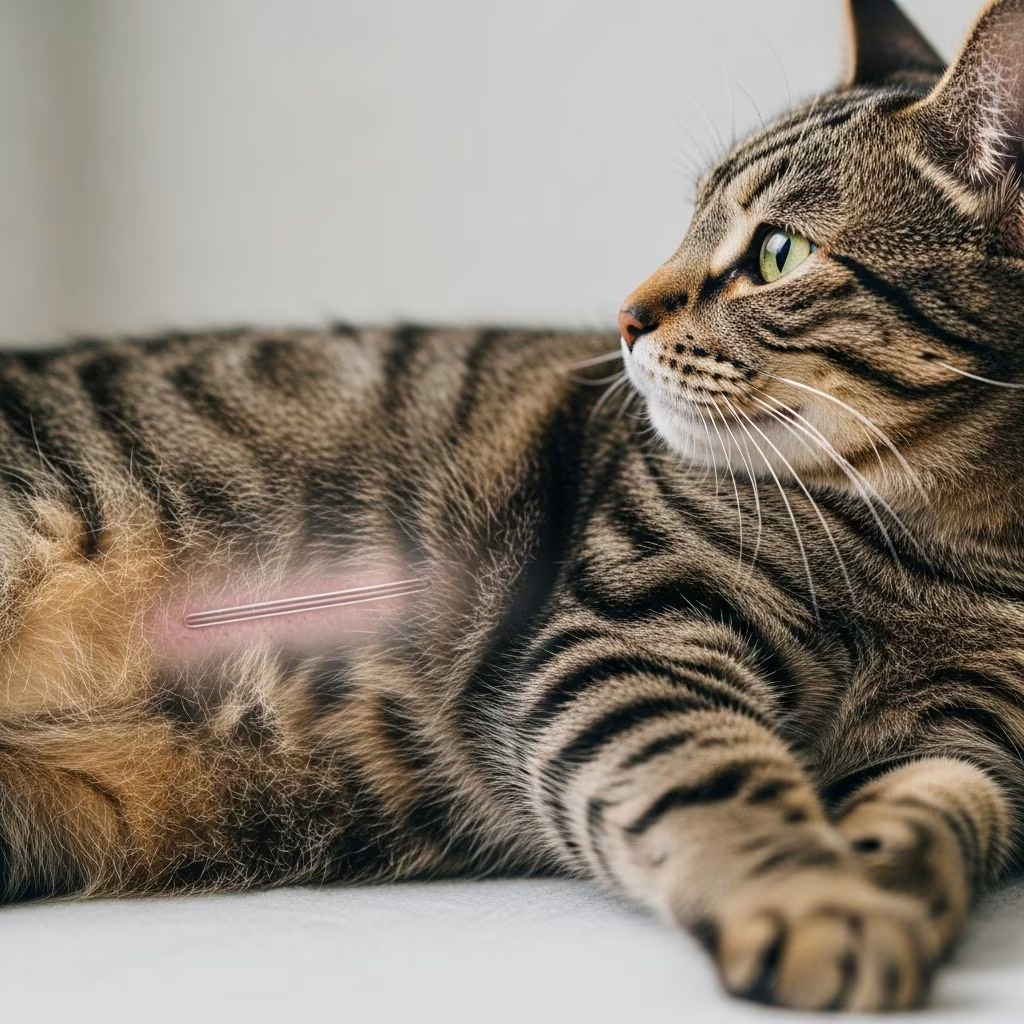
Linear Foreign Body in Cats: A Serious Gastrointestinal Emergency
Linear foreign bodies represent one of the most common and potentially life-threatening gastrointestinal emergencies in cats. These objects—typically string, yarn, ribbon, sewing thread, or carpet fibers—can cause severe internal damage and require immediate veterinary intervention. Understanding what linear foreign bodies are, how to recognize them, and when to seek emergency care is essential for every cat owner.
What is a Linear Foreign Body?
A linear foreign body is a long, thin object that becomes lodged in a cat’s gastrointestinal tract. Unlike round or spherical foreign bodies, linear objects pose unique challenges because they can wrap around the tongue or become anchored in the stomach while extending through the intestines. This characteristic creates a sawing motion that causes the intestines to bunch up on themselves in a condition called plication, which can lead to severe internal damage if not promptly addressed.
The most common linear foreign bodies found in cats include string, yarn, carpet fibers, plastic materials, and sewing thread. Cats are naturally curious creatures and often investigate string-like objects through play or accidental ingestion. This behavior makes linear foreign body ingestion a particular concern for indoor cats with access to household items.
Common Types of Linear Foreign Bodies
Several household items pose significant risks to cats. String and yarn rank among the most frequently ingested linear foreign bodies, particularly in homes with crafting supplies or decorated gifts. Sewing thread, dental floss, and ribbon can similarly become lodged in the gastrointestinal tract. Plastic materials, including plastic bags and synthetic fibers, also represent common culprits. Even seemingly harmless items like tinsel, hair ties, and carpet fibers can cause serious obstruction if swallowed.
Clinical Signs and Symptoms
Cats with linear foreign bodies may display a variety of clinical signs that can vary in severity depending on the location and extent of the obstruction. Recognizing these symptoms early is crucial for improving treatment outcomes.
Common symptoms include:
– Vomiting or repeated regurgitation- Lethargy and reduced activity- Loss of appetite or reduced food intake- Inability to get comfortable or restlessness- Abdominal discomfort or pain- Reclusiveness or hiding behavior- Dehydration indicated by dry gums- Diarrhea- Straining to defecate
In some cases, a cat owner may observe string protruding from the mouth or rectum. Never pull on a visible string, as this can cause additional internal damage. Instead, contact a veterinarian immediately for professional assessment and removal.
The severity of symptoms depends on whether the obstruction is complete or partial. Complete obstruction prevents any passage of food and water, causing rapid deterioration and repeated vomiting. Partial obstruction allows small amounts of material to pass, resulting in intermittent vomiting and gradual weight loss that may initially appear to be a mild condition.
Potential Complications
Linear foreign bodies can cause serious complications if not treated promptly. The sawing motion created as the intestines contract around the foreign object can cause lacerations and perforations in the intestinal wall. When perforation occurs, intestinal contents leak into the abdominal cavity, causing peritonitis—a life-threatening infection of the abdominal lining. This condition requires aggressive treatment and carries significant mortality risk even with intervention.
Additionally, the plication caused by linear foreign bodies can compromise blood supply to portions of the intestine, leading to tissue death and necrosis. This damage may necessitate surgical removal of large sections of bowel, which can impact long-term digestive function.
Diagnosis of Linear Foreign Bodies
Diagnosing linear foreign bodies requires a comprehensive approach combining physical examination and diagnostic imaging.
Physical Examination
During the initial examination, your veterinarian will obtain a complete patient history and perform a thorough physical assessment. The vet will look for string anchored under the tongue or protruding from the rectum, which provides definitive evidence of linear foreign body ingestion. Affected cats often display signs of dehydration with dry, tacky mucous membranes. Abdominal palpation typically reveals discomfort or a tense abdomen. The veterinarian may also note depression, lethargy, or pain responses during examination.
Diagnostic Imaging
Since clinical signs can be nonspecific and mimic other gastrointestinal conditions, imaging studies are almost always necessary to confirm diagnosis. Multiple imaging techniques may be employed to localize and characterize the foreign body.
Radiography (X-rays): Survey abdominal radiography can reveal evidence of intestinal obstruction, including gas patterns and intestinal loops suggestive of plication. While not always diagnostic on its own, radiography helps guide further investigation and can identify other potential causes of clinical signs.
Ultrasonography: Abdominal ultrasound is particularly valuable for diagnosing linear foreign bodies. The procedure can identify linear echogenic material within the gastrointestinal tract and demonstrate the characteristic appearance of plication in the small intestine. Ultrasonography also helps evaluate intestinal wall integrity, assesses the degree of peristalsis, and importantly, can identify free peritoneal fluid—an early indicator of bowel perforation and peritonitis.
Contrast Studies: In some cases, veterinarians may recommend upper gastrointestinal series using barium or iodinated contrast material. These studies can help visualize the foreign body and assess intestinal motility and mucosal integrity. However, contrast studies are contraindicated in severely dehydrated patients or those suspected of having bowel perforation.
Treatment Options
Treatment approaches for linear foreign bodies vary depending on the location, composition, and timing of ingestion.
Supportive Care and Monitoring
Cats that are stable and have recently ingested small, smooth, non-toxic objects may initially be managed with hospitalization for supportive care. This approach includes intravenous fluid therapy to correct dehydration and maintain organ perfusion, anti-nausea medications to reduce vomiting, and pain management. Repeat imaging may be used to monitor whether the object passes naturally through the gastrointestinal tract. However, most linear foreign bodies require definitive removal.
Endoscopic Removal
If the linear foreign body is located in the stomach or upper small intestine and was swallowed recently, endoscopic removal may be recommended. This minimally invasive procedure involves passing a flexible scope with specialized instruments through the mouth to visualize and remove the foreign object. Endoscopy generally works best for smaller objects swallowed within 24-48 hours, as this timing often prevents complications and reduces the need for surgical intervention.
Surgical Removal
Most cats with linear foreign bodies require surgical removal through exploratory laparotomy. Surgery becomes necessary when the foreign body is too large or sharp for endoscopic removal, has caused significant intestinal damage, or is located in areas inaccessible to endoscopy. Prior to surgery, veterinarians perform blood and urine tests to evaluate the health of major organ systems and ensure the cat can safely undergo anesthesia.
During surgery, the veterinarian makes one or more incisions into the gastrointestinal tract to access and remove the linear foreign object. In cases where the intestinal tissue has been irreparably damaged by the foreign body, a section of the affected bowel must be removed. This resection requires careful surgical technique and suturing of the remaining healthy intestine. Many experienced primary care veterinarians perform these procedures, though complex cases may benefit from consultation with a board-certified veterinary surgeon.
Post-Operative Care and Recovery
The period following surgical removal of a linear foreign body is critical for successful recovery. Cats require intensive monitoring and supportive care during hospitalization.
Immediate Post-Operative Management
Cats should be monitored around the clock for 48-72 hours following surgery. During this critical period, the veterinary team will provide appropriate pain management using multimodal therapy tailored for feline patients. Intravenous fluid therapy continues to support circulation and correct ongoing dehydration. Anti-nausea medications and drugs to promote proper intestinal motility help restore normal gastrointestinal function. Some cats benefit from antibiotic therapy to prevent infection, particularly if bowel perforation occurred before surgical intervention.
Nutritional Support
Nutritional support is essential for healing and recovery. Initially, cats may receive nothing by mouth until gastrointestinal function returns. As the digestive system recovers, small amounts of bland diet can be introduced. In some cases, feeding tube placement may be necessary if the cat is unwilling or unable to eat, ensuring adequate nutritional intake to support tissue healing.
Wound Care and Activity Restriction
The abdominal incisions typically take 10-14 days to heal, requiring strict activity restriction during this period. Most cats must be confined to a limited space to prevent strenuous activity that could compromise healing. An Elizabethan collar (cone) and in some cases a recovery suit are essential to prevent licking or chewing at the incision site. Even minor interference with the incision can delay healing or introduce infection.
Daily examination of the incision for swelling, redness, discharge, or separation is important. Any changes in the incision appearance warrant immediate veterinary attention. The veterinarian will assess healing progress at suture removal, typically scheduled 10-14 days after surgery.
Prevention Strategies
Preventing linear foreign body ingestion requires awareness and environmental management. Keep string, yarn, ribbon, and thread secured in closed containers where cats cannot access them. Secure gift wrapping materials and avoid decorating with tinsel or other string-like materials. Be cautious with household plants, as some cats chew on plant fibers. Supervise play with string toys and store them securely after use. Ensure dental floss, hair ties, and similar items are kept in closed drawers or cabinets.
Even with careful prevention, accidents can happen. Knowing the signs of linear foreign body ingestion and acting quickly can make the difference in your cat’s outcome.
Frequently Asked Questions
Q: What should I do if I see string hanging from my cat’s mouth or anus?
A: Do not pull on the string. Contact your veterinarian immediately. Pulling can cause additional internal damage. Your vet may need to perform surgery to safely remove the linear foreign body.
Q: Can linear foreign bodies pass on their own?
A: Some small, smooth objects may pass naturally, but linear foreign bodies rarely do. The sawing motion and plication they cause typically necessitate surgical removal. Waiting for natural passage can lead to serious complications like peritonitis.
Q: How long is the recovery period after surgery?
A: Most cats require 10-14 days of strict activity restriction while incisions heal. Full recovery typically takes several weeks. Follow your veterinarian’s post-operative instructions carefully to ensure proper healing.
Q: What is the prognosis for cats with linear foreign bodies?
A: Prognosis depends on the extent of intestinal damage and how quickly treatment is initiated. Cats treated before bowel perforation typically have good outcomes. However, peritonitis significantly worsens prognosis and requires aggressive treatment.
Q: Why are linear foreign bodies more dangerous than other types?
A: Linear objects create a sawing motion that causes severe intestinal damage and plication. This can lead to perforation, internal bleeding, and peritonitis—complications rarely seen with non-linear foreign bodies.
References
- Linear Foreign Bodies in Cats — Animal Hospital of North Asheville. 2020-03-30. https://www.ahna.net/site/blog-asheville-vet/2020/03/30/linear-foreign-bodies-in-cats
- Diagnostic Imaging for Linear Foreign Bodies in Cats — DVM360. https://www.dvm360.com/view/diagnostic-imaging-linear-foreign-bodies-cats
- How to Recognize and Respond to Foreign Bodies in Cats: Symptoms and Treatment — Just Cats Clinic. https://justcatsclinic.com/how-to-recognize-and-respond-to-foreign-bodies-in-cats-symptoms-and-treatment/
- Gastrointestinal Foreign Bodies in Cats and Dogs — MedVet. https://www.medvet.com/gastrointestinal-foreign-bodies-in-cats-and-dogs/
- Intestinal Blockage in Cats — PetMD. https://www.petmd.com/cat/conditions/digestive/c_ct_gastrointestinal_obstruction
- Gastrointestinal Foreign Bodies: A Life-Threatening Danger for Your Pet — Austin Vets. https://www.austinvets.com/news-and-blog/gastrointestinal-foreign-bodies-a-life-threatening-danger-for-your-pet
- Gastrointestinal Foreign Bodies in Cats — Joii Pet Care. https://www.joiipetcare.com/blogs/health-conditions/gastrointestinal-foreign-bodies-in-cats



