

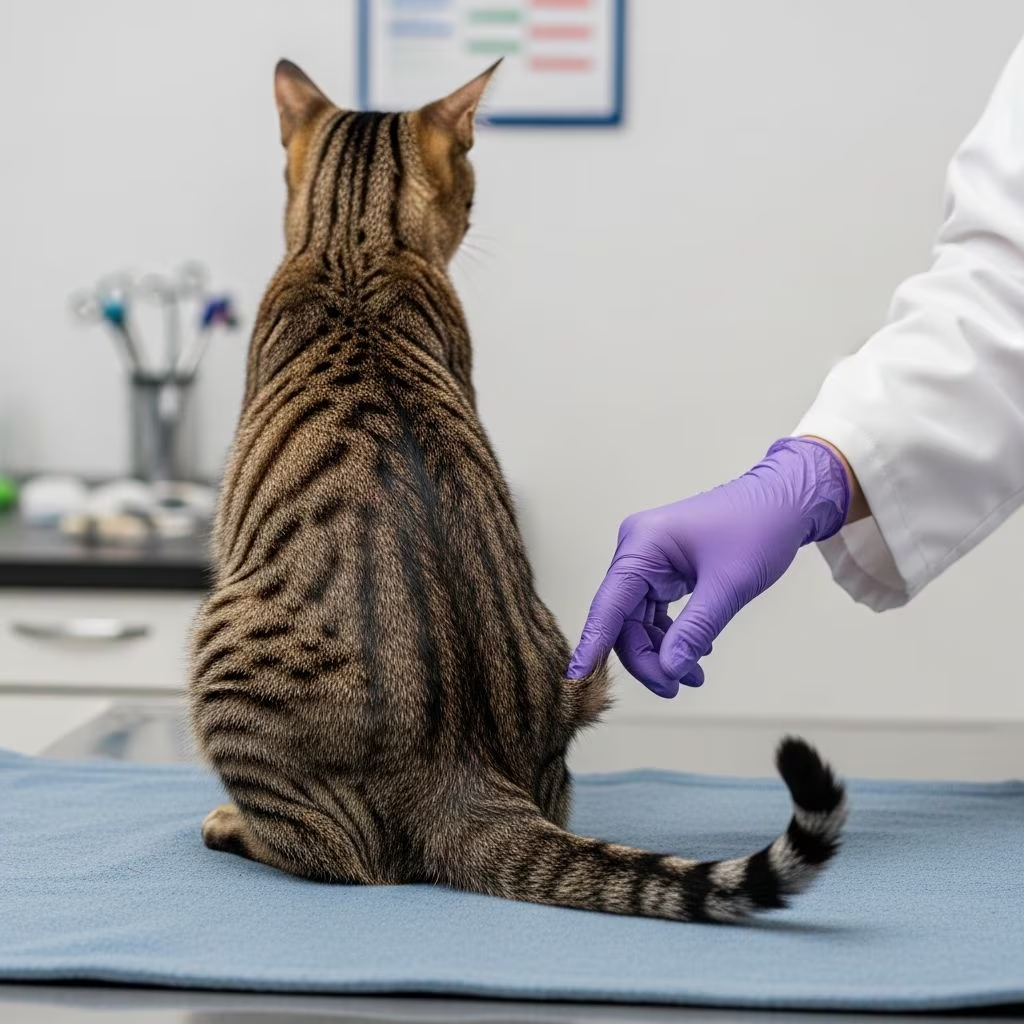
The tail serves as a vital tool for balance, communication, and expression in cats. When it suddenly hangs limp or drags, it signals potential health concerns ranging from minor strains to serious injuries. Understanding these issues helps cat owners respond promptly to restore their pet’s well-being.
Understanding the Cat Tail’s Role and Anatomy
A cat’s tail consists of 19 to 23 vertebrae, muscles, tendons, ligaments, and nerves extending from the spine. Attached at the sacrum in the pelvis, it enables precise movements for jumping and signaling emotions like happiness or agitation. Nerves from the spinal cord run through the tail base, controlling not just tail motion but also bladder, bowel, and hind leg functions.
Injuries here can disrupt these systems, leading to a floppy appearance. Unlike dogs, cats rarely suffer from ‘limber tail’ myopathy from overuse, making trauma the primary culprit in felines.
Common Symptoms of Tail Problems
Spotting a limp tail early prevents complications. Key indicators include:
- Dragging or inability to raise the tail
- Sensitivity or pain when touched, often causing hissing or swatting
- Urinary dribbling or inability to urinate
- Fecal incontinence or a relaxed anal sphincter
- Hind leg wobbliness, balance issues, or reluctance to jump
- Swelling, wounds, or abnormal bends at the tail base or tip
- Behavioral shifts like hiding, aggression, or reduced grooming
These signs may appear suddenly after an accident or gradually with infections. Cats mask pain, so subtle changes warrant attention.
Primary Causes of a Limp Tail
Several factors can render a cat’s tail limp. Here’s a breakdown of the most frequent offenders.
Traumatic Injuries and Tail Pulls
Tail pull injuries occur when forceful yanking stretches or tears nerves and tissues at the tail head. Common in fights, door slams, or car accidents, these affect the sacrum connection. Symptoms escalate from limpness to incontinence if nerves controlling elimination are damaged.
A 1985 veterinary study classified sacrocaudal injuries into groups: minimal cases with just tail pain recover fully, while severe ones risk permanent deficits. Pain at the tail base predicts better bladder recovery—11 of 11 painful cases regained function in days, versus 60% of painless ones by a month.
Fractures and Dislocations
The tail’s vertebrae can fracture from impacts like falls or vehicle strikes. Dislocations separate joints without breaking bones, causing swelling and immobility. Both lead to limp tails and potential nerve compression.
X-rays confirm these; higher spine involvement may paralyze hindquarters. Tail tip fractures cause localized limpness without systemic effects.
| Injury Type | Common Causes | Key Symptoms |
| Injury Type | Common Causes | Key Symptoms |
|---|---|---|
| Tail Fracture | RTA, falls, crushes | Limp tail, pain, kinks, swelling |
| Dislocation | Pulls, fights | Joint separation, no movement, hind leg issues |
| Tail Pull | Doors, grabs | Dragging tail, incontinence |
Infections and Abscesses
Bite wounds from cat fights often form abscesses at the tail base, leading to swelling, pain, fever, and limp tails. Untreated, infections spread, causing lethargy and appetite loss.
Full anal glands mimic this, with discomfort prompting tail-dropping until expressed.
Nerve and Neurological Issues
Trauma-induced nerve damage may heal or persist, leaving permanent flaccidity. Rare causes include tumors or spinal diseases compressing nerves.
Other Contributors
Pelvic fractures present with limp tails due to sacral breaks. Overfull anal sacs or rare myopathies add to the list, though less common in cats.
How Veterinarians Diagnose Limp Tails
Don’t delay professional evaluation—initial exams check for pain, sensation, and bladder distension. X-rays reveal fractures or dislocations; neurological tests assess nerve function.
Vets express bladders manually if needed and rule out abscesses via aspiration. Bloodwork screens for infection or systemic illness.
Treatment Approaches for Recovery
Care depends on cause:
- Conservative Management: Rest, pain meds (e.g., NSAIDs), and anti-inflammatories for mild strains or sprains. Most tail pulls improve in weeks.
- Surgical Options: Amputation for irreparable damage or severe fractures; nerve repairs rarely feasible. Pelvic fixes stabilize bones.
- Supportive Care: Antibiotics/drainage for abscesses; gland expression; manual bladder help until control returns.
- Monitoring: Home checks for urination/defecation; confinement prevents reinjury
Prognosis varies: 80-90% recover tail use with early intervention, but incontinence lingers in 10-40% of severe cases.
Prevention Strategies for Cat Owners
Minimize risks by:
- Supervising outdoors to avoid fights/traffic
- Securing doors/windows
- Regular vet checkups for gland issues
- Providing safe play spaces
- Spaying/neutering to curb roaming/fighting
Frequently Asked Questions (FAQs)
Will my cat’s limp tail heal on its own?
Mild cases yes, but vet assessment rules out fractures or nerve tears needing intervention.
Is a limp tail always painful?
Often, but nerve damage may numb it. Watch behavior for clues.
Can limp tail cause kidney problems?
Yes, untreated bladder retention leads to infections or failure.
How long until recovery?
Days for strains; weeks/months for trauma; permanent in some.
Should I touch the tail?
Gently check for heat/swelling, but avoid if aggressive—see vet.
Long-Term Outlook and Home Monitoring
Post-treatment, track mobility, elimination, and mood. Persistent issues may need rehab or adaptation, like low-sided litter boxes. Most cats adapt well, maintaining quality life even with partial deficits.
By acting swiftly on limp tail signs, owners safeguard their cat’s health and happiness. Consult vets for tailored plans.
References
- Tail Pull Injury in Cats: What You Need to Know — Partners Veterinary Clinic. 2023. https://partnersvetavl.com/?p=4031
- My Cat Has a Limp Tail, What’s Wrong? 5 Vet-Reviewed Possible … — Catster. 2024. https://www.catster.com/cat-health-care/my-cat-has-a-limp-tail/
- Pelvic fractures in cats – a limp tail may be the big clue — Urban Animal Veterinary Hospital. 2022. https://urbananimalveterinary.com/event/pelvic-fractures-cats-limp-tail/
- Acute Caudal Myopathy (Limber Tail) — VCA Animal Hospitals. 2024. https://vcahospitals.com/know-your-pet/acute-caudal-myopathy-limber-tail
- Tail Trauma in Cats – Symptoms, Causes, Diagnosis, Treatment … — WagWalking. 2023. https://wagwalking.com/cat/condition/tail-trauma



