

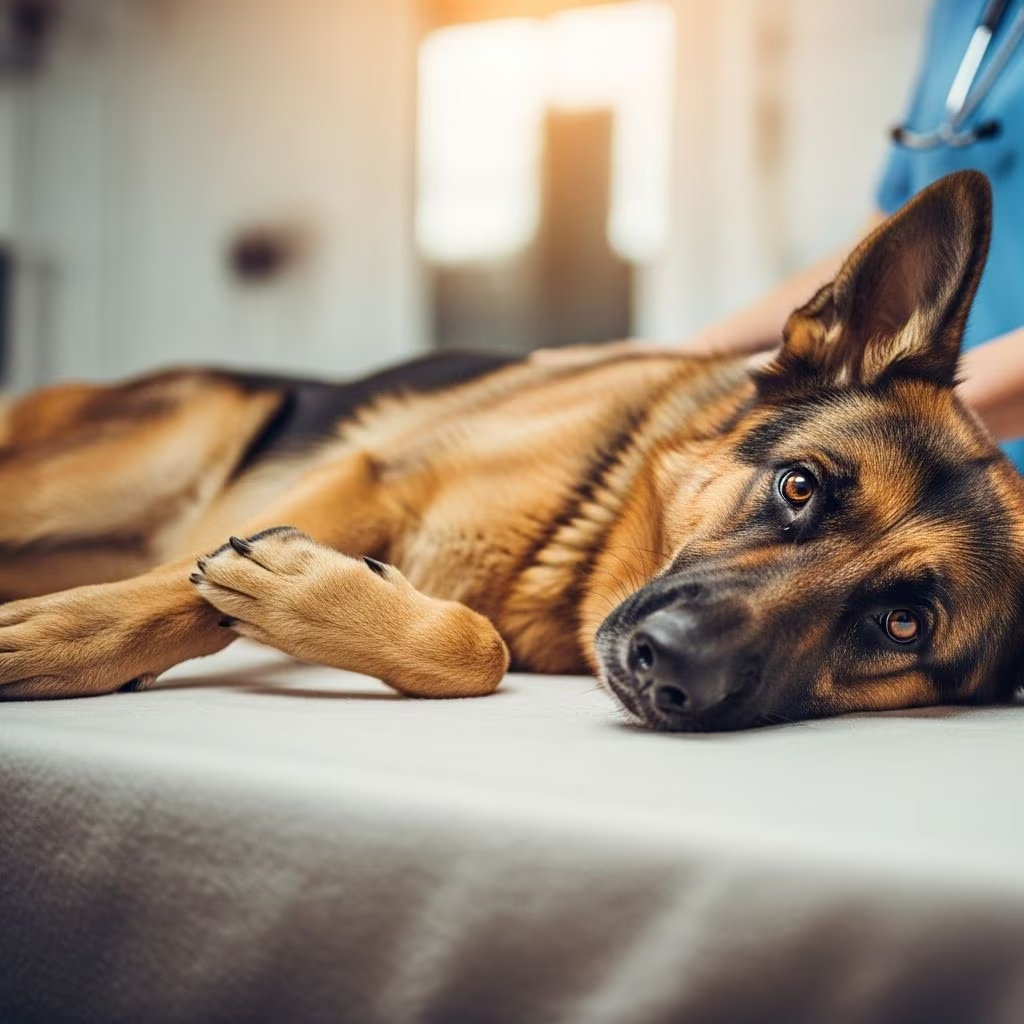
Limb paralysis, characterized by the complete loss of voluntary movement in one or more limbs, represents a serious neurological challenge in veterinary practice across species like dogs, cats, sheep, and horses. This condition often stems from disruptions in the neural pathways controlling muscle function, demanding prompt diagnosis to improve welfare and potential recovery.
Defining Paresis and Paralysis: Key Distinctions
Paresis refers to partial weakness in limb movement, while paralysis indicates total loss of motor control. Both arise from failures in communication between the brain, spinal cord, nerves, and muscles. In animals, distinguishing these helps pinpoint whether the issue involves upper motor neurons (UMN), which control descending signals and lead to spastic paralysis with hyperreflexia, or lower motor neurons (LMN), causing flaccid paralysis with hyporeflexia and rapid muscle atrophy.
UMN lesions, often from spinal cord or brain damage, preserve reflexes but cause stiffness. LMN issues, affecting peripheral nerves or neuromuscular junctions, result in limp limbs and quick wasting. Early recognition guides prognosis, as UMN problems may resolve with time, unlike severe LMN damage.
Common Causes Across Species
Trauma tops the list for sudden onset, damaging nerve roots, plexuses, or trunks. In dogs, hindlimb paralysis frequently links to lumbosacral plexus injuries or sciatic nerve trauma from accidents. Infectious agents like viruses (e.g., visna in sheep) or parasites (e.g., Taenia multiceps) cause progressive paresis, especially in flocks.
- Traumatic Injuries: Fractures, entrapments, or blows sever nerves; common in high-energy dogs or rams during mixing.
- Infections and Inflammation: Abscesses near vertebrae or viral encephalitides erode neural tissue, leading to compression.
- Degenerative Conditions: Intervertebral disc disease (IVDD) in dogs compresses cords, mimicking strokes.
- Toxins and Ticks: Neurotoxins paralyze limbs temporarily in cats and dogs.
- Neoplastic Growths: Tumors impinge nerves, rarer but grave in older animals.
Recognizing Symptoms in Pets and Livestock
Owners notice dragging limbs, knuckling, or collapse. In sheep, unilateral hindlimb weakness signals visna/maedi virus. Dogs show asymmetric gait or recumbency; cats from falls exhibit acute forelimb flops. Accompanying signs include pain vocalization, muscle tremors, or urinary retention.
| Symptom | UMN Lesion Indicator | LMN Lesion Indicator |
|---|---|---|
| Reflex Response | Hyperactive | Hypoactive/Areflexia |
| Muscle Tone | Increased (Spastic) | Decreased (Flaccid) |
| Atrophy Speed | Slow | Rapid |
| Pain Sensation | Preserved | Often Absent |
This table aids quick field assessment.
Step-by-Step Diagnostic Approach
Begin with history: onset speed, trauma, flock health. Physical exams rule out orthopedic lameness via joint palpation. Neurological checks test menace response, proprioception (knuckling time), and reflexes (patellar, withdrawal).
- Localization: Determine central (brain/spine) vs. peripheral via gait, posture, and sensory maps.
- Imaging: Radiographs detect fractures; myelography in sheep visualizes cord compression.
- Advanced Tools: MRI/CT for discs in dogs; CSF analysis for infections.
- Lab Tests: Bloodwork excludes metabolic causes; serology for viruses.
In recumbent sheep, elevate hindquarters post-myelogram for better cranial imaging.
Treatment Strategies: From Supportive to Surgical
Urgency defines action: hospitalize for stabilization, IV fluids, and pain control. Corticosteroids reduce spinal swelling in acute trauma; antibiotics combat abscesses.
Surgery decompresses IVDD or excises tumors. Nerve regeneration crawls at 1 inch/month, aided by laser therapy or acupuncture. Supportive care prevents sores: slings for standing, catheters for bladders, Elizabethan collars against self-trauma.
- Physiotherapy: Passive ranging, hydrotherapy rebuilds muscle.
- Pharmacology: Analgesics (opioids for severe pain), anti-inflammatories.
- Amputation: Last resort post-3-6 months if no sensation returns.
Species-Specific Management
Dogs and Cats
Hindlimb cases often recover if pain persists initially. Monitor 1-2 months; Horner’s syndrome worsens outlook. Cats with tick paralysis respond to antiserum.
Sheep and Livestock
Flock-level interventions: deworm dogs against coenurosis, cull visna carriers. Traumatic brachial plexus neuritis from raddle harnesses demands equipment fixes.
Prognosis Factors and Long-Term Care
Recovery hinges on lesion site—proximal nerve injuries fare worse. Early intervention boosts odds; persistent deep pain signals hope. Chronic cases need home setups: ramps, padded bedding, regular physio.
Prevent pressure ulcers by frequent repositioning and hygiene. Nutritional support counters atrophy.
Preventive Measures for Animal Owners
Secure environments curb trauma: padded trailers, safe fencing. Vaccinate against virals; routine deworming in sheep flocks. Monitor for early weakness in breeds prone to IVDD like Dachshunds.
Frequently Asked Questions (FAQs)
What is the first step if my dog can’t use its hind legs?
Seek emergency vet care immediately—delays worsen outcomes.
Can paralyzed animals regain full function?
Yes, if UMN or mild LMN; full recovery varies by cause and speed of treatment.
How do I differentiate paralysis from lameness?
Neurological exams test reflexes and sensation; lame animals retain these.
Is surgery always needed for limb paralysis?
No, conservative care suffices for many; surgery targets compressions.
What home care helps a recovering pet?
Physio, wound prevention, bladder expression, and vet-monitored nutrition.
References
- Diagnosing limb paresis and paralysis in sheep — PMC – NIH. 2015. https://pmc.ncbi.nlm.nih.gov/articles/PMC4686802/
- Leg Paralysis in Dogs – Dog Owners — MSD Veterinary Manual. Accessed 2026. https://www.msdvetmanual.com/dog-owners/brain-spinal-cord-and-nerve-disorders-of-dogs/leg-paralysis-in-dogs
- Paralysis in Dogs — PetMD. Accessed 2026. https://www.petmd.com/dog/conditions/neurological/paralysis-dogs
- Leg Paralysis in Dogs — Merck Veterinary Manual. Accessed 2026. https://www.merckvetmanual.com/dog-owners/brain-spinal-cord-and-nerve-disorders-of-dogs/leg-paralysis-in-dogs
- Leg Paralysis in Cats — WagWalking. Accessed 2026. https://wagwalking.com/cat/condition/leg-paralysis



