

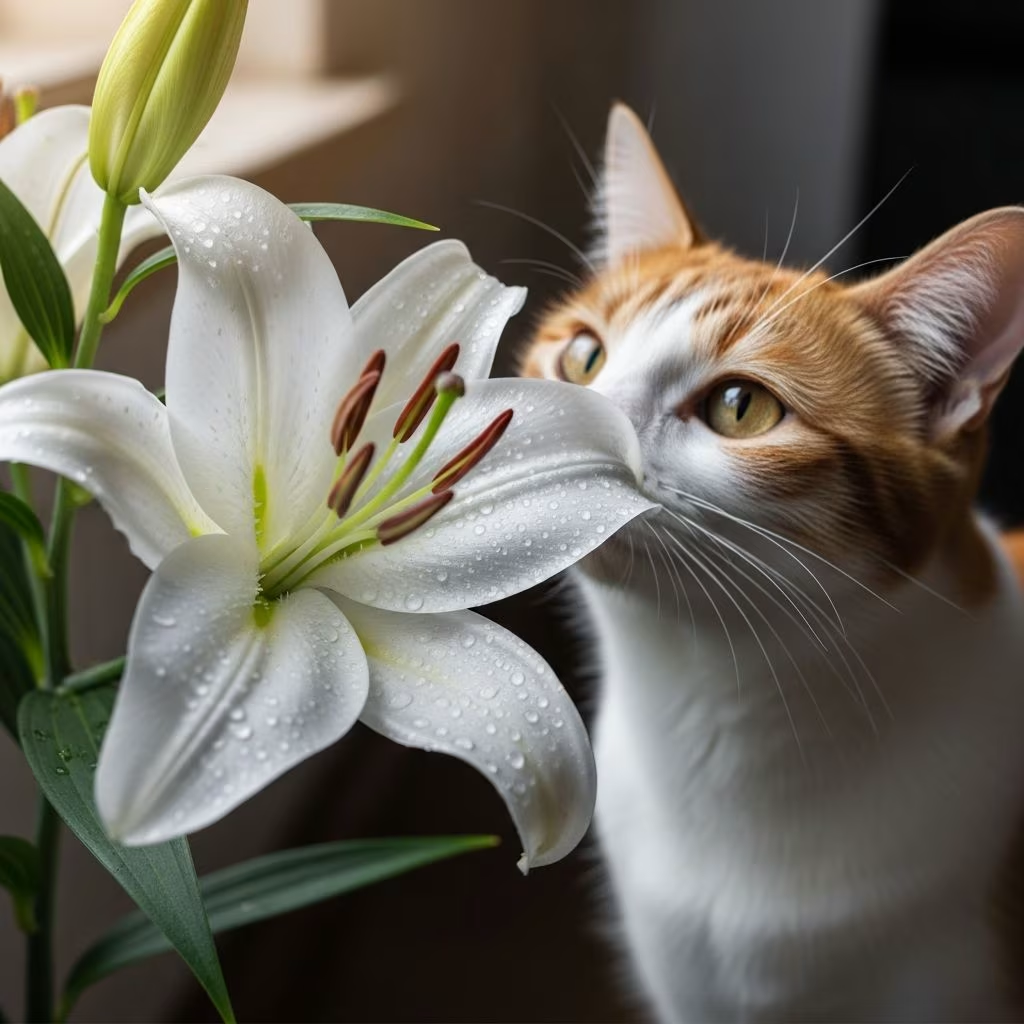
Many cat owners unknowingly bring home beautiful lilies that can turn deadly for their pets. Even minimal contact with these flowers—whether through chewing leaves, licking pollen, or drinking vase water—can trigger severe kidney damage in cats. Veterinary experts emphasize that lily poisoning ranks among the top causes of feline renal failure, with survival hinging on immediate action.
Why Lilies Target Cats So Aggressively
The exact toxin in lilies remains unidentified, but research points to a water-soluble compound that rapidly attacks the kidneys’ tubular cells. Cats lack the ability to process this substance, leading to acute kidney injury (AKI) within hours to days. Unlike dogs or humans, who suffer only mild stomach upset from lilies, cats face life-threatening consequences from any plant part. Studies confirm the nephrotoxic effects stem from rapid absorption, causing clinical signs like vomiting and lethargy soon after exposure.
Common Lily Varieties That Endanger Cats
Not every flower labeled “lily” carries the same risk, but several popular types do. Here’s a breakdown:
- True Lilies (Lilium species): Includes Asiatic, Oriental, Stargazer, and Easter lilies. All parts are toxic; even pollen grooming leads to poisoning.
- Daylilies (Hemerocallis species): Found in gardens, these cause similar renal damage despite not being true lilies.
- Peace Lilies (Spathiphyllum): Less severe but still irritate the mouth and stomach; not linked to kidney failure.
Avoid phrases like “lily-like” on labels—stick to vet-approved safe plants like roses or sunflowers.
Timeline of Poisoning Symptoms in Cats
Symptoms unfold in phases, making early detection critical. Use this table to track progression:
| Time After Exposure | Early Signs (0-24 Hours) | Late Signs (24+ Hours) |
|---|---|---|
| 0-12 Hours | Vomiting, drooling, lethargy, no appetite, hypersalivation | – |
| 12-24 Hours | Increased thirst/urination, dehydration, abdominal pain | Tremors, disorientation begin |
| 24-72 Hours | Decreased urine output, seizures | Kidney failure, coma, death |
Monitor closely: dry gums, sunken eyes, or weakness signal dehydration and urgency.
Immediate Steps If Exposure Occurs
Never wait for symptoms—act fast. Do not induce vomiting at home, as it’s dangerous for cats and ineffective without professional guidance. Rush to a vet if you suspect lily contact:
- Wipe pollen from fur to prevent grooming ingestion.
- Note exposure time and plant type.
- Avoid food/water until vet advice.
Early intervention within 2 hours boosts survival odds dramatically.
Veterinary Interventions for Lily Toxicity
Treatment focuses on decontamination, kidney support, and monitoring, as no specific antidote exists. Standard protocols include:
- Decontamination: Induced vomiting (if <2 hours post-ingestion), activated charcoal to bind toxins.
- Fluid Therapy: IV fluids for 48-72 hours flush kidneys, prevent shutdown; urine output monitored via catheter.
- Monitoring: Blood tests (CBC, chemistry, urinalysis) track kidney values; ultrasounds assess damage.
- Supportive Care: Anti-nausea drugs (e.g., Cerenia), stomach protectants (sucralfate), dialysis in severe cases.
Recent research from the University of Pennsylvania shows outpatient subcutaneous fluids viable for some stable cats, with AKI rates similar to inpatients (43-47%) and high survival (87-100%). However, vets must guide based on case specifics.
Prognosis: Factors Influencing Recovery
Survival exceeds 90% with prompt care before 18 hours, but drops sharply after kidney failure sets in. Key factors:
- Timing: <6 hours: Excellent prognosis; >24 hours untreated: Poor.
- Amount Ingested: Pollen alone suffices for toxicity.
- Pre-Existing Health: Older cats or those with kidney issues fare worse.
A 2023 AVMA-highlighted study challenges mandatory hospitalization, offering hope for accessible care.
Preventing Lily Poisoning in Your Home
Proactive steps eliminate risk:
- Keep all lilies out—ban from homes, gardens, bouquets.
- Educate family/florists: Request lily-free arrangements.
- Supervise outdoors; plant cat-safe alternatives like catnip or valerian.
- Secure vases; discard water immediately.
- Indoor cats reduce exposure—consider it for ultimate safety.
Safe Flower Alternatives for Cat Homes
Enjoy blooms without worry:
| Safe Flowers | Why Cat-Friendly |
|---|---|
| Roses | No toxicity; thorns only risk |
| Sunflowers | Mild GI upset at worst |
| Carnations | Minimal irritation |
| Baby’s Breath | Generally safe |
Always verify with ASPCA toxic plant list.
FAQs on Lily Toxicity in Cats
Q: Can cats recover from lily poisoning?
A: Yes, with treatment under 18 hours; IV fluids are key to flushing toxins and supporting kidneys.
Q: Is lily pollen toxic?
A: Absolutely—cats grooming it ingest enough for fatal damage.
Q: What about vase water?
A: Highly toxic; contains dissolved plant compounds.
Q: Are all lilies dangerous?
A: True lilies and daylilies yes; peace lilies milder.
Q: Can I treat at home?
A: No—seek vet immediately; home remedies risk worsening.
Long-Term Kidney Health After Exposure
Survivors need lifelong monitoring: annual bloodwork, low-protein diets, ample fresh water. Some develop chronic kidney disease, requiring phosphorus binders or medications. Consult specialists for tailored plans.
References
- Lily Poisoning in Cats: What To Do If Your Cat Ingests a Lily Flower — PetMD. 2023. https://www.petmd.com/cat/poisoning/lily-poisoning-cats
- Lily Poisoning in Cats: Everything You Need to Know — MedVet. 2023. https://www.medvet.com/what-is-lily-toxicity-cats/
- Lily Toxicity in Cats — Rhinebeck Animal Hospital. 2023. https://rhinebeckanimalhospital.com/blog/936263-lily-toxicity-in-cats
- New study sheds light on lily toxicity in cats; outpatient treatment may be viable — AVMA. 2023-10-01. https://www.avma.org/news/press-releases/new-study-sheds-light-lily-toxicity-cats-outpatient-treatment-may-be-viable
- Pet Poison Prevention: Understanding Lily Toxicity in Pets — Animal Emergency Care. 2023. https://animalemergencycare.net/aecprevents/pet-poison-prevention-understanding-lily-toxicity-in-pets/
- Lily Poisoning in Cats – Causes, Treatment and Associated … — Vetster. 2023. https://vetster.com/en/conditions/cat/lily-poisoning
- Lily toxicity in the cat — PubMed (NCBI). 2010-12-01. https://pubmed.ncbi.nlm.nih.gov/21147474/



