

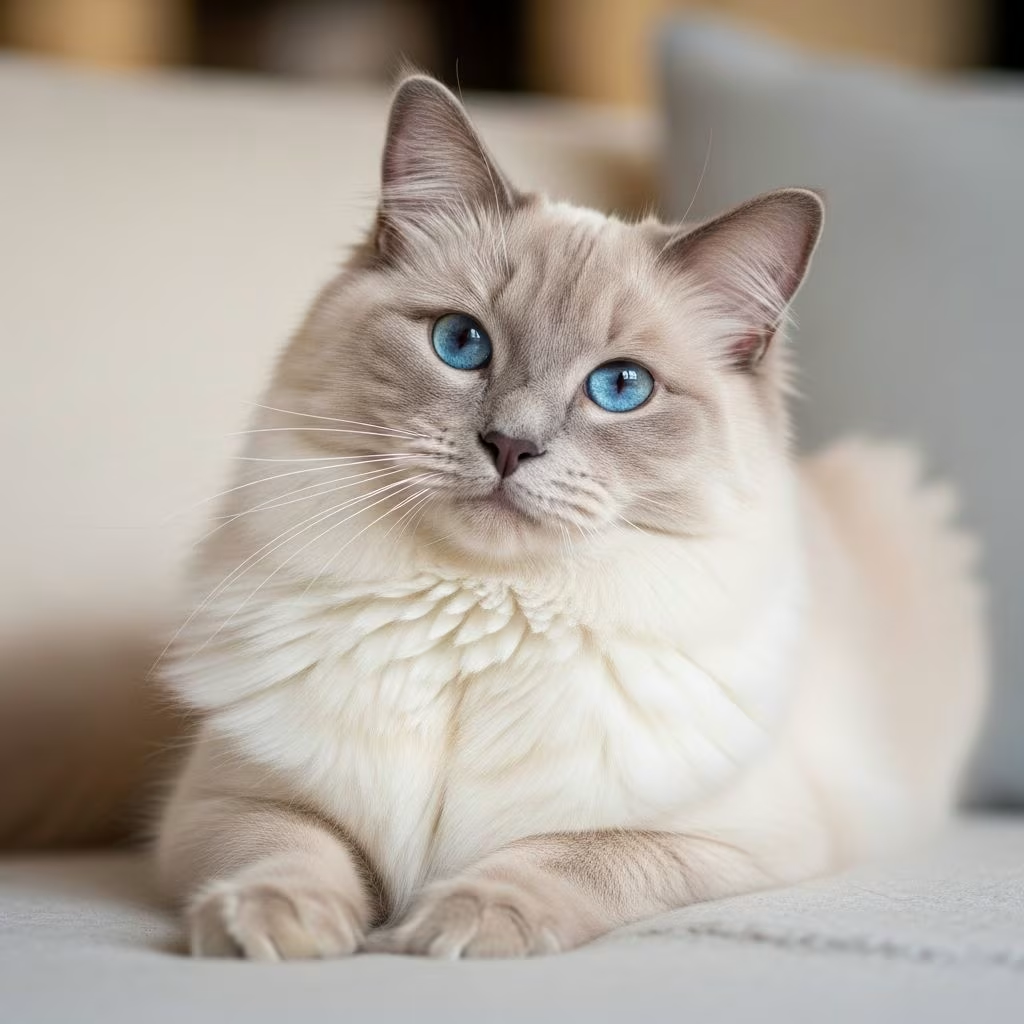
The Lilac Ragdoll stands out as a mesmerizing variant of the beloved Ragdoll breed, celebrated for its soft lavender-gray points against a pristine, icy-white body and striking blue eyes. This dilute chocolate color creates an ethereal, pastel appearance that has made it a favorite among enthusiasts seeking rarity and elegance in feline companions.
Origins and Development of the Lilac Shade
Ragdoll cats trace their roots to the 1960s in California, where breeder Ann Baker selectively bred for docile temperament and distinctive pointed coloration. The Lilac variation emerged as a genetic dilute of the chocolate point, resulting in frosty gray hues with a pinkish undertone on the ears, face, legs, and tail. Unlike bolder seal or blue points, the Lilac’s subtlety reflects careful breeding for lighter pigmentation, recognized by major registries like CFA and TICA.
These cats are born nearly white, with points gradually darkening over months or years, often reaching full vibrancy by age three. This slow maturation aligns with the breed’s overall development, where full size and coat density emerge gradually. The Lilac’s glacial white body provides a perfect canvas for its delicate points, enhancing its otherworldly charm.
Distinctive Appearance and Color Genetics
Lilac Ragdolls feature a medium-to-large frame with substantial boning, substantial bodies, and semi-longhair coats that feel plush and silky. Males typically weigh 15-20 pounds, females 10-15 pounds, with maturity at 3-4 years. Their heads are broad with rounded contours, medium ears, and large, oval blue eyes that convey perpetual gentleness.
The hallmark is the **pointed pattern**: darker extremities contrasting a lighter body. For Lilac, points are frosty grey with pinkish tinges, paw pads lavender-pink, and nose leather matching. Body shading remains minimal, ideally glacial white.
| Pattern | Description | Lilac Specifics |
|---|---|---|
| Colorpoint | Points on ears, face, legs, tail; white body | Frosty lavender-grey points, blue eyes |
| Mitted | White paws, chin; points elsewhere | Even white mittens to wrists, lavender points |
| Bicolor | White inverted V on face, legs, belly | White extends mid-thigh, lavender points |
| Lynx | Tabby stripes on points | Frosty grey bars with cream mottling |
| Tortie | Mottled red/cream over points | Pinkish-grey with pale cream overlays |
Genetically, Lilacs carry the dilute gene (c^s/c^s) on a chocolate base, producing their signature softness. Lynx adds tabby barring, tortie introduces mottling, expanding visual variety while preserving blue eyes.
Personality Traits That Define the Breed
Ragdolls earn their name from going limp when lifted, embodying ultimate relaxation. Lilac variants share this dog-like devotion, thriving on human interaction without demanding attention. They greet owners at doors, follow quietly, and curl up for extended cuddles, their soft chirps replacing loud meows.
- Affectionate: Love being held, often draping over arms like plush toys.
- Gentle: Patient with children, dogs, and strangers; rarely scratch or bite.
- Sociable: Adapt well to multi-pet homes and family life.
- Mellow Play: Enjoy interactive toys but prefer low-key fun over hyper activity.
- Intelligent: Learn tricks, walk on leashes, yet remain calmly observant.
This equanimity makes Lilac Ragdolls ideal for apartments or busy households, as they handle routines and changes with poise.
Grooming Routines for Silky Coats
The medium-long coat resists matting but sheds moderately year-round. Weekly brushing with a slicker tool distributes oils, removes loose fur, and highlights Lilac points against the pale body. Bathing is occasional, using cat-specific shampoos to preserve coat texture.
Nail trims every 2-3 weeks, ear cleaning monthly, and dental care via brushing or additives prevent common issues. Their large paws and fluffy tails require attention to avoid litter buildup.
- Bath as needed, especially pre-shows.
- Comb undercoat during shedding peaks.
- Check eyes weekly for tearing on light fur.
Minimal grooming yields maximum elegance, as the coat’s plush undercoat enhances the Lilac’s frosty allure.
Health and Wellness Essentials
Ragdolls, including Lilacs, enjoy longevity of 12-17 years with proper care. Hypertrophic cardiomyopathy (HCM) screening via echoes is vital, as the breed has genetic predispositions. Routine vet visits catch issues early.
Maintain ideal weight to ease joint strain on their hefty frames. High-quality diets support coat vibrancy and energy. Spay/neuter prevents cancers, and microchipping ensures safety.
| Common Concern | Prevention | Frequency |
|---|---|---|
| HCM | Genetic screening | Annual echo post-1 year |
| Obesity | Portion control | Daily monitoring |
| Dental Disease | Brushing/additives | Weekly |
| Urinary Issues | Wet food/hydration | Ongoing |
Nutrition Tailored for Optimal Vitality
Feed premium kibble or wet food rich in animal proteins, avoiding fillers that dull coats. Lilacs benefit from omega fatty acids for skin health and point sheen. Divide meals into 2-3 daily portions, adjusting for age and activity.
Kittens need growth formulas until 12 months; seniors require joint support. Fresh water and puzzle feeders combat boredom eating. Avoid free-feeding to prevent obesity in these laid-back giants.
Ideal Living Environments and Daily Life
Lilac Ragdolls flourish indoors with vertical spaces like cat trees and window perches for observation. Interactive play sessions mimic hunting, keeping them fit without exhaustion. They bond deeply with families, often selecting one person while tolerating all.
Quiet homes suit their mellow vibe, but they adapt to moderate noise. Temperature matters: cooler spots enhance point contrast.
Acquiring Your Lilac Ragdoll
Source from CFA/TICA-registered breeders who health-test parents. Expect $1,500-$3,000 for pedigreed kittens, rarer Lilacs at premium. Rescues occasionally have adults. Visit multiple times, meet parents, review contracts.
- Verify HCM/PKD testing.
- Choose based on pattern preference.
- Prepare for slow color development.
Frequently Asked Questions
Do Lilac Ragdolls have blue eyes?
Yes, all Ragdolls, including Lilacs, must have vivid blue eyes per standards.
How rare is the Lilac color?
Quite rare as a dilute chocolate; prized for pastel delicacy.
Are they good with kids?
Exceptionally tolerant and gentle, making them family favorites.
What’s their coat care like?
Weekly brushing suffices; low-maintenance for longhairs.
Do they darken over time?
Points may subtly deepen with age, per breed allowance.
Why Choose a Lilac Ragdoll?
This variant combines Ragdoll affability with unique, soft-hued beauty, offering years of companionship. Their rarity elevates ownership to a special privilege.
References
- Ragdoll Colors: Lilac Ragdoll — Rarity Ragdolls. 2023. https://rarityragdolls.com/ragdoll-colors/lilac-ragdoll/
- Lilac Ragdoll Cat: Info, Pictures, Facts & History — Catster. 2023. https://www.catster.com/cat-breeds/lilac-ragdoll-cat/
- Ragdoll Breed Standard — Cat Fanciers’ Association (CFA). 2024. https://cfa.org/breed/ragdoll/
- Understanding Ragdoll Cat Personality Traits — PetPlace. 2023. https://www.petplace.com/article/cats/pet-behavior-training/cat-behavior-training/ragdoll-cat-personality-traits
- What to Know About a Ragdoll Cat — WebMD. 2024. https://www.webmd.com/pets/cats/what-to-know-about-a-ragdoll-cat
- Ragdoll — The International Cat Association (TICA). 2024. https://tica.org/breed/ragdoll/
- Ragdoll Cat Breed Facts — Royal Canin. 2024. https://www.royalcanin.com/is/cats/breeds/ragdoll



