
Lilac-Crowned Amazon: Care, Personality & Behavior
Complete guide to lilac-crowned Amazon parrots: personality, diet, habitat needs, and care requirements.
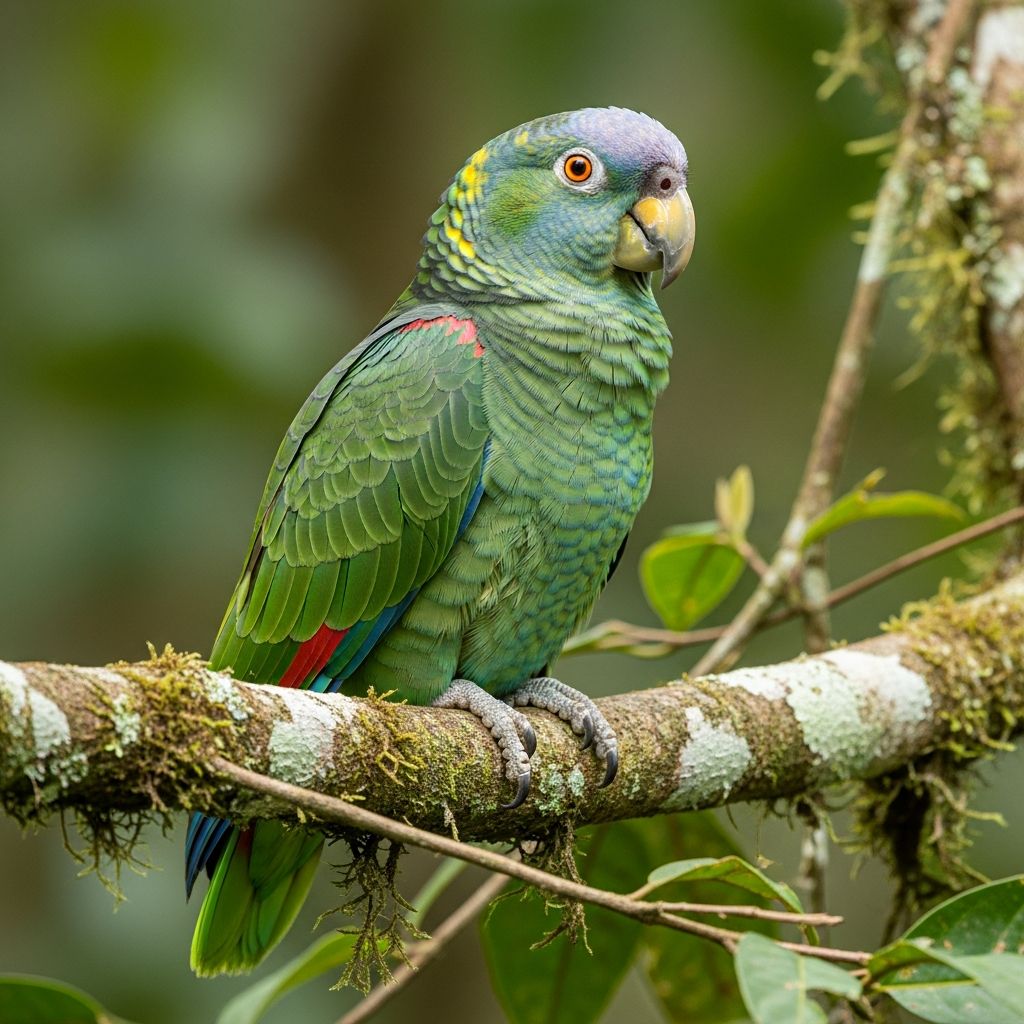
What Is A Lilac-Crowned Amazon?
The lilac-crowned Amazon, scientifically known as Amazona finschi, is a medium-sized parrot that brings charm, personality, and loyalty to any household fortunate enough to have one as a companion. Also called Finsch’s Amazon, Finsch’s parrot, or the lilac-crowned parrot, this species is named after German naturalist Friedrich Hermann Otto Finsch (1839-1917). While not as famous as the larger yellow-naped or double yellow-headed Amazons, the lilac-crowned Amazon makes up for its modest size with exceptional companionability and an engaging personality. These birds are sweet and compelling characters, often fearless to a fault, yet incredibly loyal when socialized properly. They are full of personality and demonstrate remarkable intelligence, making them rewarding companions for experienced bird owners who understand their unique needs and behavioral quirks.
Physical Characteristics & Appearance
The lilac-crowned Amazon is immediately recognizable by its striking and distinctive plumage pattern. The bird’s most notable feature is its brilliant lilac-purple crown and nape, which gives the species its common name. The forehead displays a maroon or dark reddish coloration, while the overall body plumage is a rich emerald green. The cheeks and ear coverts showcase a greenish-yellow hue that contrasts beautifully with the darker edging found throughout most of the plumage.
Adult lilac-crowned Amazons have particularly distinctive wing markings. The primary feathers are dark blue, while the secondary feathers are green with dark blue tips. Notably, the first five secondary feathers feature bright red speculum patches on their edges, which become visible during flight. The wing coverts, underside of flight feathers, and tail are predominantly green, with the tail tipped in yellowish coloring. The beak is pale brown-grey and notably curved and strong, perfectly adapted for crushing hard seeds and manipulating food. The orbital rings (eye rings) are pale grey, and the irides are amber-colored in adults, distinguishing them from juveniles. The legs are also pale brown-grey, and like all parrots, lilac-crowned Amazons possess zygodactyl feet with two toes facing forward and two facing backward, perfectly designed for climbing and gripping.
Juvenile lilac-crowned Amazons resemble adults but exhibit minor differences. Their irises are dark brown rather than amber, and they have fewer maroon-colored feathers on the forehead. By approximately one year of age, juveniles begin acquiring these adult features and their characteristic amber irises.
Native Region & Natural Habitat
The lilac-crowned Amazon is endemic to the Pacific slopes of Mexico, where this species naturally inhabits mid-altitude tropical and subtropical forests. In the wild, these parrots are found in dry forests and subtropical regions, exhibiting movements that are both seasonal and altitudinal based on food availability. During the breeding season, they are typically observed in monogamous pairs nesting in natural tree cavities in tall trees. Outside of breeding season, they form small but notably noisy groups that fly between feeding areas, traveling several kilometers daily between roosts and foraging grounds.
Unfortunately, wild populations have declined dramatically due to multiple threatening factors. The demands of the illegal pet trade, poaching, and widespread habitat destruction have severely impacted their numbers. It is estimated that fewer than 10,000 individuals remain in the wild, representing a significant decline from historical population levels. This species is frequently confiscated from smugglers at the Mexican border, though many birds illegally reach the pet trade market. Due to declining wild populations, breeders in the United States have become increasingly interested in this species, and breeding efforts have been pursued in earnest to help preserve the species.
Personality & Behavior
The lilac-crowned Amazon demonstrates a rich and complex personality that requires understanding and patience from its caretaker. These birds are highly intelligent, social creatures that thrive on interaction and mental stimulation. In the wild, they are found in flocks numbering in the hundreds, reflecting their deeply social nature. In captivity, they require daily handling and attention and will not thrive on minimal interaction.
One critical aspect of Amazon parrot ownership is learning to read body language and understand behavioral cues. For example, when a lilac-crowned Amazon fans its tail, pins its irises, stands its neck feathers on end, and struts around like a runway model, this is a clear signal to maintain distance. This intimidating display is often just bluffing, but the bird is communicating that it needs space. Many Amazons change homes multiple times during their lifetime due to this kind of territorial behavior. Bird guardians must remain calm and composed, particularly when bitten, and must not take such behaviors personally.
At sexual maturity, lilac-crowned Amazons can become cranky, nippy, unpredictable, and sometimes vicious or protective of their territory—behavior typical of many Amazon species. This usually does not last indefinitely, though it can be challenging and insulting for sensitive owners. Teaching the bird to reliably step up and step onto a stick proves invaluable during springtime when hormones can become overwhelming. For these reasons, the lilac-crowned Amazon is better suited for seasoned bird-keepers rather than novices.
Speech & Sound Characteristics
In typical Amazon style, the lilac-crowned Amazon is gregarious and unreserved, demonstrating vocal communication and territorial defense. While not as loud or boisterous as some larger Amazon species like the yellow-crowned or double yellow-headed Amazons, this species is nonetheless vocal and requires owners who can tolerate parrot noise. Lilac-crowned Amazons have excellent whistling ability, and some individuals can develop quite impressive vocabularies, though they are not renowned as prolific talkers compared to other Amazon species.
These birds make various vocalizations throughout the day, including nasal calls, croaks, and squawks that vary according to context. These vocalizations serve important functions in social cohesion and warning. They typically become most vocal during early morning hours, so a cage cover is recommended for owners who wish to avoid early wake-up calls. Those with sensitive ears may struggle with lilac-crowned Amazon ownership, as noise is relative and can be problematic in sound-sensitive households.
Diet & Nutrition
Like most Amazon parrots, lilac-crowned Amazons have hearty appetites and require a well-planned nutritional strategy. Their main diet should consist of a nutritionally balanced, manufactured parrot diet supplemented with an assortment of healthy vegetables, moderate fruit, and nutrient-dense treats that avoid empty calories.
Amazon parrots enjoy the texture of food almost as much as its taste, demonstrating preferences for varied textures and presentations. These birds particularly relish specially formulated foods such as Lafeber Nutri-Berries and Avi-Cakes, which provide both nutritional value and engaging texture. The digestive system of lilac-crowned Amazons is optimized for a diet rich in plant fibers and lipids, reflecting their natural diet in wild subtropical forests.
In their native habitat, lilac-crowned Amazons demonstrate great dietary flexibility, taking advantage of wild fruits and seasonally available crops such as corn and bananas. This natural dietary diversity should be replicated in captivity through varied offerings. Their strong, curved beaks allow them to crack hard seeds, tear off shoots, and manipulate food with precision, aided by their prehensile tongue. Proper nutrition is essential for maintaining health, as lilac-crowned Amazons can live more than 50 years when cared for properly, making long-term dietary consistency crucial.
Breeding Behaviors & Reproduction
In the wild, lilac-crowned Amazons breed during the months of February through June. During this period, they form monogamous pairs and nest in natural cavities found in tall trees within dry forests. The breeding process follows a predictable timeline: females lay clutches ranging from 1 to 4 eggs, which incubate for 28 days. After hatching, nestlings remain in the nest for approximately 60 days of growth before fledging.
Reproductive success rates in wild populations are relatively low. Females typically produce an average brood size of 1.8 nestlings per successful clutch, with reproductive output averaging 0.99 fledglings per egg-laying female. Overall, reproductive efforts result in approximately 0.70 independent young per egg-laying pair. These low success rates are likely attributable to climate variability in dry forest habitats, which can affect clutch size, reproductive output, and overall breeding success. In captivity, lilac-crowned Amazons do not reproduce freely, making them quite challenging for serious breeders and hobbyists attempting to establish sustainable captive breeding programs.
Aviculture & Captive Care
Hand-reared lilac-crowned Amazons can be quite friendly in captivity and make excellent companion parrots when properly socialized. These birds can learn a reasonable vocabulary despite not being recognized as champion talkers. They are intelligent and capable of problem-solving, pattern recognition, and sound memorization, demonstrating heightened cognitive abilities in captive environments.
Successful captive care requires meeting both physical and psychological needs. This species requires daily handling and attention to thrive and prevent behavioral problems stemming from boredom or insufficient social interaction. Like all parrots, lilac-crowned Amazons need variety in their environment, activities, and diet to remain fit, healthy, and mentally stimulated. They are agile climbers that rarely spend time on the ground, preferring to forage in treetops and rest on high, dense branches. In captivity, they may use specific resting sites night after night, establishing routines and preferences.
The lilac-crowned Amazon adapts well to subtropical climates, which explains its success in urban areas such as California, where feral populations have established themselves. This adaptability suggests these birds can thrive in a range of environmental conditions when basic care requirements are met.
Basic Care Requirements Summary
| Characteristic | Details |
|---|---|
| Color | Green with lilac crown and maroon forehead |
| Size | Medium |
| Lifespan | 30+ years (can exceed 50 years) |
| Vocalizations | Vocal communicator, good whistlers |
| Social Needs | Highly social, requires daily interaction |
| Best For | Experienced bird owners |
Frequently Asked Questions
Q: How long do lilac-crowned Amazons live?
A: Lilac-crowned Amazons can live 30+ years in captivity, and with proper care and nutrition, many individuals exceed 50 years of age, making them a significant long-term commitment.
Q: Are lilac-crowned Amazons good pets for beginners?
A: No, these birds are better suited for experienced bird-keepers. They require daily handling, can be unpredictable at sexual maturity, and need owners who understand Amazon body language and can remain composed during behavioral challenges.
Q: How loud are lilac-crowned Amazons?
A: While not as loud as some larger Amazon species, lilac-crowned Amazons are vocal birds with good whistling ability. They become particularly vocal in early mornings, so a cage cover is recommended for sound-sensitive households.
Q: What should I feed my lilac-crowned Amazon?
A: A balanced diet should include nutritionally complete manufactured parrot food, supplemented with fresh vegetables, moderate fruit, and nutrient-dense treats. These birds particularly enjoy foods like Nutri-Berries and Avi-Cakes.
Q: Do lilac-crowned Amazons talk?
A: Lilac-crowned Amazons are good whistlers and can develop vocabularies, though they are not renowned as prolific talkers compared to other Amazon species. Individual birds vary in their ability to learn sounds and words.
Q: Why are wild lilac-crowned Amazons declining?
A: Wild populations have declined due to the illegal pet trade, poaching, and habitat destruction. Fewer than 10,000 individuals are estimated to remain in the wild.
Q: Can lilac-crowned Amazons breed in captivity?
A: Lilac-crowned Amazons do not reproduce freely in captivity, making them challenging for breeders. They breed naturally during February through June in their native habitat.
References
- Lilac-crowned amazon — Wikipedia. Accessed 2025-11-28. https://en.wikipedia.org/wiki/Lilac-crowned_amazon
- Lilac-Crowned Amazon Personality, Food & Care — Lafeber Company. Accessed 2025-11-28. https://lafeber.com/pet-birds/species/lilac-crowned-amazon/
- Lilac-crowned parrot – Safari Mallorca — Safari Mallorca. Accessed 2025-11-28. https://safarimallorca.es/en/todos-los-animales/loro-corona-lila/
- Lilac-crowned Amazon — World Parrot Trust. Accessed 2025-11-28. https://parrots.org/encyclopedia/lilac-crowned-amazon/
Similar Articles








Read full bio of medha deb


