Light for Birds: Sunlight vs. Full-Spectrum Bulbs
Complete guide to bird lighting: natural sunlight benefits and full-spectrum bulb alternatives for pet bird health.
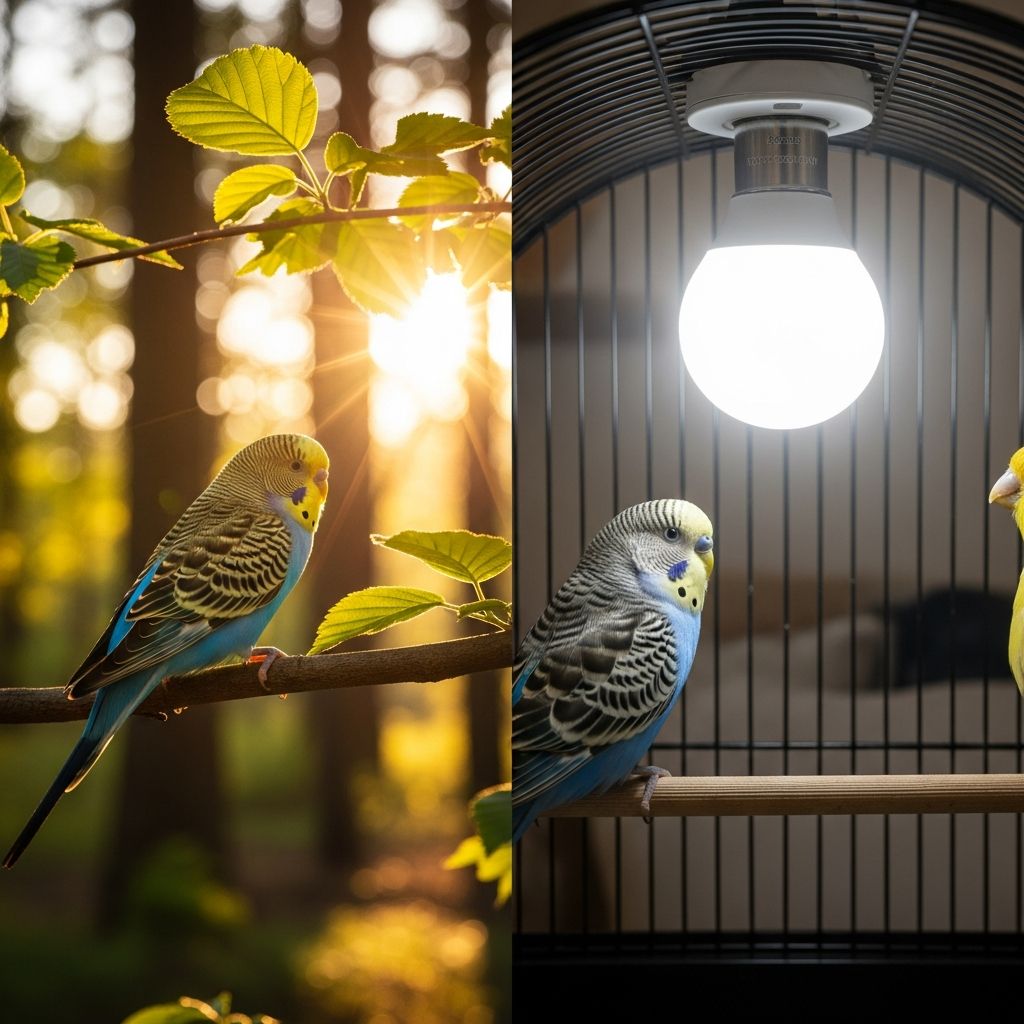
Light plays a crucial role in the health and well-being of pet birds, yet many bird owners don’t fully understand their feathered companions’ lighting needs. Whether you have a parrot, finch, canary, or other pet bird, providing appropriate light exposure is essential for maintaining physical health, behavioral balance, and emotional well-being. This comprehensive guide explores the importance of lighting for birds, the benefits of natural sunlight, the role of full-spectrum bulbs, and how to create an optimal lighting environment for your avian friend.
Understanding Bird Vision and Light Perception
Before diving into specific lighting recommendations, it’s important to understand how birds perceive light differently than humans. Birds possess the remarkable ability to see a larger portion of the color spectrum than we do, including ultraviolet (UV) light that is invisible to our eyes. This enhanced visual capability allows birds to detect colors, patterns, and nuances in their environment that humans cannot perceive.
However, birds perceive light at a different speed than humans do. Light travels in waves, and when those waves reach a certain frequency, our brains interpret them as solid, continuous light. Birds, with their faster visual processing, require these light waves to move at significantly higher frequencies to perceive the same solid light. Regular household light bulbs emit light at frequencies that appear solid and continuous to human eyes but register as flickering to birds. Imagine living in a world where all your lights constantly flicker—this constant visual disturbance can create stress, agitation, and disorientation in pet birds.
The measurement that indicates the speed of light waves produced by a bulb is called the color rendering index (CRI). Birds begin to perceive light as solid at a CRI of 91 or higher. This is a critical threshold that explains why standard household lighting can contribute to behavioral problems and stress in pet birds.
Sunlight Requirements for Pet Birds
Natural sunlight remains the gold standard for bird lighting and offers irreplaceable benefits that cannot be fully duplicated by artificial sources. Birds require natural sunlight for several vital physiological processes.
Benefits of Natural Sunlight
Natural sunlight serves multiple essential functions in bird health and development:
- Vitamin D Production: Natural sunlight enables birds to synthesize vitamin D3, which is critical for calcium absorption and bone health. Without adequate vitamin D, birds can develop weak bones, brittle feathers, and skeletal problems.
- Hormone Regulation: Sunlight exposure helps regulate hormonal cycles, including those related to reproduction and seasonal behaviors. Proper light exposure maintains appropriate hormone balance throughout the year.
- Skin and Feather Health: UV rays from natural sunlight contribute to healthy skin and vibrant feather coloration and condition.
- Immune System Support: Exposure to natural light strengthens the immune system, helping birds resist illness and maintain optimal health.
- Circadian Rhythm Regulation: Natural light cycles help establish and maintain healthy sleep-wake patterns, which are fundamental to overall well-being.
- Metabolic Function: Sunlight helps regulate metabolism and energy levels, keeping birds alert and active.
While natural sunlight offers unmatched benefits, it’s important to note that window glass filters out significant portions of the ultraviolet spectrum, particularly UVB rays. Birds positioned near windows still miss critical UV exposure because modern glass is designed to block these rays. Additionally, many pet birds live in environments where obtaining safe outdoor time is challenging or impractical.
Indoor Full-Spectrum Lighting for Birds
Since natural sunlight exposure isn’t always feasible for indoor birds, full-spectrum lighting has become an important tool for maintaining avian health. However, understanding how these lights work and their limitations is essential for bird owners.
Why Regular Indoor Lighting Isn’t Sufficient
Standard household light bulbs were designed with human vision in mind, not avian vision. These conventional bulbs lack ultraviolet-A (UVA) and ultraviolet-B (UVB) rays that birds require for vitamin D3 synthesis. More problematically, regular bulbs flicker at frequencies imperceptible to humans but clearly visible to birds, creating a stressful environment. This constant perceptual flickering can lead to behavioral issues, anxiety, agitation, and general crankiness in pet birds.
How Full-Spectrum Bulbs Work
Full-spectrum light bulbs are specifically designed to emit light across a broader range of wavelengths, including UVA and UVB radiation. These bulbs produce light at higher CRI values that allow birds to perceive the light as solid and continuous rather than flickering. Most full-spectrum bird bulbs meet or exceed the minimum CRI requirement of 91, creating a visual environment that is more comfortable and less stressful for birds.
An important note: the term “full-spectrum” can be misleading. Some manufacturers use this term to describe bulbs that emit light visible to the human eye without necessarily including UV rays. When selecting bulbs for your bird, ensure you’re purchasing specialty bulbs specifically manufactured for avian use that clearly specify UVA and UVB output.
Types of Full-Spectrum Bulbs
Several types of lighting technology are available for bird owners, each with distinct advantages and disadvantages.
Fluorescent Bulbs
Traditional fluorescent tubes have been popular for bird lighting because they can produce both UVA and UVB radiation. These bulbs are relatively affordable and widely available. However, many standard fluorescent bulbs flicker at rates that birds can detect, potentially causing stress. Additionally, fluorescent tubes lose their UV output over time, typically becoming ineffective after about six months of use, requiring regular replacement to maintain benefits.
Compact Fluorescent Bulbs (CFLs)
CFLs are smaller versions of traditional fluorescent tubes and are marketed as energy-efficient full-spectrum options. However, they present several drawbacks for birds. Not all CFLs produce sufficient UVB light for avian needs, and many flicker at frequencies that can disturb sensitive birds. While more energy-efficient than older bulbs, CFLs still generate heat and require careful placement to prevent overheating.
LED Bulbs
LED technology represents the newest and most energy-efficient lighting option. These bulbs last significantly longer than fluorescent alternatives and don’t flicker in the same problematic way, making them an excellent choice for stress-prone birds. However, most standard LED bulbs don’t naturally emit UVB radiation. To gain vitamin D3 production benefits, LED bulbs must be specifically designed for birds or supplemented with natural sunlight or dedicated UV-B bird lights.
Limitations of Full-Spectrum Bulbs
While full-spectrum bulbs offer significant advantages over regular household lighting, bird owners should understand their limitations.
UV Ray Distance and Intensity
The UVB rays emitted from full-spectrum bulbs are considerably weaker than the visible light they produce and don’t travel as far from the lamp. This means the bulb must be positioned very close to the bird to provide effective UV exposure. However, positioning the bulb too close—less than 18 inches from the bird—can cause corneal scarring and eye damage. This creates a challenging balance between achieving adequate UV exposure and preventing eye injury.
Limited Lifespan of UV Output
A critical limitation of full-spectrum bulbs is their diminishing UV output over time. After approximately six months of use, these bulbs stop producing meaningful UVB radiation, even though they continue to emit visible light. This means bird owners must replace full-spectrum bulbs regularly to maintain their benefits, making this an ongoing maintenance requirement rather than a one-time solution.
Insufficient Replacement for Natural Sunlight
Despite their benefits, full-spectrum bulbs cannot fully replace natural sunlight. The combination of limitations—restricted UV ray distance, eye injury risk at close range, and declining UV output—means these bulbs are best viewed as complementary to natural sunlight rather than a complete substitute.
Proper Placement and Setup of Bird Lighting
Correct installation and positioning of bird lighting significantly impacts its effectiveness and safety.
Distance and Placement Guidelines
For compact fluorescent bulbs (CFLs), which produce moderate UVB levels, placement should be 8 to 12 inches from the bird’s highest perch. This distance allows birds to absorb necessary UV rays while minimizing the risk of eye irritation and corneal damage. Always consult manufacturer guidelines for specific bulb models, as specifications can vary.
Best Practices for Lighting Setup
- Angle the Lights: Position lights at slight angles to mimic natural sunlight patterns rather than shining directly downward on the bird.
- Avoid Food and Water Areas: Never place lights directly above food or water bowls, as this promotes algae growth and contamination.
- Use a Timer: Establish a consistent lighting schedule using a timer to provide 10 to 12 hours of light daily, replicating natural daylight cycles and ensuring birds receive adequate rest.
- Monitor Bulb Age: Keep track of when bulbs were installed and replace them every six months to maintain effective UV output.
- Consider the Bird’s Location: Factor in your bird’s natural habitat origin. Most companion birds come from tropical regions that receive approximately 12 hours of sunlight daily.
Alternatives to Artificial Lighting
For bird owners seeking to provide natural light exposure, several safe methods exist.
Outdoor Time and Secure Aviaries
If your bird can safely spend time outdoors in a secure aviary or while wearing a harness under supervision, direct sunlight provides the most complete lighting benefits. This outdoor exposure supports all aspects of bird health and should be incorporated whenever possible and safe.
Window Placement Considerations
While placing a bird’s cage near a window might seem beneficial, understand that standard window glass blocks most UVB rays. Window placement is valuable for providing general light and circadian rhythm support but shouldn’t be relied upon as the primary source of UV exposure.
Frequently Asked Questions
Q: Can birds see colors differently than humans?
A: Yes, birds can see a larger portion of the color spectrum than humans, including ultraviolet light. They also process light faster than humans, requiring higher light frequencies to perceive solid light rather than flicker.
Q: How often should full-spectrum bulbs be replaced?
A: Full-spectrum bulbs should be replaced every six months, as their UVB output diminishes significantly after this period, even though visible light output continues.
Q: Is window sunlight enough for my indoor bird?
A: Window glass blocks most UVB rays, so window sunlight alone is insufficient. While beneficial for general lighting and circadian rhythm support, indoor birds should receive supplemental full-spectrum lighting or outdoor time in a secure aviary.
Q: What happens if birds don’t get proper lighting?
A: Without adequate lighting, birds can develop calcium deficiencies, weak bones, brittle feathers, weakened immune systems, behavioral changes, hormonal imbalances, lethargy, and increased susceptibility to illness.
Q: Can LED bulbs provide UV light for birds?
A: Standard LED bulbs don’t emit UVB. However, specialty LED bulbs designed for birds can provide UV exposure. If using regular LEDs, supplement with natural sunlight or dedicated UV-B bird lights.
Q: How many hours of light do birds need daily?
A: Most birds benefit from 10 to 12 hours of light daily, mirroring the natural daylight cycles of their native tropical habitats. Consistent timing using a timer helps maintain healthy circadian rhythms.
Conclusion
Providing appropriate lighting is fundamental to maintaining the health, happiness, and vitality of pet birds. While natural sunlight remains the ideal light source, offering irreplaceable physiological and psychological benefits, full-spectrum bulbs provide a practical solution for indoor birds. Understanding the differences between light types, the specific needs of avian vision, and proper installation techniques enables bird owners to create environments where their feathered companions can thrive. Whether you rely on full-spectrum bulbs, natural sunlight, or a combination of both, prioritizing proper lighting represents one of the most important investments in your bird’s long-term health and well-being.
References
- Light for Birds: Sunlight vs. Full-Spectrum Bulbs — Best Friends Animal Society. 2024. https://bestfriends.org/pet-care-resources/light-birds-sunlight-vs-full-spectrum-bulbs
- The Ultimate Guide To Bird Full Spectrum Lights — BirdSupplies.com. 2024. https://birdsupplies.com/blogs/news/the-ultimate-guide-to-bird-full-spectrum-lights
- Lighting Needs: Could Your Parrot Be UV Deficient? — Pamela Clark. 2018. https://pamelaclarkonline.com/2018/06/05/lighting-needs-could-your-parrot-be-uv-deficient/
- THE BIRD OWNER’S MANUAL — Best Friends Animal Society. 2024. https://bestfriends.org/sites/default/files/2024-07/thebirdownersmanual%20(1).pdf
- PROPER LIGHTING TO SUPPORT AVIAN VISION — Mickaboo. https://mickaboo.org/sites/default/files/files/AvianLightingSummary.pdf
Similar Articles







Read full bio of Sneha Tete