

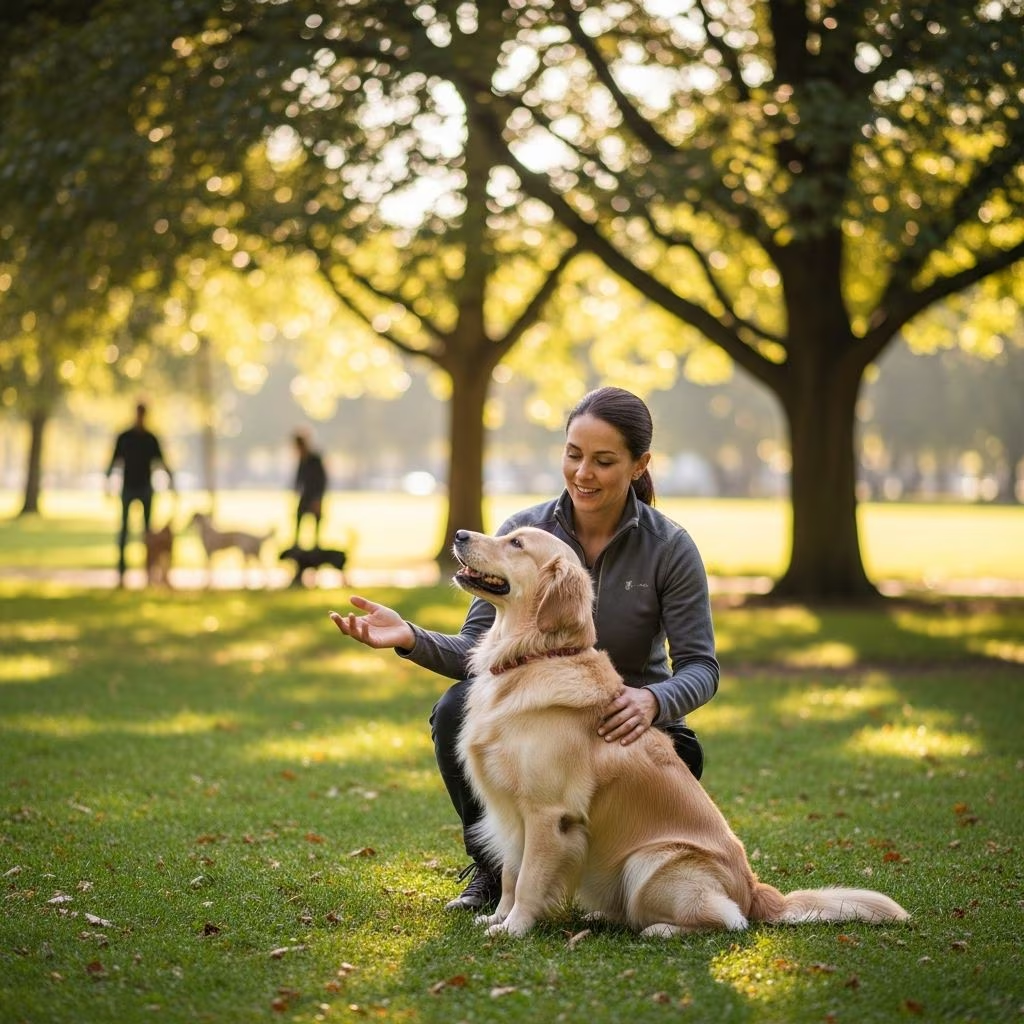
Positive reinforcement stands as the cornerstone of effective dog training, promoting desired behaviors through rewards rather than punishment. This approach not only builds reliable habits but also strengthens the bond between dog and owner over a lifetime. By consistently applying these principles, owners can ensure their dogs remain well-mannered from playful puppy days to calm senior years.
Foundations of Reward-Based Dog Training
At its core, reward-based training leverages operant conditioning, where adding a pleasant stimulus after a behavior increases its frequency. For instance, offering a treat right after a “sit” command encourages repetition. This method outperforms punishment-focused techniques by fostering enthusiasm and reducing stress in dogs.
Key elements include immediate timing, consistency, and clear cues. Owners must deliver rewards precisely when the behavior occurs to create strong associations. Short, direct commands like “sit,” “stay,” or “come” paired with upbeat tones enhance understanding.
- Timing Precision: Reward within seconds of the action to link it directly to the behavior.
- Consistency Across Sessions: Everyone in the household must use the same cues and rewards.
- Variety in Rewards: Alternate treats, toys, or praise to prevent boredom and maintain motivation.
Building Core Commands with Precision
Start with foundational skills in low-distraction environments. Use markers like clickers to pinpoint exact moments of success, followed instantly by a treat. This tool provides clearer feedback than verbal praise alone.
| Command | Purpose | Training Tip |
|---|---|---|
| Sit | Basic control | Lure with treat above nose, click when haunches lower. |
| Stay | Impulse control | Build duration gradually, reward calm holding. |
| Come | Recall safety | Practice in safe areas, use high-value rewards. |
| Leave It | Item avoidance | Cover tempting object, reward for looking away. |
Track progress by noting if behaviors occur more reliably, frequently, or quickly. If not, adjust reinforcer value or environment.
Adapting Training for Puppy Stages
Puppies thrive on frequent, short sessions. Begin with continuous reinforcement for new behaviors, then shift to intermittent schedules as proficiency grows. This mirrors natural learning patterns and prevents over-reliance on treats.
Incorporate play and social exposure early. Reward calm greetings to strangers or quiet crate time to build good habits amid high energy levels. Patience is vital; puppies test boundaries, so respond positively to successes only.
Maintaining Skills in Adult Dogs
As dogs mature, real-world application becomes crucial. Practice commands during walks, visits, or outings where distractions challenge focus. Gradually fade rewards, relying more on life rewards like continued walks for compliance.
Address emerging issues like leash pulling by reinforcing loose-leash walking. Use variable reinforcement—sometimes treat, sometimes praise—to mimic unpredictability and solidify habits.
Senior Dog Training: Refreshing Old Habits
Aging dogs may forget cues due to cognitive decline or physical changes, but reinforcement revives skills. Simplify sessions with larger treats for arthritic jaws and shorter distances for mobility-limited recalls.
Focus on comfort behaviors: rewarding gentle settling or easy access to beds. This keeps seniors mentally sharp and physically engaged, improving quality of life.
Advanced Techniques for Lifelong Engagement
Beyond basics, introduce model-rival methods where dogs observe peers succeeding at tasks. This taps social instincts, effective for complex skills like object retrieval without constant treats.
Shaping builds chains of behaviors by rewarding approximations toward goals, ideal for tricks or agility. Combine with clickers for precision.
Common Pitfalls and How to Avoid Them
- Inconsistent Responses: Reward good actions every time initially; ignore or redirect bad ones without force.
- Wrong Reinforcers: Test what excites your dog—food, play, or petting varies by individual.
- High Distractions Too Soon: Progress from quiet rooms to parks stepwise.
- Forgetting Maintenance: Daily proofing prevents regression; short bursts suffice.
Family Involvement for Unified Training
Whole-family buy-in ensures consistency. Hold training meetings to align on cues and rewards. Children can participate with supervision, using soft voices and small treats.
Track household progress in a shared journal, celebrating milestones to keep motivation high.
Tools and Resources for Success
Invest in quality clickers, treat pouches, and high-value rewards like freeze-dried liver. Apps for session timing aid consistency. Professional trainers accelerate learning, especially for reactive dogs.
Frequently Asked Questions
What if my dog ignores commands sometimes?
Return to basics in low-distraction settings, increase reward value, and ensure timing is spot-on. Consistency rebuilds reliability.
Can older dogs learn new tricks?
Yes, with adapted methods focusing on their preferences and physical limits. Mental stimulation benefits seniors greatly.
How often should I train?
Short daily sessions (5-15 minutes) multiple times a day work best, integrated into routine activities.
Is positive reinforcement suitable for all breeds?
Absolutely; it suits every temperament by tailoring rewards to the dog’s motivations.
What about aggressive behaviors?
Consult certified professionals; positive methods redirect while building calm alternatives.
Long-Term Benefits of Sustained Training
Consistent reinforcement yields safer, happier dogs less prone to shelter surrender. Owners enjoy stress-free companionship, with dogs responsive in emergencies. Over years, this investment pays dividends in mutual trust and joy.
References
- The Power of Positive Reinforcement: 5 Effective Dog Training Tips — 3 Dog Ranch MT. 2023-05-15. https://www.3dogranchmt.com/post/positive-reinforcement-tips
- Positive Reinforcement Dog Training: Understanding Operant Conditioning — American Kennel Club (AKC). 2024-02-10. https://www.akc.org/expert-advice/training/operant-conditioning-positive-reinforcement-dog-training/
- Puppy 101: Positive Reinforcement Dog Training — Small Door Veterinary. 2023-11-20. https://www.smalldoorvet.com/learning-center/puppies-kittens/positive-reinforcement-training
- How To Train a Dog With Positive Reinforcement — PetMD. 2024-01-05. https://www.petmd.com/dog/behavior/how-to-train-a-dog-with-positive-reinforcement
- Common Dog Training Methods and Their Pros and Cons — Astro Loyalty. 2023-08-12. https://www.astroloyalty.com/common-dog-training-methods-and-their-pros-and-cons/
- Using Reinforcement and Rewards to Train Your Pet — VCA Animal Hospitals. 2023-09-18. https://vcahospitals.com/know-your-pet/using-reinforcement-and-rewards-to-train-your-pet
- 6 Dos and Don’ts of Positive Reinforcement Dog Training — Ridgeside K9 Winchester. 2024-03-01. https://ridgesidek9winchester.com/6-dos-and-donts-of-positive-reinforcement-dog-training/



