

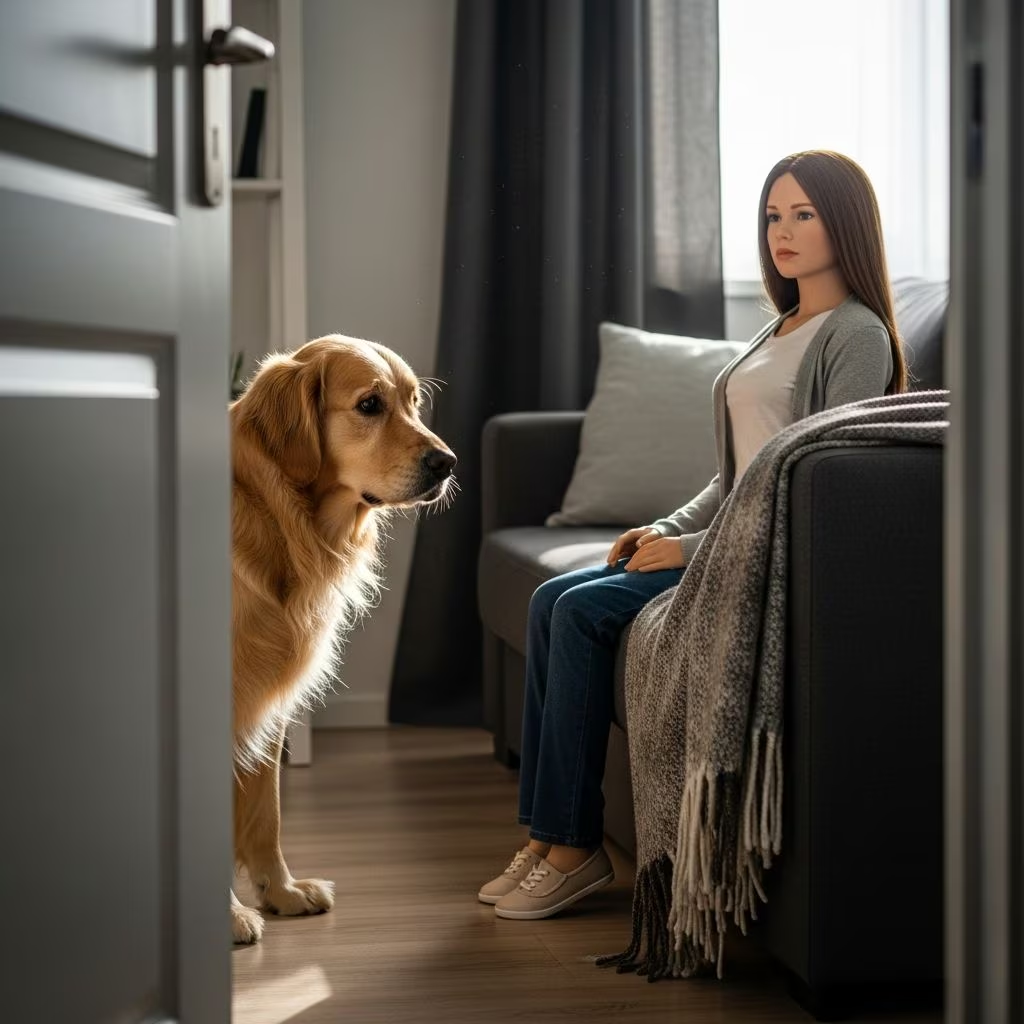
Are Life-Sized Dolls the Cure for Dog Separation Anxiety?
Life-sized, human-shaped dolls and mannequins have gone viral as a supposed quick fix for dog separation anxiety. Pet parents dress these dolls in their own clothes, prop them on the couch, and hope their dogs will feel like they are still at home. While a few heartwarming stories show dogs snuggling with dolls, animal behavior experts caution that this is not a proven cure for true separation anxiety and should never replace a comprehensive, humane treatment plan.
This article breaks down what separation anxiety really is, how dogs perceive dolls, why mannequins rarely solve the problem, and which evidence-based strategies are more likely to help your dog feel safe when left alone.
Where Did the Doll Idea Come From?
The idea of using life-sized dolls to soothe anxious dogs gained attention after a product called a human-shaped inflatable companion was featured on TV and across social media. In the pitch, the creator described using a doll dressed in his clothes to calm his dog’s distress when he left the house.
Since then, viral videos and anecdotes have shown:
- Dogs curled up next to mannequins or inflatable dolls in their guardian’s clothing.
- Owners reporting fewer destructive behaviors when the doll is present.
- Some trainers experimenting with props like mannequins as part of creative management strategies.
These stories are compelling, but they are mostly isolated anecdotes, not controlled studies. Scientific research on separation anxiety emphasizes behavior modification and, in some cases, medication, rather than props like mannequins as primary treatment tools.
Do Life-Sized Dolls Actually Work for Separation Anxiety?
According to veterinary behavior research, true canine separation anxiety is a complex panic disorder, not just simple loneliness. Dogs with this condition experience intense fear and distress when they cannot access their primary attachment figure. Common signs include:
- Vocalization (barking, howling, whining) after the owner leaves.
- Destructive behavior focused on doors or exit points.
- House soiling only when left alone.
- Pacing, drooling, or self-injury.
Because the core issue is panic about separation from a specific person, experts do not view dolls as a cure. A mannequin cannot move, interact, or respond, and it does not teach the dog that being alone is safe. It may offer some dogs comfort as a novel object or soft body to cuddle against, but that is very different from resolving an anxiety disorder.
In short:
- Some dogs might relax near a doll or mannequin.
- Most anxious dogs will not have their separation anxiety cured by a doll alone.
- Experts consider dolls, at best, a secondary comfort item, not a primary treatment.
How Dogs Really Perceive Dolls and Mannequins
It is tempting to believe your dog thinks the doll is you. However, dogs rely on a combination of scent, movement, sound, and routine cues to recognize their guardians. Research on canine perception shows that dogs can recognize humans by voice, smell, and even facial cues, but these cues are integrated dynamically, not in isolation.
When it comes to a life-sized doll:
- The doll may carry your scent if it is dressed in your worn clothing.
- Its size and shape may resemble a seated person on the couch.
- It does not move, speak, or interact, which dogs notice quickly.
Dogs are unlikely to be genuinely “fooled” into believing a doll is a living person. If they seem calmer around the doll, it is more likely because:
- The object is large and familiar-smelling.
- The dog finds it comforting to be near something shaped like a resting body.
- The doll has become part of the predictable home environment.
In other words, the doll might be a comforting object, not a convincing human stand-in.
Could Dolls Make Things Worse?
For some dogs, a life-sized doll is harmless. For others, it might be confusing or even stressful. Behavior professionals emphasize that the goal in treating separation anxiety is to help a dog learn that being alone is safe and temporary, using gradual exposure and predictable routines.
Potential downsides of relying heavily on a doll include:
- False hope for guardians: Owners may delay seeking professional help or evidence-based training if they hope the doll will solve the problem.
- Confusion for the dog: A guardian may come and go while a static “person” remains on the couch, which does not match the dog’s experience of real social interaction.
- Extended absences: Some owners might feel more comfortable leaving the dog alone for longer periods because a doll is present, even though the dog still needs human care and breaks.
Experts warn that any tool that distracts from proper assessment and treatment can ultimately prolong a dog’s suffering. If a dog is experiencing severe distress, it deserves a structured, humane plan—not a single prop marketed as a miracle cure.
Evidence-Based Approaches to Separation Anxiety
Current guidelines from veterinary behavior organizations describe separation anxiety as a condition best managed with a combination of behavior modification, environmental management, and sometimes medication or supplements.
| Approach | Main Goal | Typical Tools |
|---|---|---|
| Behavior modification | Change emotional response to being alone | Gradual departures, desensitization, counterconditioning |
| Environmental management | Make alone time feel safe and predictable | Routine, safe space, enrichment, departure cues |
| Medication/supplements | Reduce underlying anxiety | Prescription meds, pheromones, selected nutraceuticals |
Create a Reliable Routine
Dogs are comforted by predictability. A consistent routine can reduce overall stress and help them understand what to expect each day. Helpful routine elements include:
- Regular feeding times, walks, and play periods.
- Predictable departure and return windows, as much as your schedule allows.
- Calm, low-key exits and arrivals, avoiding big emotional scenes.
This reliability tells your dog, over time, that you always come back.
Start Slowly and Build Up Alone Time
Gradual exposure, often called systematic desensitization, is a cornerstone of separation anxiety treatment. The idea is to expose your dog only to situations they can handle without panicking, then slowly increase the difficulty.
A structured approach might include:
- Practicing very short departures (even just stepping outside for a few seconds) while monitoring your dog’s reaction.
- Returning before your dog becomes distressed, so they only experience successful, calm repetitions.
- Gradually extending the time away as long as your dog stays relaxed.
- Keeping departures and arrivals quiet and routine to avoid increasing arousal.
This process can take weeks or months, and severely affected dogs often do best under guidance from a certified behavior professional or veterinary behaviorist.
Use Comfort Items and Enrichment
While dolls are not core treatment tools, comfort items and enrichment can play a helpful supporting role in a broader plan. Examples include:
- Soft bedding and a familiar resting spot.
- Clothing or blankets that carry your scent.
- Food puzzles, long-lasting chews, or sniff-based games to occupy your dog.
- Background sound, such as soft music or a talk radio station, if your dog finds it soothing.
A doll can sometimes fit into this category—similar to a large stuffed body pillow—if your dog genuinely enjoys its presence. It should be seen as optional enrichment, not a substitute for training or human company.
Consider Supplements and Medication
For many dogs with moderate to severe separation anxiety, behavior modification alone is not enough. Veterinary guidelines note that anti-anxiety medications and certain supplements can make training more effective by lowering baseline fear and arousal.
Common options include:
- Prescription medications such as SSRIs or other anxiolytics, prescribed and monitored by a veterinarian or veterinary behaviorist.
- Behavioral supplements formulated with ingredients like L-theanine or alpha-casozepine, which have some evidence of calming effects in dogs.
- Pheromone products (e.g., synthetic dog appeasing pheromone) that can support relaxation for some individuals.
Any medication or supplement plan should be discussed with your veterinarian, as medical conditions, other medications, and individual health factors must be considered.
Where (If at All) a Doll Might Fit In
If you are curious about trying a life-sized doll and your dog is not terrified by unfamiliar objects, it is generally safe to treat it as an experiment in comfort, not a guaranteed solution. To use a doll in a thoughtful way:
- Introduce the doll gradually while you are home, allowing your dog to sniff and investigate at their own pace.
- Dress the doll in clothing that smells like you if your dog likes your scent.
- Observe whether your dog chooses to rest near the doll or avoids it.
- Continue pursuing a full separation anxiety plan regardless of the doll’s presence.
Even if your dog appears calmer with the doll, it is important not to:
- Leave your dog alone for much longer periods simply because the doll is present.
- Stop or delay consultation with a trainer, behaviorist, or veterinarian.
- Ignore signs of ongoing distress such as barking, pacing, or destruction.
Think of the doll as a novel comfort object—potentially cute and sometimes helpful, but never a replacement for informed care.
When to Seek Professional Help
If your dog shows persistent signs of distress when left alone, professional guidance is strongly recommended. Veterinary and behavior organizations emphasize that early intervention can prevent worsening anxiety and improve welfare.
Consider contacting a professional if:
- Your dog shows intense panic (howling, destruction, self-injury) when you leave.
- You cannot safely extend absence time without triggering anxiety.
- DIY strategies, including comfort items or dolls, have not significantly improved the situation.
Helpful professionals may include:
- Your primary veterinarian, to rule out medical causes and discuss medication or referrals.
- Veterinary behaviorists, who specialize in complex anxiety disorders.
- Certified canine behavior consultants or positive reinforcement trainers experienced in separation anxiety protocols.
Frequently Asked Questions (FAQs)
Q: Can a life-sized doll cure my dog’s separation anxiety?
A: No. A doll cannot cure true separation anxiety, which is a panic-based condition about being separated from a specific person. At most, a doll might provide some dogs with extra comfort, but it does not replace behavior modification or professional care.
Q: Does my dog think the doll is actually me?
A: Unlikely. Dogs use movement, sound, routine, and scent together to recognize people. A doll may smell like you and be roughly your size, but it does not interact, and most dogs will quickly recognize it as an inanimate object.
Q: Is it safe to use a doll as part of my dog’s routine?
A: It is generally safe if your dog is not afraid of it and cannot ingest parts of the doll. Treat it like a large toy or cushion. Monitor your dog at first to ensure they do not chew or tear off pieces that could be swallowed.
Q: What should I try before buying a doll?
A: Focus first on established strategies: create a predictable routine, gradually build alone time, use enrichment, and consult a veterinarian or qualified trainer if anxiety is significant. These approaches have far stronger evidence of success than dolls or mannequins.
Q: When are medication or supplements necessary?
A: When a dog’s anxiety is so intense that they cannot stay under threshold long enough to learn, veterinarians may prescribe anti-anxiety medications or recommend specific calming supplements and pheromone products. These tools are used alongside, not instead of, behavior modification.
References
- Treating Separation Anxiety in Dogs — American Veterinary Medical Association. 2023-05-10. https://www.avma.org/resources/pet-owners/petcare/separation-anxiety-dogs
- Dogs recognize their owners’ faces — Anna Huber et al., Animal Cognition (Springer). 2013-07-01. https://link.springer.com/article/10.1007/s10071-013-0620-4
- Behavior Problems of Dogs: Separation Anxiety — American College of Veterinary Behaviorists. 2022-09-15. https://www.dacvb.org/page/SeparationAnxiety
- Dogs’ responses to human vocal and olfactory social cues — Department of Ethology, Eötvös Loránd University. 2019-11-20. https://ttk.elte.hu/en/content/dogs-recognize-their-owners-by-voice-and-smell.t.2418
- How to Choose a Dog Trainer — American Kennel Club. 2022-03-30. https://www.akc.org/expert-advice/training/how-to-choose-a-dog-trainer/



