

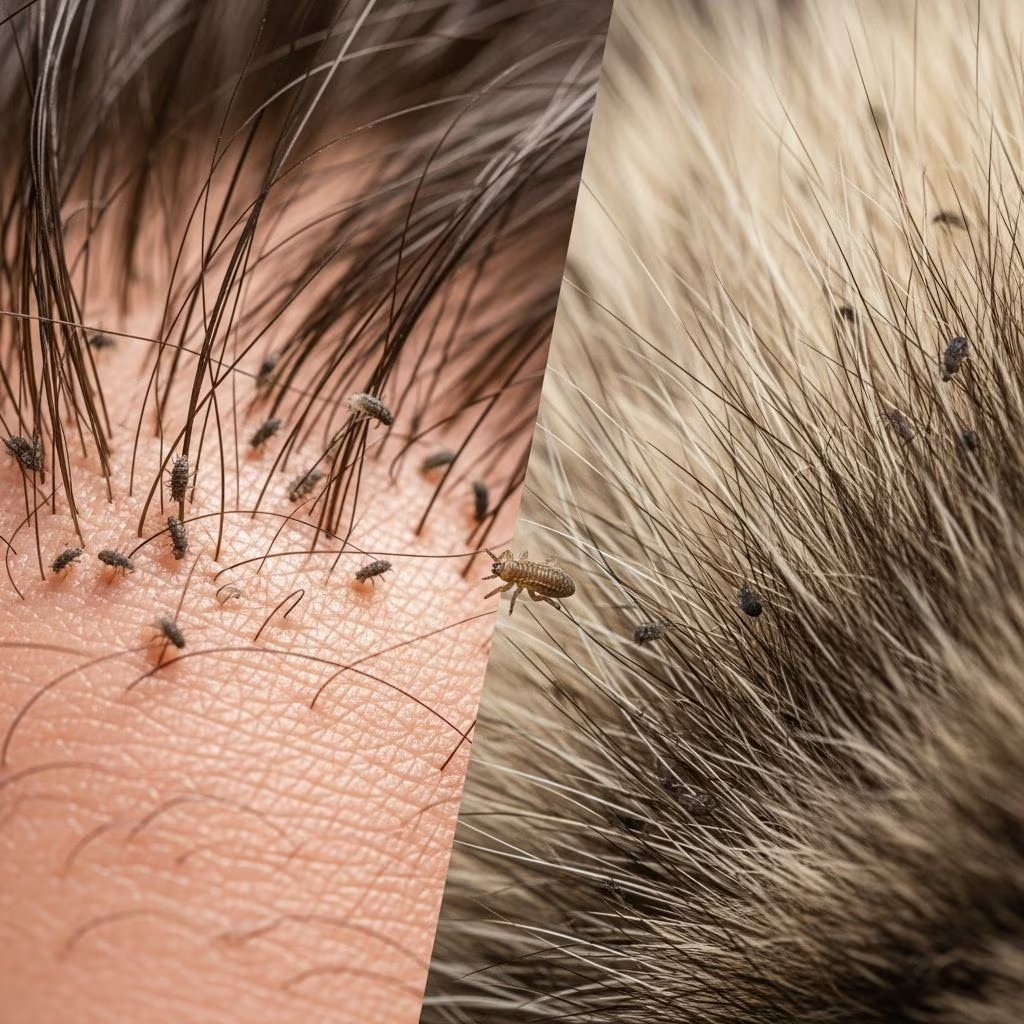
Human head lice and those affecting pets belong to distinct species that cannot survive on alternative hosts, eliminating the risk of transmission between people and animals.
Understanding the Biology of Lice Parasites
Lice are obligate parasites, relying entirely on their hosts for survival. Human head lice, scientifically named Pediculus humanus capitis, thrive exclusively on the human scalp, feeding on blood and laying eggs known as nits that adhere firmly to hair shafts. These insects measure about 2-3 mm in length, resembling sesame seeds, and lack the ability to jump or fly, moving only by crawling.
In contrast, lice on pets have evolved to match the physiology of their specific animal hosts. Dogs suffer from species like Trichodectes canis and Linognathus setosus, while cats host Felicola subrostrata. These parasites adapt to fur texture, body temperature, and blood chemistry unique to canines or felines, rendering human environments lethal.
This host specificity arises from evolutionary adaptations. A human louse transferred to a pet’s fur would desiccate or starve within hours due to incompatible conditions, unable to feed or reproduce. Similarly, pet lice perish quickly on human skin.
Debunking Persistent Myths About Cross-Species Spread
A widespread misconception equates lice with fleas or ticks, which can jump species. Unlike those arthropods, lice remain firmly non-zoonotic, confined to their natural hosts. Families often suspect pets during outbreaks because cuddling or sharing spaces coincides with human infestations, but correlation does not imply causation.
Another myth claims lice can ‘hide’ on pets indefinitely. In reality, any brief contact results in rapid louse death, preventing harboring or retransmission. Even if a louse lands on fur momentarily and crawls back to a human, this scenario is improbable given their limited mobility.
- Myth: Pets act as vectors for human lice outbreaks.
- Fact: Human lice require constant human blood access; pets provide none.
- Myth: All household lice problems involve animals.
- Fact: Infestations stem solely from human-to-human contact routes.
- Myth: Pet grooming prevents family lice.
- Fact: Grooming addresses pet-specific issues only, irrelevant to human lice.
How Human Head Lice Actually Spread
Transmission occurs primarily through direct head-to-head contact, common in schools, playgrounds, or family settings where children huddle closely. Lice crawl rapidly from one scalp to another during such proximity.
Indirect spread happens via shared items:
- Hair brushes, combs, or clips harboring nits or live lice.
- Hats, helmets, or scarves worn by infested individuals.
- Towels, pillows, or bedding, though lice survive off-host for only 1-2 days.
Public health authorities emphasize that pets play no role in these pathways.
Recognizing and Managing Lice on Pets
While irrelevant to human health, pet lice demand attention for animal welfare. Signs include intense itching, fur loss, visible crawling insects, or clustered nits near the skin.
| Host | Lice Species | Key Symptoms | Transmission Risk to Humans |
|---|---|---|---|
| Humans | Pediculus humanus capitis | Itching, nits on hair shafts | None to pets |
| Dogs | Trichodectes canis, etc. | Scratching, dandruff-like debris | None |
| Cats | Felicola subrostrata | Biting at fur, restlessness | None |
Treatment for pets involves veterinary-prescribed topical insecticides, medicated shampoos, or oral agents, combined with thorough environmental cleaning like washing bedding. Isolation prevents spread to other animals of the same species.
Prevention Strategies for Human Lice in Pet-Owning Homes
Focus efforts on human behaviors:
- Educate on contact: Discourage head-sharing during play or sports.
- Item hygiene: Avoid sharing brushes, hats, or accessories; clean weekly with hot water.
- Regular checks: Weekly scalp inspections, especially for school-aged kids.
- Environmental sanitation: Vacuum furniture and launder fabrics at 130°F+ to kill stray lice.
Pet care remains separate: routine grooming and flea preventives indirectly support hygiene but do not impact human lice.
Step-by-Step Guide to Treating Human Head Lice
1. Confirm infestation: Part hair to spot nits (white, oval, cemented to shafts) or lice (grayish, moving).
2. Over-the-counter remedies: Apply permethrin or pyrethrin lotions, following labels precisely. Repeat after 7-10 days to target hatching nits.
3. Manual removal: Use fine-tooth combs post-treatment, soaked in vinegar or conditioner for easier nit detachment.
4. Household measures: Machine-wash all fabrics; seal non-washables in bags for 2 weeks.
Resistant cases warrant professional nit-picking services or prescription ivermectin.
Special Considerations for Multi-Pet Households
In homes with dogs and cats, treat all animals simultaneously if one shows signs, as same-species lice can spread within groups. Humans need not alter interactions, as no crossover exists. Monitor birds or exotic pets similarly, noting their lice also remain host-bound.
Frequently Asked Questions
Can my dog give me head lice?
No. Dog lice cannot survive on human scalps due to biological incompatibilities.
Should I treat my cat during a family lice outbreak?
No routine treatment needed unless the cat displays its own lice symptoms like excessive grooming.
How long can lice live away from a human host?
Up to 48 hours, insufficient for pet-mediated spread.
Are lice on pets contagious to other pets?
Only within the same species; dog lice won’t affect cats.
What’s the best way to check for lice on children?
Use bright light and magnifier on dry hair first, then wet comb through sections.
Long-Term Household Protection Plan
Implement ongoing protocols: monthly family head checks, pet vet exams, and education on myths. Schools and daycares benefit from awareness campaigns to curb outbreaks at the source.
By separating human and pet parasite concerns, families avoid unnecessary pet blame or treatments, fostering healthier coexistence.
References
- About Lice – CDC — Centers for Disease Control and Prevention. 2023. https://www.cdc.gov/lice/about/index.html
- Can Pets Spread Head Lice? Debunking the Myths and Facts — LiceDoctors. 2024. https://www.licedoctors.com/blog/does-head-lice-spread-through-pets
- Do Pets Spread Lice? — Medical Associates of Northwest Arkansas. 2023. https://mana.md/do-pets-spread-lice/
- Can Pets Get Lice? Facts, Myths, Prevention & Treatment — Lice Clinics of America. 2024. https://www.liceclinicsofamerica.com/can-pets-get-lice-facts-myths-and-care-guidelines/
- Can pets get lice from humans? — Lice Clinics Upstate NY / Merck Vet Manual reference. 2023. https://liceclinicsupstateny.com/can-pets-get-lice/
- Human Lice — Penn State Extension. 2022. https://extension.psu.edu/human-lice/



