

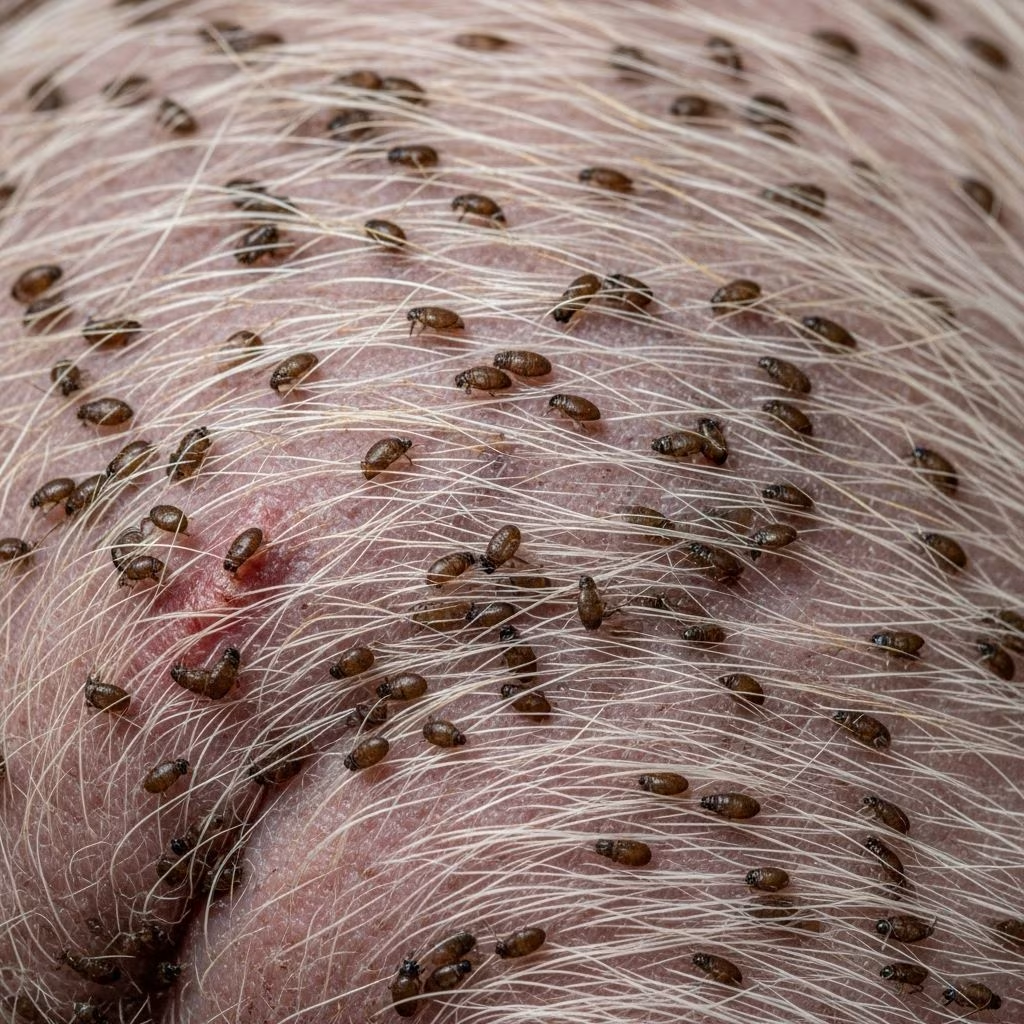
Lice infestations represent a significant parasitic challenge in pig farming, primarily caused by the blood-sucking louse Haematopinus suis. These external parasites attach to the skin, feeding on blood and triggering intense irritation that affects pigs of all ages. Early detection and intervention are crucial to prevent economic losses from reduced growth, anemia, and secondary infections.
Biology and Life Cycle of Porcine Lice
The swine louse, Haematopinus suis, is a species-specific parasite that completes its entire life cycle on the host pig. Adults are large, visible insects measuring up to 3/4 inch when engorged, with a teardrop-shaped body, eight legs, and no antennae. Females lay eggs (nits) that adhere firmly to hairs, hatching into nymphs that molt three times before reaching adulthood. The direct life cycle, without environmental stages, means all lice stages remain on the pig.
This cycle typically spans 2-3 weeks under optimal conditions. Nits are resistant to many treatments, necessitating repeat applications spaced 10-14 days apart to target newly hatched nymphs. Lice thrive in hidden body areas like behind ears, neck folds, flanks, and inner legs, where they are harder to detect.
Recognizing Signs of Lice Infestation
Pigs affected by lice exhibit pronounced behavioral changes due to pruritus (intense itching). Common signs include vigorous rubbing against fences, walls, or pen mates, leading to hair loss, skin abrasions, and sores. In heavy infestations, constant irritation disrupts feeding, resulting in stunted growth and weight loss.
- Rubbing and scratching: Pigs rub head, ears, neck, and back relentlessly.
- Skin changes: Reddened patches, alopecia (hair loss), and rough, scaly skin.
- Visible parasites: Large, dark lice or nits on hairs, especially in concealed spots.
- Systemic effects: Anemia in severe cases, shown by pale skin, lethargy, and poor performance.
Young growing pigs (8-12 weeks) and outdoor herds are particularly vulnerable, with infestations worsening in winter due to close contact.
Health Impacts and Economic Consequences
Beyond discomfort, lice cause blood loss, potentially leading to clinically apparent anemia in heavily infested animals. This reduces feed efficiency and daily gains, impacting profitability. Secondary issues include bacterial infections from self-trauma and transmission of diseases like swinepox.
In breeding herds, untreated lice lower sow productivity and piglet viability. Hide damage from rubbing results in slaughter downgrades, with skin lesions resembling measles in extreme cases. Overall, infestations can cut herd productivity by 10-20% if unmanaged.
| Severity | Clinical Signs | Production Impact |
|---|---|---|
| Mild | Occasional rubbing, few lice visible | Minimal growth reduction |
| Moderate | Frequent rubbing, hair loss, anemia signs | 5-10% feed intake drop |
| Severe | Constant irritation, sores, pale pigs | 20%+ growth loss, hide damage |
Accurate Diagnosis Methods
Diagnosis starts with visual inspection, parting hair in high-risk areas like ears, neck, and flanks to spot lice or nits. Haematopinus suis is unmistakable due to its size and shape. Differentiate from mites by lice’s mobility and lack of burrowing; mites cause more papular rashes.
Microscopic confirmation may be needed for nits. Check for anemia via packed cell volume tests in severe cases. History of rubbing, poor growth, and outdoor exposure supports lice suspicion.
Effective Treatment Strategies
Treatment targets all life stages, with repeat dosing essential due to nit resistance. Injectable avermectins like ivermectin and doramectin are highly effective, killing lice and other parasites.
- Ivermectin (e.g., Ivomec): Injectable or in-feed; repeat in 10-14 days. Short-acting but potent.
- Doramectin (e.g., Dectomax): Longer duration, less injection pain; ideal for chronic cases.
- Topicals: Pyrethroids, phosmet, or amitraz sprays/pour-ons for near-slaughter pigs (short withdrawal).
Administer whole-herd treatments to prevent re-infestation. For growers, in-feed ivermectin post-weaning works well.
| Product Type | Examples | Dosage Notes | Withdrawal Period |
|---|---|---|---|
| Injectable Avermectins | Ivermectin, Doramectin | Single dose, repeat 10-14 days | 18-35 days |
| Topical Acaricides | Phosmet, Amitraz | Spray/pour-on, repeat if needed | 3-7 days |
| Dusts/Powders | Carbaryl, Pyrethrins | Apply to dry coat | Varies |
Always follow label instructions and regional approvals; consult vets for resistance concerns.
Prevention and Control Programs
Herd-wide eradication demands integrated strategies. Quarantine new pigs for 2-3 weeks, inspecting thoroughly. Treat all incoming stock.
- All-in-all-out systems: Clean and disinfect pens between batches.
- Environmental management: Wash concrete/wood surfaces, dry thoroughly to kill off-host lice.
- Routine treatments: Twice-yearly for breeders; post-weaning for growers.
- Monitoring: Weekly checks in high-risk seasons.
Avoid overcrowding and ensure good ventilation to reduce stress susceptibility.
Distinguishing Lice from Other Ectoparasites
Lice differ from mange mites (sarcoptic, demodectic), ticks, and fleas:
- Mites: Burrow, cause papules/crusts; ears shake violently.
- Ticks: Larger, engorge massively; transmit diseases but less itchy.
- Fleas: Jump, smaller; rare in pigs.
Co-infestations occur; broad-spectrum treatments cover multiple parasites.
Frequently Asked Questions (FAQs)
Can pig lice affect humans or other animals?
No, Haematopinus suis is host-specific to swine and cannot survive on humans or other species.
How soon after treatment can pigs be slaughtered?
Depends on product: 3 days for some topicals, up to 35 days for injectables. Check labels.
Why repeat treatments for lice?
Nits hatch post-treatment; second dose kills nymphs, breaking the cycle.
Are lice more common in indoor or outdoor pigs?
Both, but outdoor/hairy breeds face higher risk due to environmental persistence.
What if treatments fail?
Possible resistance; rotate classes (e.g., avermectins to pyrethroids) and improve hygiene.
Long-Term Herd Management for Parasite-Free Pigs
Sustainable control integrates biosecurity, vigilant monitoring, and timely interventions. Regular vet audits and record-keeping track infestation trends. Educating farm staff on early signs ensures rapid response. By prioritizing lice management, producers enhance animal welfare, boost growth rates, and minimize costs—key to thriving swine operations.
Implementing strategic deworming calendars, combined with nutritional support for immunity, fortifies herds against parasites. Research continues on novel insecticides, but current tools suffice with proper use.
References
- Sucking lice: Haematopinus suis – Learn About Parasites — Western College of Veterinary Medicine, University of Saskatchewan. 2023. https://wcvm.usask.ca/learnaboutparasites/parasites/sucking-lice-haematopinus-suis.php
- Mange and Lice – NADIS — National Animal Disease Information Service. 2024. https://www.nadis.org.uk/disease-a-z/pigs/mange-and-lice/
- Identifying Swine Lice, Ticks, and Fleas — American Mini Pig Association. 2023. https://americanminipigassociation.com/identifying-swine-lice-ticks-fleas/
- Lice – Swine Diseases — University of Minnesota Libraries Publishing. 2022. https://open.lib.umn.edu/swinedisease/chapter/lice/
- Controlling and Eliminating Mange Mite Infections in Pigs — Michigan State University Extension. 2024. https://www.canr.msu.edu/news/controlling-and-eliminating-mange-mite-infections-in-pigs
- Lice in Pigs – Integumentary System – Merck Veterinary Manual — Merck & Co., Inc. 2025. https://www.merckvetmanual.com/integumentary-system/lice/lice-in-pigs



