

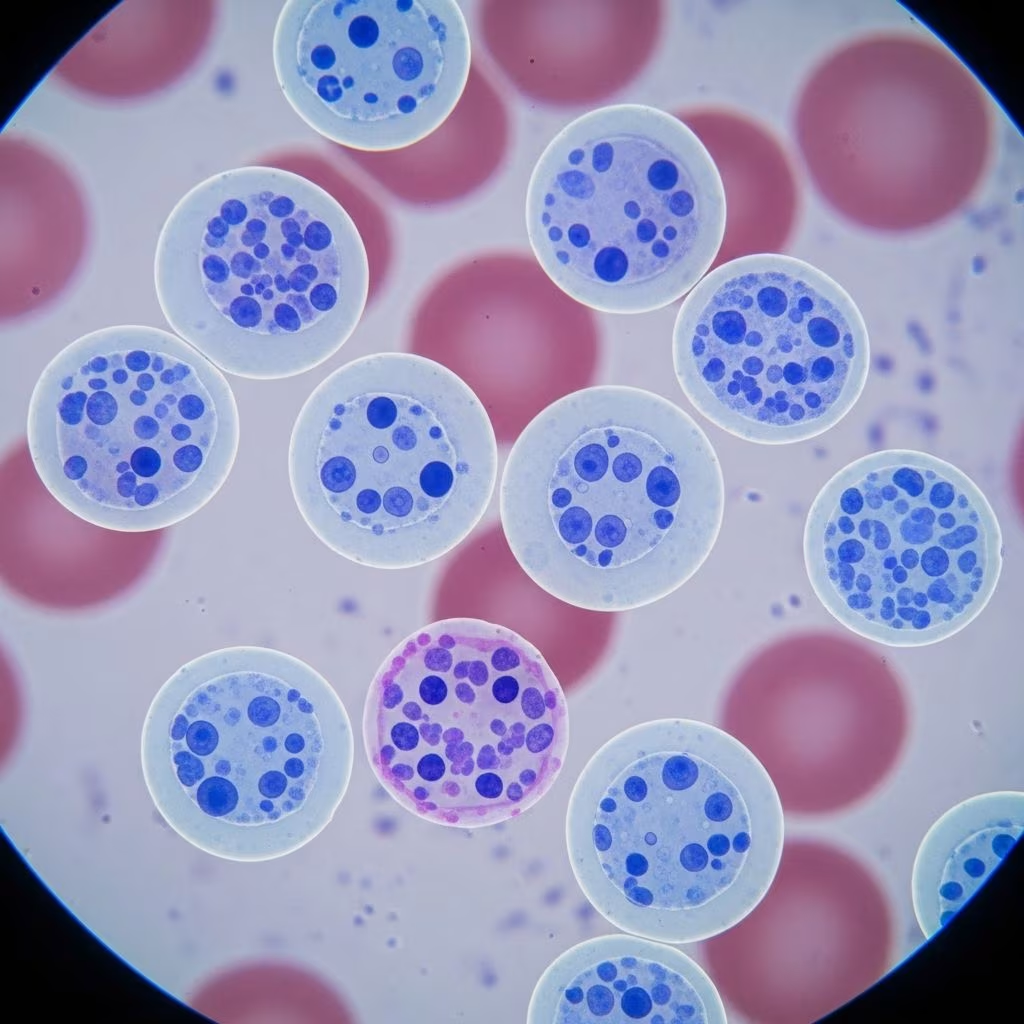
White blood cells, or leukocytes, form the cornerstone of the animal immune system, circulating through the bloodstream to detect and neutralize threats like pathogens and abnormal cells. These dynamic cells vary in type, function, and concentration across species, influencing how veterinarians interpret blood work and manage diseases.
Overview of Leukocyte Biology
Leukocytes originate primarily from bone marrow stem cells and migrate into circulation or tissues as needed. Their numbers and proportions shift in response to infections, stress, or inflammation, providing critical diagnostic clues. In mammals, typical total leukocyte counts range widely; for instance, larger felids exhibit elevated levels compared to smaller counterparts, potentially linked to dietary and environmental exposures.
Unlike red blood cells, leukocytes actively patrol the body, with lifespans from hours to years depending on type and activation state. Species differences are notable: birds and reptiles feature heterophils instead of neutrophils, which perform analogous roles but with distinct granule staining.
Granulocytic Leukocytes: Frontline Defenders
Granulocytes, characterized by cytoplasmic granules, dominate acute inflammatory responses. They include neutrophils (or heterophils in some species), eosinophils, and basophils.
Neutrophils and Heterophils
Neutrophils constitute 50-70% of leukocytes in most mammals, excelling in phagocytosis of bacteria and fungi. They undergo a multi-step process: chemotaxis to infection sites, adherence to targets, engulfment, lysosomal fusion, and microbial destruction. In felids, larger species like lions show higher neutrophil counts, possibly due to prolonged contact with decaying prey harboring pathogens.
Heterophils in rabbits, guinea pigs, birds, and reptiles mirror neutrophils functionally but appear eosinophilic under microscopy, complicating differentiation from true eosinophils.
Eosinophils
Eosinophils target multicellular parasites and modulate allergies, releasing granules rich in major basic protein upon stimulation by histamine or immune complexes. In equines, they surge during parasitic infestations, aiding veterinarians in pinpointing helminth burdens.
Basophils
The rarest granulocytes, basophils release histamine and support immediate hypersensitivity reactions, akin to mast cells. Their scarcity in circulation belies their potency in allergic cascades.
Agranulocytes: Adaptive Immunity Orchestrators
Agranulocytes lack prominent granules and include monocytes and lymphocytes, bridging innate and adaptive defenses.
Monocytes and Macrophages
Monocytes, comprising 2-10% of leukocytes, differentiate into macrophages or dendritic cells in tissues. They phagocytose larger particles, present antigens to lymphocytes, and secrete cytokines like IL-1 to trigger fever and hematopoiesis. Big cats display monocyte elevations, correlating with risks from protozoal contaminants in kills.
Lymphocytes: Specificity and Memory
Lymphocytes, 20-50% of total, drive long-term immunity. B cells mature into plasma cells producing antibodies; T cells handle cellular threats via cytotoxicity or helper functions; natural killer cells target tumors and virally infected cells.
In felids, smaller species have higher lymphocyte proportions, while larger ones favor neutrophils, reflecting divergent pathogen pressures.
Species-Specific Variations in Leukocyte Profiles
Leukocyte compositions differ markedly by taxon, impacting reference ranges.
| Species Group | Dominant Leukocyte | Key Variation | Clinical Note |
|---|---|---|---|
| Mammals (e.g., dogs, horses) | Neutrophils | 50-70% neutrophils | Stress leukograms common |
| Felids (large vs. small) | Neutrophils (large) | Large: high neut/mono, low lymph | Diet-influenced ratios |
| Birds/Reptiles | Heterophils | Eosinophil-like granules | Distinguish from eosinophils |
| Rabbits/Guinea Pigs | Heterophils | Analogous to neutrophils | Cytologic challenges |
Larger body mass correlates with higher total leukocytes and neutrophil/lymphocyte ratios in felids, underscoring evolutionary adaptations.
Leukocyte Functions in Depth
- Phagocytosis: Neutrophils and monocytes engulf invaders via chemotaxis, opsonization-enhanced attachment, pseudopod formation, and digestive enzyme deployment.
- Antigen Presentation: Monocytes process and display peptides on MHC molecules, activating T cells.
- Humoral Immunity: B lymphocytes secrete immunoglobulins targeting extracellular pathogens.
- Cellular Immunity: T cells proliferate upon antigen recognition, releasing lymphokines to recruit phagocytes.
- Hypersensitivity Modulation: Eosinophils and basophils amplify type I and II reactions.
In platelet-rich plasma therapies, leukocytes like eosinophils contribute growth factors (VEGF, PDGF) for tissue regeneration.
Diagnostic Applications of Leukocyte Counts
Complete blood counts (CBCs) reveal leukocyte abnormalities signaling disease. Leukocytosis with neutrophilia indicates bacterial infection; lymphocytosis suggests viral or chronic issues; eosinophilia points to parasites.
Left shifts (band neutrophils) denote acute inflammation. In equines, WBC panels monitor colic or endotoxemia. Felid zoo vets use body mass-adjusted baselines for rare species.
Pathophysiology and Disorders
Leukocyte dysfunction underlies immunodeficiencies, leukemias, and hypersensitivities. Cyclic neutropenia in grey collies exemplifies genetic flaws; chronic lymphocytic leukemia burdens elderly dogs.
Glucocorticoids induce lymphopenia and neutrophilia via redistribution. Accurate interpretation requires species norms and history.
Advances in Leukocyte Research
Recent studies link body size to immunity: felid analyses show large predators’ leukocyte profiles suit carrion risks. Equine research emphasizes WBC roles in laminitis and strangles.
FAQs
What are the main types of white blood cells in animals?
Neutrophils, lymphocytes, monocytes, eosinophils, and basophils (or heterophils in some species).
How do leukocyte counts vary between large and small cats?
Large cats have more neutrophils and monocytes, fewer lymphocytes, linked to prey size and decay.
What causes elevated eosinophils in horses?
Parasitic infections or allergies.
Why are heterophils important in avian medicine?
They function like neutrophils but stain differently, key for infection diagnosis.
Can leukocytes aid in regenerative therapies?
Yes, via growth factors in PRP.
Practical Veterinary Insights
Veterinarians should use automated counters judiciously, confirming with cytology for heterophils or bands. Serial CBCs track therapy efficacy. Understanding interspecies norms prevents misdiagnosis.
References
- Size Matters: Zoo Data Analysis Shows that the White Blood Cell Composition in Felids Depends on Body Mass — PMC. 2020-07-15. https://pmc.ncbi.nlm.nih.gov/articles/PMC7341519/
- White Blood Cells in Horses: Function and Immune Response — Mad Barn Equine Research Bank. 2023. https://madbarn.com/research-topics/white-blood-cells/
- White Blood Cells in Animals — Merck Veterinary Manual. 2023-05-01. https://www.merckvetmanual.com/circulatory-system/hematopoietic-system-introduction/white-blood-cells-in-animals
- Roles of White & Red Blood Cells in PRP — Companion Animal Health Publications. 2022-10-12. https://publications.companionanimalhealth.com/blog/what-are-the-roles-of-white-blood-cells-and-should-they-be-included-in-prpprp
- Physiology of Leukocytes in Animals — Merck Veterinary Manual. 2023-05-01. https://www.merckvetmanual.com/circulatory-system/leukocyte-disorders/physiology-of-leukocytes-in-animals
- White blood cells – Morphologic features — eClinpath. 2022. https://eclinpath.com/hematology/morphologic-features/white-blood-cells/
- Haematology 101: Why a manual white blood cell count is important — Veterinary Internal Medicine Nursing. 2021-08-20. https://www.veterinaryinternalmedicinenursing.com/blog/white-blood-cells



