

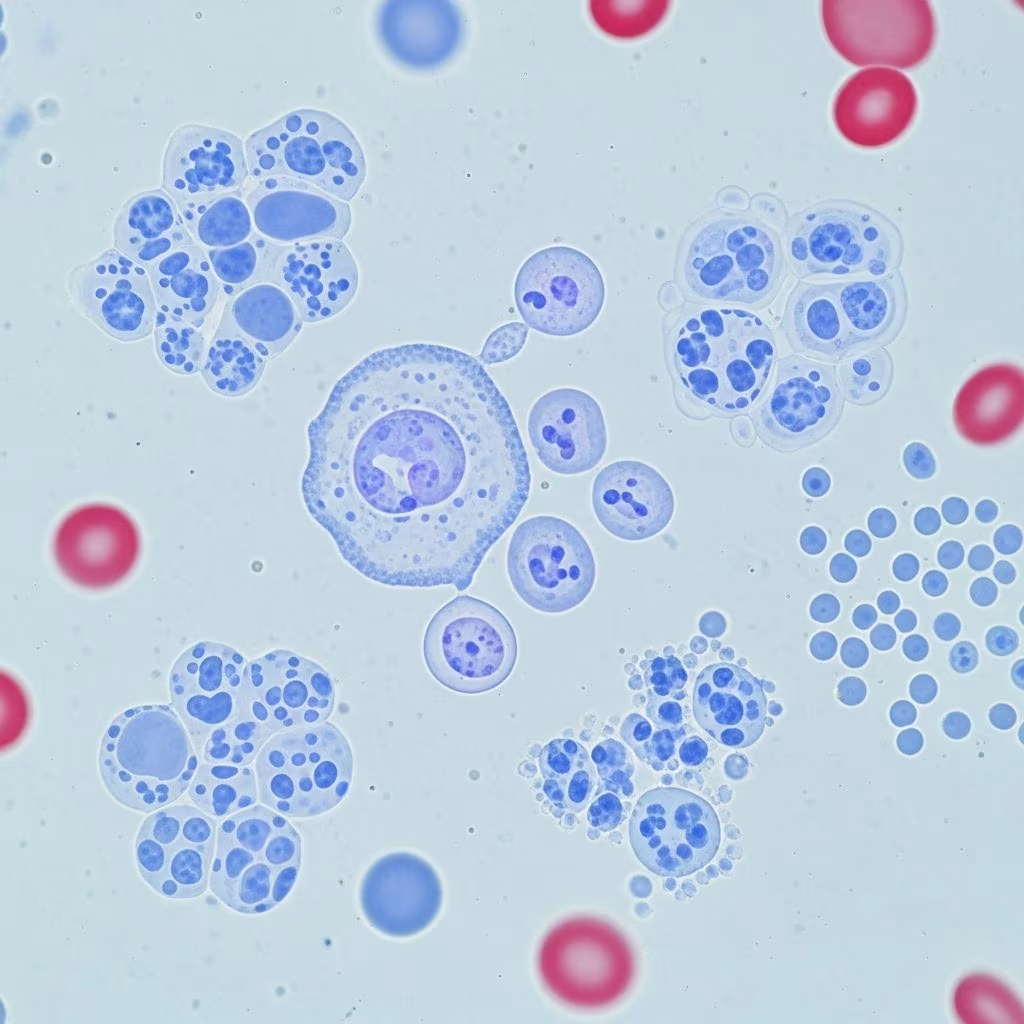
White blood cells, or leukocytes, play a critical role in an animal’s immune defense system. Disorders involving these cells manifest as changes in their numbers or morphology in the bloodstream, known collectively as leukogram abnormalities. These shifts provide veterinarians with vital clues about underlying inflammation, infection, stress, or malignancy. Common patterns include increases (leukocytosis) or decreases (leukopenia) in total leukocyte counts, alongside alterations in specific cell types like neutrophils, lymphocytes, monocytes, and eosinophils.
Fundamentals of the Leukogram
The leukogram is a component of the complete blood count (CBC) that evaluates leukocyte quantity and quality. Normal total leukocyte ranges vary by species: dogs typically have 6,000–17,000/μL, while cats range from 5,500–19,500/μL. Deviations signal physiological responses or pathology. For instance, neutrophilia often indicates acute inflammation, whereas lymphopenia frequently points to stress or viral challenges.
- Neutrophils: Primary responders to bacterial infections and tissue damage.
- Lymphocytes: Key in adaptive immunity; elevations suggest viral issues or leukemia.
- Monocytes: Involved in chronic inflammation.
- Eosinophils: Associated with parasites and allergies.
Increases in White Blood Cell Counts: Leukocytosis Patterns
Leukocytosis refers to elevated total WBC counts and can stem from physiologic, inflammatory, or neoplastic causes. Physiologic leukocytosis occurs without disease, often due to excitement or epinephrine release, featuring transient neutrophilia without left shifts or toxicity.
Stress or Corticosteroid Effects
One of the most frequent leukogram changes is the corticosteroid-induced pattern, triggered by endogenous glucocorticoids from stress or exogenous administration. It characteristically shows mature neutrophilia, lymphopenia, eosinopenia, and monocytosis (more consistent in dogs). This peaks 4–12 hours post-exposure and reflects lymphocyte redistribution and apoptosis, neutrophil demargination, and eosinophil sequestration.
In dogs and cats, this “stress leukogram” aids in distinguishing stress from primary inflammation, as toxic changes or immature neutrophils are absent.
Inflammatory Neutrophilia
Neutrophilia with a left shift (presence of band neutrophils) and toxic granulation signals acute inflammation, such as bacterial infections or tissue necrosis. Severe cases, termed leukemoid reactions, mimic leukemia with WBC counts exceeding 50,000/μL in dogs or 30,000/μL in cats. Causes include pyometra, abscesses, or paraneoplastic syndromes from tumors producing colony-stimulating factors.
| Condition | Typical WBC Count | Species Affected | Key Features |
|---|---|---|---|
| Pyometra | Up to 100,000/μL | Dogs | Neutrophilia, left shift |
| Abscess/Foreign Body | 30,000–70,000/μL | Dogs, Cats | Toxic neutrophils |
| Hepatozoon canis | >50,000/μL | Dogs | Extreme neutrophilia |
Decreases in White Blood Cell Counts: Leukopenia and Specific Deficiencies
Leukopenia indicates reduced WBCs, often with neutropenia as the earliest sign due to neutrophils’ short lifespan. Causes range from bone marrow suppression to overwhelming sepsis.
Neutropenia Dynamics
Neutropenia arises from decreased production, increased consumption, or sequestration. Mild cases (<3,000/μL) may be subclinical, but severe ones predispose to infections. Cyclic neutropenia in grey collies is genetic, while parvovirus in dogs or panleukopenia in cats causes profound drops via intestinal loss and marrow damage.
Lymphopenia Insights
Lymphopenia, the most common isolated abnormality, primarily results from glucocorticoid effects causing lymphocyte apoptosis. Other etiologies include chylothorax (lymph loss), viral infections targeting lymphocytes (e.g., distemper, FeLV), or immunodeficiencies like combined immunodeficiency in foals.
Lymphoproliferative Conditions
Persistent or marked lymphocytosis raises suspicion for leukemia. Chronic lymphocytic leukemia (CLL) features small, mature lymphocytes exceeding 1,000,000/μL in dogs or 250,000/μL in cats, often with T-cell origin in dogs and no FeLV link in cats.
In cattle, persistent lymphocytosis (>7,500/μL) signals bovine leukemia virus (BLV) infection, a B-cell proliferation that may progress to lymphoma.
- Acute lymphoblastic leukemia: Blasts in circulation.
- Large granular lymphocyte leukemia: Involves gut or nodes in cats.
- Multicentric lymphoma: Systemic involvement.
Other Notable Leukocyte Abnormalities
Eosinophilia and Basophilia
Eosinophilia occurs in hypersensitivity, parasitism, or eosinophilic leukemia. Leukemoid eosinophilia (>25,000/μL) is rare but seen in severe inflammation. Basophilia, uncommon, links to immediate allergies or myeloproliferative disorders.
Monocytosis
Monocytosis accompanies chronic inflammation, recovery from neutropenia, or glucocorticoid effects in dogs.
Diagnostic Approaches to Leukogram Changes
Interpreting leukograms requires integrating history, physical exam, and cytology. Blood smears reveal morphology: toxic neutrophils (foamy cytoplasm, Döhle bodies) predict poor prognosis in sepsis or parvovirus.
Advanced tests include flow cytometry for leukemia immunophenotyping, bone marrow aspirates for production issues, and PCR for viral causes like BLV.
Species-Specific Considerations
Dogs show robust neutrophilia in inflammation, up to 100,000/μL, while cats’ responses are milder (<30,000/μL). Horses exhibit lymphopenia in viral diseases, and cattle's BLV lymphocytosis is a herd health concern.
| Species | Common Leukocytosis Max | Unique Patterns |
|---|---|---|
| Dog | 100,000/μL | Stress monocytosis |
| Cat | 30,000/μL | Less pronounced shifts |
| Cow | Variable | BLV lymphocytosis |
| Horse | Moderate | Neutropenia in endotoxemia |
Treatment and Management Strategies
Therapy targets underlying causes: antibiotics for infections, immunosuppressants for immune-mediated neutropenia, chemotherapy for leukemias. Supportive care includes fluids, transfusions for pancytopenia, and colony-stimulating factors cautiously, as they can induce extreme neutrophilia.
Prognosis varies; toxic neutrophils correlate with higher mortality in dogs with pyometra or sepsis.
Frequently Asked Questions (FAQs)
What causes a low white blood cell count in dogs?
Common causes include parvovirus, sepsis, drugs, or bone marrow failure. Counts below 3,000/μL increase infection risk.
Is stress leukogram dangerous?
No, it’s physiologic and resolves with stress reduction, but mimics inflammation, requiring differentiation.
How is leukemia diagnosed in pets?
Via persistent lymphocytosis, cytology showing blasts, flow cytometry, and ruling out reactive causes.
Can cats get leukemoid reactions?
Yes, but milder than dogs, often <30,000/μL from abscesses or neoplasia.
What is persistent lymphocytosis in cattle?
A BLV marker with lymphocytes >7,500/μL; most animals are asymptomatic but may develop lymphoma.
Preventive Measures and Monitoring
Vaccination prevents viral leukopenias (e.g., parvovirus). Regular CBCs screen for BLV in herds. Early detection via routine bloodwork improves outcomes in chronic conditions.
In summary, leukogram analysis is indispensable for veterinary diagnostics, revealing inflammation type, stress, or neoplasia. Species variations necessitate tailored interpretations.
References
- Leukogram Abnormalities in Animals — MSD Veterinary Manual. 2023. https://www.msdvetmanual.com/circulatory-system/leukocyte-disorders/leukogram-abnormalities-in-animals
- Disorders of White Blood Cells — PMC/NIH. 2020-04-01. https://pmc.ncbi.nlm.nih.gov/articles/PMC7170189/
- Leukocyte Disorders — Veterian Key. 2016. https://veteriankey.com/leukocyte-disorders/
- Leukocyte Disorders — PMC/NIH. 2020-03-15. https://pmc.ncbi.nlm.nih.gov/articles/PMC7151858/
- Overview of Leukocyte Disorders in Animals — Merck Veterinary Manual. 2023. https://www.merckvetmanual.com/circulatory-system/leukocyte-disorders/overview-of-leukocyte-disorders-in-animals



