

Dogs spend most of their lives being told what to do: when to eat, where to walk, when to rest, and even who they can greet. Yet modern behavioral science shows that, just like humans, dogs benefit tremendously when they are allowed to make safe, well-framed choices in daily life.1
Providing your dog with a little more control over their routine is not about letting them run the show. It is about offering guided freedom that improves their emotional well-being, sharpens their behavior, and strengthens the bond you share.2
Why Choice Matters So Much for Dogs
In behavioral science, agency refers to an animal’s ability to control aspects of its environment and experience. Studies across species show that having some control greatly reduces stress and improves learning and resilience.3 When dogs can influence what happens to them, they tend to be more relaxed, confident, and adaptable.
For family dogs, this control usually comes in small, everyday ways:
- Choosing which toy to play with
- Deciding which direction to go on part of a walk
- Selecting a preferred resting spot
- Opting in (or out) of certain interactions with people or other dogs
These decisions might look minor to us, but for a dog whose life is mostly managed by humans, they are a big deal.
Simple Ways to Let Your Dog Make Choices
Choice does not need to be elaborate or time-consuming. You can weave it into routines you already have. The key is to present two or more acceptable options and then pay attention to what your dog picks.
Everyday Choice Ideas You Can Use Now
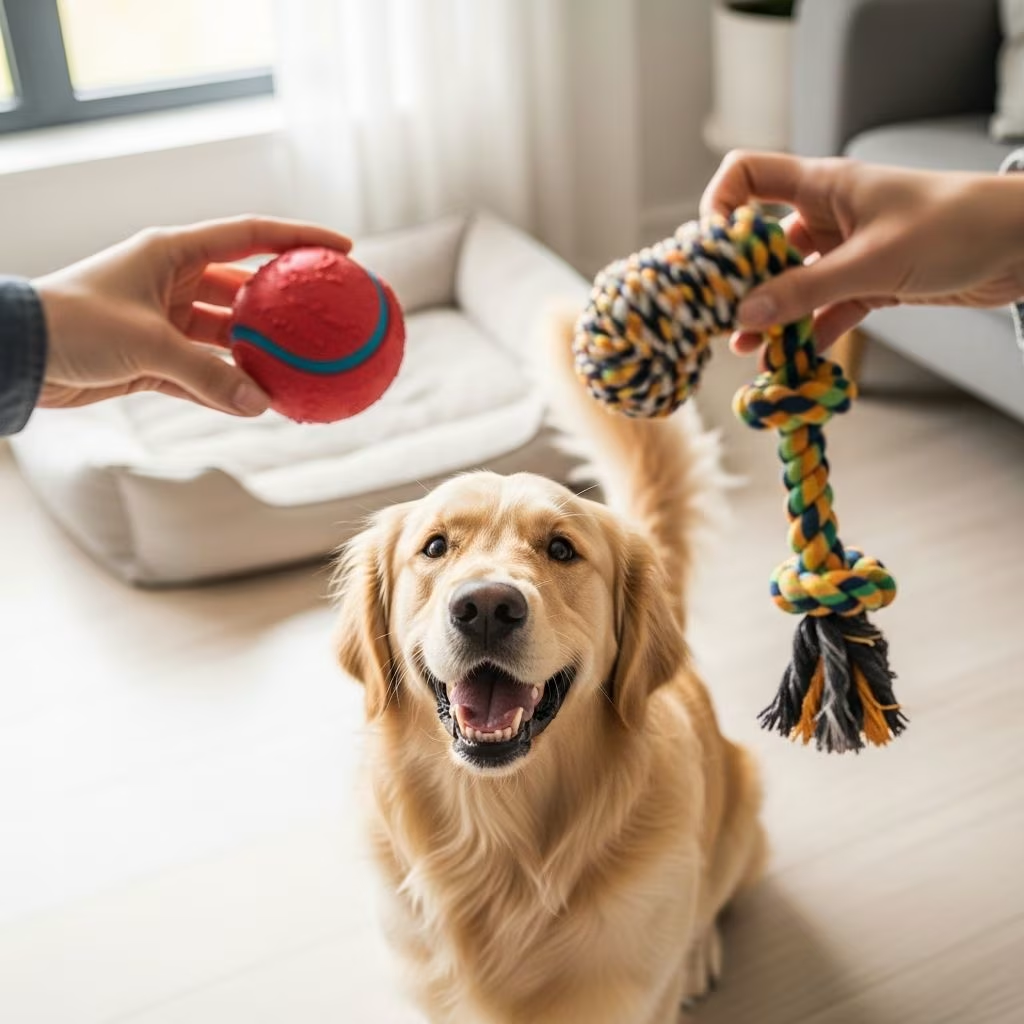
- Toy selection: Hold out two toys and let your dog gravitate toward one. Offer the toy they sniff, nudge, or take first.
- Treat preference: Place two different treats in each hand. Present both closed fists at nose level and open the hand your dog sniffs or paws at first.
- Walk direction: At a safe intersection or path split, relax the leash and see which way your dog chooses to go. Follow their lead when safe and appropriate.
- Sniff time: Allow extra time for scent exploration without rushing them along, especially in low-traffic areas.
- Resting spots: Provide multiple cozy options—beds, blankets, a crate with the door open, a spot on the couch—and let your dog decide where to settle.
- People choices: When possible, let your dog decide whether to approach a person instead of leading or pulling them toward someone for greetings.
All options you offer should be safe and acceptable—your dog is choosing between “yes” and “yes,” not between something allowed and something forbidden.
How Agency Improves Your Dog’s Behavior
Dogs who experience more control over their environment often become more exploratory and flexible in new situations, similar to findings from environmental enrichment research in other animals.3 Instead of bracing for what will be done to them, they begin to look for what they can do.
More Engagement With Their World
When dogs can make choices, they typically:
- Move with curiosity instead of hesitation
- Show more interest in training and games
- Approach new environments as opportunities, not threats
- Recover more quickly from surprises or mild stressors
By contrast, dogs who rarely have agency may become rigid or reactive. They can learn that the world is something that simply happens to them, which can increase anxiety, frustration, and challenging behavior.
| Environment Type | Typical Dog Mindset | Likely Behavior Patterns |
|---|---|---|
| Choice-rich (guided freedom) | “I can explore and influence what happens.” | Curious, engaged, more adaptable and confident |
| Choice-poor (highly controlled) | “Things happen to me, and I cannot change them.” | More reactive, withdrawn, or inflexible |
Less Stress, More Calm
Unpredictability and lack of control are well-known drivers of stress responses in animals, leading to changes in heart rate, hormones, and behavior.3 Giving dogs choices is a practical way to reduce that stress in everyday life.
How Choices Reduce Stress
- Avoiding triggers: If your dog can choose a different path, they may bypass things that scare or upset them, such as loud yard equipment or a barking dog behind a fence.
- Controlling distance: Allowing your dog to move farther away from something they find uncomfortable (a crowd, a noisy street, an unfamiliar dog) can quickly reduce anxiety.
- Investigating safely: Dogs gather information primarily through scent. Letting them sniff thoroughly helps them assess situations and feel more secure.
- Reducing learned helplessness: When animals feel they have no control, they can stop trying to cope, a state known as learned helplessness. Choice helps protect against this pattern by confirming that their behavior matters.
Over time, a dog who can influence their environment tends to relax. Their body language softens, they may display fewer stress signals (like yawning, lip-licking, or pacing), and they often become easier to handle in new environments.
Better Quality of Life—for Both of You
Choice and control are central to animal welfare frameworks and are linked to better outcomes in behavior, health, and emotional well-being.3 For pet dogs, the benefits show up in many parts of life.
Why Choice Makes Life Richer
- More enjoyment: When dogs can do more of what they genuinely like—sniffing, chewing, resting in certain spots—their daily experiences become more satisfying.
- Mental enrichment: Evaluating options (toy A vs. toy B, route X vs. route Y) adds cognitive work, which can tire and satisfy dogs in healthy ways.
- Confidence building: Each successful choice reinforces the idea that their actions produce predictable outcomes, an important ingredient in confidence.
- Less frustration: If your dog can choose between appropriate outlets (like different chew or puzzle toys), they are less likely to complain, whine, or act out from boredom or blocked desires.
- Reduced boredom: Having control over how to spend their time—within boundaries—helps prevent chronic under-stimulation, which is a recognized welfare concern in companion animals.3
These improvements make life easier for humans, too. A dog who is more content, more mentally engaged, and less frustrated is typically easier to live with and manage day-to-day.
Stronger Relationships Through Respecting Preferences
Many owners now view their dogs as family members, and research suggests that the way we relate to our dogs shapes their behavior and well-being.2 Paying attention to your dog’s choices is one of the clearest ways to show respect and build trust.
Learning What Your Dog Truly Likes
When you consistently offer choices and observe what your dog picks, patterns emerge:
- Treat preferences: If your dog clearly favors one treat over another, you can use that higher-value option for important training (like recall or handling). This often leads to faster learning and stronger performance.
- Walk routes: Over time, you will see which streets or parks your dog gravitates toward and which they avoid. You can then plan more walks in places they enjoy and fewer in places they find stressful.
- Resting habits: Some dogs prefer elevated beds; others like soft, enclosed spaces. Knowing these preferences lets you design more comfortable home setups.
- Social comfort: Your dog’s willingness (or reluctance) to approach certain people, dogs, or situations provides valuable feedback about their comfort level. Respecting that feedback builds trust.
Owners who treat dogs as close companions or even child-like family members often manage them in more intimate ways—keeping them indoors, allowing access to bedrooms and beds, and providing more social interaction.2 Within this context, honoring the dog’s own preferences becomes even more important to avoid overwhelming them with contact they may not always want.
From Top-Down Control to Collaboration
When you respond to your dog’s choices instead of constantly directing every move, your relationship shifts toward partnership:
- You communicate with your dog, not just at them.
- Your dog learns that their signals and decisions matter to you.
- Trust grows because your dog experiences you as predictable, responsive, and safe.
This collaborative approach does not remove structure; it balances structure with sensitivity to the dog’s needs. The result is a stronger, more secure bond on both sides.
Balancing Freedom and Safety
Allowing dogs to make choices does not mean abandoning rules or letting them do anything they want. Responsible choice-giving always happens inside a safe, thoughtful framework.
Guidelines for Safe Canine Agency
- Offer only safe options: Never present a choice that could endanger your dog (like running into traffic or approaching an unfriendly dog).
- Keep legal and community rules: Off-leash choice should be limited to secure, allowed areas where you can still call your dog back reliably.
- Use recall as a safety net: A strong recall cue lets you interrupt your dog’s choice if safety requires it.
- Watch body language: If your dog appears conflicted, tense, or unsure, simplify the situation or help them move away.
- Start small: Begin with low-stakes choices (toy, bed, treat) before expecting your dog to navigate more complex options in stimulating environments.
Think of it as designing a playroom for a toddler: everything inside is safe, so whichever toy they choose, you can relax. For dogs, you are curating an environment and set of options that support healthy, empowered decision-making.
Putting It All Together: Daily Life With a Choice-Rich Dog
Over time, regularly offering choices changes both you and your dog. Your dog becomes more confident, engaged, and calm. You become more observant, responsive, and attuned to who your dog really is as an individual.
In practice, a typical day with a choice-rich dog might include:
- Morning: Letting your dog choose between two walking routes and allowing generous sniffing time.
- Midday: Offering a choice between two enrichment activities (a puzzle feeder or a stuffed chew) while you work.
- Evening: Providing multiple rest spots and letting your dog decide where to nap or sleep.
- Throughout the day: Watching for signs of “no thanks” (turning away, avoiding eye contact, moving off) and respecting them when your dog declines certain interactions.
The more you practice, the more you will see: your dog has clear opinions. Listening to those opinions, within safe limits, is one of the most powerful ways to improve their welfare and deepen your connection.
Frequently Asked Questions (FAQs)
Q: Won’t giving my dog choices make them spoiled or disobedient?
A: Not when choices are structured. You are still deciding what options are on the menu; your dog is simply choosing between acceptable alternatives. Research suggests that dogs with balanced, responsive management—clear rules plus emotional support—tend to show better adaptability and social behavior than dogs raised with either harsh control or complete lack of structure.2
Q: How can I tell what my dog is choosing if they do not grab or bark?
A: Watch subtle body language: which object they look at first, which direction they lean toward, what they sniff longer, or where they choose to place their body. Turning away, freezing, or avoiding something is also a clear choice you should respect, especially in social situations.
Q: Is it safe to let my dog choose other dogs or people to greet?
A: You can let your dog indicate interest—by willingly walking toward someone, tail and body loose—while you still evaluate safety and consent from the other side. If your dog hesitates, slows, or tries to move away, honoring that choice helps prevent forced, stressful interactions that can lead to fear or aggression.
Q: My dog seems anxious. Can more choice really help?
A: Having some control over outcomes is a core factor in reducing stress and preventing learned helplessness across animal species.3 For anxious dogs, structured choices (like choosing distance from triggers or which safe route to walk) can be a valuable complement to behavior modification plans developed with a qualified professional. Always seek veterinary or behavioral help for persistent anxiety.
Q: What if my dog always chooses the most exciting option, like the busiest route or the loudest park?
A: You are not obligated to offer every possible option. If certain environments over-arouse your dog or make them harder to handle, do not include those as choices. Instead, offer two or three appropriate options that balance stimulation with safety and your dog’s ability to cope calmly.
References
- Environmental enrichment for companion animals — Yeates JW, Main DCJ. 2008-06-01. https://doi.org/10.1080/10888700802100954
- The role of dogs is associated with owner management practices and living environment — Martos-Martínez Á, Štritof I, Gerencsér L, et al. 2024-02-29. https://pmc.ncbi.nlm.nih.gov/articles/PMC11557872/
- Environmental enrichment and control of stress in laboratory animals — Rüedi-Bettschen D, Pedersen EM, Hoffmann WE. 2006-03-01. https://doi.org/10.1038/laban0306-27
- Five Domains Model: A comprehensive framework for assessing animal welfare — Mellor DJ, Beausoleil NJ. 2015-09-01. https://doi.org/10.7120/09627286.24.3.241
- Redefining parenting and family – the child-like role of dogs in human families — Blouin DD. 2015-01-01. https://doi.org/10.1027/1016-9040/a000552



