

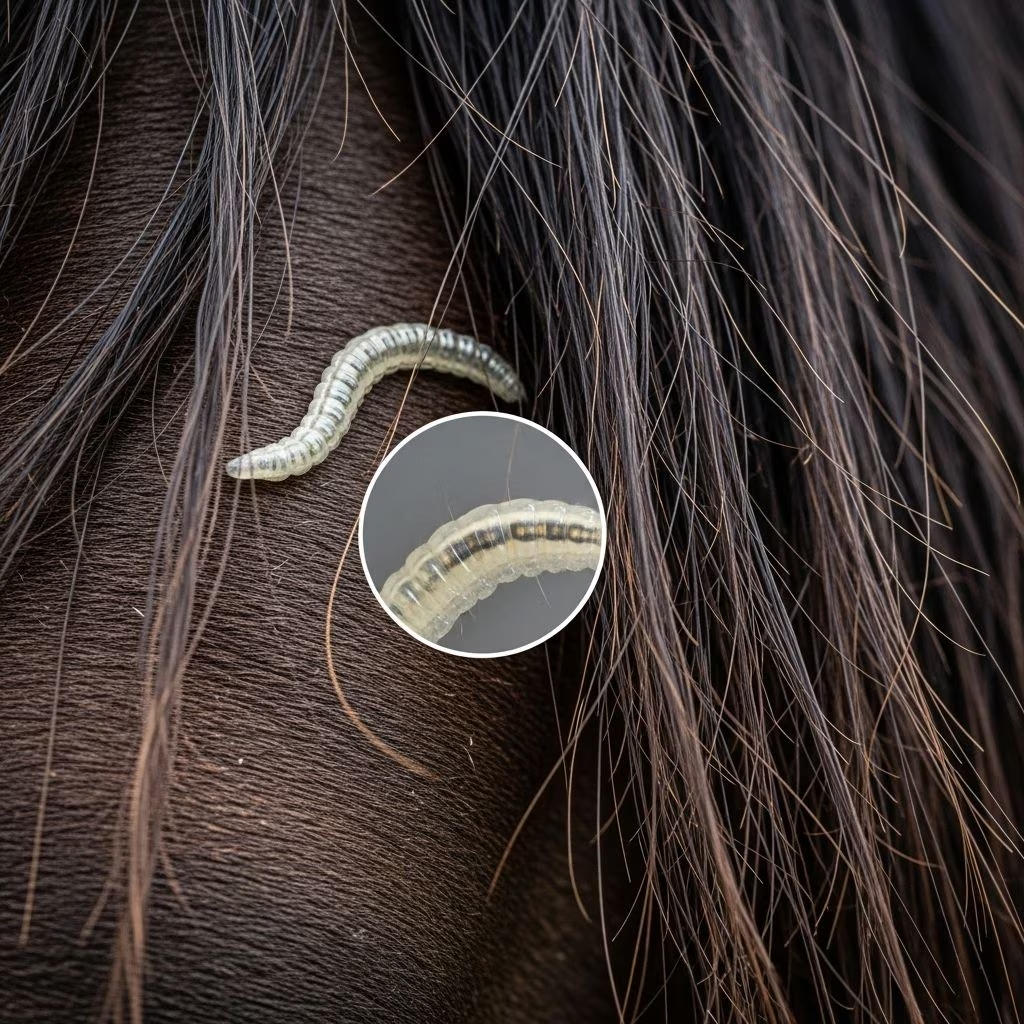
While horses are susceptible to numerous parasitic infections, not all of these parasitic organisms cause severe disease or require aggressive intervention. A distinct category of parasitic infections exists that, while present in equine populations, typically produce minimal clinical manifestations or disease severity in most infected animals. Understanding these organisms, their transmission patterns, and appropriate management strategies forms an essential component of comprehensive equine health management. This knowledge allows veterinarians and horse owners to prioritize deworming efforts and allocate resources toward parasites that pose the greatest health threats.
Flies and Botfly Infections in Horses
Among the parasitic conditions affecting horses with relatively low clinical significance are infections caused by botfly species. The genus Gasterophilus encompasses several species capable of infecting equines, though two species predominate in domestic and sport horses. Gasterophilus intestinalis and Gasterophilus nasalis represent the primary species encountered in conventional equine populations, while other Gasterophilus species tend to affect working, feral, or wild equids infrequently. Of these, G. intestinalis stands out as the most prevalent and abundant species affecting domesticated horses.
The lifecycle of botflies demonstrates a unique transmission mechanism distinct from most other equine parasites. Adult female botflies engage in a remarkable behavior: they glue eggs directly onto hair shafts on the horse’s body. Rather than entering through conventional digestive routes, horses ingest these eggs when grooming themselves or other animals, or through incidental ingestion while eating. Upon ingestion, the larvae develop within the gastrointestinal tract, particularly within the stomach and occasionally in the oral cavity. This lifecycle represents one of the most unusual transmission routes among equine parasites.
The clinical impact of botfly infections remains generally minimal in most infected horses. While larval presence within the stomach can trigger localized irritation, most animals tolerate botfly infections without displaying clinical disease. This low pathogenic potential, combined with the self-limiting nature of infections as adult flies eventually detach and pass through feces, contributes to the classification of botflies as minor clinical concerns. However, effective control programs utilizing strategic medication timing and synchronized regional treatment protocols can substantially reduce transmission rates across horse populations.
Stomach Parasites and Their Gastrointestinal Effects
Multiple parasitic species establish themselves within the equine stomach, with three primary organisms deserving attention: Habronema muscae, Habronema microstoma, and Draschia megastoma. These parasites demonstrate a shared lifecycle characteristic: they utilize muscid flies—common house and stable flies—as intermediate hosts. Adult worms reside within the gastric mucosa, establishing themselves after horses ingest either larvae deposited around the mouth by infected flies or deceased flies harboring larval stages. The developmental period from ingestion to adult maturation requires approximately eight weeks.
The clinical manifestations of stomach worm infections present an interesting paradox. Despite their physical presence in contact with gastric mucosa, Habronema parasites rarely produce recognizable gastrointestinal signs in infected horses. This minimal clinical disease profile directly contributes to their classification within the minor clinical significance category. However, this apparent benign nature shifts when considering an alternative manifestation: these parasites are responsible for a dermatological condition commonly termed “summer sores.” This cutaneous presentation emerges when larvae migrate aberrantly and establish in skin wounds, triggering inflammatory responses and granulomatous reactions that can prove more problematic than the primary gastric infection.
Draschia megastoma has become increasingly rare in contemporary domestic horses, further diminishing its clinical importance in modern equine medicine. This decline in prevalence suggests that existing management practices inadvertently reduce transmission rates for this particular species, even without specifically targeted interventions.
The Role of Small Stomach Worms in Equine Nutrition
A distinct parasitic species, the small stomach worm scientifically designated Trichostrongylus axei, occupies a unique epidemiological position. Unlike many equine parasites that demonstrate host specificity, T. axei affects multiple herbivorous species, including cattle, sheep, and goats. Consequently, horses develop infections primarily under specific management conditions: when maintained on pastures simultaneously grazed by ruminant livestock. This requirement for mixed-species grazing dramatically limits the prevalence of this parasite in exclusively equine operations.
The pathophysiology of Trichostrongylus infections involves penetration of larval stages into the gastric lining, establishing a chronic inflammatory state characterized by catarrhal gastritis with hemorrhagic components. The affected gastric tissue may appear limited and irregularly distributed, or progress to involve substantial portions of the stomach wall, potentially developing ulcerations. Despite this tissue damage, the clinical manifestation typically reduces to progressive weight loss rather than acute gastrointestinal crisis. The slow development of disease and variable presentation contribute to this parasite’s classification as relatively minor in clinical significance.
Pinworm Infections and Dermatological Complications
Pinworms, scientifically identified as Oxyuris equi, predominantly affect younger equines, particularly those under eighteen months of age. The distinguishing clinical sign of pinworm infection manifests as visible egg masses surrounding the anal region, appearing as white to yellow crusty accumulations. These visible parasitic deposits trigger an intense pruritic response, prompting affected horses to engage in frequent rubbing and scratching of anal and tail regions. While the resulting alopecia and skin irritation merit owner attention, the overall health impact remains limited.
The lifecycle of pinworms differs notably from most other equine parasites: female worms migrate to the anal region specifically to deposit eggs, a behavior that directly produces the observable clinical sign. This visible manifestation, while aesthetically concerning to owners, facilitates both diagnosis and assessment of treatment efficacy. Modern antiparasitic medications demonstrate excellent efficacy against pinworm infections, typically resolving both parasitic burden and associated behavioral signs rapidly.
Threadworm Infections in Young Horses
Threadworms, designated as Strongyloides westeri, represent another parasitic entity typically classified among minor clinical concerns, though specific circumstances warrant careful monitoring. This parasite demonstrates a transmission route distinct from most equine parasites: maternal transmission through colostrum and milk to nursing foals. This direct passage from mare to offspring represents a significant epidemiological feature that influences the age profile of infected animals.
The clinical manifestations associated with S. westeri remain somewhat variable and not universally consistent. While associations with enteritis and diarrhea have been documented, no clearly defined disease syndrome has been formally established. Epidemiological research suggests that clinical disease manifestations correlate with parasite burdens exceeding 2,000 eggs per gram of feces. Below this threshold, many infected horses exhibit no recognizable clinical signs.
An additional consideration with threadworm infections involves the percutaneous route of infection, whereby larvae can penetrate the skin of young horses. This penetration pathway can trigger dermatitis on distal extremities, and unusual behavioral manifestations including hyperactivity and agitation have been documented in yearlings within heavily contaminated environments. Despite these potential complications, the overall clinical significance remains relatively modest compared to major parasitic concerns.
Protozoal Infections: Giardiasis in Equines
While most parasitic organisms discussed thus far represent helminths (worm parasites), protozoal infections deserve consideration within the spectrum of equine parasitic disease. Giardiasis, a chronic intestinal infection caused by Giardia protozoa, occurs worldwide across diverse mammalian species, avian populations, and humans. Despite widespread prevalence in carnivorous animals such as dogs and cats, equine giardiasis remains considerably less common. Survey data indicates that Giardia detection in equine fecal samples ranges from 0.5% to 20%, depending upon testing methodology and population sampled. Age represents a significant risk factor, with younger animals demonstrating higher susceptibility to infection.
The clinical significance of equine giardiasis parallels the pattern observed with other minor parasitic infections: infected horses frequently harbor the organism without displaying overt clinical manifestations. When clinical signs develop, they typically involve chronic gastrointestinal dysfunction rather than acute disease. This variable presentation complicates clinical recognition and may contribute to underdiagnosis of giardiasis in equine populations.
Tapeworm Infections and Intestinal Involvement
Tapeworms, belonging to the class Cestoda, represent another parasitic group affecting equine gastrointestinal health. These parasites may establish themselves throughout the small and large intestine or even within the gastric chamber. The transmission mechanism for equine tapeworm infections demonstrates the ecological complexity of parasitic lifecycles: transmission occurs through consumption of soil mites that have ingested tapeworm eggs from contaminated feces. Once inside the horse’s gastrointestinal tract, larvae develop and mature into adult parasites.
Unlike large strongyles that cause vascular damage or small strongyles that trigger mucosal inflammation, tapeworms establish infection through a different mechanism. Adult tapeworms attach to intestinal walls, though clinical manifestations vary. Diagnosis requires detection of eggs in fecal samples, a process that may necessitate multiple testing occasions to achieve reliable results. Several medications demonstrate efficacy against tapeworm infections, providing straightforward therapeutic options when diagnosis is confirmed.
Comparative Analysis of Minor Parasites
| Parasitic Species | Primary Hosts Affected | Transmission Route | Primary Clinical Sign | Diagnostic Method |
|---|---|---|---|---|
| Gasterophilus spp. | All age groups | Ingestion of eggs on hair | Oral and gastric irritation | Fecal examination, clinical observation |
| Habronema spp. | All ages | Fly-deposited larvae | Summer sores (skin lesions) | Fecal culture, histopathology |
| Oxyuris equi (Pinworms) | Young horses (<18 months) | Ingestion of eggs | Anal itching, alopecia | Tape test, visual inspection |
| Strongyloides westeri | Foals, young horses | Maternal transmission, percutaneous | Diarrhea (variable), dermatitis | Fecal examination at high counts |
| Giardia spp. | Young horses primarily | Waterborne, fecal-oral | Chronic diarrhea (variable) | Fecal antigen test, culture |
| Tapeworms (Cestodes) | All ages | Mite ingestion | Colic, weight loss (variable) | Fecal examination (multiple tests) |
Management Strategies for Minor Parasites
Management of parasites within the minor clinical significance category differs substantially from approaches directed toward major parasitic threats. Rather than implementing aggressive deworming protocols, many practitioners employ selective treatment strategies based upon clinical presentation and risk assessment. For organisms such as botflies and stomach worms, macrocyclic lactone medications, including ivermectin and moxidectin, remain effective therapeutic options. These broad-spectrum agents typically target multiple parasitic species simultaneously, providing efficiency within comprehensive deworming programs.
Environmental management plays a significant role in controlling several of these minor parasites. Pinworm control benefits from regular stall sanitation, as eggs persist in bedding and accumulate near resting areas. Fly control measures directly reduce transmission of botfly and Habronema infections by limiting fly populations. Pasture management, particularly avoiding mixed-species grazing or rotating pastures to interrupt lifecycle transmission, effectively reduces Trichostrongylus and other environmentally dependent parasites.
For maternal transmission parasites such as Strongyloides westeri, strategic treatment of nursing mares at specific timepoints provides effective prevention. Administration of ivermectin to mares twenty-four hours following foaling substantially reduces the likelihood of threadworm transmission through colostrum and milk, protecting vulnerable neonatal foals from infection during their most susceptible period.
Frequently Asked Questions About Minor Equine Parasites
Are minor parasites completely harmless to horses?
While classified as minor, these parasites are not universally harmless. They can cause significant problems in specific circumstances or individual horses. Clinical significance remains relative; a parasite causing minimal disease in one population may produce substantial illness in another with different management conditions or immune status.
Should all horses be treated for these parasites?
Treatment decisions should rest upon risk assessment, environmental conditions, and individual clinical presentation rather than blanket application. Horses on pastures contaminated with particular parasites or demonstrating clinical signs warrant treatment, while others in lower-risk situations may not require intervention.
Can minor parasites cause serious complications?
Yes, certain circumstances can escalate minor parasites into significant health threats. Massive infections, immunocompromised hosts, or specific environmental factors may transform ordinarily benign infections into clinically important disease.
How are these parasites diagnosed?
Diagnosis varies by organism but typically involves fecal examination, cultural techniques, or visual identification of parasitic signs. Some require multiple tests for reliable detection.
What preventative measures are most effective?
Environmental management, pasture rotation, fly control, and targeted treatment of mares before foaling represent primary preventative strategies. Medication timing and selective deworming based upon risk significantly reduce transmission.
Integration Into Comprehensive Parasite Management
Understanding minor parasitic infections contextualizes the broader equine parasite management landscape. While major parasites such as large strongyles demand aggressive control efforts, minor parasites remain important considerations within integrated management programs. A balanced approach recognizes that resource allocation should prioritize high-impact parasites while maintaining awareness of minor parasitic threats and their potential under specific circumstances.
Modern parasite management increasingly emphasizes selective deworming rather than universal treatment protocols. This approach requires knowledge of local parasite epidemiology, risk factors, and individual horse circumstances. Practitioners can thereby optimize therapeutic efficacy while minimizing unnecessary drug administration and reducing the development of antimicrobial resistance among parasitic populations.
The parasites discussed herein represent the secondary tier of equine parasitic concerns. Recognition of their presence, understanding of their lifecycles, and awareness of circumstances that might escalate them into clinically significant threats enable horse owners and veterinarians to make informed management decisions. Through integrated approaches combining environmental modification, selective therapeutic intervention, and targeted prevention, the health impacts of these organisms can be effectively minimized while focusing primary attention upon parasites with greater pathogenic potential.
References
- Common Gastrointestinal Parasites of Horses — MSD Veterinary Manual. 2024. https://www.msdvetmanual.com/multimedia/table/common-gastrointestinal-parasites-of-horses
- Gastrointestinal Parasites of Horses — Merck Veterinary Manual. 2024. https://www.merckvetmanual.com/horse-owners/digestive-disorders-of-horses/gastrointestinal-parasites-of-horses
- Gastrointestinal Parasites of Minor Clinical Importance in Horses — Merck Veterinary Manual. 2024. https://www.merckvetmanual.com/digestive-system/gastrointestinal-parasites-of-horses/gastrointestinal-parasites-of-minor-clinical-importance-in-horses
- Intestinal Parasites in Horses: Challenges and Considerations in Modern Parasite Management — Succeed Equine. 2024. https://www.succeed-vet.com/educational-resources/blog/equine-gi-management/intestinal-parasites-in-horses-challenges-and-considerations-in-modern-parasite-management/
- Intestinal Parasites in Horses — UC Davis Center for Equine Health. 2024. https://ceh.vetmed.ucdavis.edu/health-topics/intestinal-parasites-horses



