

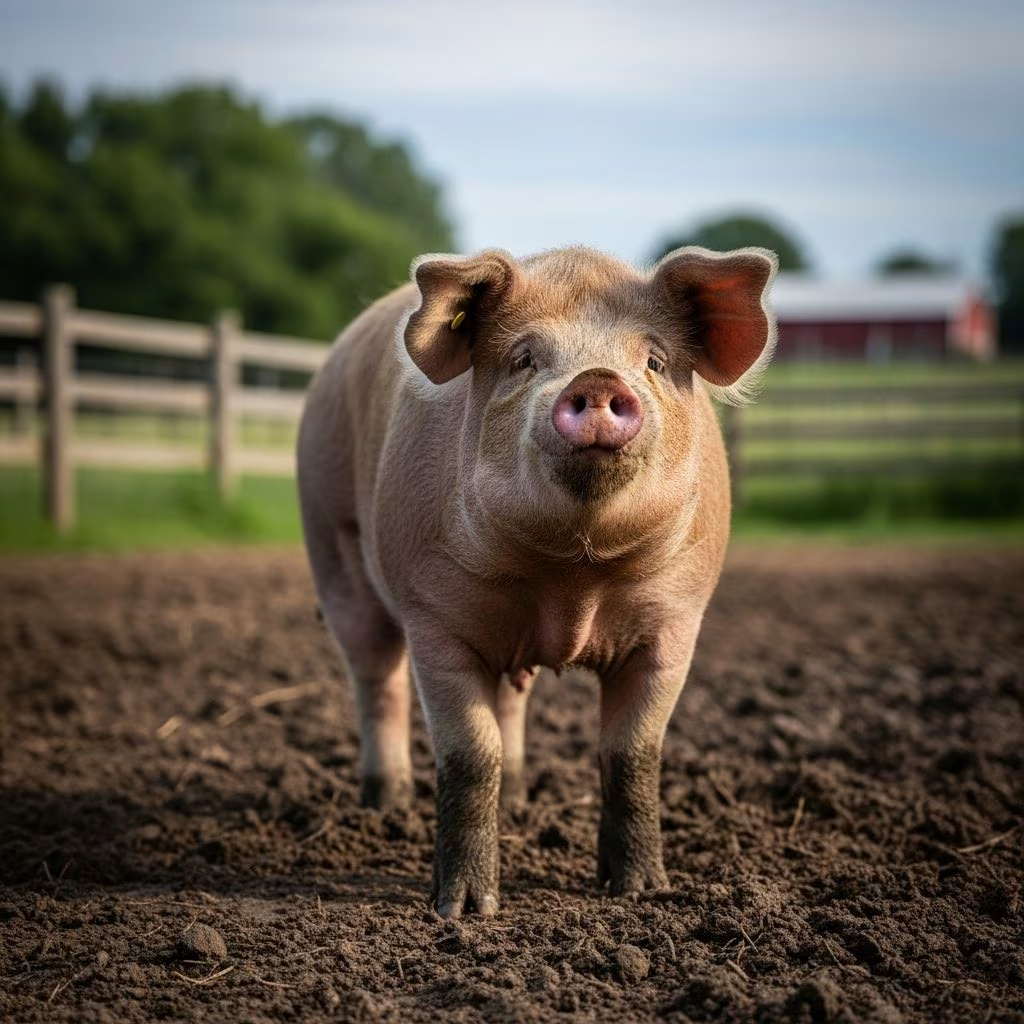
Leptospirosis stands out as a significant bacterial infection affecting pigs worldwide, primarily targeting the reproductive system and leading to substantial economic losses in breeding operations. Caused by various serovars of Leptospira bacteria, this zoonotic disease spreads through contaminated environments and direct contact, posing risks to both animal health and human handlers.
The Nature of Leptospira Pathogens
These spiral-shaped, gram-negative bacteria thrive in warm, moist conditions and possess flagella that enable a distinctive corkscrew motility. In swine, the most relevant pathogens include Leptospira interrogans serovars Pomona, Bratislava, and Kennewicki, as well as Leptospira borgpetersenii. Pigs serve as maintenance hosts for serovars like Bratislava, Pomona, and Tarassovi, with Bratislava showing global prevalence.
Unlike more resilient pathogens such as parvovirus, Leptospira does not persist long in dry environments, making wet areas like wallows, flush systems, and effluent gutters high-risk zones for transmission. Incidental infections from serovars like Icterohaemorrhagiae, Grippotyphosa, or Canicola can also occur, occasionally causing acute illness in young pigs.
Transmission Pathways in Swine Herds
The bacteria colonize the kidneys and reproductive tracts, leading to chronic shedding in urine and genital secretions. Key transmission routes include:
- Direct exposure to infected urine in moist environments, such as outdoor wallows or indoor systems with solid floors and contaminated drinkers.
- Venereal spread, particularly with serovar Bratislava, via semen from carrier boars to sows.
- Contact with carrier animals or vectors like rodents, which introduce the pathogen into clean herds.
- Recycled lagoon water or open gutters facilitating urine contamination.
Once established, infections persist as pigs become lifelong carriers, with maternal antibodies offering only short-term protection post-weaning. Herds often experience a two-year disease cycle, with higher impacts on second-litter females introduced to older carrier boars.
Clinical Manifestations Across Age Groups
Infections are frequently subclinical in non-pregnant or growing pigs, evading early detection. Reproductive failures dominate in breeding stock, with acute signs like mild fever, ataxia, and lethargy often overlooked.
Impacts on Breeding Sows and Gilts
Primary signs include irregular estrus, infertility, and abortions, especially 2-4 weeks pre-term. Litters may feature stillbirths, mummification, weak-born piglets, or reduced litter sizes. Finishing pigs might show kidney lesions like white-spotted nephritis at slaughter.
| Sign | Description | Common Serovar Association |
|---|---|---|
| Abortions | Late-gestation losses | Pomona, Bratislava |
| Stillbirths/Weak Piglets | Increased non-viable births | All major serovars |
| Mummification | Fetal preservation failures | Pomona |
| Infertility | Repeat breeding | Bratislava (venereal) |
| Kidney Scarring | White spots at slaughter | General |
Effects on Piglets and Boars
Young pigs rarely show overt illness but may exhibit jaundice, hematuria, inappetence, or mortality in severe cases. Boars harbor infections in reproductive organs, perpetuating venereal transmission.
Diagnostic Approaches
Confirming leptospirosis requires integrating clinical history, serology, and pathology. The microscopic agglutination test (MAT) detects antibodies, with high titers (>1:100 for Pomona) indicating active infection. Bratislava often yields lower titers, complicating diagnosis in endemic herds.
Other methods include:
- PCR on urine, tissues, or fetal samples for direct detection.
- Necropsy revealing interstitial nephritis or uterine lesions.
- Paired sera showing titer rises post-outbreak.
Differentials encompass porcine reproductive and respiratory syndrome (PRRS), parvovirus, brucellosis, and porcine circovirus, necessitating comprehensive testing.
Prevention and Control Strategies
Effective management combines vaccination, biosecurity, and herd monitoring. Vaccines target key serovars like Pomona and Bratislava, reducing clinical disease but not always eliminating carrier status. Administer to gilts pre-breeding and boosters annually.
Biosecurity measures include:
- Rodent control to eliminate vectors.
- Avoiding urine-contaminated water in flushing systems.
- Quarantine and testing of new stock.
- Improved drainage in outdoor units.
Antibiotics like doxycycline or streptomycin treat outbreaks, though carriers persist. All-in-all-out systems and gilt acclimation help break cycles.
Zoonotic Risks and Human Health
As a zoonosis, leptospirosis transmits to humans via contaminated water or tissues, causing flu-like symptoms, renal failure, or Weil’s disease (jaundice, hemorrhage; 5-15% fatality). Swine handlers face elevated risks, underscoring PPE use and hygiene.
Global Prevalence and Risk Factors
Seropositivity varies, with studies showing 33% in some swine populations, often multiple serovars. Risk factors include poor quarantine, artificial insemination without screening, and feral pig proximity. Technical management flaws amplify spread.
Frequently Asked Questions (FAQs)
What are the most common serovars in pigs?
Pomona, Bratislava, and Tarassovi predominate, with pigs as reservoirs.
How do you differentiate leptospirosis from PRRS?
Leptospirosis focuses on late abortions and kidney signs; MAT confirms, unlike PRRS PCR.
Is vaccination 100% effective?
No, it mitigates symptoms but carriers may shed; combine with biosecurity.
Can leptospirosis affect growing pigs?
Rarely clinically, but kidney scarring appears at slaughter.
What human precautions are needed?
Wear gloves, boots; avoid urine exposure; vaccinate at-risk workers.
Emerging Insights and Future Directions
Ongoing research highlights serovar variability and venereal roles, urging tailored vaccines. Feral swine may amplify transmission, warranting surveillance. Integrated approaches promise healthier herds.
References
- Leptospirosis – Swine Diseases — University of Minnesota. 2023. https://open.lib.umn.edu/swinedisease/chapter/leptospirosis/
- Leptospirosis – MSD Animal Health Swine — MSD Animal Health. 2024. https://www.msd-animal-health-swine.com/diseases-solutions/sowcare/leptospirosis/
- Leptospirosis in Swine – Infectious Diseases — Merck Veterinary Manual. 2025-02-01. https://www.merckvetmanual.com/infectious-diseases/leptospirosis/leptospirosis-in-swine
- Leptospirosis | The Pig Site — The Pig Site. 2023. https://www.thepigsite.com/disease-guide/leptospirosis-leptospira
- Leptospirosis in Pigs – NADIS — NADIS. 2024. https://www.nadis.org.uk/disease-a-z/pigs/leptospirosis-in-pigs/
- Leptospirosis | Disease Outbreak Control Division — Hawaii Department of Health (.gov). 2025. https://health.hawaii.gov/docd/disease_listing/leptospirosis/
- Global Seropositivity of Swine Leptospirosis: Systematic Review — PMC / NIH (.gov). 2023-04-01. https://pmc.ncbi.nlm.nih.gov/articles/PMC10059827/



