

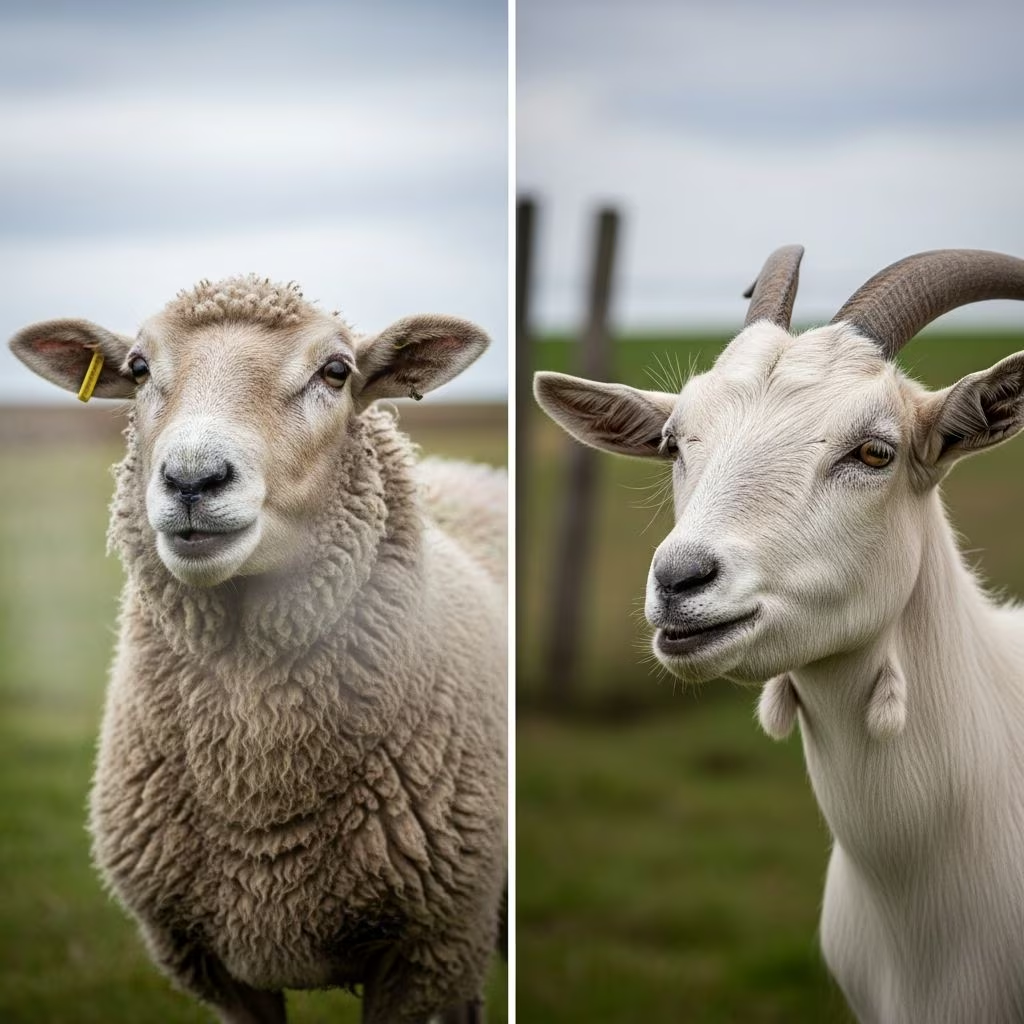
Lentiviral infections represent a significant challenge in small ruminant health, primarily manifesting as chronic respiratory issues in sheep and goats. These slow-acting viruses, part of the small ruminant lentivirus (SRLV) group, lead to progressive pneumonia known as ovine progressive pneumonia (OPP) in sheep or pneumonic caprine arthritis encephalitis (CAE) in goats. Affected animals often endure gradual deterioration without acute symptoms initially, complicating early intervention.
The Nature of Lentiviral Pathogens
At the core of these conditions are retroviruses that integrate into host cells, particularly macrophages, establishing lifelong persistence. In sheep, the maedi-visna virus (MVV) drives OPP, while goats face the CAE virus, though cross-species transmission occurs. These pathogens replicate minimally in infected tissues, evading full immune clearance through antigenic variation or weak antibody responses. This low-level persistence fuels ongoing inflammation, targeting lungs, joints, udders, and the brain.
Lung involvement defines the pneumonic form, where viral activity in alveolar macrophages thickens lung tissue over years. Sheep develop interstitial pneumonia, reducing oxygen exchange, while goats show similar fibrosis. The disease’s insidious onset means carriers spread infection unknowingly for months or years.
Recognizing Respiratory Distress Patterns
Clinical signs emerge subtly in adults, often after 2-4 years. Sheep with pneumonic OPP display weight loss despite appetite, labored breathing, and a persistent dry cough worsening over time. Their coats dull, and they lag behind the flock, showing exhaustion. Nasal discharge may appear without fever unless secondary bacteria invade.
In goats, pneumonic CAE follows a parallel course: chronic cough, rapid shallow breaths, emaciation, and enlarged lung lymph nodes. Advanced cases involve dyspnea at rest, mimicking heart failure. Both species risk bacterial superinfections, elevating respiratory rates to 60-80 breaths per minute.
| Species | Key Pneumonic Signs | Progression Timeline |
|---|---|---|
| Sheep (OPP) | Labored breathing, cough, weight loss | 2-5 years post-infection |
| Goats (CAE) | Chronic cough, pneumonia, lymph node swelling | 1-4 years, often older adults |
Beyond the Lungs: Multisystem Effects
While pneumonia dominates respiratory discussions, SRLVs strike broadly. Arthritis form in goats causes joint swelling in knees, hocks, and ankles, leading to lameness. Sheep experience similar synovial inflammation. Mastitis hardens udders bilaterally, slashing milk production and stunting lambs or kids.
Encephalitic variants, rarer, attack the nervous system. Young goats show ataxia, paralysis, seizures, and blindness; sheep exhibit hindlimb weakness, tremors, and paresis termed visna. These neural damages stem from demyelination amid mononuclear infiltrates.
- Arthritis: Progressive lameness, joint effusion, cartilage erosion.
- Mastitis: Firm udder (“hard bag”), reduced lactation yield.
- Encephalitis: Coordination loss, paralysis, often fatal in youth.
Pathways of Viral Transmission
SRLVs spread primarily vertically via colostrum and milk from infected dams, with 50-80% transmission risk to offspring. Horizontal routes include respiratory aerosols in close confinement, saliva, feces, or contaminated needles/equipment. Breeding contact facilitates venereal spread, though less common.
In intensive systems, overcrowding accelerates outbreaks. Goats nursing from OPP-positive sheep or vice versa heightens cross-infection, as tests detect both viruses. Persistence in macrophages ensures lifelong shedding, even asymptomatically.
Diagnostic Approaches and Tools
Veterinarians rely on serology like agar gel immunod diffusion (AGID) or ELISA for antibodies in blood, milk, or synovial fluid. PCR detects viral DNA in tissues, confirming active infection. Post-mortem exams reveal lung consolidation, lymphoid hyperplasia, and demyelination.
Clinical diagnosis integrates history: herd prevalence, age, and signs. Radiographs show interstitial patterns; ultrasound detects joint effusions. False negatives occur early, so repeat testing every 6-12 months is standard.
Management Without a Cure
No vaccines or antivirals eradicate SRLVs; focus shifts to supportive care and biosecurity. Separate positives via testing; cull chronically ill to curb spread. Nutritional boosts aid wasting animals—high-energy feeds, vitamin E/selenium supplements counter oxidative stress.
Antibiotics treat secondary pneumonias: oxytetracycline or florfenicol per vet guidance. Pain relief with NSAIDs eases arthritic goats. For mastitis, dry off affected udders to prevent nursing transmission.
Prevention: Building Resilient Herds
Core strategy: test-and-remove. Quarantine newborns; feed heat-treated colostrum or pasteurized milk from negatives. Use artificial insemination from certified clean sires. Disinfect shears, needles; avoid communal tubs.
Select genetics favoring resistance—breeds like hair sheep show lower susceptibility. Monitor via annual ELISA; aim for SRLV-free status through culling. Segregate ages to limit kid-lamb exposure.
| Prevention Tier | Actions | Expected Impact |
|---|---|---|
| Basic | Test annually, quarantine positives | Reduce prevalence 20-50% |
| Advanced | Artificial rearing, clean genetics | Approach SRLV-free status |
| Farm-wide | Biosecurity protocols, ventilation | Minimize horizontal spread |
Economic Toll on Producers
SRLVs slash productivity: 20-30% milk loss from mastitis, premature culling hikes replacement costs, and pneumonia cuts growth rates by 15%. In dairy herds, indurative mastitis dooms commercial viability. Meat operations face lighter carcasses and higher mortality.
Global incidence varies—Iceland eradicated maedi via slaughter policies; U.S. flocks average 20-40% positives. Early control preserves profitability.
Research Horizons and Future Controls
Ongoing trials explore recombinant vaccines targeting envelope proteins, with partial efficacy in sheep. Gene editing eyes resistant breeds. Improved diagnostics like milk ELISAs simplify monitoring. Collaborative programs from USDA and WOAH push eradication models.
Frequently Asked Questions
Can humans catch lentiviral pneumonia from sheep or goats?
No zoonotic risk exists; SRLVs stay ruminant-specific.
How soon after infection do symptoms appear?
Typically 1-5 years, though some shed virus immediately.
Is there treatment to cure infected animals?
No cure; management targets symptoms and spread prevention.
Does breed influence susceptibility?
Yes, some like East Friesian sheep face higher rates; hair sheep resist better.
Can I keep positives with negatives?
Not recommended; strict separation essential to avoid transmission.
References
- Common Diseases in Dairy Goats and Sheep — Maury County Veterinary Services. 2023-01-23. https://www.maurycountyvet.com/site/blog/2023/01/23/common-diseases-dairy-goats-sheep
- Small Ruminant Lentiviruses (CAE and OPP) in Goats and Sheep — Open Sanctuary Project. N/A. https://opensanctuary.org/small-ruminant-lentiviruses-cae-and-opp-in-goats-and-sheep/
- Lentiviral diseases of sheep and goats: chronic pneumonia — PubMed. 1985. https://pubmed.ncbi.nlm.nih.gov/3885367/
- Maedi-visna — World Organisation for Animal Health (WOAH). N/A. https://www.woah.org/en/disease/maedi-visna/
- Ovine Progressive Pneumonia — Minnesota Board of Animal Health. 2021. http://www.bah.state.mn.us/sites/default/files/documents/OPP-AASRP-2021.pdf
- Understanding and Managing Small Ruminant Lentivirus — Penn State Extension. N/A. https://extension.psu.edu/understanding-and-managing-small-ruminant-lentivirus-in-your-sheep-and-goats/
- Maedi-Visna — Center for Food Security and Public Health (CFSPH). N/A. https://www.cfsph.iastate.edu/DISEASEINFO/disease/?disease=maedi-visna&lang=en



