

Understanding Lenticular Sclerosis in Dogs
Lenticular sclerosis is a common eye condition that develops in senior dogs as a natural part of the aging process. Also known as nuclear sclerosis, this condition involves a gradual hardening and increased density of the lens fibers in the eye, resulting in a cloudy or hazy appearance. While the visible changes in your dog’s eyes may be concerning at first glance, the good news is that lenticular sclerosis typically does not significantly impair your dog’s vision and requires no specific treatment. Understanding this condition can help pet owners distinguish it from more serious eye problems like cataracts and provide appropriate care for their aging companions.
What Exactly is Lenticular Sclerosis?
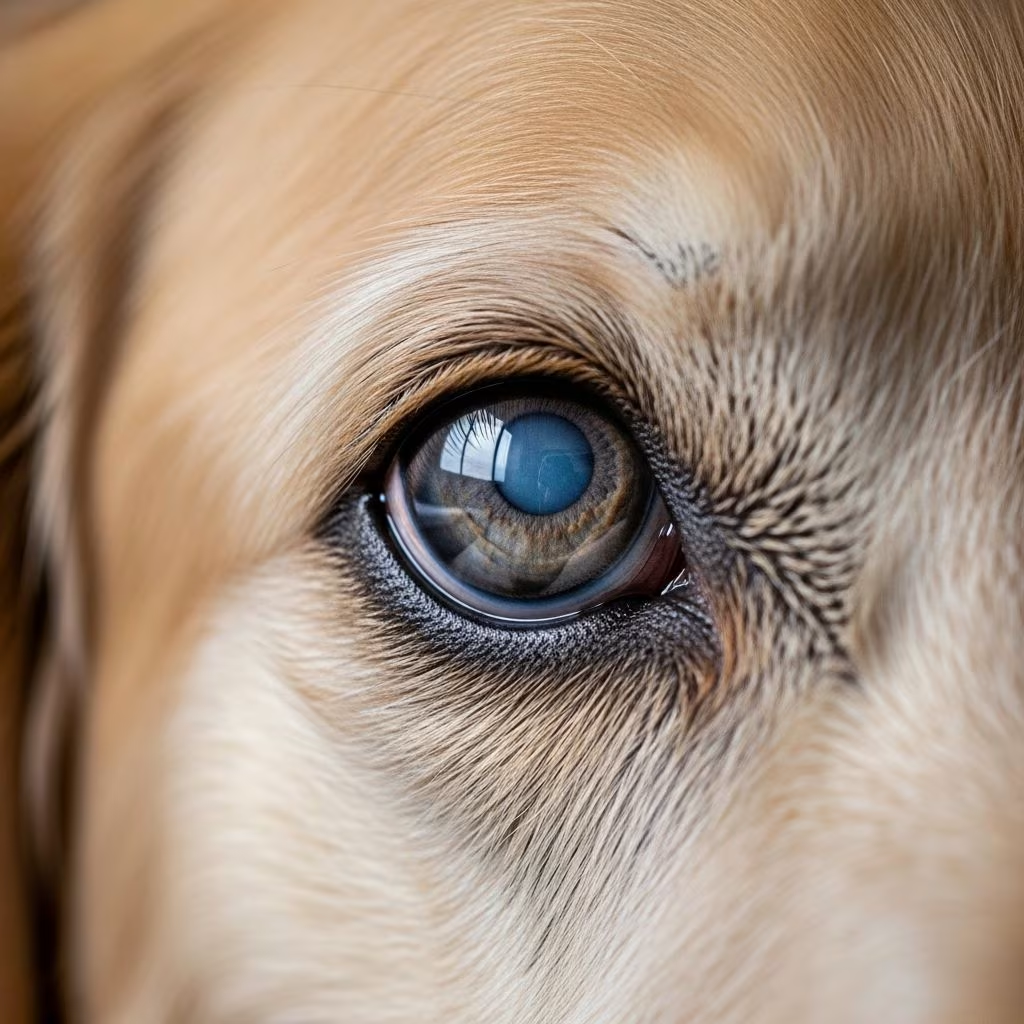
Lenticular sclerosis is characterized by the progressive accumulation and compression of lens fibers in the eye. As dogs age, new lens fibers develop around the outside of the lens, gradually compressing the older fibers in the center, or nucleus, of the lens. This compression causes the nucleus to become increasingly dense and hard, ultimately leading to the lens losing its transparency. The result is a distinctive gray, rounded opacity or cloudiness that appears in the center of the lens. This condition typically develops bilaterally, meaning it affects both eyes symmetrically, creating a uniform appearance across both optical lenses.
Appearance and Characteristics of Lenticular Sclerosis
One of the defining features of lenticular sclerosis is its distinctive visual presentation. The condition appears as an evenly gray, rounded opacity in the center of the lens. This cloudiness is most easily observed when the pupil is dilated during a veterinary examination. Interestingly, the opacity is often more dramatic when viewed from the side of the eye rather than from the front, which is why veterinarians may position themselves at different angles during examination.
Key Visual Characteristics:
- Even, symmetrical gray cloudiness in the lens center
- Bluish or grayish haze that develops gradually
- Bilateral presentation in both eyes
- More noticeable from side viewing angles
- Progressive appearance that becomes more dramatic over time
When examined with an ophthalmoscope, a specialized instrument that allows veterinarians to view the back of the eye, the retina and fundus can still be seen through the sclerotic lens, even though the view may be slightly fuzzy. This distinguishes lenticular sclerosis from cataracts, where the lens becomes so opaque that the back of the eye cannot be visualized at all.
Common Symptoms and Signs
While lenticular sclerosis produces visible changes in the appearance of the eye, the actual symptoms affecting your dog’s daily life are typically minimal. This is one of the most reassuring aspects of the condition for pet owners to understand.
Primary Signs You Might Notice:
- Cloudy or hazy appearance in both eyes
- Bluish or grayish tint to the lens
- Difficulty seeing in low light conditions
- Mild increased sensitivity to bright light
- Subtle changes in eye color
- Possible difficulty focusing on objects up close
In most cases, lenticular sclerosis does not cause any significant visual deficits. Dogs can continue to live their normal lives without noticeable impairment. However, in some advanced cases where the lens fibers become very dense and compressed, dogs may experience minor vision issues related to depth perception and near vision, particularly in dim lighting conditions. Some owners report that their dogs may not catch treats as easily as before or might have slight difficulty with stairs, but these issues are relatively uncommon and typically only occur in very advanced cases.
What Causes Lenticular Sclerosis?
The exact cause of lenticular sclerosis remains not entirely understood by veterinary ophthalmologists, but the condition is fundamentally linked to the natural aging process in dogs. The primary mechanism involves the continuous growth of new lens fibers throughout a dog’s life. As these new fibers develop around the outer edges of the lens, they gradually compress the older, original fibers in the nucleus at the center of the lens.
Contributing Factors:
- Natural aging process and lens fiber accumulation
- Progressive compression of central lens fibers
- Lens hardening and increased fiber density
- Cumulative sun exposure throughout the dog’s life
While aging is the primary factor, research suggests that cumulative sun exposure may accelerate the development and progression of lenticular sclerosis. This means that limiting your dog’s UV light exposure throughout their lifetime may help slow down the development of this condition. However, since lenticular sclerosis is an inevitable consequence of aging, it cannot be completely prevented.
Age of Onset and Risk Factors
Lenticular sclerosis can begin developing in dogs as young as six years old, though the condition is most commonly observed in dogs eight years of age or older. This makes it a particularly common finding during senior dog wellness examinations. As dogs continue to age, the prevalence and visibility of lenticular sclerosis typically increases. However, individual variation exists, and some dogs may develop the condition earlier than others depending on genetic factors, breed predisposition, and environmental exposure to sunlight.
Diagnosis: How Veterinarians Identify Lenticular Sclerosis
Proper diagnosis of lenticular sclerosis requires a thorough eye examination by a veterinarian. This is particularly important because several eye conditions can cause clouding of the lens, and it’s essential to distinguish lenticular sclerosis from more serious conditions like cataracts that do require treatment.
The Diagnostic Process Includes:
- Visual inspection of both eyes for characteristic cloudiness
- Pupil dilation using medicated eye drops to allow better visualization
- Examination with an ophthalmoscope to view the retina and fundus
- Assessment of light reflection and lens transparency
- Tonometry to measure intraocular pressure and rule out glaucoma
- Evaluation for cataracts and other potential eye conditions
During the ophthalmoscopic examination, your veterinarian will look for a characteristic reflection called the tapetum lucidum. If this reflection is blocked by lens cloudiness, it may indicate a cataract rather than lenticular sclerosis. With lenticular sclerosis, despite the cloudiness, the veterinarian can still visualize through the lens to see the retina at the back of the eye. This distinction is crucial for accurate diagnosis and appropriate management recommendations.
Lenticular Sclerosis vs. Cataracts: Understanding the Difference
Many pet owners confuse lenticular sclerosis with cataracts because both conditions involve lens cloudiness. However, these are distinctly different conditions with different implications for your dog’s vision and treatment options.
| Characteristic | Lenticular Sclerosis | Cataracts |
|---|---|---|
| Cause | Natural aging process | Various causes: injury, disease, genetics |
| Vision Impact | Minimal to no significant impairment | Can cause blindness if severe |
| Appearance | Even, symmetric gray opacity in center | White cloudiness that can be complete |
| Ophthalmoscopic View | Retina visible through lens | Retina may be partially or completely blocked |
| Treatment | No treatment necessary | Surgical correction if significant vision loss |
| Progression | Slow, age-related | Can progress quickly depending on cause |
Treatment Options and Management
One of the most reassuring aspects of lenticular sclerosis is that there is no specific treatment necessary for the condition itself. The clouding caused by lenticular sclerosis does not cause pain, and it does not significantly affect your dog’s quality of life or daily functioning. Treatment is simply not required or recommended for straightforward cases of lenticular sclerosis.
Why No Treatment?
- Lenticular sclerosis is a normal part of aging
- The condition is not painful
- Vision impairment is minimal to negligible
- No medications can reverse the changes
- Surgical intervention is not beneficial for this condition alone
Monitoring and Follow-Up Care
While treatment is not necessary for lenticular sclerosis itself, regular veterinary monitoring is important for two key reasons. First, it ensures that the cloudiness remains purely from lenticular sclerosis and not from developing cataracts. Second, it allows your veterinarian to monitor for any secondary eye conditions that might develop.
Recommended Monitoring Schedule:
- Annual eye examinations for dogs diagnosed with lenticular sclerosis
- More frequent exams if vision changes are noticed
- Regular evaluation for cataract development
- Assessment for other age-related eye conditions
- Monitoring of intraocular pressure for glaucoma risk
Supporting Your Dog with Lenticular Sclerosis
While treatment is not necessary, there are several ways you can support your aging dog’s quality of life if they have been diagnosed with lenticular sclerosis, particularly if they experience any mild vision changes.
Environmental Modifications:
- Remove obstacles and clutter from your home to prevent accidents
- Keep furniture in the same location for familiarity
- Install night lights to help navigation in low light conditions
- Use visual aids like contrasting colors for food and water bowls
- Place textured mats on slippery surfaces to improve grip
- Avoid sudden movements that may startle your dog
- Maintain consistent routines for feeding, exercise, and bathroom breaks
- Limit UV light exposure to slow progression
- Ensure a balanced diet rich in vitamins A and C
Prognosis and Long-Term Outlook
The prognosis for lenticular sclerosis is excellent. This condition is progressive but does not impair vision to any significant degree in the vast majority of cases. Most dogs with lenticular sclerosis continue to live full, active lives without noticeable visual impairment. The cloudiness will continue to develop and become more pronounced over time, but this progression does not translate to equivalent vision loss.
In very advanced cases with extremely dense lens fibers, some dogs may experience minor issues with depth perception or near vision in dim lighting, but these problems are uncommon and rarely significantly affect quality of life. Dogs truly have to live a dog’s life, not read fine print, and lenticular sclerosis does not prevent them from doing so.
Frequently Asked Questions
Q: Is lenticular sclerosis painful for my dog?
A: No, lenticular sclerosis is not painful. It is a gradual, age-related condition that causes no discomfort to your dog. The only changes are the visual appearance of cloudiness in the lens.
Q: Will lenticular sclerosis cause my dog to go blind?
A: No, lenticular sclerosis does not cause blindness. Unlike cataracts, which can progress to complete vision loss, lenticular sclerosis causes minimal to negligible vision impairment. Your dog should continue to see and function normally.
Q: Can lenticular sclerosis be prevented?
A: Since lenticular sclerosis is caused by the natural aging process, it cannot be completely prevented. However, limiting your dog’s sun exposure throughout their lifetime may slow down its development and progression.
Q: What should I do if I notice cloudiness in my dog’s eyes?
A: Schedule an appointment with your veterinarian for a comprehensive eye examination. While cloudiness could indicate lenticular sclerosis, it could also indicate cataracts or other eye conditions that do require treatment. A thorough examination is necessary to determine the cause.
Q: How often should my dog with lenticular sclerosis be examined?
A: Dogs diagnosed with lenticular sclerosis should have regular eye examinations, typically at least annually, to monitor for any changes and to ensure that cataracts are not developing. Your veterinarian may recommend more frequent exams if needed.
Q: Are there supplements that can help lenticular sclerosis?
A: While no supplements can reverse lenticular sclerosis, some veterinarians recommend antioxidant supplements to support overall eye health and potentially slow progression. A diet rich in vitamins A and C may also be beneficial for maintaining eye health.
Q: What is the difference between lenticular sclerosis and a cataract?
A: The main difference is that with lenticular sclerosis, the retina remains visible through the lens during examination, while with cataracts, the lens becomes so opaque that the retina cannot be seen. Cataracts can significantly impair vision and may require surgery, while lenticular sclerosis does not.
Q: Will my dog need surgery for lenticular sclerosis?
A: No, surgery is not recommended for lenticular sclerosis itself. However, if your dog develops a cataract, surgery may be recommended. Regular monitoring helps ensure early detection of any cataracts that might develop.
References
- Lenticular Sclerosis in Dogs — VCA Animal Hospitals. 2024. https://vcahospitals.com/know-your-pet/lenticular-sclerosis-in-dogs
- Lenticular Nuclear Sclerosis in Dogs: Symptoms & Treatment — Animal Eye Guys. 2024-05-30. https://www.animaleyeguys.com/site/blog/2024/05/30/nuclear-sclerosis-dogs
- Nuclear Sclerosis in Dogs: What is It and What Do You Need to Know? — American Kennel Club. 2024. https://www.akc.org/expert-advice/health/nuclear-sclerosis-in-dogs/
- Is it a Cataract or Lenticular Sclerosis? — PetMD. 2011-11. https://www.petmd.com/blogs/fullyvetted/2011/nov/cataracts_or_lenticular_sclerosis-11975
- Nuclear Sclerosis in Dogs – Everything You Should Know — Northwest Animal Eye. 2023-11-15. https://www.northwestanimaleye.com/site/blog/2023/11/15/nuclear-sclerosis-dogs
- Lenticular Sclerosis in Dogs – Causes, Treatment and Care — Vetster. 2024. https://vetster.com/en/conditions/dog/lenticular-sclerosis



