

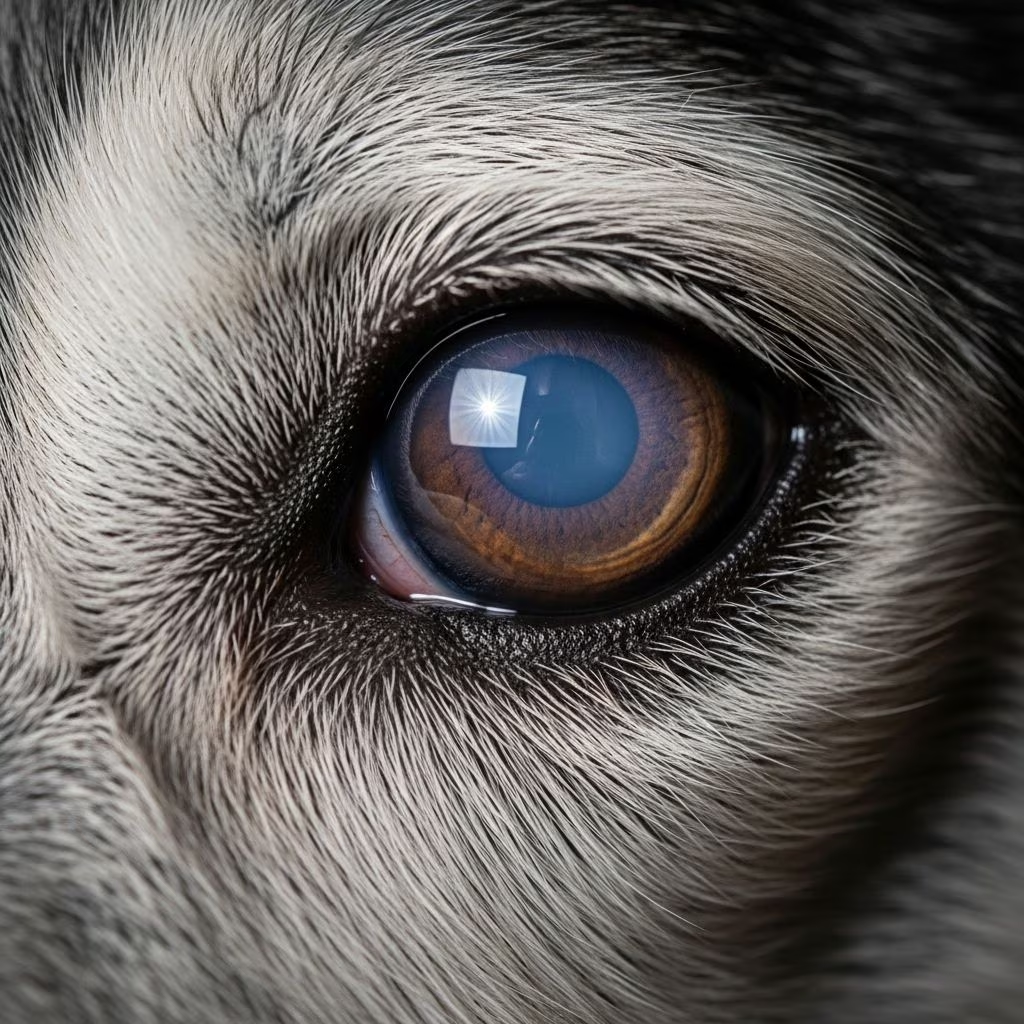
As dogs enter their senior years, various physical changes occur throughout their bodies, and the eyes are no exception. One of the most commonly observed age-related ocular changes in older dogs is a condition known as lenticular sclerosis, also referred to as nuclear sclerosis. This condition affects the lens of the eye, causing a characteristic cloudy appearance that many pet owners notice during routine interactions with their aging companions. Understanding this condition is essential for dog owners to distinguish it from more serious eye problems and to provide appropriate care for their pets.
The Fundamental Nature of Lenticular Sclerosis
Lenticular sclerosis represents a natural biological process that occurs in the eyes of aging canines. At its core, this condition involves structural changes to the lens, which is a transparent biological component positioned behind the pupil that plays a critical role in focusing light onto the retina. Throughout a dog’s lifetime, the lens continuously produces new fiber cells that accumulate in layers. Unlike other tissues in the body that can expand to accommodate new growth, the lens exists within a fixed capsule that cannot stretch. As a result, newly formed fibers compress the older, central fibers of the lens, causing progressive hardening and density changes.
This compression process gradually transforms the lens from its normal clear, flexible state into a denser, less flexible structure. The resulting optical effect creates a characteristic bluish-gray haze that develops symmetrically in both eyes. This visual change is typically one of the first signs that pet owners notice when examining their aging dog’s eyes, particularly when viewing the eyes from the side angle where the opacity becomes more apparent.
When Does Lenticular Sclerosis Typically Develop?
The onset of lenticular sclerosis follows a fairly predictable timeline based on a dog’s age. Research indicates that this condition becomes evident in dogs starting around six to seven years of age, though it remains relatively subtle during this initial phase. By the time dogs reach eight years of age, the condition becomes increasingly common and more visually apparent. As dogs continue aging beyond this point, the progression generally becomes more pronounced, with the cloudy appearance becoming increasingly noticeable to observant owners.
It is important to recognize that lenticular sclerosis is not an overnight development but rather a gradual process that unfolds over months and years. This slow progression allows dogs to naturally adapt to the subtle changes in their visual perception, though some behavioral adjustments may become necessary as the condition advances.
Recognizing the Clinical Presentation and Symptoms
The visual manifestations of lenticular sclerosis provide clear indicators that warrant attention from pet owners. The most prominent characteristic is the development of a bluish-gray tint or haze that appears in the lens of the eye. This coloration typically affects both eyes symmetrically, meaning both eyes display similar changes in appearance and progression.
Beyond the visible color changes, dogs with advancing lenticular sclerosis may exhibit behavioral and functional changes related to their perception:
- Hesitation when navigating stairs or elevated surfaces due to altered depth perception
- Reduced ability to track or catch objects thrown through the air
- Occasional startle responses when approached, as their spatial awareness becomes less precise
- Difficulty focusing on objects in close proximity, similar to presbyopia in humans
- Enhanced sensitivity to bright light conditions
- Improved vision in dimly lit environments compared to brightly lit spaces
- Accidental nipping during treat intake due to misjudged distance perception
Importantly, these behavioral changes develop gradually, allowing most dogs to adapt their movement patterns and interactions accordingly. The gradual nature of the condition provides a natural adjustment period that contrasts sharply with sudden vision loss from other causes.
Distinguishing Lenticular Sclerosis from Cataracts
One of the most critical distinctions pet owners must understand is the difference between lenticular sclerosis and cataracts, as these conditions can appear superficially similar but have vastly different implications for a dog’s vision and treatment options.
| Characteristic | Lenticular Sclerosis | Cataracts |
|---|---|---|
| Primary Cause | Normal age-related lens hardening | Protein denaturation in lens |
| Vision Impact | Minimal to no vision loss | Significant vision impairment |
| Light Transmission | Light passes through lens normally | Light is blocked by opaque lens |
| Appearance Pattern | Symmetric bilateral cloudiness | Can be unilateral or asymmetric |
| Treatment Options | No treatment necessary | Surgical intervention possible |
| Progression Speed | Very gradual over years | Variable, sometimes rapid |
The key distinction lies in how each condition affects light transmission through the lens. In lenticular sclerosis, despite the cloudy appearance, light continues to pass through the lens and reach the retina, preserving functional vision. In contrast, cataracts involve protein changes that create opaque barriers that actively block light from reaching the retina, resulting in significant vision impairment or blindness. This fundamental difference means that a dog with lenticular sclerosis maintains normal vision capability, whereas a dog with advanced cataracts experiences genuine vision loss.
The Diagnostic Process and Veterinary Examination
Accurate diagnosis of lenticular sclerosis requires a comprehensive ophthalmic examination conducted by a veterinarian, ideally one with specialized training in veterinary ophthalmology. The diagnostic procedure typically involves several components to accurately identify the condition and rule out more serious ocular problems.
During the examination, the veterinarian will perform pupil dilation using specialized eye drops to allow enhanced visualization of the lens structures. This dilation process reveals the characteristic gray, rounded opacity centered in the lens that is more easily observed when the pupil is expanded. The opacity often appears more dramatic when viewed from the side rather than from the direct front view, so veterinarians may examine the eye from various angles for optimal visualization.
Additionally, the veterinarian will use an ophthalmoscope to examine the retina and fundus (the back of the eye) through the sclerotic lens to ensure that these structures remain healthy and that the cloudy appearance is indeed from lenticular sclerosis rather than other pathology. This careful examination helps distinguish lenticular sclerosis from cataracts or other more serious eye conditions that might require intervention.
Understanding the Underlying Mechanisms
While the exact mechanisms driving lenticular sclerosis remain incompletely understood, current veterinary research provides valuable insights into the biological processes involved. The fundamental mechanism centers on the continuous production of lens fiber cells throughout a dog’s lifetime. These new fibers deposit on the outer regions of the lens, and as they accumulate over years, they compress the older, central lens fibers into a progressively denser nucleus.
Environmental factors may also play a role in the progression rate. Some veterinary ophthalmologists suggest that increased exposure to ultraviolet radiation from sunlight may accelerate the development or progression of lenticular sclerosis, though this remains an area of ongoing investigation. This potential connection to UV exposure suggests that limiting excessive sun exposure, particularly for dogs in sunny climates, may be a prudent preventive measure, though it is not a proven intervention at this time.
Management and Lifestyle Considerations for Affected Dogs
The good news for dog owners is that lenticular sclerosis does not require medical treatment or intervention. Since the condition does not significantly impair vision, no pharmaceutical or surgical approaches are necessary or recommended. Instead, management focuses on making simple environmental and behavioral adjustments to accommodate the subtle depth perception changes that may occur.
Pet owners can implement several practical strategies to support their dogs with this condition:
- Maintain consistent lighting in frequently used areas to help dogs navigate their environment more confidently
- Avoid sudden movements or surprising your dog from the side, as their depth perception may be slightly altered
- Use verbal cues when approaching your dog, particularly from angles where they cannot see you directly
- Be cautious when offering treats by hand, allowing your dog to approach the treat rather than extending it into their space
- Provide extra time and patience when your dog approaches stairs or other changes in elevation
- Avoid playing catch or fetch with fast-moving objects, instead engaging in slower-paced play or other activities
- Protect your dog’s eyes from excessive UV exposure when spending extended time outdoors
Prognosis and Long-Term Outlook
Dogs with lenticular sclerosis have an excellent prognosis and can live comfortably throughout their senior years with this condition present. Since the disease does not progress to blindness or cause pain, the quality of life remains unaffected for most dogs. The gradual nature of the changes allows dogs’ brains to naturally compensate for any depth perception alterations, and most dogs adapt remarkably well to these subtle vision changes.
It is important to note that while lenticular sclerosis itself is benign and non-progressive in terms of causing actual vision loss, dogs who are very elderly may eventually develop concurrent vision problems from other sources. Regular veterinary check-ups remain important to monitor overall eye health and to ensure that any new eye conditions are detected and managed appropriately.
Frequently Asked Questions About Lenticular Sclerosis
Is lenticular sclerosis painful for my dog?
No, lenticular sclerosis is not a painful condition. Dogs do not experience discomfort from this age-related lens change, and it requires no pain management or treatment.
Can lenticular sclerosis be prevented?
Lenticular sclerosis is a natural consequence of aging and cannot be prevented entirely. However, limiting excessive UV exposure through sun protection may potentially slow progression, though this has not been definitively proven.
Will my dog go blind from lenticular sclerosis?
No, lenticular sclerosis does not cause blindness. The condition preserves functional vision, and light continues to pass through the lens despite its cloudy appearance.
Does every senior dog develop lenticular sclerosis?
Lenticular sclerosis is extremely common in older dogs and is considered a normal part of aging. However, individual variation exists, and not all senior dogs may develop equally noticeable changes.
Should I consider cataract surgery if my dog has lenticular sclerosis?
Surgery is not indicated for lenticular sclerosis since the condition does not impair vision. If your veterinarian suspects cataracts rather than lenticular sclerosis, that situation would be evaluated separately for potential surgical intervention.
When to Consult Your Veterinarian
While lenticular sclerosis itself is not an emergency condition, certain situations warrant veterinary consultation. If you notice sudden changes in your dog’s eyes, rapid vision loss, or signs of pain such as excessive tearing or eye redness, contact your veterinarian promptly, as these signs may indicate a more serious condition requiring intervention. Additionally, if you are uncertain whether your dog’s eye changes represent lenticular sclerosis or another condition, a professional evaluation provides important clarity and peace of mind.
Regular veterinary wellness examinations become increasingly important as dogs age, providing opportunities for your veterinarian to monitor eye health and identify lenticular sclerosis or other age-related changes early. These routine check-ups also ensure that any concurrent health conditions are detected and managed appropriately.
References
- Nuclear Sclerosis in Dogs: Signs, Symptoms, Treatments — American Kennel Club. 2024. https://www.akc.org/expert-advice/health/nuclear-sclerosis-in-dogs/
- Nuclear Sclerosis in Dogs – Everything You Should Know — Northwest Animal Eye. 2023-11-15. https://www.northwestanimaleye.com/site/blog/2023/11/15/nuclear-sclerosis-dogs
- Lenticular Sclerosis: How Do Dogs Get It and How Is It Treated? — PetMD. 2024. https://www.petmd.com/dog/conditions/eyes/lenticular-sclerosis
- Lenticular Sclerosis in Dogs – Causes, Treatment and Prevention — Vetster. 2024. https://vetster.com/en/conditions/dog/lenticular-sclerosis



