
Lens Problems In Horses: Causes, Signs, And Treatment Guide
Explore the causes, symptoms, diagnosis, and management strategies for lens disorders in horses to safeguard equine vision and welfare.
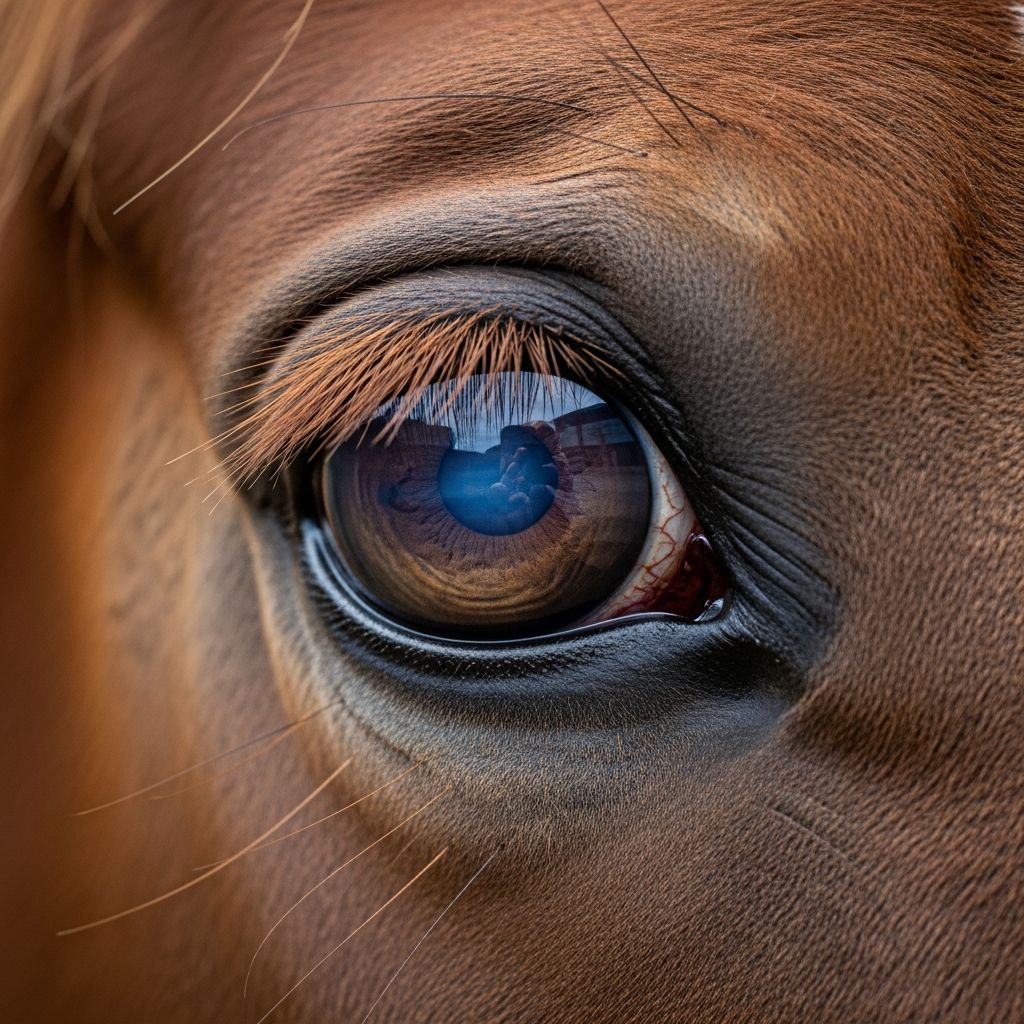
The lens plays a pivotal role in equine vision by focusing light onto the retina. Disruptions to its position or clarity can lead to significant visual impairment, pain, and secondary complications. Understanding these conditions empowers horse owners to act swiftly.
The Essential Role of the Equine Lens
In horses, the lens is a transparent, avascular structure suspended by zonular fibers within the eye. It lacks blood vessels and nerves, deriving nutrients from aqueous and vitreous humors while maintaining perfect clarity for light transmission. Any shift or opacity compromises this function, often stemming from inflammation, injury, or age-related degeneration.
Primary Lens Abnormalities in Equine Eyes
Lens disorders in horses primarily manifest as opacities or displacements. Cataracts represent the most prevalent issue, affecting 5-7% of horses with otherwise normal eyes, while luxations are rarer but more urgent. These conditions frequently arise secondary to chronic inflammation like equine recurrent uveitis (ERU), also known as moon blindness, the leading cause of equine blindness.
Cataract Formation and Progression
Cataracts involve lens opacity, which can be congenital or acquired. Acquired forms often link to ERU, where inflammatory vesicles form in the lens periphery, evolving into cortical opacities. In young horses, small equatorial cataracts may go unnoticed without pupil dilation. Progression can lead to mature cataracts, creating aphakic crescents visible during exams. Unlike dogs or cats, equine cataracts rarely resolve spontaneously and demand vigilant monitoring.
Lens Displacement: Subluxation and Luxation
Displacement occurs when zonular fibers weaken, allowing partial (subluxation) or complete (luxation) shifts. Anterior luxation pushes the lens forward, blocking aqueous humor drainage and risking glaucoma. Posterior luxation relocates it to the vitreous, potentially tolerable if inflammation is controlled. ERU repeatedly inflames zonules, making it the top culprit, alongside trauma, glaucoma, or cataracts.
- Subluxation: Mild shift; vision partially preserved, but progression risks complications.
- Anterior Luxation: Urgent; causes corneal edema, iris trembling, and pain.
- Posterior Luxation: Less immediately threatening; monitor for anterior migration.
Factors Increasing Susceptibility
Certain profiles heighten risk. Breeds prone to ERU, such as Appaloosas, face elevated threats. Older horses experience zonular weakening naturally. Trauma from kicks or branches damages supporting structures. Pre-existing conditions like glaucoma or cataracts further destabilize the lens.
| Risk Factor | Description | Impact on Lens |
|---|---|---|
| ERU (Moon Blindness) | Chronic inflammation | Weakens zonules over time |
| Trauma | Injury to eye | Direct zonule rupture |
| Age | Advanced years | Natural fiber degeneration |
| Cataracts/Glaucoma | Prior eye disease | Secondary instability |
Recognizing Clinical Signs
Early detection hinges on observing subtle changes. Owners may note cloudiness in the pupil, a trembling iris (iridodonesis), altered anterior chamber depth, or a visible lens edge. Pain manifests as blepharospasm, epiphora, or head shaking. In advanced cases, corneal edema, buphthalmos (enlarged globe), or vision loss prompts behavioral shifts like hesitation in dim light or bumping obstacles.
Horses cannot feel lens pain directly due to its aneural nature, but adjacent inflammation causes discomfort. Routine checks during grooming reveal asymmetries or opacities.
Diagnostic Approaches for Lens Issues
Veterinarians employ targeted exams. Visual inspection identifies position anomalies. Ophthalmoscopy and slit-lamp biomicroscopy detail internal structures, revealing subluxated edges or cataracts. Tonometry measures intraocular pressure to detect glaucoma. Under sedation, pupil dilation with mydriatics enhances views, sometimes aided by intracameral epinephrine for fibrin clearance.
- Direct Ophthalmoscopy: Spots lens shifts via retroillumination.
- Slit-Lamp: Magnifies opacities and zonule status.
- Tonometry: Quantifies pressure elevations.
Management and Therapeutic Options
Treatment varies by severity and cause. Conservative approaches suit stable posterior cases: topical/systemic anti-inflammatories control ERU, with pupil constrictors preventing anterior shifts. Frequent monitoring checks for edema or pain.
Surgical intervention becomes necessary for progressive or painful conditions. Lensectomy removes the lens, restoring comfort though not always vision; success is higher in foals than adults with ERU histories. Enucleation is a last resort for blind, painful eyes, preserving welfare. Post-op care includes anti-inflammatories and monitoring for phthisis bulbi.
Addressing Underlying Inflammation
ERU management is cornerstone: topical NSAIDs, corticosteroids, or immunosuppressants reduce flares. Systemic therapy aids chronic cases. Environmental controls like fly masks mitigate triggers.
Preventive Strategies for Equine Eye Health
Proactive care minimizes risks. Annual ophthalmic exams catch incipient issues. Prompt trauma treatment prevents zonule damage. Fly control and UV-protective masks curb ERU. Nutritional support with antioxidants may bolster lens resilience, though evidence is emerging.
- Regular vet eye checks, especially for at-risk breeds.
- Immediate care for injuries or inflammation.
- Stable environments reducing trauma exposure.
- Vigilant monitoring of behavior and eye appearance.
Prognosis and Long-Term Outlook
Outcomes depend on timeliness. Early subluxation with controlled ERU may stabilize vision. Luxations often require surgery, with guarded prognoses due to recurrence risks. Cataract surgery restores function in select cases, but secondary uveitis complicates adults. Untreated cases risk glaucoma or blindness, impacting usability.
Frequently Asked Questions (FAQs)
What causes the most lens problems in horses?
Equine recurrent uveitis (ERU) is the primary driver, weakening zonules through repeated inflammation.
Can horses live with a luxated lens?
Posterior luxations may be managed medically if comfortable, but anterior ones typically need intervention.
Is cataract surgery common for horses?
It’s viable but less routine than in small animals, with better foal success rates.
How do I know if my horse has lens issues?
Look for pupil cloudiness, iris quiver, squinting, or tearing; consult a vet promptly.
Can lens disorders be prevented?
Not entirely, but controlling ERU, protecting from trauma, and routine exams significantly reduce risks.
References
- Dislocated Eye Lens (Luxated Lens) in Horses — Mad Barn. 2023. https://madbarn.com/luxated-lens-in-horses/
- Diseases and Surgery of the Lens — Veterian Key. 2016. https://veteriankey.com/diseases-and-surgery-of-the-lens/
- Diagnosis and treatment of lens diseases — PubMed (Peer-reviewed). 1992. https://pubmed.ncbi.nlm.nih.gov/1458330/
- The Lens in Animals — MSD Veterinary Manual (.edu equivalent authority). 2023. https://www.msdvetmanual.com/eye-diseases-and-disorders/ophthalmology/the-lens-in-animals
- Common Equine Eye Conditions — AAEP.org (Official veterinary org). 2023. https://aaep.org/post/common-equine-eye-conditions/
- Assessment of vision and common eye problems in horses — Cornell University Vet College (.edu). 2023. https://www.vet.cornell.edu/about-us/news/20230515/assessment-vision-and-common-eye-problems-horses
Similar Articles








Read full bio of medha deb


