

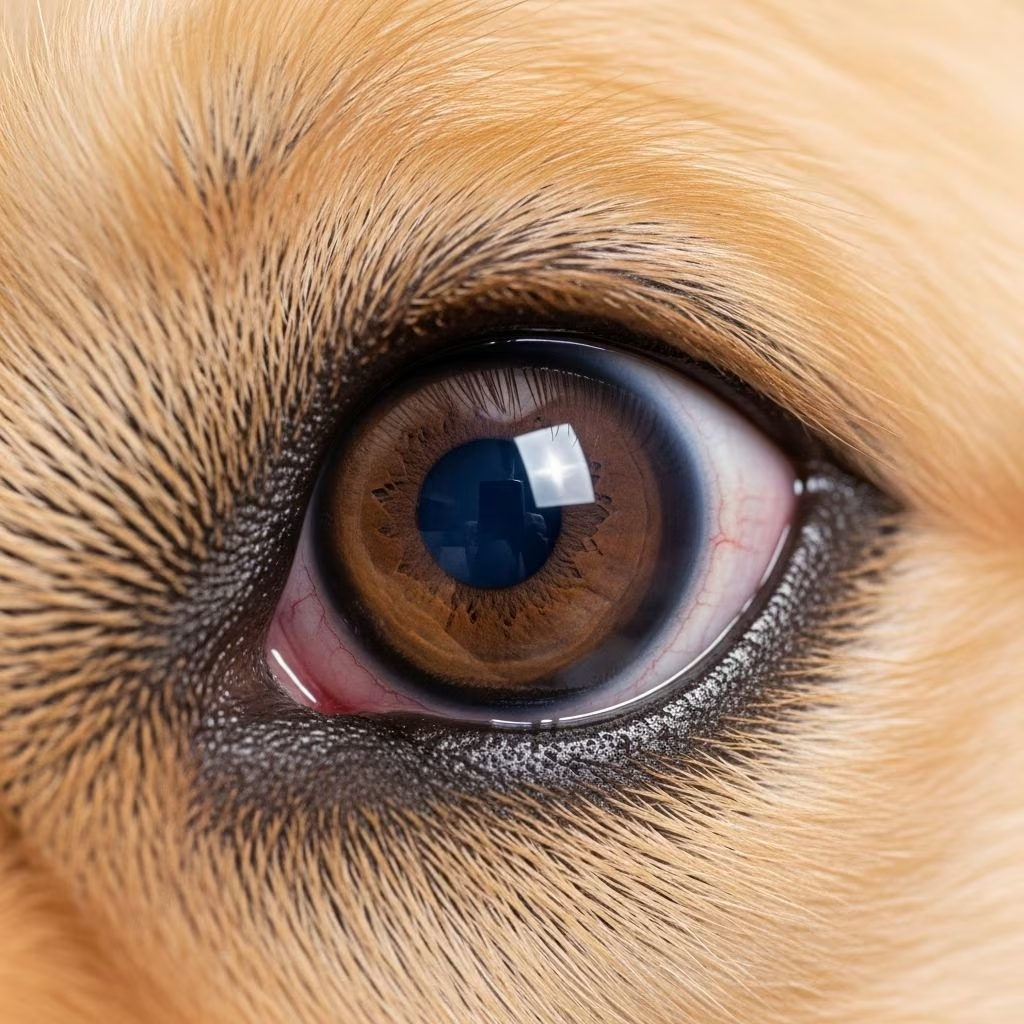
Understanding Lens Luxation in Dogs
Lens luxation is a serious eye condition that affects dogs when the lens of the eye becomes dislocated from its normal position. This occurs when the ligaments that hold the lens in place (called zonules or ciliary ligaments) break or deteriorate, allowing the lens to shift out of alignment. The condition can develop gradually or occur suddenly, and it represents an ophthalmic emergency when the lens moves into the front chamber of the eye. Understanding this condition is crucial for dog owners, as early detection and prompt treatment can significantly impact the preservation of vision.
What Causes Lens Luxation in Dogs
Lens luxation in dogs can result from two primary categories: primary and secondary causes. Primary lens luxation occurs due to an inherited weakness in the ciliary ligaments and is most commonly seen in terrier breeds, including Jack Russell Terriers, Patterdale Terriers, Parson Russell Terriers, and Border Terriers. This genetic predisposition causes the ligaments supporting the lens to gradually weaken over time.
Secondary lens luxation develops as a consequence of other eye diseases or injuries. Common secondary causes include:
- Trauma or injury to the eye
- Chronic inflammation of the eye (uveitis)
- Advanced cataracts
- Glaucoma or elevated intraocular pressure
- Retinal disease
Understanding whether the luxation is primary or secondary helps guide treatment decisions and long-term management strategies. Dogs with primary lens luxation often require monitoring of the opposite eye, as the condition frequently affects both eyes over time.
Clinical Signs and Symptoms
The signs of lens luxation vary depending on whether the lens has moved partially (subluxation) or completely out of position. Initial stages of lens luxation may be subtle and difficult for owners to detect without specialized veterinary equipment.
Early signs of lens subluxation include:
- Wobbling or trembling of the lens during eye movement
- Intermittent changes in pupil size and shape
- Subtle changes in vision or eye focus
Signs of complete anterior lens luxation (emergency symptoms):
- Sudden onset of eye pain and discomfort
- Excessive squinting or keeping the eye closed
- Increased tearing and watery discharge
- Redness of the white of the eye (conjunctival injection)
- Cloudiness or opacity in the eye
- Visible change in pupil appearance or shape
- Light sensitivity (photophobia)
- Vision loss in the affected eye
When the lens luxates anteriorly and becomes trapped between the cornea and iris, intraocular pressure rapidly rises, causing acute glaucoma. This is an extremely painful condition that requires immediate veterinary attention to prevent permanent blindness.
Diagnosis of Lens Luxation
Diagnosis of lens luxation requires comprehensive ophthalmologic examination by a qualified veterinary professional. A board-certified veterinary ophthalmologist uses specialized diagnostic equipment and techniques to confirm the condition.
Diagnostic procedures include:
- Slit-lamp biomicroscopy to visualize lens position and movement
- Tonometry to measure intraocular pressure
- Gonioscopy to evaluate the drainage angle
- Ultrasound examination if visualization is compromised by corneal opacity
- Careful assessment of the contralateral (opposite) eye for early signs
Early detection is particularly important because intervention before the lens completely luxates can prevent the development of glaucoma and maintain vision. Many cases of subluxation are discovered during routine eye examinations before the owner notices any clinical signs.
Treatment Options for Anterior Lens Luxation
Anterior lens luxation is considered a surgical emergency because of the rapid development of glaucoma and the associated pain and vision loss. Surgical removal of the dislocated lens is the only truly effective treatment for anterior luxation.
Surgical Management
Surgical removal of an anteriorly displaced lens (lensectomy) is the definitive treatment. This procedure is typically performed by a board-certified veterinary ophthalmologist under general anesthesia. The surgeon makes a small incision in the eye and carefully removes the entire lens. The incision is then closed with absorbable sutures that do not require removal. Additional sutures may be placed at the corner of the eye (canthus) depending on the patient’s specific condition.
An alternative surgical technique called phacoemulsification uses high-frequency ultrasound to liquefy the lens through a very small 2.8 mm incision. This minimally invasive approach has particular advantages when performed as prophylactic surgery before complete luxation occurs. This technique has approximately a 75% success rate with patients remaining sighted over three years after the operation.
Medical Management Prior to Surgery
Until surgery can be performed, immediate medical management is essential to control pain and prevent vision loss. Initial treatment typically includes:
- Pain relief medications
- Anti-glaucoma medications to reduce intraocular pressure
- Topical anti-inflammatory medications
- Systemic medications as needed for pain control
Medical therapy alone cannot resolve anterior lens luxation but serves as a temporary measure to preserve ocular health until surgical intervention is possible.
Alternative Treatments When Surgery Is Not Possible
In cases where surgical removal is not feasible due to financial constraints or medical contraindications, other treatment approaches may be attempted. A procedure called transcorneal reduction of anterior lens luxation (TRALL) involves attempting to widen the pupil medically and push the lens back into the posterior chamber. This approach requires sedation and has about an 8 in 10 success rate, with approximately 50% of eyes retaining sight 12 months after the procedure. However, this requires lifelong twice-daily treatment with medications that keep the pupil small to prevent re-luxation.
If the lens cannot be repositioned and surgery is not an option, removal of the entire eye (enucleation) may be recommended to relieve pain associated with elevated intraocular pressure and glaucoma.
Treatment for Partial Lens Luxation (Subluxation)
Before the lens completely dislocates, it may “wobble” in place as some of the supporting ligaments begin to break. This condition, called subluxation, presents different treatment considerations than complete luxation. Many veterinary ophthalmologists recommend performing surgery before complete luxation occurs to prevent the potentially serious complications associated with acute anterior luxation, including glaucoma and permanent vision loss.
The specific approach depends on individual factors such as the degree of subluxation, the rate of progression, and whether the opposite eye is affected. Your veterinarian will discuss the most appropriate treatment strategy based on comprehensive eye examination findings and consultation with a veterinary ophthalmologist.
Treatment for Posterior Lens Luxation
Posterior lens luxation, where the lens falls into the back chamber of the eye, generally causes less severe symptoms than anterior luxation and may require minimal or no treatment. The posterior chamber typically has more space to accommodate the dislocated lens without causing acute pressure elevation.
Management options for posterior luxation include:
- Observation and monitoring without treatment if the eye remains comfortable
- Topical medications to keep the pupil constricted and prevent the lens from moving forward
- Treatment of any underlying conditions that may have caused the luxation, such as uveitis
- Surgical lens extraction in selected cases, though this is technically demanding
Dogs with posterior lens luxation managed medically require lifelong eye drop application, typically twice daily, to maintain pupil constriction and lens position. Regular monitoring by a veterinary ophthalmologist is important to detect any progression to anterior luxation.
Recovery and Post-operative Management
Recovery from lens luxation surgery requires strict adherence to post-operative protocols. Dogs typically need two weeks of very strict rest following the procedure. Initially, your pet may be hospitalized for several days for close monitoring and pain management.
Post-operative care includes:
- Strict activity restriction with leash-walking only during outdoor time
- Confinement in a kennel or safe area to prevent running, jumping, and stair climbing
- Use of an Elizabethan collar (cone) to prevent the dog from pawing at the face
- Administration of prescribed medications exactly as directed
- Regular follow-up examinations with the ophthalmologist
- Lifelong post-operative medications in many cases
Dogs retain the ability to see following lens removal but become farsighted without the lens. Vision quality depends on several factors, including how quickly treatment was initiated and whether complications developed during or after surgery.
Possible Complications
While lens extraction is generally successful, several complications can occur:
- Inflammation inside the eye (uveitis)
- Development of glaucoma post-operatively
- Retinal detachment
- Bleeding into the eye
- Anterior chamber inflammation
- Corneal scarring
The risk of complications varies depending on the surgical technique used, the timing of intervention, and individual patient factors. Early intervention before complete luxation and glaucoma development generally results in better outcomes.
Prognosis and Long-term Outlook
The prognosis for lens luxation depends on several factors, including the type of luxation, the timing of treatment, and whether complications develop. Early detection and prompt surgical intervention significantly improve the chances of preserving vision. Dogs managed with prophylactic phacoemulsification have approximately 75% success rate with vision retention over three years. For posteriorly luxated lenses managed medically, vision can often be maintained with appropriate medical therapy, though lifelong medication compliance is necessary.
Frequently Asked Questions About Lens Luxation
Q: Is lens luxation painful?
A: Yes, anterior lens luxation is extremely painful due to rapid elevation of intraocular pressure causing acute glaucoma. Posterior lens luxation may cause minimal or no discomfort. Prompt pain management and treatment are essential.
Q: Can lens luxation affect both eyes?
A: Yes, particularly in cases of primary lens luxation. Dogs may develop the condition in both eyes over time. The opposite eye should be monitored regularly by a veterinary ophthalmologist.
Q: Will my dog be blind after lens removal surgery?
A: No, dogs retain vision following lens removal but become farsighted. Vision quality depends on factors such as timing of intervention and absence of complications. Many dogs adapt well and maintain good quality of life.
Q: How long does lens luxation surgery take?
A: The duration varies depending on the surgical technique and complexity, typically ranging from 30 minutes to over an hour. Your ophthalmologist can provide specific timing for your dog’s case.
Q: What is the cost of lens luxation surgery?
A: Surgical costs vary widely depending on location, surgeon expertise, and technique used. Consultation with your veterinary ophthalmologist can provide specific pricing. Pet insurance may cover portions of treatment costs.
Q: Are certain dog breeds more prone to lens luxation?
A: Yes, terrier breeds including Jack Russell Terriers, Border Terriers, and other small terriers have significantly higher incidence of primary lens luxation due to inherited ligament weakness.
Q: How often should my dog be monitored after surgery?
A: Regular follow-up examinations are essential, typically scheduled at one week, one month, three months, and six months post-operatively, then annually thereafter. Your ophthalmologist will establish an appropriate monitoring schedule.
References
- Lens Luxation in Dogs — VCA Animal Hospitals. 2025. https://vcahospitals.com/know-your-pet/lens-luxation-in-dogs
- Lens Luxation in Cats and Dogs — Davies Veterinary Specialists. 2025. https://www.vetspecialists.co.uk/fact-sheets-post/lens-luxation-in-cats-and-dogs/
- Primary Lens Luxation in Dogs — PetMD. 2025. https://www.petmd.com/dog/conditions/eyes/primary-lens-luxation-dogs
- Dislocation of the Lens in Small Animals — Merck Veterinary Manual. 2025. https://www.merckvetmanual.com/emergency-medicine-and-critical-care/ophthalmic-emergencies-in-small-animals/dislocation-of-the-lens-in-small-animals
- Lens Instability in Dogs and Cats Clinical Brief — College of Veterinary Surgeons. 2018-07-03. https://www.cuvs.org/sites/default/files/inline-files/Clinical%20Brief_Lens%20Instability%20in%20Dogs%20and%20Cats_07.03.18.pdf
- Lens Luxation Treatment Options — Animal Vision Care & Surgical Center. 2025. https://animalvisioncare.com/eye-conditions/canine/lens-luxation/



