

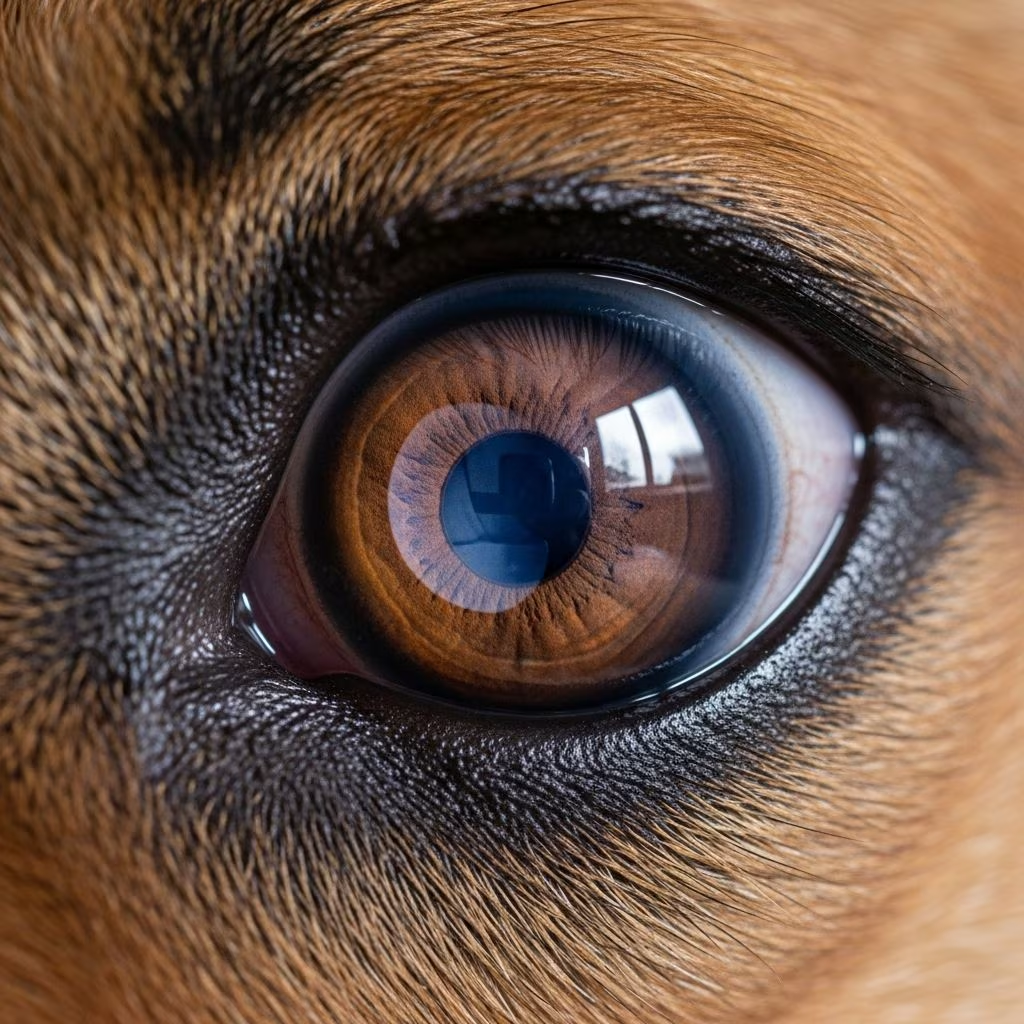
Lens Luxation in Dogs: Understanding This Serious Eye Condition
Lens luxation is a serious eye condition that affects dogs and requires immediate veterinary attention. This condition occurs when the lens of the eye becomes displaced from its normal position, potentially leading to blindness and severe pain if left untreated. Understanding the causes, recognizing the symptoms, and knowing the available treatment options can help pet owners protect their dogs’ vision and quality of life.
What is Lens Luxation?
Lens luxation refers to the displacement or dislocation of the lens from its normal position within the eye. The lens is held in place by tiny ligaments called zonules. When these zonules weaken or break, the lens can shift out of its proper position. This condition can be either primary (hereditary) or secondary (resulting from another eye disease or injury). Certain dog breeds, particularly terriers, are genetically predisposed to lens luxation, making it a hereditary concern for breed-specific health issues.
Types of Lens Luxation
Lens luxation is classified based on the direction in which the lens displaces:
Anterior Lens Luxation
Anterior lens luxation occurs when the lens moves forward into the front of the eye, becoming trapped between the cornea and iris. This is the more serious form and is considered a medical emergency. When the lens moves into the anterior chamber, it obstructs the normal flow of fluid within the eye, causing intraocular pressure to rise rapidly. This elevated pressure leads to glaucoma, which damages the optic nerve and retina, potentially resulting in permanent blindness within hours to days if not treated immediately.
Posterior Lens Luxation
Posterior lens luxation occurs when the lens falls backward into the back portion of the eye (the vitreous cavity). This type is typically less severe than anterior luxation because the lens does not obstruct fluid flow in the same way. Many dogs with posterior lens luxation may experience minimal discomfort and can often be managed with medical treatment rather than emergency surgery.
Subluxation
Before the lens completely dislocates, it may begin to wobble as some of the supporting zonules start to break down. This condition is known as subluxation or partial lens luxation. While the lens remains in its normal position, it lacks stability, and the condition may progress to complete luxation over time.
Causes of Lens Luxation
Lens luxation can develop through multiple pathways:
Primary Lens Luxation (Hereditary)
Primary lens luxation is inherited and results from a genetic predisposition to zonular weakness. Certain breeds show significantly higher incidence rates, including Jack Russell Terriers, Parson Russell Terriers, Border Collies, Shar-Peis, Miniature Bull Terriers, and Fox Terriers. In these breeds, the zonules are inherently weaker, making lens luxation more likely to occur spontaneously during the dog’s lifetime. Even without any injury or trauma, the zonules gradually deteriorate, eventually leading to lens displacement.
Secondary Lens Luxation
Secondary lens luxation develops as a consequence of another eye condition or traumatic injury. Uveitis (inflammation of the inner eye), chronic glaucoma, and retinal detachment can all weaken the zonules over time. Additionally, ocular trauma or head injuries can cause immediate zonular damage, resulting in lens luxation. Other conditions contributing to secondary luxation include lens-induced uveitis and chronic inflammation of the eye.
Recognizing the Symptoms
Early detection of lens luxation is crucial for preserving vision. Pet owners should be alert for the following symptoms:
Initial Signs
The very first sign of lens luxation is wobbling or movement of the lens, which is difficult to notice without specialized ophthalmological equipment. Most owners do not detect this early sign and instead notice more obvious clinical symptoms once the condition has progressed.
Acute Symptoms of Anterior Luxation
When the lens luxates anteriorly, dogs typically experience sudden onset symptoms including:
- Sudden eye pain and discomfort, causing the dog to hold the eye shut
- Redness of the white portion of the eye (conjunctival and episcleral injection)
- Cloudiness or haziness of the eye
- Watery discharge or excessive tearing
- Sensitivity to light (photophobia)
- Changes in pupil size or shape
- Squinting and increased blinking
- Behavioral changes indicating pain, such as reluctance to play or interact
Posterior Luxation Symptoms
When the lens luxates posteriorly, dogs may show few or no obvious symptoms initially. Some dogs experience only mild visual disturbance. However, if the pupil dilates, the lens may shift forward into the anterior chamber, causing acute symptoms similar to anterior luxation. This unpredictable progression makes even asymptomatic posterior luxation concerning.
Diagnosis and Examination
Veterinary ophthalmologists use specialized equipment to diagnose lens luxation. A thorough eye examination includes:
Clinical Examination
The veterinarian will assess both eyes and look for signs of lens movement, changes in pupil response, and evidence of increased intraocular pressure. Specialized drops may be applied to dilate or constrict the pupils to better visualize the lens position.
Tonometry
Measuring intraocular pressure is critical, as elevated pressure indicates glaucoma. Various tonometry methods, including applanation tonometry and rebound tonometry, help determine if the eye is experiencing dangerously high pressures.
Gonioscopy
This examination technique allows the veterinarian to visualize the drainage angles of the eye and assess how well fluid is draining. Blockage of drainage due to lens position directly contributes to pressure elevation.
Ultrasound
In cases where the eye is too cloudy to examine clearly, ultrasound may be used to visualize internal eye structures and confirm lens position.
Treatment Options
Treatment varies depending on the type and severity of lens luxation, as well as the dog’s overall health status.
Treatment for Anterior Lens Luxation
Anterior lens luxation is a surgical emergency requiring immediate intervention to prevent permanent blindness.
Surgical Treatment (Lensectomy)
Surgical removal of the anteriorly displaced lens is the only effective definitive treatment for anterior luxation. This procedure, called lensectomy, is typically performed by a board-certified veterinary ophthalmologist under general anesthesia. The surgeon makes a small incision in the eye and carefully removes the entire lens. The incision is then closed with absorbable sutures that do not require removal. Depending on the dog’s individual condition, additional sutures may be placed at the corner of the eye (canthus).
Another advanced surgical technique, phacoemulsification, uses high-frequency ultrasound to liquefy the lens through a very small 2.8 mm incision. This less traumatic approach has a high success rate, with approximately 75% of patients maintaining sight over 3 years after the procedure. Phacoemulsification is typically used in early cases of lens luxation.
Pre-Surgical Medical Management
Until surgery can be performed, it is essential to control pain and manage elevated intraocular pressure to prevent further damage to the retina and optic nerve. Treatment includes pain relief medications and anti-glaucoma medications such as topical prostaglandin analogs, beta-blockers, carbonic anhydrase inhibitors, and systemic medications like mannitol or oral carbonic anhydrase inhibitors to reduce intraocular pressure.
Alternative Treatment When Surgery Is Not Possible
If surgical removal cannot be performed due to financial constraints, medical or physical attempts to move the lens posteriorly may be attempted. The pupil can be dilated medically, and gentle physical manipulation may reposition the lens into the back of the eye. If successful, lifelong medical management with twice-daily eye drops to keep the pupil constricted is required to maintain lens position. This approach has approximately an 80% success rate in repositioning the lens, with about 50% of treated eyes retaining vision after 12 months.
Enucleation
If the lens cannot be repositioned and surgical extraction is not feasible, enucleation (surgical removal of the entire eye) may be performed to provide pain relief. While this eliminates the affected eye, it resolves chronic pain from the condition and may be the most humane option when other treatments are unavailable.
Treatment for Posterior Lens Luxation
Posterior lens luxation often requires less aggressive intervention than anterior luxation.
Medical Management
Many cases of posterior lens luxation can be managed with topical medications designed to keep the pupil constricted. Miotic agents such as latanoprost prevent the lens from shifting forward into the anterior chamber. These medications must be applied consistently, typically twice daily without fail, to maintain lens position. Additionally, topical anti-inflammatory medications may be prescribed to manage any associated inflammation.
Surgical Intervention
Some veterinary ophthalmologists recommend elective surgical extraction before the lens has luxated anteriorly, particularly in high-risk patients. Surgical removal of a posteriorly luxated lens involves similar techniques to anterior extraction but carries greater technical difficulty and higher complication risk. Success rates are comparable to anterior luxation surgery.
Treatment for Subluxation
When the lens is only partially displaced (subluxation), some ophthalmologists recommend early surgical intervention before complete luxation occurs. Operating at the subluxation stage may reduce the risk of complications associated with complete anterior luxation. Others prefer conservative management with monitoring and may recommend topical miotic medications. The best approach depends on the individual dog’s condition and examination findings by a veterinary ophthalmologist.
Surgical Complications and Outcomes
While surgical removal of the lens is often successful in preserving vision, several complications can occur:
Potential Complications
- Intraocular hemorrhage (bleeding inside the eye)
- Retinal detachment
- Development or worsening of glaucoma
- Inflammation of the eye
- Infection
- Anterior lens luxation of the contralateral (opposite) eye during recovery
Vision Outcomes
Following successful lensectomy for anterior lens luxation, approximately 50% of treated eyes retain functional vision two years after surgery. While vision is preserved, dogs become farsighted without a lens and require lifelong post-operative medications to manage inflammation and prevent glaucoma. Phacoemulsification procedures demonstrate improved outcomes, with approximately 75% of patients maintaining sight over 3 years post-operatively.
Post-Operative Care and Recovery
Proper post-operative care is essential for optimal recovery:
Hospitalization
Most dogs are hospitalized for several days immediately following surgery for close monitoring of eye pressure, inflammation, and wound healing.
Activity Restriction
Recovery typically requires a strict two-week rest period following surgery. During this time, dogs should be confined and activity strictly limited. Outdoor time should be restricted to leash walks only, with no running, jumping, or stair climbing. Dogs should be kept in their kennels except during necessary outdoor bathroom breaks and meal times.
Post-Operative Medications
Dogs require lifelong medications after lens removal, including topical antibiotics, anti-inflammatory drops, and medications to control intraocular pressure. All medications must be administered exactly as directed by the ophthalmologist.
Protective Equipment
Elizabethan collars (recovery cones) must be worn to prevent the dog from pawing at the face, which could damage the incision or introduce infection.
Follow-Up Examinations
Regular follow-up examinations with the ophthalmologist are necessary to monitor healing, assess vision, and adjust medications as needed.
Frequently Asked Questions
Q: Is lens luxation painful for dogs?
A: Yes, especially anterior lens luxation, which causes acute pain due to elevated intraocular pressure. Dogs may hold their eyes shut, squint excessively, and show behavioral signs of distress. Posterior lens luxation is typically less painful initially but can become painful if the lens shifts forward.
Q: Can lens luxation affect both eyes?
A: Yes, in primary (hereditary) lens luxation, both eyes are typically affected. While they may not luxate simultaneously, dogs with genetic predisposition are at high risk for bilateral involvement. If one eye has luxated, the other eye should be monitored closely and may benefit from preventive medication.
Q: What should I do if I suspect my dog has lens luxation?
A: Seek immediate veterinary attention, preferably from a veterinary ophthalmologist. Anterior lens luxation is an emergency, and early treatment is critical for preserving vision and relieving pain. Do not delay seeking care.
Q: Will my dog go blind if I don’t treat lens luxation?
A: With anterior lens luxation, blindness is very likely without prompt treatment. The elevated intraocular pressure damages the optic nerve and retina within hours to days. Even with treatment, vision may still be lost in some cases, but surgery offers the best chance of preserving sight.
Q: Can lens luxation be prevented?
A: Primary lens luxation cannot be prevented as it is genetically determined. However, breeding dogs with a family history of lens luxation should be carefully considered. Secondary lens luxation may be prevented by managing underlying eye conditions such as uveitis and avoiding eye trauma.
Q: What is the cost of lens luxation surgery?
A: Surgical costs vary depending on the procedure type, your geographic location, and the specific veterinary clinic. Consultation with your ophthalmologist will provide an accurate estimate for your dog’s specific situation.
Q: Can dogs see normally after lens removal?
A: Dogs can see after lens removal, but their vision is altered. Without a lens, dogs become farsighted and may have difficulty focusing on close objects. However, most dogs adapt well to this change and maintain functional vision for normal activities.
References
- Lens Luxation in Dogs — VCA Animal Hospitals. Accessed 2025-11-28. https://vcahospitals.com/know-your-pet/lens-luxation-in-dogs
- Clinical Brief: Lens Instability in Dogs and Cats — College of Veterinary Surgeons (CUVS). 2018-07-03. https://www.cuvs.org/sites/default/files/inline-files/Clinical%20Brief_Lens%20Instability%20in%20Dogs%20and%20Cats_07.03.18.pdf
- Primary Lens Luxation in Dogs — PetMD. Accessed 2025-11-28. https://www.petmd.com/dog/conditions/eyes/primary-lens-luxation-dogs
- Dislocation of the Lens in Small Animals — Merck Veterinary Manual. Accessed 2025-11-28. https://www.merckvetmanual.com/emergency-medicine-and-critical-care/ophthalmic-emergencies-in-small-animals/dislocation-of-the-lens-in-small-animals
- Lens Luxation in Cats and Dogs — Davies Veterinary Specialists. Accessed 2025-11-28. https://www.vetspecialists.co.uk/fact-sheets-post/lens-luxation-in-cats-and-dogs/
- Lens Luxation in Dogs — Primrose Hill Veterinary Hospital. Accessed 2025-11-28. https://www.primrosehillvets.ie/eye-care/lens-luxation-in-dog
- Lens Luxation — Animal Vision Care & Surgical Center. Accessed 2025-11-28. https://animalvisioncare.com/eye-conditions/canine/lens-luxation/



