
Lens In Animals: 4 Key Components, Disorders, Care
Comprehensive guide to the animal lens anatomy, development, function, and common disorders in veterinary practice.
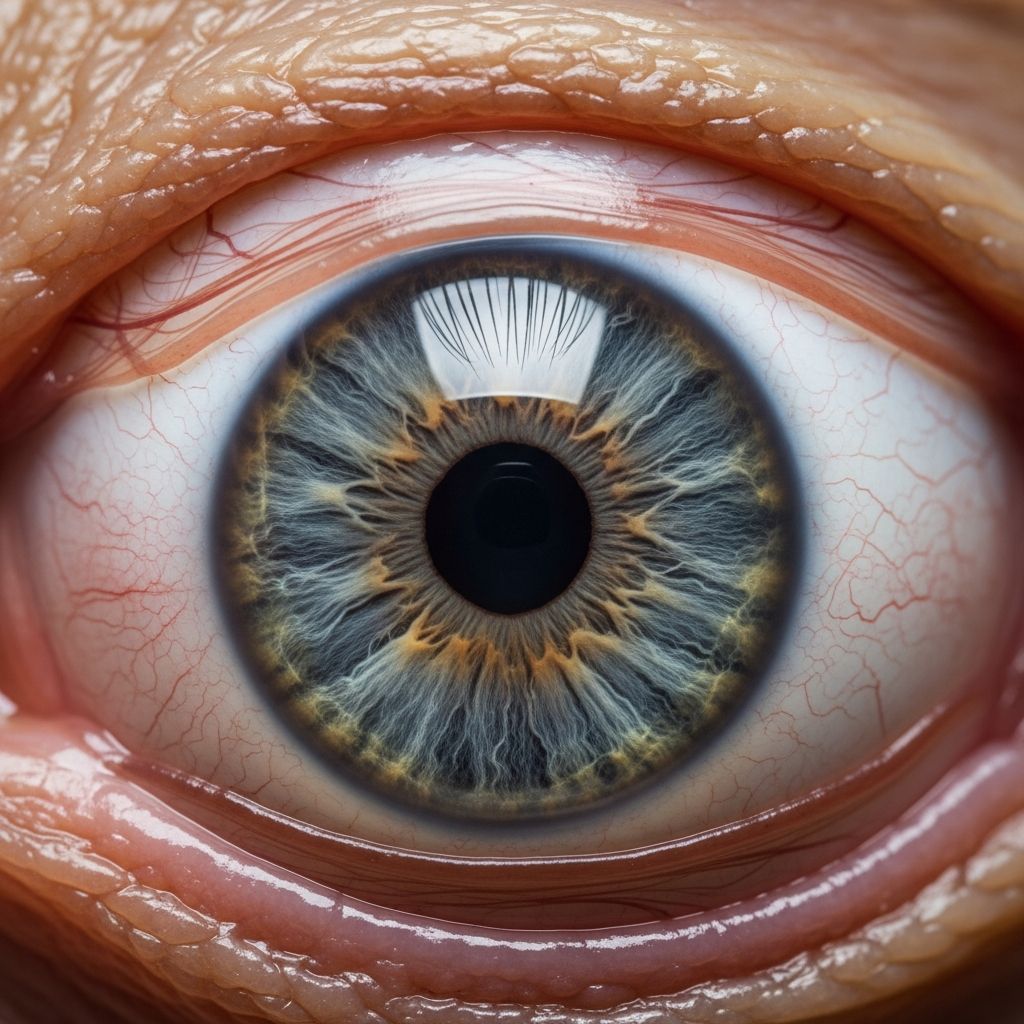
The lens serves as a critical optical component in the eyes of animals, enabling sharp focus of light onto the retina for clear vision. This transparent, biconvex structure adjusts shape to accommodate varying distances, though its capabilities differ across species.
Anatomy and Positioning of the Lens
In animal eyes, the lens occupies a central position in the anterior segment, situated directly behind the iris and pupil. It divides the eye into anterior and posterior chambers, with aqueous humor nourishing it from the front and vitreous humor supporting it from behind. Suspensory zonular fibers, originating from the ciliary body, anchor the lens securely at its equator, allowing precise control over its curvature.
The lens comprises three primary layers: an outer elastic capsule, a single layer of anterior epithelial cells, and an inner mass of elongated fiber cells. The capsule, a basement membrane rich in collagen type IV, laminin, and proteoglycans, varies in thickness—thickest at the equator for zonular attachments and thinnest at the poles. Epithelial cells, located only on the anterior surface, proliferate lifelong, migrating equatorially to differentiate into new fibers that push older ones centrally, ensuring continuous growth without compromising transparency.
Fiber cells form concentric lamellae, resembling a honeycomb in cross-section, interconnected by gap junctions and ball-and-socket interdigitations for metabolic exchange and structural integrity. The central nucleus consists of embryonic primary fibers, while the surrounding cortex holds newer secondary fibers. Sutures, where fibers meet at poles, create visible patterns that grow more intricate with age.
Developmental Origins and Lifelong Growth
Lens formation begins embryonically from surface ectoderm induced by the optic vesicle. The lens placode invaginates into a vesicle, filling with elongating primary fibers signaled by the retina to produce crystallins—refractive proteins maintaining clarity. Posterior epithelium regresses, leaving a thin capsule, while anterior cells persist for ongoing fiber production.
This continuous addition of fibers from the germinative zone at the equator results in a lens that enlarges throughout life, adapting to the animal’s growth. In dogs and cats, the lens reaches about 7-9 mm in diameter by adulthood, with shape changes limited compared to primates due to weaker accommodation.
Optical Function and Accommodation Mechanism
The lens refracts light to converge rays precisely on the retina. Its high refractive index, derived from crystallin-packed fibers devoid of organelles, ensures transparency. Accommodation—the process of focusing—involves ciliary muscle contraction relaxing zonules, allowing elastic capsule recoil to round the lens for near vision. Relaxation flattens it for distance.
Species variations are notable: dogs and cats exhibit minimal dynamic accommodation, relying more on corneal refraction and head movement. Horses and ruminants show greater flexibility, while birds possess spherical, high-power lenses with minimal shape change.
Key Components Table
| Component | Description | Function |
|---|---|---|
| Lens Capsule | Elastic basement membrane (2-28 μm thick) | Encases fibers, zonular attachment, shape maintenance |
| Epithelium | Anterior monolayer of cuboidal cells | Cell division, fiber production, pump nutrients |
| Fibers | Elongated, anucleate cells in lamellae | Refract light, form nucleus and cortex |
| Zonules | Fibrous ligaments from ciliary body | Suspend and tension lens |
Common Lens Disorders in Veterinary Practice
Lens opacities and displacements represent frequent ophthalmic issues in animals, often leading to vision impairment if untreated.
Cataracts: Primary Lens Pathology
Cataracts involve lens opacification from crystallin aggregation, fiber swelling, or degeneration, classified by location (nuclear, cortical, equatorial, posterior, anterior capsular) and cause (hereditary, diabetic, traumatic, senile). In dogs, breeds like Poodles, Labrador Retrievers, and Cocker Spaniels are predisposed to inherited juvenile cataracts starting at the nucleus or sutures. Cats rarely develop cataracts, typically secondary to inflammation.
Progression varies: incipient (1-10% opacity), immature (11-99%), mature (complete), hypermature (resorption with wrinkles). Clinical signs include blue/grey pupil, mydriasis, vision loss. Electroretinography confirms retinal function pre-surgery.
Lens Luxation and Subluxation
Anterior luxation occurs when zonules rupture, propelling the lens forward into the anterior chamber, causing glaucoma, corneal edema, and iris capture. Posterior luxation drops it into the vitreous. Breeds like Terriers, Bulldogs, and Collies are genetically prone due to weak zonules. Acute pain, buphthalmos, and vision loss necessitate emergency intervention.
Diagnostic Approaches for Lens Conditions
Veterinary ophthalmologists employ focal illumination, slit-lamp biomicroscopy, and indirect ophthalmoscopy to assess lens clarity and position. Retroillumination highlights opacities against the red reflex. Ultrasonography evaluates posterior segment in opaque media, while gonioscopy checks drainage angles in luxations.
- Focal Exam: Magnifies anterior details.
- Slit-Lamp: Detects subtle cortical changes.
- Fundoscopy: Rules out retinal involvement.
Treatment Strategies and Prognosis
Medical management targets underlying causes: anti-inflammatories for uveitis, glycemic control in diabetics. Surgical options include phacoemulsification for cataracts—ultrasound fragmentation and aspiration with intraocular lens implantation—boasting 90-95% success in dogs. Lens extraction for luxations prevents glaucoma.
Prognosis hinges on timely intervention; hypermature cataracts risk phacolytic glaucoma, while retained lens fragments post-trauma invite inflammation. Postoperative care involves topical antibiotics, atropine, and anti-glaucoma drops.
Species-Specific Lens Considerations
Dogs: High cataract incidence; surgery common.
Cats: Rare primary issues; trauma-related.
Horses: Senile cataracts, luxations from injury.
Ruminants: Nutritional deficiencies contribute.
Preventive Measures and Owner Education
Regular ophthalmic exams screen at-risk breeds. Control diabetes, avoid trauma. Early detection preserves vision.
Frequently Asked Questions (FAQs)
What causes cataracts in pets?
Heredity, diabetes, aging, or trauma disrupt lens proteins.
Can animal cataracts be reversed without surgery?
No; only surgery removes opacities effectively.
Is lens surgery safe for dogs?
Yes, with >90% success when retina is healthy.
How do I know if my pet has lens luxation?
Signs: painful red eye, cloudy cornea, vision loss—seek vet urgently.
Do all breeds get lens problems?
No, but predisposed ones like Terriers need screening.
References
- Lens (vertebrate anatomy) — Wikipedia. 2023-10-15. https://en.wikipedia.org/wiki/Lens_(vertebrate_anatomy)
- Lens – introduction — Veterian Key. 2016-12-01. https://veteriankey.com/lens-introduction/
- Eye Structure and Function in Dogs — Merck Veterinary Manual. 2023-05-01. https://www.merckvetmanual.com/dog-owners/eye-disorders-of-dogs/eye-structure-and-function-in-dogs
Similar Articles








Read full bio of medha deb


