

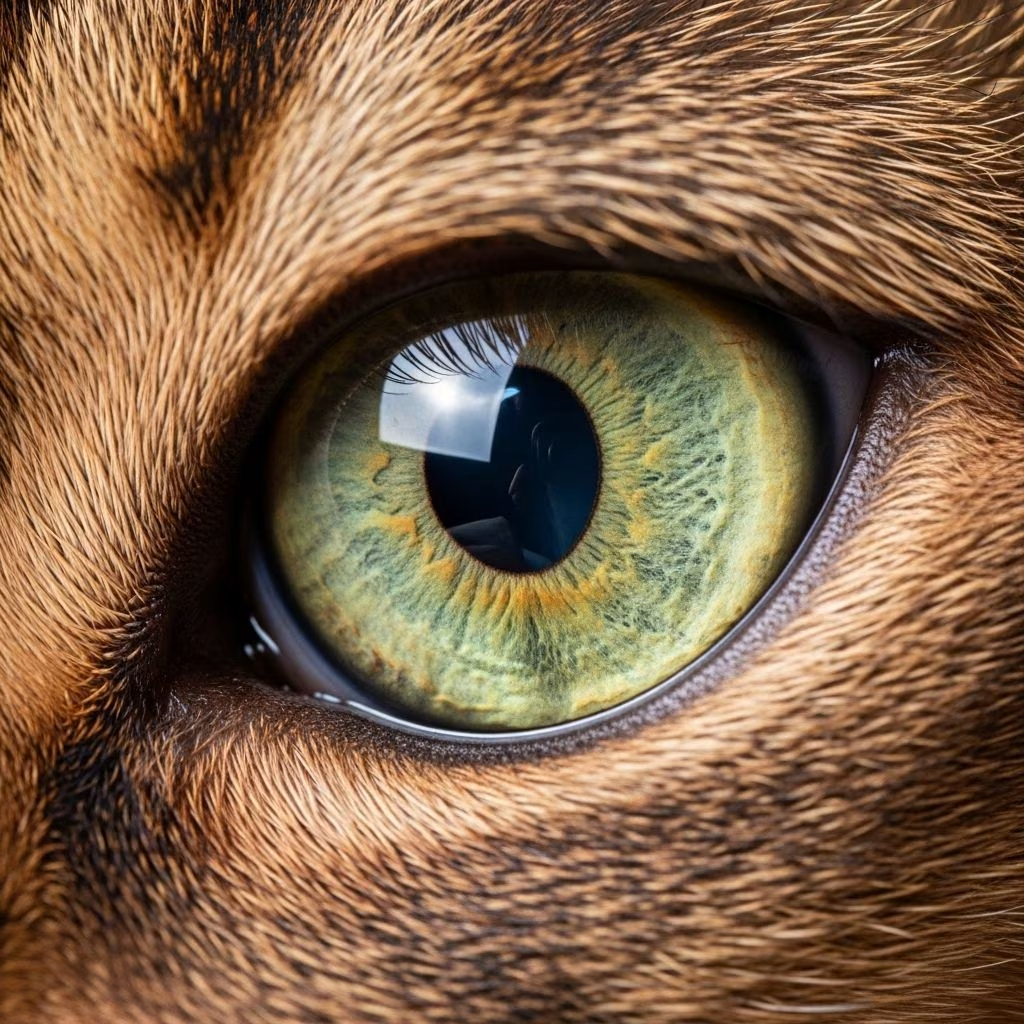
Lens dislocation, known medically as lens luxation, represents a severe ophthalmic crisis in small animals, especially dogs and cats. This condition arises when the lens, crucial for focusing light onto the retina, shifts from its normal position due to weakened or ruptured supporting fibers called zonules. Without prompt intervention, it can trigger glaucoma, retinal damage, and chronic pain, potentially leading to blindness or eye removal. Pet owners must recognize early warning signs to seek specialist care swiftly.
Understanding the Anatomy and Mechanism of Lens Displacement
The eye’s lens is held in place by zonular ligaments extending from the ciliary body. These delicate fibers maintain the lens’s stability during accommodation, allowing clear vision at varying distances. When zonules weaken or break completely, the lens can tilt (subluxation) or fully displace, either forward into the anterior chamber or backward into the vitreous humor.
- Anterior displacement: The lens moves ahead of the iris, obstructing fluid drainage and spiking intraocular pressure (IOP).
- Posterior displacement: The lens sinks behind the iris, less acutely painful but risky for secondary complications.
- Partial instability: Early zonular failure causes wobbling, visible as an irregular pupil margin.
This mechanical failure disrupts normal aqueous humor flow, fostering inflammation and pressure buildup that damages the optic nerve and retina over time.
Primary Causes: Genetic Predisposition in Dogs
In canines, primary lens dislocation stems from hereditary zonular fragility, linked to mutations in the ADAMTS17 gene. This autosomal recessive trait predominantly strikes terrier breeds between 3-7 years old, with Shar-Peis, Border Collies, and Poodles also vulnerable. Both eyes often succumb sequentially, underscoring the need for bilateral monitoring in at-risk pets.
| Breed | Risk Level | Typical Onset Age |
|---|---|---|
| Terriers (various) | High | 4-6 years |
| Shar-Pei | High | 5-7 years |
| Miniature Poodle | Moderate | 3-5 years |
| Border Collie | Moderate | 4-6 years |
Cats experience it less frequently, usually as a secondary issue rather than inherited.
Secondary Triggers: Underlying Diseases and Trauma
Unlike primary cases, secondary dislocation results from acquired damage. Common culprits include:
- Hypermature cataracts, where lens shrinkage stretches zonules to breaking.
- Prolonged anterior uveitis, eroding zonular integrity through inflammation.
- Chronic glaucoma, exerting traction on weakened supports.
- Trauma or intraocular tumors, directly severing fibers.
- Rare congenital microphakia in kittens, featuring undersized lenses prone to slippage.
In felines, uveitis dominates as the precipitant, often tied to systemic infections or immune disorders. Identifying and treating root causes can sometimes stabilize early instability.
Recognizing Clinical Signs: From Subtle to Severe
Manifestations vary by luxation type and progression. Posterior shifts may be asymptomatic initially, with owners noting only cloudiness. Anterior luxations provoke intense distress:
- Marked blepharospasm (squinting) and epiphora (tearing).
- Conjunctival redness and episcleral injection.
- Diffuse corneal swelling (edema), impairing visibility.
- Sudden vision impairment or behavioral changes like bumping into objects.
A hallmark of subluxation is the aphakic crescent—a moon-shaped gap in the pupil where the lens edge peeks through. Elevated IOP manifests as a hardened globe on gentle palpation.
Diagnostic Approaches: Confirming the Crisis
Veterinarians employ targeted exams to affirm diagnosis amid obfuscating edema:
- Tonometry: Applanation devices gauge IOP peripherally to evade lens interference, which falsely inflates central readings.
- Direct ophthalmoscopy: Reveals lens position, pupil anomalies, or vitreous touch.
- B-scan ultrasound: Assesses posterior structures when corneas haze over, checking for retinal tears or detachments.
- Gonioscopy: Inspects drainage angles for closure.
- Schirmer tear test: Rules out concurrent dry eye.
Distinguishing primary from secondary forms guides breeding advice and therapy.
Emergency Management: Stabilizing Before Surgery
Anterior luxation qualifies as an ophthalmic emergency due to rapid glaucomatous escalation. Initial steps prioritize IOP reduction:
- Intravenous mannitol (1-2 g/kg slowly) draws fluid osmotically.
- Topical/systemic carbonic anhydrase inhibitors like dorzolamide.
- Avoid prostaglandins; their miotic effect exacerbates vitreous trapping.
Pain relief via systemic analgesics bridges to referral. For sighted eyes, rush to a veterinary ophthalmologist; blind, painful globes warrant enucleation discussions.
Surgical Interventions: Restoring Comfort and Vision
Intracapsular lensectomy extracts the offending lens via a limbal incision, using phacoemulsification or manual techniques. Absorbable sutures seal the site. Prophylactic canthotomy aids access in tense eyes.
Post-op care includes:
- Topical steroids and antibiotics to curb inflammation.
- Antiglaucoma drops with rigorous IOP surveillance.
- E-collar to prevent self-trauma.
For posterior luxations or subluxations, miotics like demecarium delay progression, with surgery elective if stable.
Postoperative Care and Monitoring
Owners monitor for redness, discharge, or behavioral shifts signaling complications. Frequent rechecks (weekly initially) track healing. Lifelong meds often manage residual uveitis or pressure issues.
Potential Complications and Prognosis
Despite intervention, challenges persist: secondary glaucoma (most common), retinal detachment, persistent uveitis. Vision retention odds improve with early action in sighted eyes, but comfort is prioritized in blind ones. Primary cases carry guarded long-term outlooks due to bilateral risk.
Prevention Strategies for At-Risk Breeds
Genetic screening via ADAMTS17 tests informs breeding. Annual ophthalmic exams from age 2 detect instability early. Prompt cataract or uveitis treatment mitigates secondary risks.
FAQs on Pet Lens Dislocation
Is lens dislocation painful for my dog?
Yes, especially anterior forms cause acute pain from pressure and inflammation.
Can cats get lens luxation?
Rarely primary; usually secondary to uveitis.
What if surgery isn’t an option?
Medical IOP control and dilation may temporize, but enucleation prevents suffering.
How much does treatment cost?
Varies; surgery ~$2,000-$4,000 USD, plus meds/follow-ups.
Is breeding affected dogs advisable?
No; genetic testing recommended to avoid propagation.
References
- Dislocation of the Lens in Small Animals — Merck Veterinary Manual. 2023. https://www.merckvetmanual.com/emergency-medicine-and-critical-care/ophthalmic-emergencies-in-small-animals/dislocation-of-the-lens-in-small-animals
- Lens Luxation in Dogs — VCA Animal Hospitals. 2024. https://vcahospitals.com/know-your-pet/lens-luxation-in-dogs
- Lens luxation in the dog and cat — PubMed (Veterinary and Comparative Ophthalmology). 1990-10-01. https://pubmed.ncbi.nlm.nih.gov/2194357/
- Dislocated Eye Lens in Cats — PetMD. 2023. https://www.petmd.com/cat/conditions/eyes/c_ct_lens_luxation
- Lens Instability (Luxation/Subluxation) In the Dog & Cat — MSPCA Angell. 2022. https://www.mspca.org/angell_services/15148-2/



