

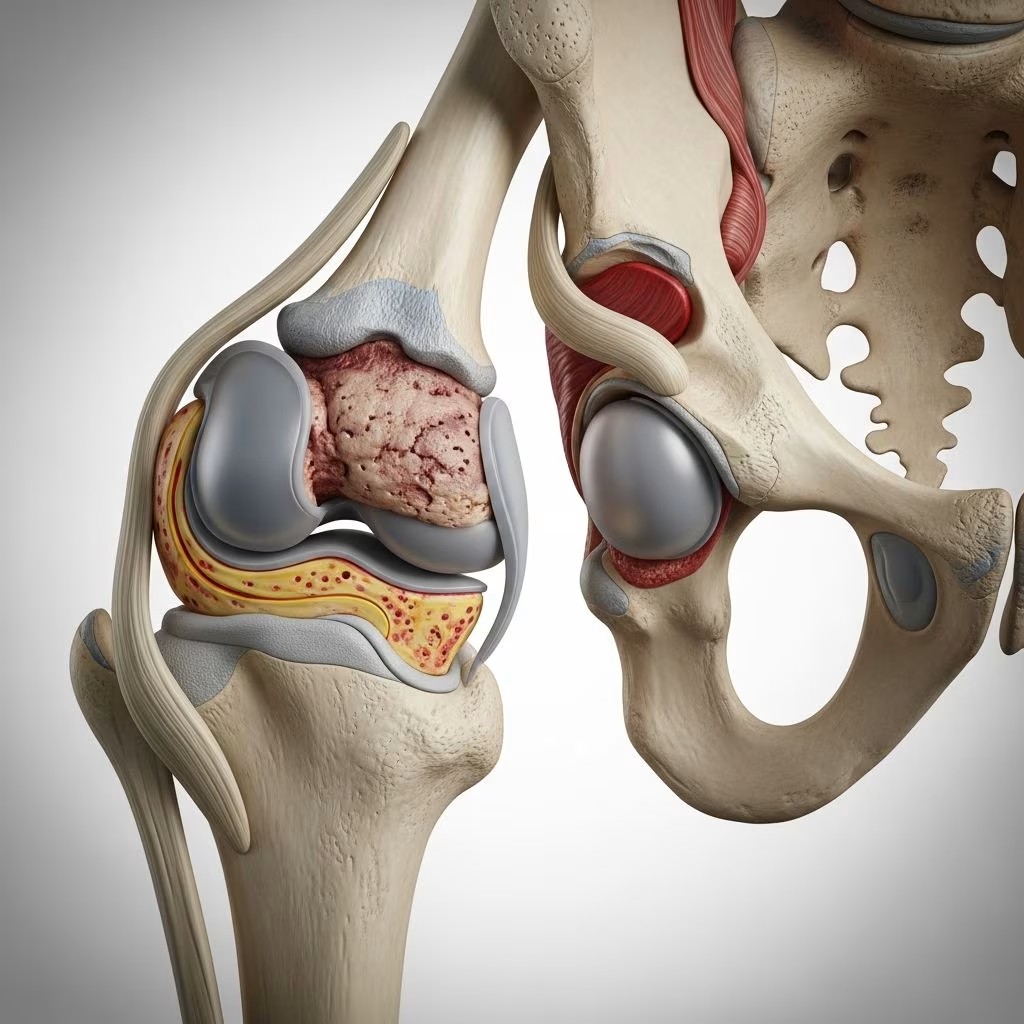
This orthopedic condition primarily impacts young, small-breed dogs, disrupting blood supply to the femoral head and causing bone degeneration. Early intervention through surgery often restores function and alleviates pain effectively.
Understanding the Condition
Legg-Calvé-Perthes disease, also known as avascular necrosis of the femoral head, occurs when blood flow to the ball-shaped top of the thigh bone in the hip joint is interrupted. This leads to bone cell death, collapse of the femoral head, and subsequent pain and mobility issues in affected dogs. The condition is most prevalent in toy and miniature breeds such as Yorkshire Terriers, Pomeranians, Miniature Poodles, and Dachshunds, typically manifesting between 4 months and 1 year of age. Unlike in children, where it is self-limiting, in dogs it progresses to require veterinary management to prevent chronic arthritis.
The disease process unfolds in stages: initial ischemia causes necrosis, followed by fragmentation where the dead bone breaks down, then revascularization as new blood vessels form, and finally remodeling. Without treatment, the deformed femoral head grinds against the hip socket, accelerating joint degeneration. While the exact trigger for vascular compromise remains unclear, genetic predispositions in small breeds suggest hereditary factors play a key role.
Recognizing Early Warning Signs
Dogs with this condition often present subtle initial symptoms that owners might overlook. Common indicators include:
- A gradual or sudden onset of limping on the affected hind leg, worsening with activity.
- Reluctance to run, jump, or climb stairs, preferring to rest.
- Pain upon palpation of the hip area, sometimes manifesting as whining or snapping.
- Muscle atrophy in the thigh due to disuse, giving the leg a thinner appearance.
- Stiffness after periods of inactivity, improving slightly with gentle movement.
In advanced cases, dogs may carry the affected leg entirely or develop a swaying gait. Pain might radiate to the knee or lower back, confusing initial assessments. Since bilateral involvement occurs in about 15-20% of cases, monitor both hips if one shows issues. Prompt recognition prevents secondary complications like muscle wasting or compensatory injuries in other limbs.
Diagnostic Approaches by Veterinarians
Veterinarians rely on a combination of clinical evaluation and imaging for confirmation. The process begins with a thorough history and physical exam, testing hip range of motion, assessing pain response, and checking for crepitus (grinding sensation). Key diagnostic tools include:
| Method | Purpose | Details |
|---|---|---|
| X-rays (radiographs) | Primary confirmation | Reveal femoral head flattening, sclerosis, or fragmentation; compare affected vs. normal side. |
| Advanced imaging (CT/MRI) | Detailed assessment | Used rarely for complex cases to evaluate extent of necrosis. |
| Blood tests | Rule out differentials | Exclude infections, inflammatory diseases, or metabolic disorders mimicking symptoms. |
Differential diagnoses encompass hip dysplasia, panosteitis, fractures, or infectious arthritis. Early diagnosis via X-rays during the necrosis stage allows timely surgical planning, optimizing outcomes.
Available Treatment Strategies
Treatment focuses on pain relief, joint preservation, and restoring mobility. Conservative management suits very early or mild cases, but surgery is the gold standard for most dogs.
Non-Surgical Options
For puppies under 6 months or minimal collapse:
- Rest and crate confinement: Limits weight-bearing to promote revascularization.
- Anti-inflammatory medications: NSAIDs like carprofen reduce pain and swelling.
- Physical therapy: Gentle exercises maintain muscle tone and joint flexibility.
- Supportive slings: Assist mobility during healing.
These approaches succeed in under 20% of cases, as the disease often progresses rapidly in dogs.
Surgical Interventions
Femoral Head Ostectomy (FHO) is the most common procedure, removing the femoral head and neck to eliminate painful bone-on-bone contact. A fibrous ‘false joint’ forms between the scar tissue and acetabulum, allowing pain-free function. Performed under general anesthesia, recovery involves 2-4 weeks of strict rest followed by controlled rehab.
Other surgeries include:
- Juvenile pubic symphysiodesis (JPS): For very young puppies to redirect pelvic growth.
- Total hip replacement (THR): Rare for young dogs due to growth concerns, reserved for severe bilateral cases later in life.
Success rates for FHO exceed 90%, with most dogs regaining near-normal activity levels.
Step-by-Step Recovery Roadmap
Post-operative care is crucial for optimal healing:
- Days 1-14: Pain meds, antibiotics, and sling support; no weight-bearing.
- Weeks 3-6: Introduce short leash walks; begin passive range-of-motion exercises.
- Weeks 6-12: Hydrotherapy or underwater treadmill to build strength without stress.
- Beyond 3 months: Gradual return to play; monitor for overexertion.
Nutrition with joint supplements (glucosamine, omega-3s) supports cartilage health. Weight management prevents overload on the pseudo-joint.
Long-Term Prognosis and Complications
With timely FHO, over 95% of dogs achieve good-to-excellent function, running and playing without pain. Complications are rare but include:
- Infection at incision site (less than 5%).
- Delayed healing or fibrosis causing stiffness.
- Luxation of the pseudo-joint if rehab is inadequate.
Bilateral cases may need staged surgeries. Older dogs post-treatment rarely develop severe osteoarthritis, unlike untreated ones. Annual vet check-ups track joint health.
Prevention and Breed-Specific Advice
While not fully preventable due to genetic links, strategies include:
- Responsible breeding: Avoid pairing affected lines in predisposed breeds.
- Early screening: X-rays for at-risk puppies at 4-6 months.
- Obesity control: Maintain ideal weight to reduce hip stress.
- Puppy nutrition: Balanced diet for skeletal development.
Owners of high-risk breeds should learn signs and act swiftly at first lameness.
Cost Considerations and Insurance Benefits
Diagnosis averages $200-500; FHO surgery $1,500-4,000 per hip, including aftercare. Pet insurance covering hereditary conditions offsets expenses, often reimbursing 70-90%. Compare policies for orthopedic coverage exclusions.
Frequently Asked Questions (FAQs)
Is Legg-Calvé-Perthes painful for dogs?
Yes, it causes significant discomfort from bone collapse and inflammation, but surgery provides lasting relief.
Can large breeds get this disease?
Extremely rare; it predominantly affects small breeds under 25 lbs.
How long does recovery from FHO take?
Full function returns in 2-3 months with proper rehab.
Will my dog need surgery on both hips?
About 15% do; treat one side first, monitor the other.
Does pet insurance cover this condition?
Many plans do if purchased before symptoms; check for breed-specific exclusions.
References
- Legg-Calvé-Perthes disease — Mayo Clinic. 2023-10-15. https://www.mayoclinic.org/diseases-conditions/legg-calve-perthes-disease/symptoms-causes/syc-20374343
- Perthes Disease — American Academy of Orthopaedic Surgeons (AAOS). 2024-01-10. https://orthoinfo.aaos.org/en/diseases–conditions/perthes-disease
- Legg-Calvé-Perthes disease — Children’s Hospital of Philadelphia (CHOP). 2025-02-20. https://www.chop.edu/conditions-diseases/legg-calve-perthes-disease
- Legg Calvé Perthes Disease — National Organization for Rare Disorders (NORD). 2024-08-05. https://rarediseases.org/rare-diseases/legg-calve-perthes-disease/
- Legg-Calvé-Perthes disease — Cleveland Clinic. 2024-11-12. https://my.clevelandclinic.org/health/diseases/legg-calve-perthes-disease



