

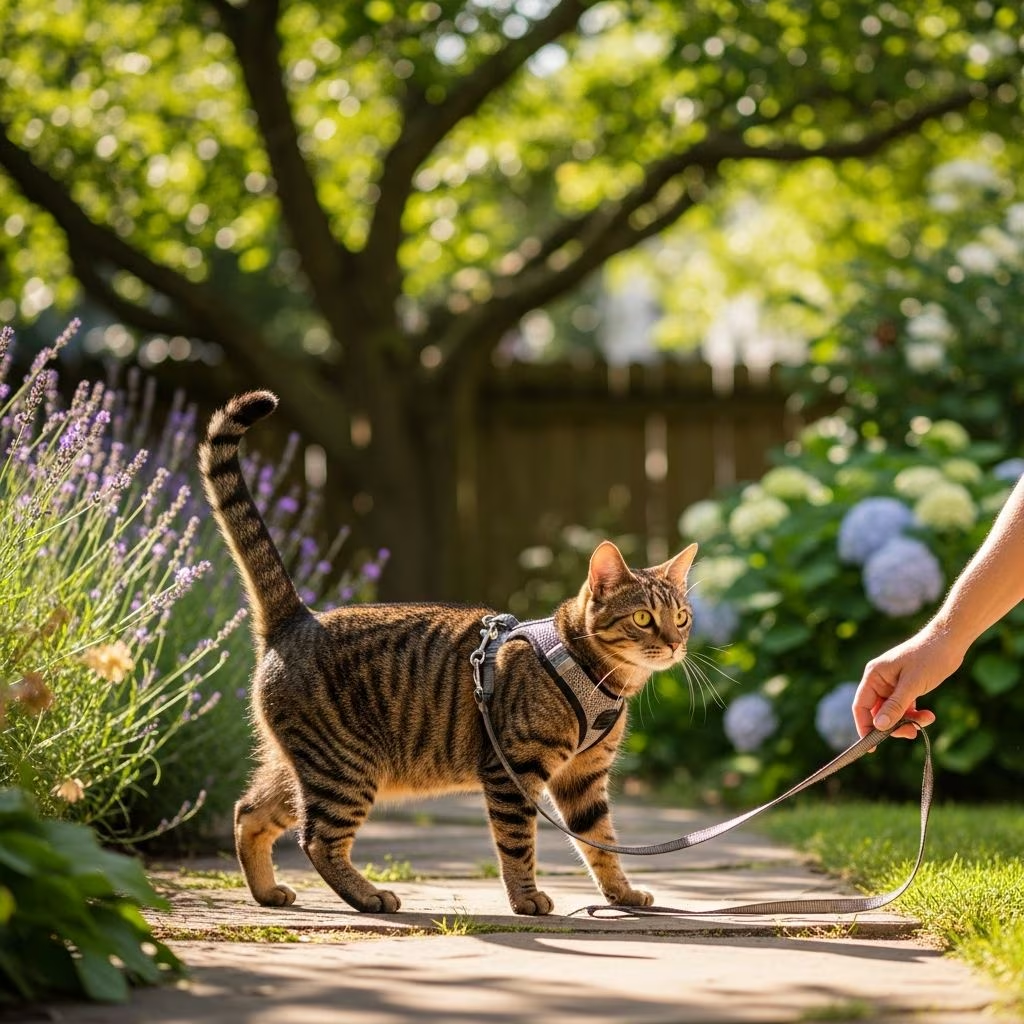
Many cat owners assume that cats are exclusively indoor pets with no interest in outdoor exploration. However, with proper preparation and training, your feline companion can safely enjoy outdoor activities on a leash. Leash training opens new opportunities for physical exercise, mental enrichment, and bonding between you and your cat while maintaining their safety in an unpredictable environment.
Why Consider Leash Training for Your Cat?
Leash training provides numerous benefits beyond simple outdoor walks. Cats that receive regular outdoor stimulation through supervised leash walks experience increased physical activity, which helps prevent obesity and related health conditions. The outdoor environment offers rich sensory experiences—different textures, sounds, and smells—that mentally stimulate indoor cats and reduce behavioral issues stemming from boredom.
Additionally, leash training allows you to maintain control over your cat’s outdoor interactions. Rather than allowing your cat unsupervised freedom, which exposes them to traffic, predators, and disease risks, leash walking lets you guide their exploration while managing potential dangers. This controlled approach provides peace of mind for pet owners who want their cats to experience outdoor environments safely.
Understanding Your Cat’s Natural Responses
Before beginning leash training, it’s essential to recognize that cats have fundamentally different instincts than dogs. Cats are independent creatures with a strong flight-or-fight response to unfamiliar situations. When stressed or frightened, cats instinctively attempt to escape rather than seek reassurance from their owner. This natural behavior means that leash training requires patience, understanding, and respect for your cat’s individual personality and comfort level.
Not all cats will take to leash walking with equal enthusiasm. Some cats adapt quickly and eagerly explore their surroundings, while others may require extended training periods or may never feel comfortable walking on a leash. Age, temperament, prior experiences, and individual personality all influence how readily a cat accepts leash training. Kittens and younger cats typically adapt more easily to new experiences, while older cats may feel more resistant to change.
Essential Equipment for Successful Leash Training
Selecting the right equipment forms the foundation of successful leash training. Poor equipment choices can make training frustrating for both you and your cat, while quality gear significantly improves your training experience.
The Harness: Your Most Critical Tool
Never use a standard neck collar for leash training, regardless of how secure it appears. A collar poses serious safety risks to your cat. A cat’s head circumference is nearly identical to their neck width, meaning they can slip out of collars with minimal effort, potentially causing injury in the process. Additionally, if a cat panics while wearing a leash attached to a collar, they risk choking or suffering neck damage.
A well-fitted harness distributes pressure across your cat’s body, preventing escape and eliminating choking hazards. The ideal harness design includes attachment points at both the chest and back, providing superior security compared to single-point attachments. When fitting a harness, you should be able to slip two fingers between the harness and your cat’s body without difficulty. The harness must be snug enough to prevent slipping but loose enough to allow comfortable movement and breathing.
Take time to find a harness that suits your cat’s body type and temperament. Some cats prefer lightweight mesh harnesses that feel less restrictive, while others do better with slightly sturdier designs. Consider trying multiple styles before settling on one, as individual fit preferences vary significantly among cats.
Leash Selection and Considerations
Choose a lightweight, shorter leash specifically designed for cats rather than a retractable leash. Retractable leashes create control problems, often teaching pets to pull and allowing them to wander too far from their owner, creating safety risks. A shorter, fixed-length leash keeps your cat closer, improving your ability to respond to dangers quickly and preventing your cat from darting into traffic or unsafe areas.
A bungee-style leash designed for cats offers additional advantages, as the elasticity absorbs sudden movements and reduces tension spikes that might startle your cat. The leash length should be sufficient for your cat to explore and sniff without feeling overly restricted, typically between 4 and 6 feet.
Supporting Training Materials
Stock your training supplies with high-value treats that your cat finds irresistible. Small, soft treats work best, as they’re easy to dispense during training sessions without filling your cat’s stomach too quickly. Interactive toys, particularly wand toys with feather or string attachments, help maintain your cat’s focus during training and provide positive motivation.
Keep a small towel or carrier accessible during outdoor walks. While a well-fitted harness prevents most escapes, cats possess remarkable flexibility and can occasionally slip free if they panick or the harness shifts improperly. Having a containment method readily available allows you to quickly secure your cat in emergency situations without risk of them bolting into traffic or disappearing into unfamiliar territory.
The Progressive Training Framework
Phase One: Harness Familiarization (One to Two Weeks)
Begin training indoors in a calm environment free from other pets or distractions. Place the harness in your cat’s favorite locations—near their food bowl, on their preferred sleeping spot, or along their common pathways. Allow your cat several days to investigate the harness without any pressure to wear it. This preliminary exposure helps your cat develop curiosity rather than fear of the equipment.
Once your cat shows neutral or positive interest in the harness, gently place it against their body without fastening any straps. Immediately reward this behavior with treats and praise, then remove the harness while your cat remains calm. Repeat this process multiple times daily over several days, gradually increasing the duration of each session.
Progress to actually fastening the harness while your cat wears it for brief periods. Keep initial sessions extremely short—just 30 seconds to a minute—with immediate rewards upon removal. Many cats lie down or attempt to wriggle out during these early sessions; this is completely normal behavior and does not indicate failure. Gently encourage your cat with treats and soft voice reassurance, and never force them to wear the harness if they become significantly distressed.
Gradually extend the duration your cat wears the harness over one to two weeks, working from minutes to progressively longer periods. Your cat should feel comfortable wearing the harness while eating, playing, and resting before moving forward. The goal is for your cat to forget they’re wearing it, simply accepting it as normal.
Phase Two: Leash Attachment and Indoor Walking (One to Two Weeks)
Once your cat comfortably wears the harness, attach the leash and allow it to drag freely around the house. This permits your cat to become accustomed to the leash’s weight and presence without any directional pressure. Many cats will initially ignore the trailing leash; others may attempt to play with it or bat at it. Either response is normal and acceptable.
Begin practicing gentle walking indoors by using toys or treats to encourage your cat to move while wearing the attached leash. Use a wand toy to guide their movement, or create a treat trail along your floor to motivate walking. Never pull on the leash or tug your cat in a specific direction—instead, follow your cat’s lead and let them determine the pace and direction of movement.
Observe your cat’s body language carefully during these indoor practice sessions. Signs of stress include flattened ears, a tucked tail, low body posture, or attempts to hide. If your cat displays stress signals, end the session immediately and try again later. Training should always be a positive experience with no forced participation.
Phase Three: Outdoor Introduction (Gradual Progression)
Select a safe outdoor location for your cat’s first outdoor experience—an enclosed backyard, a quiet park, or a secure patio area with minimal distractions. Avoid areas with heavy dog traffic, loud noises, or other animals that might overwhelm or frighten your cat. Some cats do better starting in very confined spaces where escape is impossible, gradually progressing to larger areas as confidence builds.
Begin with extremely short outdoor sessions lasting just five to ten minutes. Watch your cat closely, allowing them to explore at their own pace while maintaining a loose leash. The goal is for your cat to investigate their environment, sniff interesting scents, and gradually acclimate to outdoor sensations—not to achieve a specific distance or walking pattern.
Keep a constant awareness of your surroundings and other animals. Be prepared to pick up your cat or hold the leash firmly if dogs approach, other cats appear, or your cat shows fear responses. Always keep the leash loose and avoid pulling or tugging, even if your cat attempts to go in a direction you consider unsafe—holding firm without giving in helps your cat eventually accept boundaries.
Gradually extend outdoor walking duration as your cat gains confidence, moving from short five-minute sessions to 15 or 20-minute adventures. Progress should be determined entirely by your cat’s comfort level; never rush advancement to longer distances or more complex environments.
Common Training Challenges and Solutions
| Challenge | Likely Cause | Solution Strategy |
|---|---|---|
| Cat refuses harness | Insufficient familiarization or negative associations | Return to Phase One; extend familiarization period; use higher-value treats; never force wearing |
| Cat freezes or won’t walk | Fear, stress, or overstimulation | Move to quieter environment; reduce session duration; use toys to encourage movement; allow more acclimation time |
| Cat attempts escape | Poor harness fit or inadequate security | Verify harness fit; check all buckles and straps; consider different harness style; keep backup carrier accessible |
| Excessive pulling behavior | Overstimulation or desire for independence | Reduce environmental complexity; use shorter sessions; practice indoors more; reward calm behavior with treats |
| Fear of outdoor sounds | Sensory overload from unfamiliar stimuli | Start in quieter locations; gradually introduce busier environments; avoid forcing exposure; allow cat to retreat if frightened |
Safety Protocols for Outdoor Walking
Always remain alert to potential dangers during outdoor leash walks. Stay close to home, particularly during initial training stages, so you can quickly retreat to safety if your cat becomes frightened or a threatening situation develops. Avoid areas with heavy traffic, and never allow your cat to approach unfamiliar dogs or wildlife.
Never tie your cat up or leave them unattended while on a leash, even for brief moments. A tied cat cannot escape from threats and has no control over their safety. Similarly, never bring your cat to veterinary appointments on a leash; always use a proper carrier for transport.
Bring water and a collapsible bowl during longer walking sessions, particularly on warm days. Some cats enjoy drinking from outdoor water sources, but providing clean water prevents dehydration and reduces the temptation to drink from potentially contaminated sources. Include waste bags in your walking kit, and pick up after your cat just as you would a dog, maintaining consideration for other outdoor users.
Building Positive Associations
Positive reinforcement forms the absolute foundation of successful leash training. Never punish your cat for resistance to the harness, leash pulling, or unwillingness to walk. Punishment creates negative associations with outdoor activities and damages your cat’s trust in you. Instead, reward every small success—your cat tolerating harness contact, taking a single step while wearing the leash, remaining calm during outdoor exposure—with treats, praise, and affection.
Consistently pairing the harness and leash with positive experiences—treats, toys, outdoor exploration, bonding time—helps your cat develop enthusiasm for the process. Some cats eventually view the harness as a signal that outdoor adventure awaits and eagerly cooperate with the training process.
Recognizing When Your Cat Isn’t Ready
Despite comprehensive training efforts, some cats genuinely dislike leash walking and outdoor environments. Extremely anxious cats, very elderly cats, or cats with certain health conditions may not be suitable candidates for leash training. Continuing to push a cat that shows persistent signs of distress—constant pulling, extreme anxiety, refusing to eat treats, or attempting repeated escapes—can damage your relationship and increase your cat’s anxiety.
Recognizing your individual cat’s limits represents responsible pet ownership. Alternative enrichment options like window perches, bird feeders visible from windows, or secured outdoor enclosures (catios) provide outdoor stimulation without the stress of leash walking for cats who aren’t suited to this activity.
Advanced Walking and Outdoor Adventures
Once your cat masters basic leash walking, you can gradually expand your outdoor adventures. Introduce new environments progressively—a different park, a hiking trail, or a beach walk—always starting in less stimulating areas and building toward more complex environments. Some experienced walking cats enjoy accompanying their owners on extended outdoor adventures, becoming comfortable explorers of diverse environments.
Always maintain awareness that leash-trained cats remain susceptible to the same outdoor hazards as untrained cats. Traffic, predators, parasites, and disease remain constant risks. Ensure your cat maintains current vaccinations, wears appropriate identification, and remains on a secure, well-fitted harness during all outdoor activities.
References
- How to Leash Train a Cat: A Step-by-Step Guide to Safe Outdoor Adventures for Cats of All Ages — Birdsbesafe. Accessed February 17, 2026. https://www.birdsbesafe.com/blogs/news/how-to-leash-train-a-cat-a-step-by-step-guide-to-safe-outdoor-adventures-for-cats-of-all-ages
- How to Leash Train a Cat — PetMD. Accessed February 17, 2026. https://www.petmd.com/cat/behavior/how-to-leash-train-cat
- Leash Training a Cat 101: A Complete Guide to Getting Outside — Chewy. Accessed February 17, 2026. https://www.chewy.com/education/cat/training-and-behavior/cat-walking-101-train-cat-walk-leash
- 5 Tips on Leash-Training Your Cat — PETA. Accessed February 17, 2026. https://www.peta.org/lifestyle/animal-companions/follow-simple-tips-get-cat-leash-trained-spring/
- How To Leash Train a Cat — Zoetis Petcare. Accessed February 17, 2026. https://www.zoetispetcare.com/blog/article/leash-train-cat



