

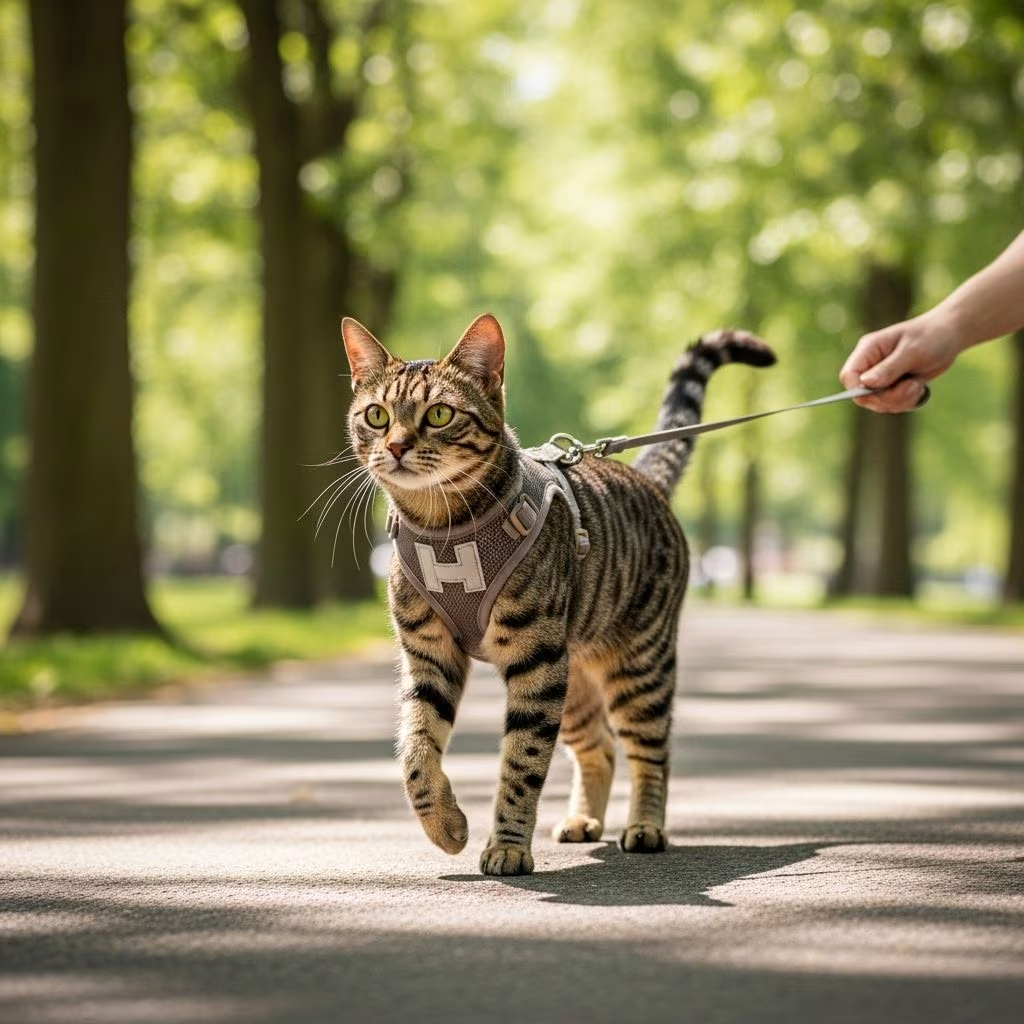
Teaching your cat to walk comfortably on a leash opens up a world of safe outdoor experiences, providing mental stimulation and physical activity while minimizing risks like traffic or predators. This process demands patience, positive reinforcement, and a tailored approach to your cat’s personality, often taking weeks but yielding rewarding results for both you and your pet.
Why Consider Leash Training for Cats?
Unlike dogs, cats are natural explorers driven by curiosity rather than routine exercise. Leash training allows them to satisfy instincts safely, reducing indoor boredom that can lead to destructive behaviors. It also strengthens the owner-pet bond through shared adventures in gardens, parks, or quiet neighborhoods. Importantly, it prevents unsupervised escapes, protecting against common urban dangers.
- Enrichment boost: Outdoor scents and sights engage their senses, combating obesity and stress.
- Safety first: Keeps cats from roaming into traffic or fights.
- Health perks: Gentle walks support muscle tone and vitamin D exposure.
Selecting the Ideal Equipment
Proper gear is foundational to success. Skip collars for leashes—they’re easy for cats to slip and can injure necks. Opt for a cat-specific harness instead, designed to distribute pressure across the chest and shoulders.
| Item | Key Features | Why It Matters |
|---|---|---|
| Harness | Adjustable straps, padded, escape-proof clips; fits snugly (two fingers under) | Ensures comfort and security without restricting movement |
| Leash | 4-6 feet, lightweight nylon, non-retractable | Allows exploration slack without tangling or pulling |
| Treats/Rewards | High-value, smelly options like tuna or freeze-dried meat | Builds positive links; use only for sessions |
| Extras | Carrier backpack, waste bags, ID tag | Emergency retreats, responsibility, quick recovery |
Measure your cat’s girth behind the front legs for sizing. Brands like Red Dingo offer adjustable models with safety releases. Let your cat sniff the gear first to ease familiarity.
Building Comfort with the Harness
Introduction must be gradual to avoid fear. Rushing leads to resistance, so prioritize trust-building over speed.
- Exposure phase (Days 1-7): Leave the harness near food bowls or beds. Reward curiosity with treats. This desensitizes to sight and smell.
- Touch and sound acclimation: Snap buckles near them, pair with play or meals. Practice fastening/unfastening sounds daily.
- First wear (5-10 minutes): Slip on loosely during mealtime. Feed treats continuously; remove after. Repeat 2-3 times daily, extending time as relaxation shows (ears forward, tail up).
Monitor body language: relaxed whiskers and blinking eyes signal progress. If freezing occurs, pause and resume with more rewards. Many cats accept harnesses fully within two weeks.
Mastering Indoor Leash Practice
Once harness-wearing is routine (30+ minutes), introduce the leash indoors. This simulates real tension without external stimuli.
- Attach loosely; let drag supervised for 10 minutes. Toss treats away to encourage movement.
- Pick up end gently; follow your cat’s lead. No pulling—let them ‘walk you’ initially.
- Short sessions (5 minutes): Lure with treats along a path, praising softly. Gradually guide direction.
Use a clear hallway or room to minimize distractions. Consistency matters—train same time daily. Success here predicts outdoor readiness.
Transitioning to Outdoor Walks
Start in low-stakes environments when indoor walks are confident (10-15 minutes).
- Threshold test: Step outside briefly (doorway only), treat heavily. Return inside quickly.
- First outing (quiet morning/evening):strong> Choose fenced yards or calm paths. Hold leash slack; let explore at their pace.
- Build duration: 5 minutes first week, add 2-3 weekly. Introduce grass over pavement for appeal.
- Routine establishment: Fixed times/locations build anticipation. Carry carrier for breaks.
Never leave unattended. Progress to new spots only after mastering basics.
Common Hurdles and Fixes
Challenges arise, but they’re surmountable with observation.
| Issue | Signs | Solutions |
|---|---|---|
| Freezing/Crouching | Low body, dilated pupils, flattened ears | Retreat indoors, shorten sessions, amp rewards |
| Pulling/Escaping | Backward lunges, harness fights | Looser fit check, more indoor practice, no force |
| Vocal Distress | Hissing, meowing excessively | Pause, associate with positives, try later |
| Lack of Interest | Ignores outdoors | Scent trails (herbs), play integration, grassy spots |
Patience trumps persistence; regress steps if needed. Kittens train faster than adults.
Advanced Techniques for Confident Walkers
Once basics click, refine skills.
- Recall cues: ‘Come’ with treats; practice indoors first.
- Backpack integration: Train carrier comfort for longer trips.
- Group walks: Pair with calm dogs after solo mastery.
- Weather adaptation: Short sessions in rain with ponchos.
Certified behaviorists recommend cat-led pacing for sustainability.
Health and Safety Essentials
Consult vets pre-training, especially for seniors or health issues. Vaccinate fully, apply flea preventives, and microchip. Watch for overheating—morning/evening best. Cleanup maintains community goodwill.
Frequently Asked Questions
Can all cats be leash trained?
Most can with time, though bold breeds like Bengals excel. Shy cats need slower pacing.
How long until first walk?
2-6 weeks average, varying by cat.
What if my cat hates the harness?
Try softer fabrics or vest styles; double rewards.
Is outdoor walking safe long-term?
Yes, supervised; superior to free-roaming.
Kitten vs. adult training differences?
Kittens adapt quicker; adults require more desensitization.
Leash training transforms indoor cats into adventurous companions, fostering deeper connections through tailored, positive methods.
References
- Train your cat to walk on a leash — 24PetWatch. Accessed 2026. https://www.24petwatch.com/ca/blog/how-to-train-your-cat-to-walk-on-a-leash
- How to Leash Train Your Cat — Blue Buffalo. Accessed 2026. https://www.bluebuffalo.com/articles/cat/how-to-leash-train-your-cat/
- Leash Training a Cat 101 — Chewy. Accessed 2026. https://www.chewy.com/education/cat/training-and-behavior/cat-walking-101-train-cat-walk-leash
- Leash training your cat — Wisconsin Humane Society. Accessed 2026. https://www.wihumane.org/behavior/ask-the-experts/cat-behavior/leashing-your-cat
- Leash Training Your Cat — Anti-Cruelty Society. Accessed 2026. https://anticruelty.org/pet-library/leash-training-your-cat
- How To Walk Your Cat On A Leash (Cat-led Training) — YouTube (Animal Humane Society channel reference). 2025-11-14. https://www.animalhumanesociety.org/resource/leash-train-your-cat-5-easy-steps



