

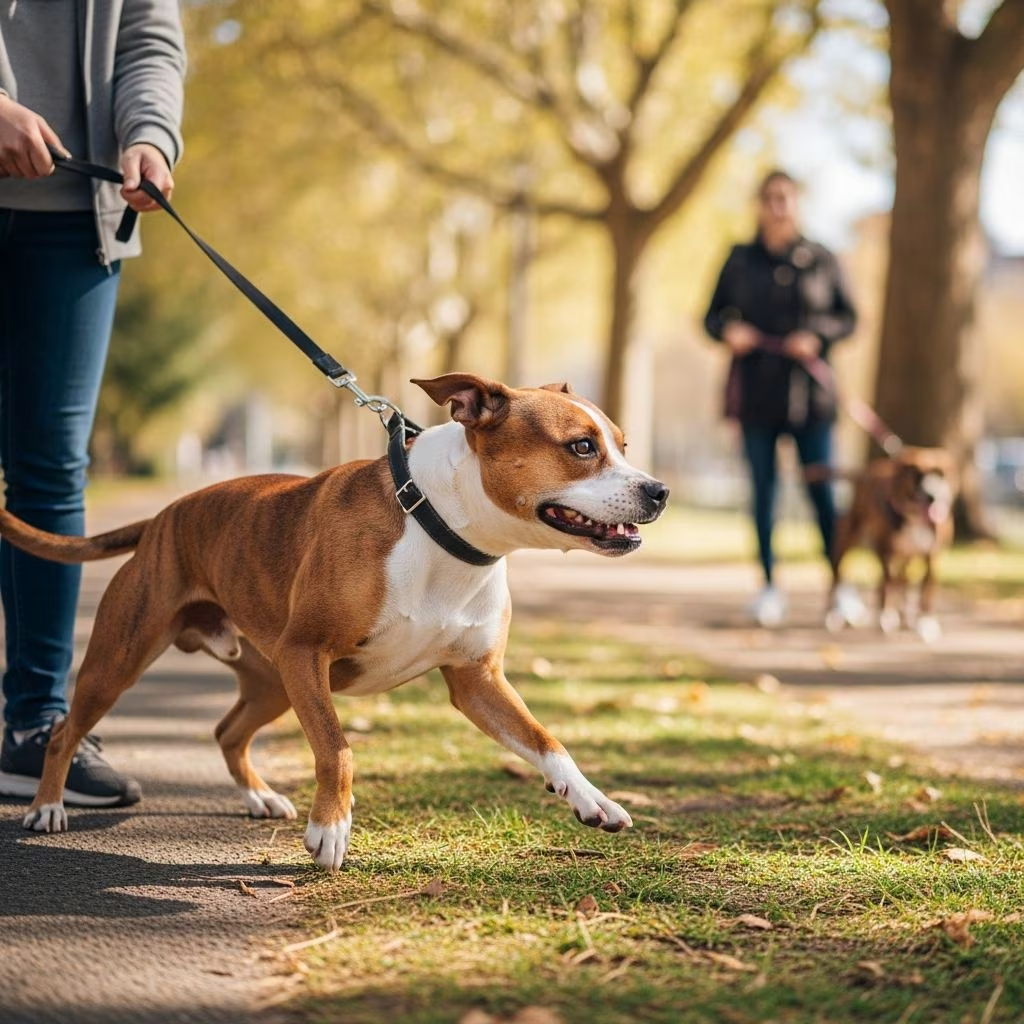
Leash reactivity, often perceived as aggression on a leash, is a widespread challenge for dog owners, where dogs bark, lunge, or growl at other dogs or people during walks. This behavior typically arises from underlying emotions like fear or frustration, intensified by the physical constraint of the leash, which prevents natural flight or approach responses.
Understanding the Roots of Leash Reactivity
Dogs exhibit leash reactivity due to several interconnected factors. Fear is a primary driver; the leash restricts escape from perceived threats, escalating stress into defensive displays such as barking or lunging. Frustration occurs when sociable dogs cannot greet others freely, building tension that manifests aggressively.
Territorial instincts also play a role, with leashed dogs feeling compelled to protect their owner or space more intensely. Insufficient socialization in puppyhood leaves dogs ill-equipped for diverse encounters, while pent-up energy from limited exercise can heighten arousal. The leash itself may induce anxiety in some dogs, associating it with discomfort or past negative experiences.
Recognizing Signs of Reactivity
Early identification prevents escalation. Common indicators include stiff body posture, raised hackles, intense staring, growling, barking, lunging, or snapping when spotting triggers at a distance. These differ from play behaviors by their intensity and the dog’s inability to relax post-encounter. Owners often feel isolated and anxious, compounding the issue.
Prevention Strategies for Puppies and Young Dogs
Proactive steps during puppyhood build confidence. Expose puppies gradually to various stimuli—people, dogs, sounds—in controlled, positive settings to foster calm associations. Enroll in puppy socialization classes to teach appropriate interactions under supervision.
- Start walks in low-traffic areas, rewarding calm behavior with treats.
- Use short, frequent sessions to avoid overwhelming the pup.
- Combine with off-leash playtime to release energy and practice social skills.
Spaying or neutering can reduce hormone-driven reactivity in some cases.
Management Techniques for Established Reactivity
For dogs already showing signs, structured training is essential. Avoid punishment-based methods like choke or shock collars, as they increase fear and aggression. Instead, prioritize positive reinforcement and behavior modification.
Desensitization and Counterconditioning (DS/CC)
This cornerstone approach involves gradual exposure to triggers at sub-threshold distances where the dog remains calm, pairing sightings with high-value rewards. Over time, the trigger predicts good things, reshaping emotional responses.
- Identify the dog’s reaction threshold (distance where reactivity starts).
- Position at a safe distance during walks; treat immediately upon trigger appearance.
- Gradually decrease distance as tolerance improves, always under control.
Consistency yields results, though progress varies by individual.
Equipment Recommendations
Proper gear enhances safety and control without discomfort. Front-clip harnesses redirect pulling gently, while head halters like Gentle Leader guide via the nose for better management.
| Equipment Type | Benefits | Considerations |
|---|---|---|
| Front-Clip Harness | Reduces pulling, distributes pressure evenly | Ensure proper fit to avoid chafing |
| Head Halter | Quick head turns for distraction | Acclimate slowly with treats |
| Standard Flat Collar | Basic option for non-pullers | Avoid for reactive dogs; use martingale for security |
Feed walks with a hungry dog using treats to boost focus.
Practical Walk Skills
Teach emergency U-turns: Spot trigger early, say “let’s go,” lure with treats, and retreat briskly. Practice “Look at Me” cues for engagement. Use the Look At That (LAT) game: Reward glances at triggers without reacting.
- Maintain loose leash to reduce tension signals.
- Choose quiet times/routes initially.
- End sessions positively before escalation.
Advanced Training Protocols
Build on basics with impulse control exercises. At home, practice “Leave It” and “Place” stays. Off-leash play with compatible dogs rewards calm on-leash behavior. For high arousal, response substitution trains alternative calm actions like sitting.
When to Consult Professionals
Severe cases risk bites or injury; seek certified trainers, behaviorists, or veterinary behaviorists immediately. They assess root causes, craft individualized plans, teach safe handling, and monitor progress. Group classes like Reactive Rover provide controlled practice.
Professionals emphasize no universal fix—plans adapt to each dog’s needs.
Common Myths and Misconceptions
Myth: Dominance training cures reactivity. Reality: Punishment worsens fear.
Myth: All reactive dogs are aggressive. Reality: Most stem from fear/frustration, treatable with science-based methods.
Myth: It resolves with age. Reality: Without intervention, it persists or intensifies.
Long-Term Success and Lifestyle Adjustments
Sustained improvement requires ongoing management. Increase exercise via fetch or hikes to burn energy. Mental stimulation like puzzle toys prevents boredom-fueled reactivity. Track progress in a journal to celebrate milestones.
Owners benefit from learning canine body language: whale eye, lip licking signal stress. Patience is key—many dogs achieve peaceful walks within months.
Frequently Asked Questions (FAQs)
What if my dog is fine off-leash but reactive on-leash?
The leash barrier amplifies frustration or fear; focus on DS/CC and off-leash socialization.
Can medication help?
Veterinary behaviorists may prescribe anti-anxiety meds alongside training for severe cases.
How long does training take?
Weeks to months, depending on consistency and severity; professional guidance accelerates results.
Is muzzle training necessary?
For bite risks, yes—train positively as a safety tool.
Will neutering fix it?
It may help but isn’t a cure; combine with behavior mod.
References
- How to Deal with Leash Aggression in Dogs — Miller Clark Animal Hospital. 2024-03-15. https://www.millerclarkanimalhospital.com/site/blog/2024/03/15/leash-aggression
- How to Deal with Leash Aggression in Dogs — Oahu Veterinary Specialty Center. 2024-02-29. https://www.oahvet.com/site/blog/2024/02/29/leash-aggression-dogs
- How to Deal with Leash Aggression in Dogs — Clackamas Pet Clinic. 2024-01-30. https://www.clackamaspetclinic.com/site/blog/2024/01/30/leash-aggression-dogs
- Leash Aggression in Dogs: What to Know — American Kennel Club. 2024. https://www.akc.org/expert-advice/training/leash-aggression/
- Dog Behavior Problems – Aggression to Unfamiliar Dogs – Treatment — VCA Animal Hospitals. 2024. https://vcahospitals.com/know-your-pet/dog-behavior-problems—aggression—unfamiliar-dogs—treatment
- Dog-Dog Aggression On Leash (Reactivity) — San Francisco SPCA. 2024. https://www.sfspca.org/resource/dog-dog-aggression-on-leash-reactivity/
- Dealing with Leash Reactivity — Best Friends Animal Society. 2024. https://bestfriends.org/network/resources-tools/dealing-leash-reactivity



