

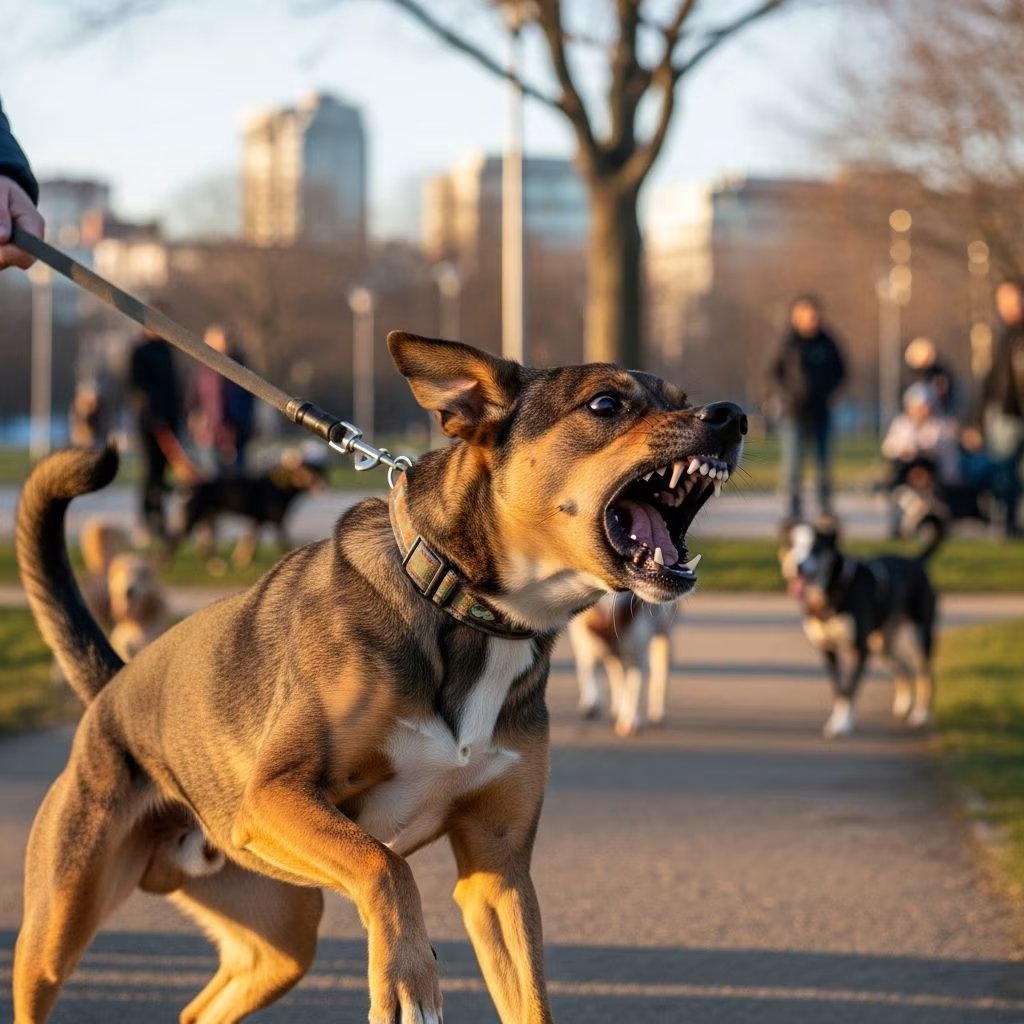
Leash reactivity, often perceived as aggression on a leash, affects many dogs and their owners during walks. This behavior manifests as barking, lunging, or growling toward other dogs, people, or stimuli while restrained by a leash. Understanding and addressing it requires insight into underlying emotions and structured interventions.
Understanding the Roots of Leash Reactivity
Dogs exhibit leash reactivity due to several interconnected factors. Primarily, **fear** drives many cases: a dog feels trapped by the leash, unable to flee from perceived threats, triggering a fight response instead. Frustration builds when the leash prevents natural social greetings or play, escalating tension.
Territorial instincts amplify this; leashed dogs may view their space as under protection, leading to defensive displays. Insufficient early socialization leaves puppies unprepared for diverse encounters, fostering anxiety in adulthood. Additionally, pent-up energy from lack of exercise can result in over-excitement, misinterpreted as aggression.
- Fear-based reactivity: Dog snarls to create distance from scary stimuli.
- Frustration-based: Leash blocks desired interactions, causing outbursts.
- Territorial: Protects owner or path from intruders.
- Energy overflow: Unreleased vigor turns into hyperactivity on walks.
Recognizing Signs Early
Early detection prevents escalation. Watch for stiff body posture, raised hackles, intense staring, or sudden leash tension before vocalization. These precursors signal building stress. Owners often notice patterns, like reactivity only toward certain breeds or in crowded areas.
| Early Warning Signs | Advanced Reactivity |
|---|---|
| Stiffening, ears back | Barking, lunging |
| Whale-eye (whites showing) | Growling, snapping |
| Tail rigid or tucked | Attempted bites |
Tracking these in a journal helps identify triggers, aiding targeted management.
Prevention Strategies for Puppies and Young Dogs
Proactive steps during puppyhood build confidence. **Socialization** is key: expose pups to varied environments, people, dogs, and noises positively before 12-16 weeks. Puppy classes provide controlled interactions, teaching polite greetings.
Regular exercise burns energy, reducing over-arousal. Aim for daily off-leash play sessions in safe areas. Use reward-based training from day one to associate leashes with fun.
- Start leash training indoors with treats.
- Gradually introduce outdoor walks in quiet areas.
- Enroll in obedience classes early.
Management Techniques for Current Reactivity
For established issues, prioritize safety and gradual change. Select gear wisely: front-clip harnesses redirect pulling without neck pressure; head collars offer control for strong dogs.
**Environmental management** avoids triggers: walk during off-peak hours, choose quiet paths, maintain 20-50 feet distance from stimuli. Emergency U-turns—quickly turning away—de-escalate situations.
Positive reinforcement shines here. Reward calm behavior with high-value treats before reactivity threshold. Build distance where dog stays relaxed, slowly closing gaps over sessions.
Desensitization and Counterconditioning: Core Training Methods
These evidence-based protocols reshape emotional responses. **Desensitization** exposes dogs to triggers at sub-threshold levels, preventing overwhelm. Pair with **counterconditioning**, where triggers predict rewards, shifting associations from negative to positive.
Steps for implementation:
- Identify trigger distance (e.g., 30 feet calm, 20 feet tense).
- At safe distance, feed treats continuously during trigger presence.
- Repeat daily, shortening distance as relaxation improves.
Progress may take weeks; consistency is vital. For frustration-driven cases, teach impulse control via games like “leave it” or mat stays.
Tools and Equipment Recommendations
| Tool | Benefits | Considerations |
|---|---|---|
| Front-clip harness | Reduces pulling, gentle | Proper fit essential |
| Head halter (e.g., Gentle Leader) | Steers head for control | Desensitize gradually |
| Sturdy 4-6 ft leash | Prevents tangling | Avoid retractables |
| Muzzle (if needed) | Safety for bites | Train positively first |
Avoid choke/prong collars; they heighten fear.
Role of Exercise and Mental Stimulation
Beyond walks, enrich life to lower baseline stress. Puzzle toys, scent games, and agility build focus. Daily 30-60 minutes vigorous play prevents energy buildup fueling reactivity.
When to Seek Professional Guidance
DIY works for mild cases, but professionals excel for intensity or bites. Certified trainers (CPDT) or veterinary behaviorists (DACVB) assess via history and observation, crafting custom plans. They teach nuanced skills like reading body language and handling escalations safely.
Benefits include faster progress, injury prevention, and owner confidence. Find credentials via APDT or IAABC directories.
Common Mistakes to Avoid
- Punishing reactions: Increases fear, worsens cycles.
- Ignoring subtle cues: Misses prevention windows.
- Inconsistent training: Undermines progress.
- Overfacing dog: Too-close exposures backfire.
Realistic Expectations and Long-Term Success
Improvement varies; some dogs manage triggers in months, others need lifelong strategies. Celebrate small wins like quieter walks. Maintenance sessions sustain gains.
FAQs
Is leash reactivity the same as aggression?
No, it’s often fear or frustration mimicking aggression. True aggression involves intent to harm; reactivity is emotional overflow.
Can all dogs be fixed?
Most improve significantly with proper methods; severe cases may require management.
How long does training take?
Weeks to months, depending on consistency and case severity.
Should I use a retractable leash?
No, they reduce control and encourage pulling.
What if my dog bit someone?
Consult a vet behaviorist immediately; muzzle train for safety.
References
- How to Deal with Leash Aggression in Dogs — Miller Clark Animal Hospital. 2024-03-15. https://www.millerclarkanimalhospital.com/site/blog/2024/03/15/leash-aggression
- How to Deal With Leash Aggression in Dogs — Five Oaks Animal Hospital. 2023-12-15. https://www.fiveoaksah.com/site/blog/2023/12/15/how-deal-leash-aggression-dogs
- How to Deal With Leash Aggression in Dogs — Gluckstadt Animal Hospital. 2024-07-15. https://www.gluckstadtanimalhospital.com/site/blog/2024/07/15/deal-with-leash-aggression-dogs
- Dog Behavior Problems – Aggression to Unfamiliar Dogs – Treatment — VCA Animal Hospitals. N/A. https://vcahospitals.com/know-your-pet/dog-behavior-problems—aggression—unfamiliar-dogs—treatment
- Dealing with Leash Reactivity — Best Friends Animal Society. N/A. https://bestfriends.org/network/resources-tools/dealing-leash-reactivity
- Leash Aggression in Dogs: What to Know — American Kennel Club. N/A. https://www.akc.org/expert-advice/training/leash-aggression/



