

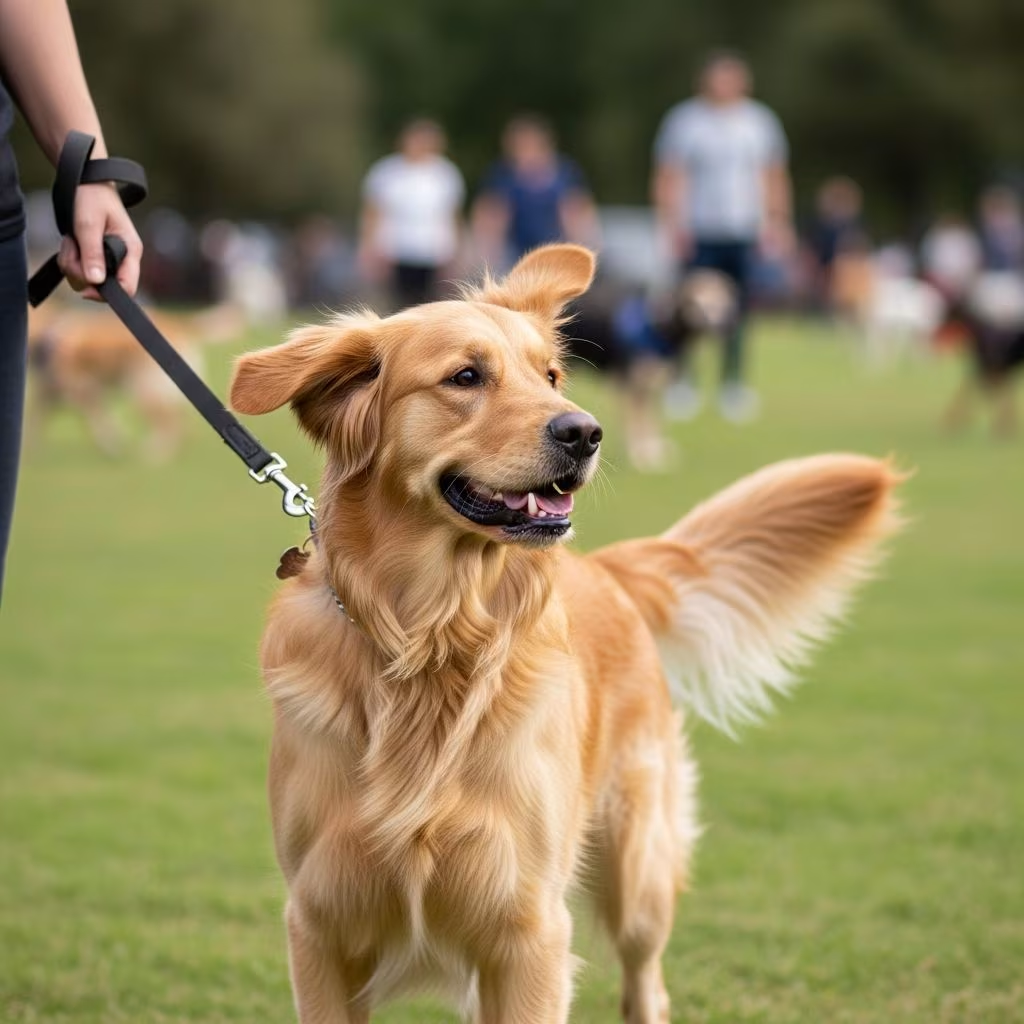
Your dog is a joy at home or in the dog park, greeting everyone with wagging enthusiasm. But the moment the leash comes out, chaos ensues: barking, lunging, growling at passing dogs or people. This frustrating paradox—known as leash reactivity—affects countless otherwise friendly dogs, turning walks into battles of wills. Understanding why this happens and how to address it can reclaim your daily routine.
Defining Leash Reactivity and Its Impact
Leash reactivity occurs when a dog displays intense behaviors like barking, lunging, or snapping while restrained by a leash, typically toward triggers such as other dogs, strangers, or moving objects. Unlike true aggression, it’s often a response to feeling trapped, where the leash prevents natural flight or approach instincts.
This issue disrupts bonding time, increases owner stress, and risks escalation if ignored. Dogs off-leash may play happily, but on-leash tension amplifies reactions, potentially leading to redirected bites or chronic anxiety.
Unpacking the Root Causes
Two primary drivers fuel leash reactivity: fear and frustration. Fearful dogs perceive threats and attempt to create distance through vocalizations and lunges since fleeing is impossible. Frustrated dogs, excited to greet but blocked by the leash, build escalating energy that spills into reactive outbursts.
- Fear-based triggers: Past traumas like dog attacks, inadequate socialization, or pain from medical issues heighten vulnerability.
- Frustration-based: High-energy dogs eager for playdates, restrained from natural curving greetings (arc approaches, sniffing).
- Leash role: A taut leash signals owner tension, worsening the cycle; loose leashes promote calm.
Additional factors include trigger stacking—cumulative stressors like multiple dogs or noises pushing dogs over threshold—and punishment-based training that suppresses warnings, risking silent bites.
Spotting the Signs Early
Recognize reactivity before it peaks. Early indicators include stiff posture, dilated pupils, raised hackles, whining, or intense staring. Advanced signs: explosive barking, lunging, air-snapping.
| Behavior Type | Fear Indicators | Frustration Indicators |
|---|---|---|
| Body Language | Stiff, cowering, ears back, tail tucked | Bouncy, playful barking, forward lean |
| Vocalizations | Growling, snarling | High-pitched barks, whining |
| Leash Pressure | Pulling away or freezing | Straining forward eagerly |
Journal triggers (e.g., bearded men, joggers) to map patterns.
Preparation: Essential Tools and Mindset
Success demands consistency and positivity. Stock up:
- High-value treats (cheese, hot dogs in tiny bits)
- Treat pouch and squeeze tubes for speed
- 4-6 ft non-retractable leash
- Well-fitted harness (no collars for pulling)
- Optional waist leash for control
Shift mindset: Stay calm, breathe deeply—your tension transfers via leash. Rule out medical pain via vet check.
Core Training Strategies
Desensitization: Building Tolerance
Gradually expose to triggers at sub-threshold distance where calm prevails. Start far (e.g., 50 feet from another dog), reward focus on you. Slowly close gap over sessions as tolerance grows.
- Spot trigger at safe distance.
- Feed treats continuously while under threshold.
- Increase proximity only if calm maintained.
Counter-Conditioning: Rewiring Emotions
Pair triggers with positivity so they predict rewards, flipping fear/frustration to anticipation.
Protocol:
- Trigger appears → Immediate high-value treat rain.
- No cue needed; automatic association forms.
- End session before threshold breach.
Emergency Distance Tools (BAT Technique)
When reactivity brews, create space swiftly:
- Turn 180°, speed-walk away while treating.
- Use ‘life jacket’ turn: Arc body to block view.
- Practice ‘u-turns’ preemptively at mild arousal.
Advanced Protocols for Progress
Threshold Management
Avoid overload. Walk low-traffic times/routes. Use visual barriers (parked cars) to preempt sights.
Engagement Games
Build ‘look at me’ with cues like ‘watch’: Reward eye contact amid distractions, progressing to trigger proximity.
Off-Leash Alternatives
Supplement with fenced play to fulfill social needs, reducing walk pressure.
Common Pitfalls and Fixes
| Mistake | Why It Fails | Better Approach |
|---|---|---|
| Punishing reactions | Heightens fear, suppresses warnings | Positive reinforcement only |
| Tight leash | Amplifies stress | Keep loose, breathe calm |
| Forced greetings | Triggers fights via unnatural approach | Parallel walks at distance |
| Ignoring vet check | Masks pain issues | Rule out health first |
Realistic Timeline and Expectations
Improvement varies: Weeks for mild cases, months for severe. Consistency yields 80% success in committed owners. If stalled, seek certified trainer (CPDT-KA).
FAQs
Is leash reactivity dangerous?
Not inherently aggressive, but untreated it risks bites. Reactive dogs aren’t ‘bad’—they’re stressed.
My dog is fine off-leash. Why leash issues?
Leash blocks flight/greeting, trapping instincts.
Will treats ‘reward’ bad behavior?
No—timing rewards triggers, not reactions.
When to use a muzzle?
For safety during training if bite risk exists. Train positive associations.
Can puppies develop this?
Yes—proactive socialization prevents.
Long-Term Success Tips
Integrate lifestyle: Daily mental games, exercise variety. Track via app/journal. Celebrate micro-wins—quiet heel past a trigger is victory.
With patience, your friendly dog regains walk joy. Persistence transforms reactivity into reliability.
References
- Leash Reactivity (Confinement) in Dogs – PetMD — PetMD. 2023-05-10. https://www.petmd.com/dog/behavior/leash-reactivity-in-dogs
- Dealing with Leash Reactivity | Best Friends Animal Society — Best Friends Animal Society. N/A. https://bestfriends.org/network/resources-tools/dealing-leash-reactivity
- Dog Leash Reactivity – SPCA of Wake County — SPCA of Wake County. N/A. https://spcawake.org/services/pet-behavior/dog-leash-reactivity/
- Understanding the Causes of Leash Reactivity | Tyler Muto – YouTube — Tyler Muto (YouTube). N/A. https://www.youtube.com/watch?v=6J54KiVnlhk
- Leash Reactivity | Wisconsin Humane Society — Wisconsin Humane Society. N/A. https://www.wihumane.org/behavior/ask-the-experts/dogs/leash-reactivity
- Managing reactive behavior – Cornell University College of Veterinary Medicine — Cornell University Riney Canine Health Center. N/A. https://www.vet.cornell.edu/departments-centers-and-institutes/riney-canine-health-center/canine-health-information/managing-reactive-behavior
- Managing a leash-reactive dog – Animal Humane Society — Animal Humane Society. N/A. https://www.animalhumanesociety.org/resource/managing-leash-reactive-dog



