

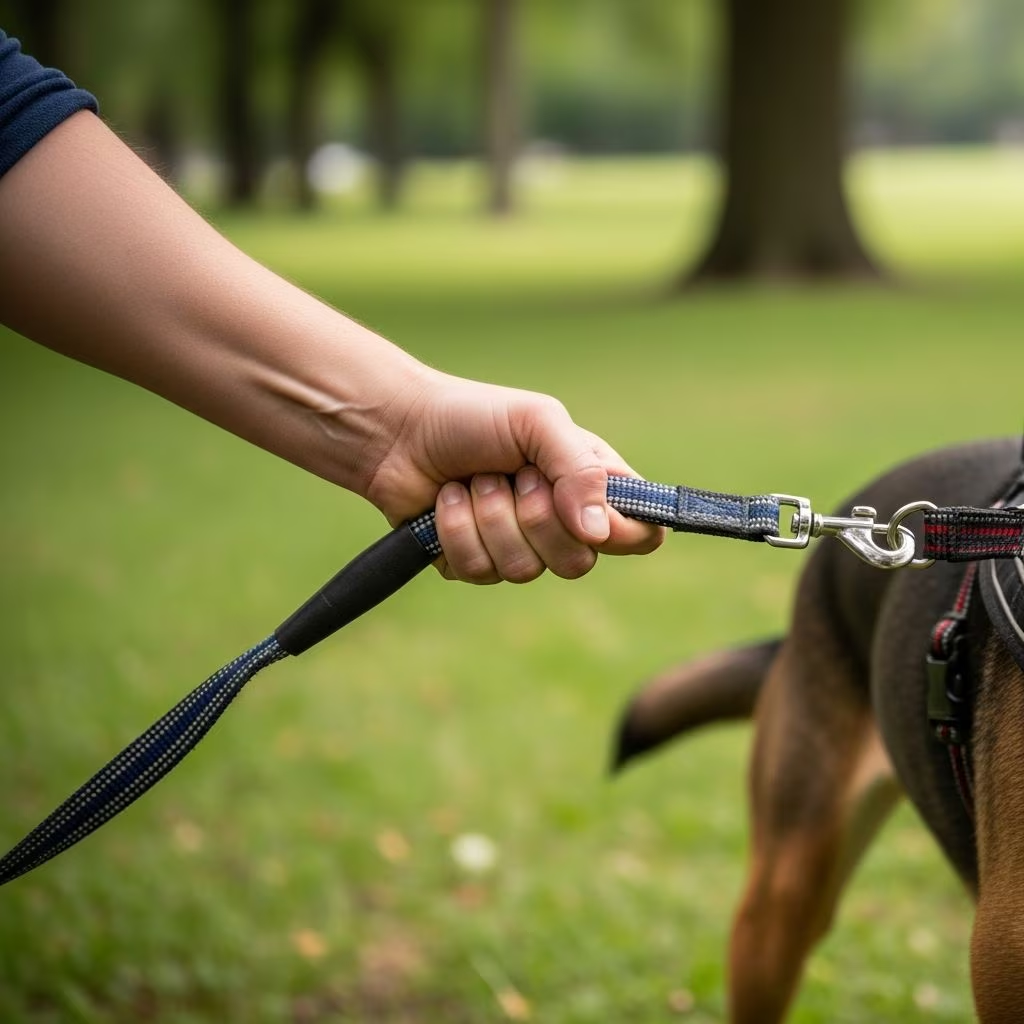
Dogs often grab and tug on their leashes during walks due to excitement, playfulness, frustration, or lack of training, leading to frustrating and potentially unsafe experiences for owners. Effective management involves understanding root causes and applying positive reinforcement techniques to redirect behavior.
Why Do Dogs Grab and Tug on the Leash?
Leash grabbing and tugging, sometimes called leash biting, is a common behavior in shelter and home environments, observed in about 4.4% of walks among shelter dogs, particularly juveniles and younger adults. This action often stems from overstimulation during walks, where dogs view the leash as a toy for play-tugging, or from frustration when restrained from desired stimuli like other dogs or vehicles.
Younger dogs are more prone, with age as a key predictor; pulling on the leash affects 86% of walks, while grabbing occurs less frequently but correlates with longer shelter stays, signaling adoption challenges. In high-arousal shelter settings, dogs grab leashes when first removed from kennels due to intense excitement.
- Excitement and Play: Dogs treat the swinging leash as an interactive toy, especially high-energy breeds.
- Frustration: Leash reactivity builds when dogs can’t approach triggers, leading to mouthing or biting.
- Attention-Seeking: Tugging elicits owner reactions, reinforcing the behavior.
- Lack of Training: Untrained dogs default to natural mouthing instincts without alternatives.
Understanding the Behavior
Behaviors like jumping (45% during harnessing), pulling (86% during walks), and grabbing equipment reveal excitable patterns most common in younger dogs. Demographic factors such as age and body size influence prevalence; medium to large juveniles show higher rates. In homes, this mirrors shelter findings, where tight leashes amplify stress and reactivity.
Frustrated dogs may redirect aggression to the leash, akin to biting hands or collars during restraint. Vocalizing or targeting other dogs/vehicles accompanies 20-30% of walks, escalating tugging. Recognizing these as communication—rather than defiance—allows targeted intervention.
Prevention Tips
Proactive steps minimize leash grabbing before it starts. Use appropriate equipment like front-attachment harnesses to reduce pull force and redirect momentum. Chain leashes or taste deterrents discourage mouthing in defensive handling scenarios.
- Practice collar and harness conditioning at home to desensitize dogs to handling.
- Provide mental stimulation pre-walk, like puzzle toys, to lower arousal.
- Opt for no-pull gear: head collars for strong pullers, ensuring proper fit to avoid discomfort.
- Train loose-leash walking basics in low-distraction areas first.
Shelter data emphasizes focusing on young dogs, as behaviors like grabbing predict longer stays, urging early training.
How to Stop Leash Grabbing and Tugging
Address the behavior through consistent, positive methods. Stop movement immediately when grabbing occurs, standing still until the dog releases—known as “be a tree”. Reward calm chewing on alternatives.
Step-by-Step Training Methods
- Ignore and Redirect: When the dog grabs, drop the leash (if safe) and offer a toy. Praise release and calm holding.
- Two-Leash Technique: Use a primary leash and drag line; switch to the drag line when mouthing starts, eliminating tug fun.
- Taste Deterrents: Apply pet-safe bitter sprays to the leash; combine with chain options for persistent biters.
- Impulse Control Exercises: Practice “leave it” with treats, progressing to leash scenarios.
- Emergency Handling: For aggressive tuggers, use sideways body positioning and slip leads for safety.
For mouthy dogs, carry toys on walks to occupy jaws. Sessions should last 5-10 minutes, multiple times daily, with high-value rewards for success.
Advanced Techniques for Reactivity
Leash-reactive dogs bark and lunge due to perceived threats, worsened by owner tension on tight leashes. Counter-condition by feeding treats for calm responses to triggers at distance, gradually closing gaps. Avoid punishment, which heightens fear.
| Behavior | Trigger | Intervention |
|---|---|---|
| Grabbing Leash | Excitement | Stand still, redirect to toy |
| Pulling/Tugging | Frustration | Two-leash switch, no-pull harness |
| Reactivity | Other dogs | Counter-conditioning with treats |
| Mouthing Handler | Overstimulation | Desensitize handling, calm pre-walk |
Frequently Asked Questions
Why does my dog grab the leash on walks?
Dogs grab leashes from playfulness, frustration, or habit, especially young or high-energy ones; it’s common in 4-5% of shelter walks and predicts adoption delays.
Is leash biting a sign of aggression?
Rarely; it’s usually excitement or redirection, not true aggression unless paired with growling or stiffness. Egregious cases warrant professional assessment.
How long does training take?
Most see improvement in 1-2 weeks with daily 10-minute sessions; persistent cases may need 4-6 weeks, focusing on consistency.
What equipment helps most?
Front-clip harnesses reduce pulling, chain leashes deter biting, and toys provide alternatives.
Can puppies be trained out of this?
Yes, early intervention works best; juveniles show highest rates, so start with positive reinforcement.
What if my dog pulls toward other dogs?
Increase distance, use treats for calm focus on you, and practice loose-leash in quiet areas to build skills.
Common Mistakes to Avoid
Avoid yanking the leash, which frustrates dogs and escalates biting. Don’t walk excited dogs; wait for calm. Punishment reinforces fear-based reactivity. Tight leashes signal tension, worsening outbursts.
- Never drag a grabbing dog forward.
- Avoid off-leash greetings with reactives.
- Don’t use retractable leashes, which encourage pulling.
Shelters note behaviors like these affect length of stay, underscoring home training’s value.
When to Seek Professional Help
If tugging accompanies fear aggression (cowering, intense barking), or persists after 4 weeks, consult a certified trainer. ASPCA advises multi-context evaluation before extreme measures. Red flags include biting handlers or unmanageable reactivity.
Long-Term Management
Combine walks with off-leash exercise to burn energy. Track progress in a journal. Regular handling practice prevents escalation. Well-managed dogs enjoy stress-free walks, strengthening bonds.
In shelters, targeting grabbers shortens stays, proving training efficacy. Owners mirroring these yield happier pets.
References
- Behaviors of Shelter Dogs During Harnessing and Leash Walks — National Institutes of Health (PMC). 2024. https://pmc.ncbi.nlm.nih.gov/articles/PMC11939286/
- Defensive Dog Handling: Leash Skills and Body Language — ASPCApro. 2012-05-10. https://www.aspcapro.org/sites/default/files/defensive_handling_slides_0.pdf
- Position Statement on Shelter Dog Behavior Assessments — ASPCA. Accessed 2026. https://www.aspca.org/about-us/aspca-policy-and-position-statements/position-statement-shelter-dog-behavior-assessments
- Solutions for Leash Pullers — Louisiana SPCA. 2020. https://www.louisianaspca.org/wp-content/uploads/2020/09/Leash-pulling.pdf
- Managing a Leash-Reactive Dog — SPCA of Wake County. 2018. https://spcawake.org/wp-content/uploads/2018/07/DogLeashReactive.pdf
- Leash Biting — Maryland SPCA. 2025. https://mdspca.org/wp-content/uploads/2025/05/Leash-Biting.pdf



