
Laundry Detergent Dangers for Cats
Discover why laundry pods and detergents pose serious risks to cats and learn essential steps for prevention and emergency response.
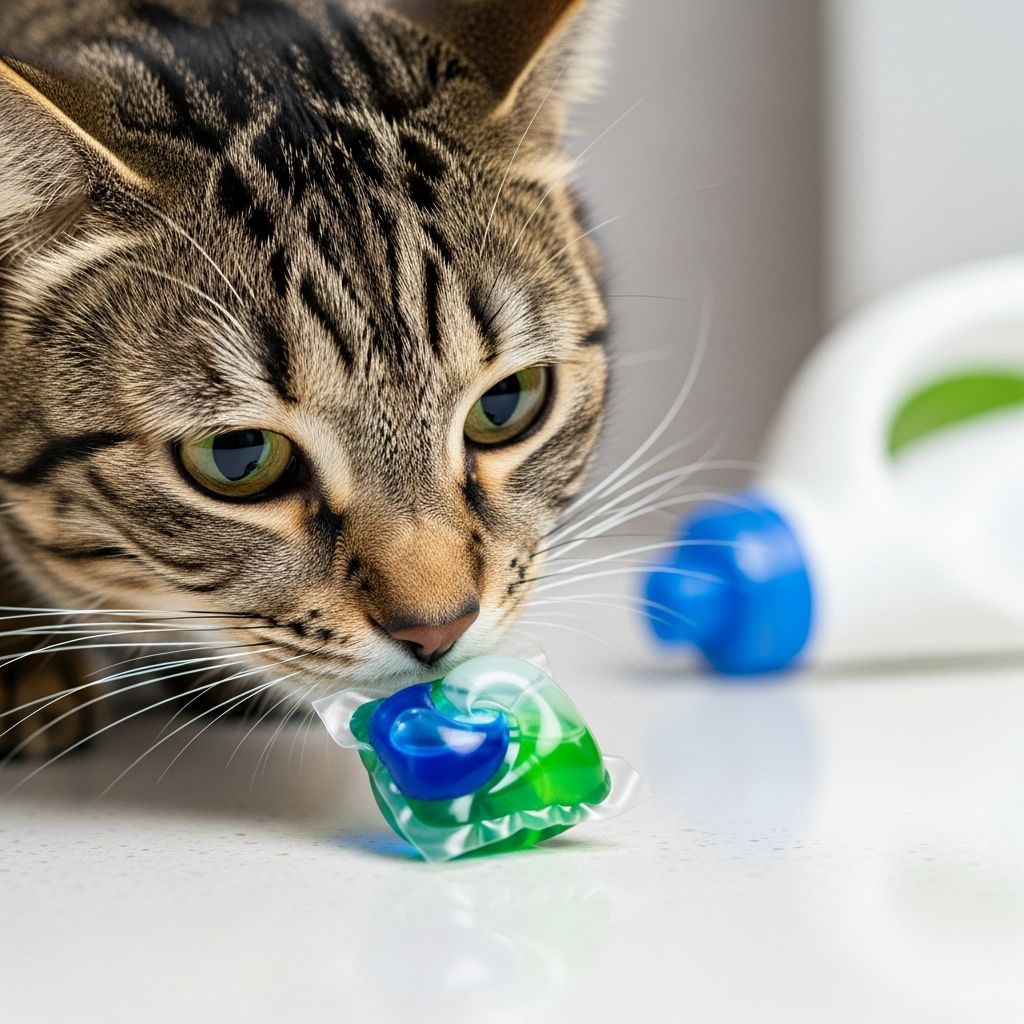
Household laundry products, especially concentrated pods, represent a significant threat to cats due to their chemical composition and appealing texture. These items can trigger immediate and delayed health crises, ranging from gastrointestinal upset to life-threatening respiratory complications. Understanding these risks empowers cat owners to safeguard their pets effectively.
Why Laundry Products Attract Cats
Cats are naturally curious groomers, often investigating spills or novel items in the home. Laundry detergents contain surfactants, fragrances, and dyes that may mimic appealing scents or textures, drawing felines in. Unlike dogs, cats frequently ingest toxins indirectly through self-grooming after paw contact with spilled liquids.
- Curiosity factor: Pods resemble toys with their colorful, squishy exterior.
- Grooming instinct: Cats lick paws clean, consuming residues unknowingly.
- Accessibility: Laundry areas are common household zones where products are left within reach.
Chemical Components Behind the Toxicity
Modern detergents feature anionic and nonionic surfactants, propylene glycol, ethanol, and a pH range of 7-9, creating a low-viscosity, pressurized gel in pods. When bitten, these release explosively, coating the mouth, throat, and potentially lungs. Traditional powders or liquids pose lesser risks due to poor palatability, limiting intake volume.
| Component | Role | Risk to Cats |
|---|---|---|
| Anionic surfactants | Cleaning agents | Mucosal irritation, burns |
| Nonionic surfactants | Enhance solubility | Skin/eye corrosion |
| Propylene glycol | Humectant | Gastrointestinal upset |
| Ethanol | Solvent | Respiratory depression |
These elements disrupt pulmonary surfactants in cats, exacerbating inhalation risks during grooming of sodium lauryl sulfate-laden spills.
Immediate Symptoms to Watch For
Signs manifest rapidly post-exposure, often within minutes. Over 72% of pod-ingesting pets develop illness, with vomiting in 84% of cases. Respiratory issues affect 21% via coughing and 13% with wheezing or distress.
- Oral signs: Excessive drooling, pawing at mouth, gagging.
- Gastrointestinal: Vomiting, diarrhea, appetite loss.
- Respiratory: Coughing, wheezing, dyspnea, moist lung sounds.
- Other: Lethargy, eye redness, straining to defecate.
Cats may rub eyes or face if splashed, indicating irritation from high-pressure expulsion.
Severe Complications and Long-Term Effects
Beyond initial symptoms, aspiration pneumonia emerges as the primary fatality cause, triggered by regurgitation of detergent into airways. Esophageal strictures from irritation can hinder swallowing chronically. Inhalation during grooming leads to cyanosis and pulmonary edema within 1-3 hours.
Pet Poison Helpline data underscores pod severity: dogs dominate calls, but cats suffer uniquely from grooming exposures. Dehydration and electrolyte imbalances arise from prolonged vomiting.
First Response: What to Do Immediately
Act swiftly but calmly. If detergent contacts fur, rinse thoroughly with water until soap-free. Flush mouth gently if minimal ingestion suspected. Eye exposure demands immediate irrigation with saline or water for 5 minutes, followed by vet visit.
- Remove pet from source.
- Rinse affected areas copiously.
- Monitor for 12-24 hours, especially breathing.
- Seek professional care for any concerning signs.
Avoid inducing vomiting, as it heightens aspiration risk.
Veterinary Interventions Explained
Mild cases may resolve outpatient with antiemetics and GI protectants like sucralfate or proton pump inhibitors. Hospitalization follows for respiratory distress: radiographs assess pneumonia, oxygen supports breathing, nebulization clears airways, and antibiotics prevent secondary infections. Bronchodilators aid severe wheezing.
Activated charcoal proves ineffective here, per case studies. Most recover in 24-72 hours with supportive care.
Prevention Strategies for Cat-Safe Homes
Proactive measures drastically reduce incidents. Store products in locked cabinets, use pet-proof containers, and opt for fragrance-free alternatives if possible.
- Install child-safety latches on laundry rooms.
- Clean spills instantly, drying surfaces fully.
- Elevate baskets away from jumping zones.
- Educate household members on risks.
Consider pod-free detergents to minimize appeal.
FAQs on Laundry Detergent and Cats
Are all laundry detergents equally dangerous to cats?
No, pods pose the highest risk due to concentration and pressure. Liquids and powders cause milder effects from limited ingestion.
What if my cat only licked a small spill?
Monitor closely; grooming can amplify intake. Contact a vet or poison hotline if symptoms appear.
How do I know if aspiration pneumonia has developed?
Look for worsening cough, blue gums, rapid breathing. Radiographs confirm diagnosis.
Can cats recover fully from pod ingestion?
Yes, with prompt treatment, most do within days, though severe cases require intensive care.
Is there a safe amount of detergent cats can ingest?
No established safe threshold exists; any exposure warrants caution.
Statistics and Trends in Pet Exposures
Pet Poison Helpline reports highlight rising pod incidents, with gastrointestinal and respiratory dominance. Cats’ grooming behavior elevates their vulnerability compared to dogs.
| Symptom | Prevalence in Pod Cases |
|---|---|
| Vomiting | 84% |
| Coughing | 21% |
| Wheezing/Dyspnea | 13% |
| Illness Overall | 72% |
Beyond Detergents: Other Household Cleaners
Bleaches cause milder effects unless concentrated, yielding hypersalivation or lethargy. Always dilute and ventilate.
In summary, vigilance transforms potential tragedies into avoidable mishaps. Prioritize secure storage and rapid response to keep cats thriving.
References
- Pet Peeves: Laundry and Dishwasher Pods — VCA Animal Hospitals. Accessed 2026. https://vcahospitals.com/know-your-pet/pet-peeves-laundry-and-dishwasher-pods
- Laundry Detergent Ingestion Case Study — ASPCApro. Accessed 2026. https://www.aspcapro.org/resource/laundry-detergent-ingestion-case-study
- Laundry Detergent — American College of Veterinary Pharmacists. Accessed 2026. https://vetmeds.org/pet-poison-control-list/laundry-detergent/
- Toxicoses From Household Cleaners and Personal Care Products in Animals — MSD Veterinary Manual. Accessed 2026. https://www.msdvetmanual.com/toxicology/toxicoses-from-household-hazards/toxicoses-from-household-cleaners-and-personal-care-products-in-animals
Similar Articles








Read full bio of Sneha Tete




