

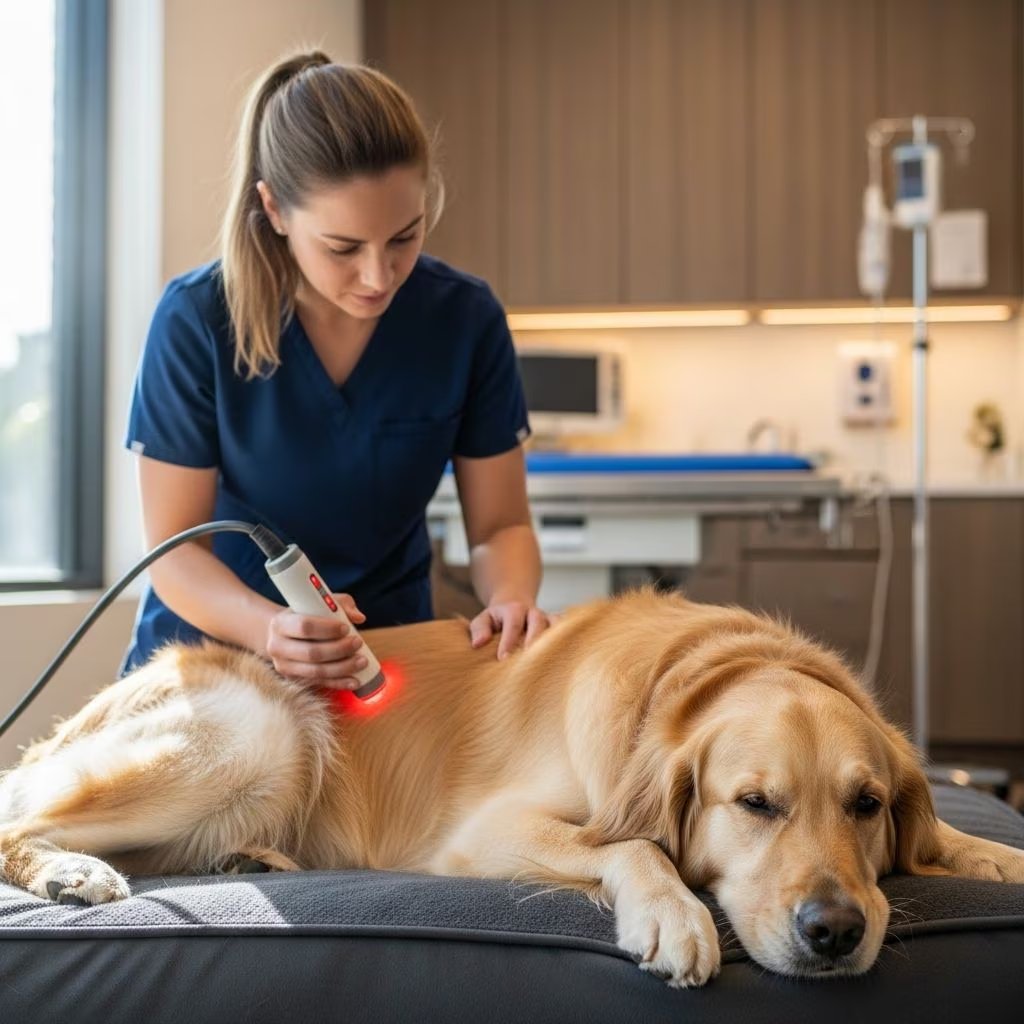
Arthritis affects millions of dogs, causing chronic pain, stiffness, and reduced mobility that diminish their daily joy. Low-level laser therapy, also known as photobiomodulation, offers a promising, non-invasive solution. This treatment uses specific wavelengths of light to penetrate tissues, promoting healing at the cellular level without drugs or surgery. Clinical studies demonstrate its ability to alleviate pain, decrease inflammation, and restore activity in affected dogs.
Understanding Canine Arthritis and Its Impact
Osteoarthritis (OA) is a degenerative joint disease common in older dogs and certain breeds prone to hip dysplasia or elbow issues. It involves cartilage breakdown, leading to bone-on-bone friction, swelling, and pain. Dogs with OA often show reluctance to rise, limp during walks, or avoid play, significantly impacting their quality of life.
- Symptoms include stiffness after rest, limping, muscle atrophy, and behavioral changes like irritability.
- Risk factors: age, obesity, genetics, and prior injuries.
- Traditional treatments like NSAIDs provide relief but carry risks of gastrointestinal upset or kidney strain with long-term use.
Laser therapy emerges as a complementary option, targeting root causes rather than just masking symptoms.
How Laser Therapy Works in Dogs
Laser therapy delivers red or near-infrared light (typically 600-1000 nm) to affected joints. Photons are absorbed by mitochondria in cells, boosting ATP production, which accelerates repair processes. This leads to vasodilation for better blood flow, reduced oxidative stress, and modulation of inflammatory mediators like cyclooxygenase-2 (COX-2) and bradykinin.
| Mechanism | Effect on Joints |
|---|---|
| Cellular Energy Boost | Increases ATP, speeds tissue repair |
| Anti-Inflammatory | Lowers COX-2, bradykinin; reduces swelling |
| Pain Signal Block | Inhibits nerve transmission to brain |
| Improved Circulation | Enhances oxygen/nutrient delivery |
Sessions last 5-20 minutes, with dogs experiencing no discomfort—many relax or sleep during treatment.
Clinical Evidence Supporting Laser Therapy
Peer-reviewed studies confirm laser therapy’s efficacy for canine OA. In one trial with 23 dogs, weekly sessions over six weeks increased daily step counts from 1,109 at baseline to 8,416 by week six (p < 0.001). Activity levels rose after the first treatment, with 50% of dogs reducing analgesic use.
Another study of 17 dogs showed Canine Brief Pain Inventory (CBPI) scores dropping from 11.8 to 9.2 after one session (p=0.018), continuing to improve over eight weeks. Analgesics were reduced in 13 dogs, suspended in six, with no side effects reported.
A 2020 study noted vet and owner-reported pain reduction and quality-of-life gains post-treatment. These findings indicate consistent mobility improvements and pain relief across populations.
Benefits Beyond Pain Management
Laser therapy’s advantages extend to holistic wellness:
- Increased Mobility: Dogs walk, run, and climb stairs more freely, as accelerometers tracked in studies.
- Drug Reduction: Allows tapering NSAIDs, minimizing side effects.
- Faster Recovery: Promotes healing for post-surgical or injury-related arthritis.
- Non-Invasive Safety: Zero reported adverse effects in trials; suitable for all ages.
- Quality of Life Boost: Owners report happier, more playful pets.
For senior dogs with degenerative joint disease, it supports active lifestyles without pharmaceutical dependency.
Practical Guide to Starting Laser Therapy
Consult a veterinarian trained in laser therapy. Initial assessments include gait analysis, pain scoring (e.g., CBPI, Liverpool OA in Dogs), and X-rays to confirm OA.
- Treatment Protocol: 2-3 sessions weekly for 4-6 weeks, then maintenance monthly.
- Equipment: Class IIIb or IV lasers; home units available but vet-supervised preferred.
- Cost: $30-65 per session; packages reduce expenses.
- Complements: Pair with weight management, joint supplements (glucosamine), hydrotherapy, or acupuncture.
Monitor progress via activity trackers or pain scales. Improvements often appear after 1-2 sessions.
Comparing Laser Therapy to Other Treatments
| Treatment | Pros | Cons | Efficacy Evidence |
|---|---|---|---|
| Laser Therapy | Non-invasive, no side effects, quick sessions | Requires multiple visits | High: Step count +760% |
| NSAIDs (e.g., Carprofen) | Fast oral relief | GI/kidney risks long-term | Moderate, symptomatic |
| Joint Supplements | Supportive, low risk | Slow onset, variable results | Supportive |
| Surgery (e.g., Joint Replacement) | Addresses severe cases | Invasive, recovery time | Case-specific |
Laser stands out for safety and multimodal benefits.
Real-World Outcomes and Owner Experiences
Dogs in studies showed enthusiasm for renewed activity: one trial noted energy expenditure stability despite higher steps, indicating efficient movement. Owners frequently report pets jumping on furniture again or chasing toys post-therapy. In a retrospective analysis, client satisfaction soared as dogs “enjoyed life more,” with reduced medication needs.
For breeds like Labs or Golden Retrievers prone to hip OA, early intervention preserves function.
Addressing Common Concerns
Is it painful? No—light-based, dogs find it soothing.
How many sessions? 6-12 initially, then as needed.
Works for all arthritis? Effective for OA, post-trauma; less for autoimmune types.
Home use? Possible with vet guidance; professional best for precision.
Future Directions in Veterinary Laser Therapy
Ongoing research refines protocols, dosages, and wavelengths for optimal OA management. Integration with AI-monitored wearables could personalize treatments. As evidence grows, laser therapy may become standard for canine joint care.
Frequently Asked Questions (FAQs)
What is the success rate of laser therapy for dog arthritis?
Studies report 70-90% improvement in pain and mobility scores after 4-8 weeks.
Can puppies or young dogs benefit?
Yes, for injury-induced issues; not typically needed for age-related OA.
Does insurance cover it?
Some pet plans do; check providers like Trupanion.
How does it compare to acupuncture?
Both non-invasive; laser targets deeper tissues faster.
Any contraindications?
Avoid over tumors or thyroid; pregnant dogs need caution.
References
- Effects of low‐level laser therapy on impaired mobility in dogs with osteoarthritis — PMC. 2023-03-15. https://pmc.ncbi.nlm.nih.gov/articles/PMC10029903/
- Preliminary clinical experience of low-level laser therapy for the management of canine osteoarthritis-associated pain — PMC. 2020-04-22. https://pmc.ncbi.nlm.nih.gov/articles/PMC7193873/
- Laser Therapy for Dogs — PetMD. 2023. https://www.petmd.com/dog/procedure/laser-therapy-for-dogs
- Laser Therapy for Treatment of Joint Disease in Dogs and Cats — Today’s Veterinary Practice. 2022. https://todaysveterinarypractice.com/integrative-alternative-medicine/laser-therapy-for-treatment-of-joint-disease-in-dogs-and-cats/



