

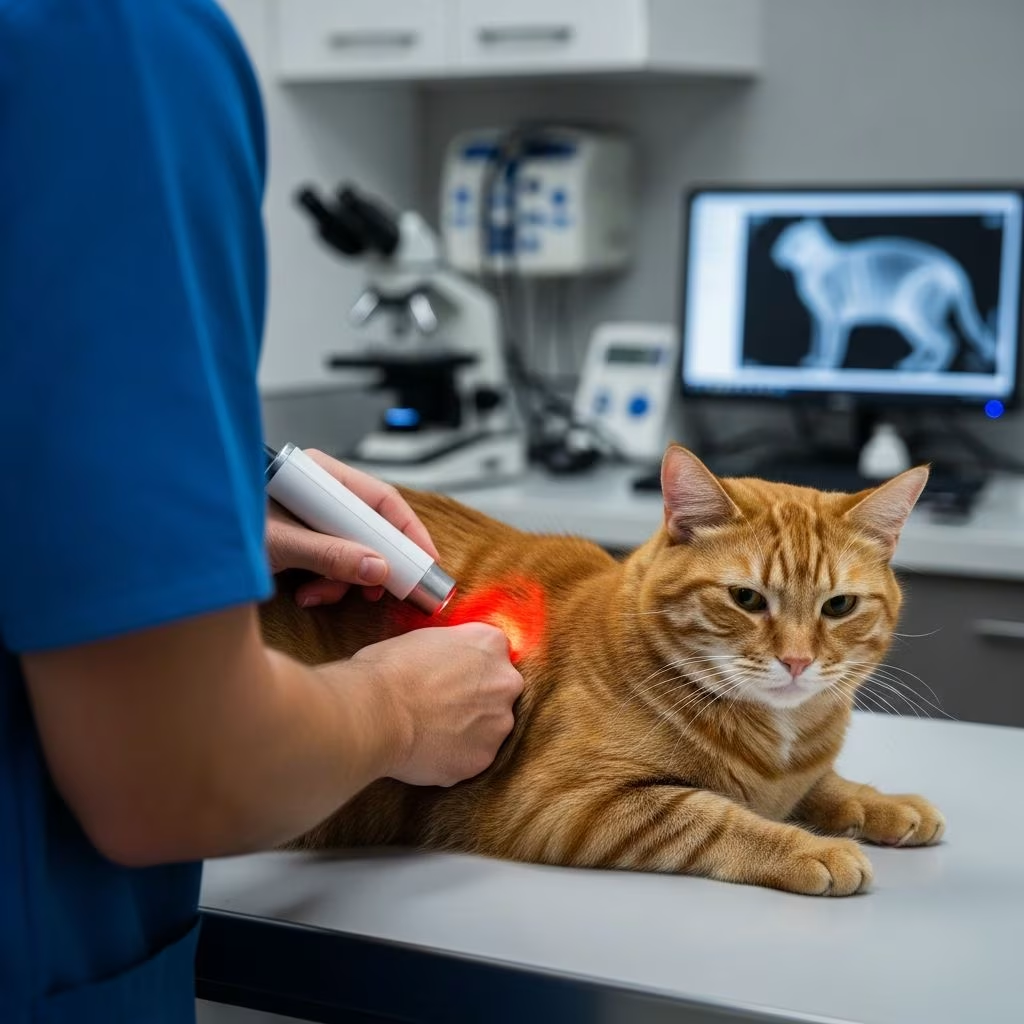
Laser therapy, also known as photobiomodulation, represents a revolutionary advancement in veterinary medicine for cats. This treatment delivers specific wavelengths of light to affected tissues, triggering biological processes that promote healing, alleviate pain, and diminish inflammation without the need for drugs, surgery, or invasive procedures.
Understanding the Science Behind Feline Laser Treatment
At its core, laser therapy for cats utilizes low-level light in the therapeutic window of 620 to 1200 nanometers. These wavelengths penetrate deep into tissues with minimal scattering or absorption by superficial structures, reaching cells that need repair. The light interacts with mitochondria, the energy-producing components within cells, boosting ATP production and enhancing metabolic activity. This photobiostimulation cascade leads to improved cellular function, faster tissue regeneration, and modulated immune responses.
Cats often respond exceptionally well to this therapy due to their sensitive physiology. Unlike higher-powered surgical lasers that cut or cauterize, therapeutic lasers are ‘cold’—they produce no heat, ensuring comfort during sessions. Most treatments last 8-12 minutes, with no need for sedation, shaving fur, or recovery downtime.
Key Mechanisms of Pain Relief and Healing
Laser therapy addresses pain in cats through multiple pathways, making it highly effective for both acute and chronic issues:
- Anti-Inflammatory Effects: Promotes vasodilation to increase blood flow and activates lymphatic drainage, reducing swelling from injuries or bruising.
- Neurological Blockade: Stimulates nerve cells to inhibit pain signal transmission to the brain, providing immediate relief.
- Endorphin Release: Triggers the body’s natural production of endorphins, offering sustained, drug-free analgesia.
Beyond pain management, the therapy accelerates wound closure, reduces scar tissue formation, and enhances nerve regeneration. Improvements are often noticeable within 12-24 hours, though cumulative benefits build over multiple sessions.
Common Feline Conditions Responsive to Laser Therapy
Veterinarians frequently recommend laser therapy for a broad spectrum of cat health issues. Its versatility allows integration with traditional care, enhancing outcomes without added risks.
| Condition | How Laser Therapy Helps | Typical Treatment Frequency |
|---|---|---|
| Arthritis & Degenerative Joint Disease | Reduces joint inflammation, eases stiffness, improves mobility | 2-3 sessions/week for 4-6 weeks |
| Muscle, Ligament, Tendon Injuries | Speeds tissue repair, lowers pain, prevents fibrosis | Daily for acute cases, then tapering |
| Post-Surgical Recovery | Minimizes swelling, accelerates incision healing | 2-5 times/week initially |
| Wounds & Ulcerations | Boosts cell growth, fights infection risk | Every 2-3 days until healed |
| Back Pain & Neuromuscular Disorders | Relieves nerve compression, restores function | Customized based on severity |
| Ear Infections & Gingivitis | Decreases inflammation, aids post-extraction healing | 3-5 sessions per episode |
This table summarizes applications drawn from clinical veterinary practices, where laser therapy consistently shows positive results.
Benefits Tailored to Cats’ Unique Needs
Cats are masters at hiding discomfort, making early intervention crucial. Laser therapy excels here by providing relief that encourages natural behaviors like grooming and play. Key advantages include:
- Increased circulation and oxygen delivery to damaged areas
- Relaxed muscles and reduced nerve hypersensitivity
- No adverse effects or interactions with medications
- Improved quality of life, especially for senior cats with mobility challenges
For geriatric felines suffering from osteoarthritis—a condition affecting up to 90% of cats over 12 years—regular sessions can restore agility and reduce reliance on pain meds.
The Treatment Experience: What Cat Owners Can Expect
A typical session involves positioning your cat comfortably while the veterinarian moves the handheld laser probe over the target area. Many cats relax or even purr, associating the warm sensation with comfort. No protective eyewear is needed for pets, though handlers wear goggles for safety.
Treatment protocols are personalized. Acute injuries might require 3-5 sessions over a week, while chronic arthritis benefits from ongoing maintenance every 1-2 weeks. Costs vary by clinic and session length but are often comparable to a standard exam, with packages available for multi-session plans.
Safety Profile and Considerations
Extensively studied in veterinary settings, laser therapy boasts an impeccable safety record. No known side effects have been reported across thousands of treatments. It’s ideal for cats with medication sensitivities, kidney issues, or those recovering from anesthesia.
Contraindications are rare but include direct application over known cancers or the eyes. Always consult a certified veterinary professional using FDA-cleared Class III or IV lasers for optimal dosing. Pregnant cats should avoid abdominal treatments.
Integrating Laser Therapy into Comprehensive Care
Far from a standalone solution, laser therapy complements acupuncture, physical therapy, joint supplements, and diet modifications. For instance, combining it with weight management yields superior arthritis control. Veterinarians at specialized clinics monitor progress via mobility assessments and owner feedback, adjusting protocols dynamically.
Research from bodies like the American Animal Hospital Association (AAHA) supports its efficacy, noting decreased inflammation and improved wound healing as primary outcomes.
Real-World Outcomes and Owner Testimonials
Owners report transformative changes: limping cats resuming jumps, reduced licking at wounds, and brighter demeanors. In one clinic’s experience, 80% of arthritis patients showed measurable gait improvements after 10 sessions. These anecdotes align with peer-reviewed findings on photobiomodulation’s role in joint disease management.
Choosing the Right Veterinary Provider
Seek clinics with experienced staff, like board-certified practitioners using calibrated equipment. Inquire about laser class (IIIb or IV for deeper penetration), wavelength specifics, and success rates for feline cases. Many offer introductory sessions to demonstrate value.
Frequently Asked Questions (FAQs)
Is laser therapy painful for cats?
No, it’s painless and relaxing. Cats typically remain calm throughout.
How many sessions does my cat need?
Varies by condition: acute issues may need 4-6, chronic ones 8-12 or more, with maintenance as required.
Can all cats receive laser therapy?
Most yes, but consult your vet for cases involving cancer or pregnancy.
Does insurance cover it?
Many pet plans do; check for wellness or alternative therapy riders.
How soon will I see results?
Often within 24 hours, with peak effects after 3-4 sessions.
Future Directions in Feline Laser Applications
Emerging research explores lasers for dental pain, urinary issues, and even behavioral stress reduction in cats. Portable home units are in development, promising convenient maintenance care. As adoption grows—now in 20% of U.S. companion animal practices—expect refined protocols and broader accessibility.
References
- Laser Therapy For Cats | LOVE Animal Hospital and Urgent Care — LOVE Animal Hospital. Accessed 2026. https://love.vet/laser-therapy-for-cats/
- Everything You Should Know About Laser Therapy For Cats — Cat Care Center. Accessed 2026. https://www.catcarecenter.com/services/cats/laser-therapy-pain-relief-for-cats
- Laser Therapy For Cats | The Hometown Veterinarian — Hometown Veterinarian. Accessed 2026. https://www.hometownveterinarian.com/services/cats/laser-therapy-for-cats
- Benefits of laser therapy for cats — Mahopac Vet. 2023-08-07. https://www.mahopacvet.com/site/blog/2023/08/07/benefits-laser-therapy-cats
- Laser Therapy for Treatment of Joint Disease in Dogs and Cats — Today’s Veterinary Practice. Accessed 2026. https://todaysveterinarypractice.com/integrative-alternative-medicine/laser-therapy-for-treatment-of-joint-disease-in-dogs-and-cats/
- Understanding Veterinary Laser Therapy and Its Benefits for Pets — Ballantyne Vet. Accessed 2026. https://www.ballantynevet.com/blog/laser-therapy-for-dogs-cats/
- What is veterinary laser therapy? — AAHA. Accessed 2026. https://www.aaha.org/resources/laser-therapy/



