

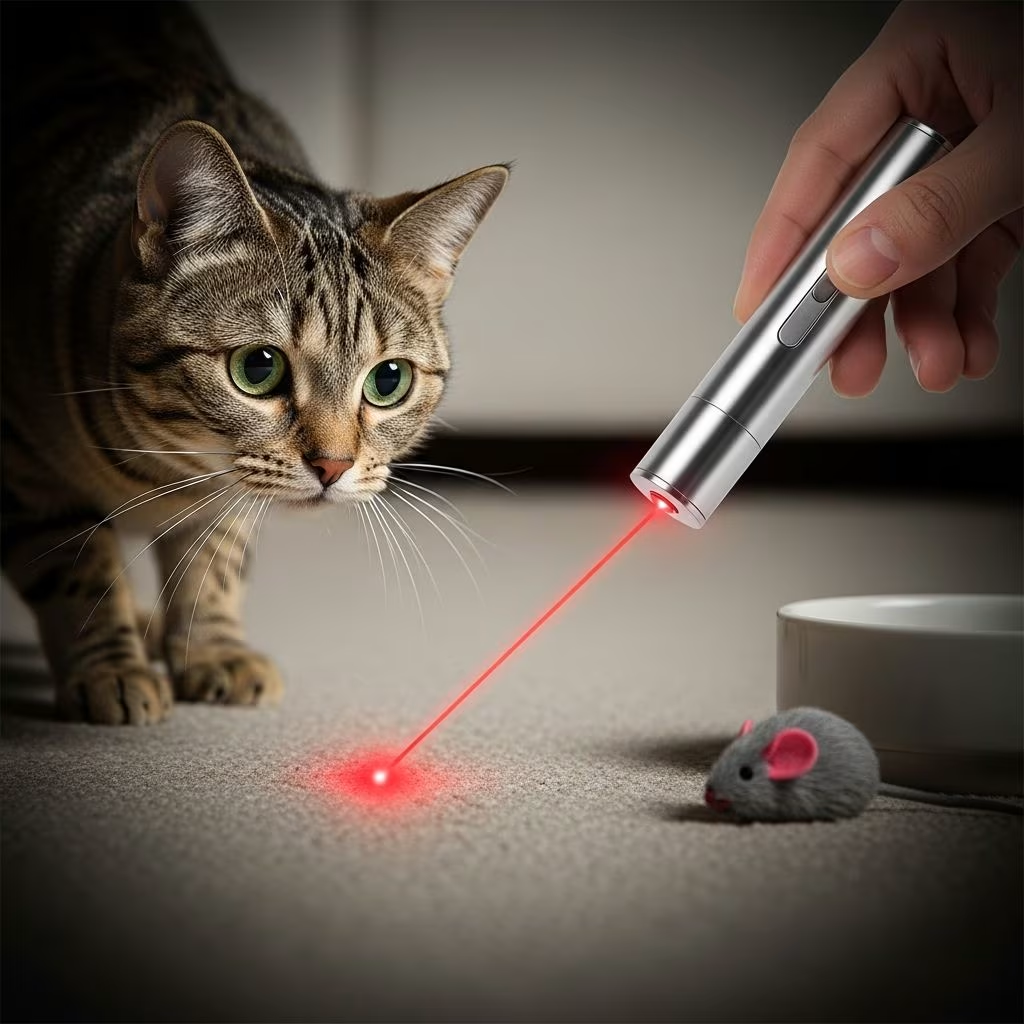
Interactive toys like laser pointers captivate cats with their elusive red dots, sparking intense chasing sessions that mimic hunting instincts. However, questions linger about long-term safety for feline eyes and mental health, prompting cat owners to weigh fun against potential pitfalls.
The Allure of Laser Play in Feline Enrichment
Cats are natural predators wired for stalking and pouncing, behaviors stifled in indoor environments. Laser pointers provide a dynamic outlet, darting across floors and walls to simulate prey movement. This stimulation burns energy, sharpens reflexes, and combats boredom, especially vital for apartment-dwelling felines lacking outdoor access.
Short bursts of laser chase elevate heart rates, promoting cardiovascular fitness akin to wild sprints. Owners report cats eagerly anticipating sessions, fostering bonding moments. Yet, the intangible nature of the beam—impossible to capture—sets it apart from traditional toys, raising unique behavioral considerations.
- Boosts physical exercise through rapid pursuits.
- Engages predatory drive without physical toys.
- Ideal for multi-cat homes, reducing territorial tensions via shared focus.
Eye Safety: Protecting Vision During Play
Direct laser exposure poses the gravest immediate threat to cats’ sensitive retinas. Even low-power devices (1-5 milliwatts, Class 1 or 2) can inflict burns if shone into eyes, potentially causing permanent blindness. Veterinary ophthalmologists warn that cats’ smaller pupils offer scant protection against focused beams, unlike human blink reflexes.
Reflections off mirrors, windows, or glossy floors amplify risks, directing light unpredictably. Studies confirm pet lasers pack enough punch to damage retinal cells, with effects worsening at higher wattages. To mitigate:
- Select pointers under 5mW, labeled pet-safe.
- Avoid aiming near faces; keep beams on non-reflective surfaces.
- Supervise closely, storing devices inaccessible post-play.
Flashlights or LED alternatives mimic effects sans laser hazards, though vigilance remains key.
Behavioral Impacts: Frustration and Compulsive Patterns
The chief psychological drawback stems from unfulfilled hunts. Cats pounce triumphantly, only for the dot to vanish, thwarting the ‘kill’ phase of predation. Repeated denial may breed frustration, stress, or obsessive fixations on lights, shadows, and reflections.
A 2021 peer-reviewed survey of 618 owners linked frequent laser use to elevated abnormal repetitive behaviors (ARBs), including spinning, tail-chasing, and staring at electronics—hallmarks of feline compulsive disorder (FCD). Indoor cats aged 1-2 years showed highest susceptibility, with laser frequency as the top predictor (R² model). While correlational, patterns suggest moderation: over half of light-chasers redirected easily, hinting not all escalate to pathology.
| Behavior Type | Association with Laser Frequency | Risk Factors |
|---|---|---|
| Chasing lights/shadows | Strong positive correlation | Indoor living, young age |
| Obsessive staring | Significant link | Frequent sessions |
| Tail chasing/spinning | Moderate association | Lack of alternatives |
| Overgrooming | No significant link | N/A |
Owners prioritizing other playstyles avoided lasers most, valuing tangible satisfaction over endless pursuit.
Safe Usage Guidelines for Responsible Play
Maximize enjoyment while minimizing harm through structured routines. Limit sessions to 5-10 minutes, 2-3 times daily, interspersed with cooldowns. Vary patterns—slow creeps, quick zigzags—to prevent habituation.
End triumphantly: Guide the dot to a treat, toy, or kibble pile for a ‘catch,’ completing the hunt cycle. Monitor cues like dilated pupils, twitching tail, or vocalizing signaling overstimulation; pause immediately.
- Assess environment: Dim lights, matte floors.
- Warm up with wand toys.
- Conclude with reward capture.
- Observe post-play for fixation signs.
For multi-pet households, rotate turns to curb competition.
Superior Alternatives to Endless Chasing
To sidestep laser pitfalls, opt for toys delivering physical payoff. Feather wands like Da Bird allow swatting and ‘killing,’ fully engaging instincts. Battery-operated mice or balls with bells roll erratically, rewarding pounces with capture.
- Wand Toys: Long-range control, realistic prey simulation.
- Automated Toys: Independent play for busy owners, e.g., laser-free spinners.
- Puzzle Feeders: Mental hunts blending food rewards with problem-solving.
- Scent Toys: Catnip-infused for olfactory stimulation.
Combine modalities: 70% physical, 30% mental daily. Track preferences via play journals for tailored enrichment.
Signs Your Cat Needs a Play Style Shift
Watch for red flags indicating laser incompatibility:
- Increased shadow fixation outside sessions.
- Restlessness or aggression post-play.
- Repetitive motions like circling or fabric-sucking.
- Lethargy despite activity, signaling burnout.
Consult vets if ARBs persist; environmental tweaks or anti-anxiety aids may help. Young or shelter cats merit extra scrutiny, given stress baselines.
Expert Insights on Feline Play Therapy
Veterinarians advocate balanced enrichment portfolios. Dr. Luqman Javed notes lasers stress via uncatchable prey, urging ‘kill’ proxies. The Ohio State study underscores retinal vulnerabilities, reinforcing low-power mandates.
Holistic approaches integrate vertical spaces, window perches, and foraging for 24/7 stimulation, reducing toy dependency.
FAQs: Laser Pointers and Cat Play
Can laser pointers blind my cat?
Yes, direct eye exposure risks permanent retinal damage, even from pet-safe models. Always avoid faces and reflections.
Do lasers cause OCD in cats?
Frequent use correlates with compulsive light-chasing and staring, per 2021 research, though causation needs more study.
How often should I use a laser pointer?
5-10 minute sessions, 2-3 times daily max, ending with a tangible reward to fulfill hunting needs.
What if my cat ignores other toys?
Introduce gradually with catnip or treats; persistence builds interest. Vary textures and motions.
Are there age restrictions for laser play?
Kittens and seniors benefit but monitor closely; 1-2 year-olds show highest ARB risks.
Building a Thriving Indoor Cat World
Beyond single toys, craft ecosystems: Scratching posts, tunnels, and rotating novel items prevent ennui. Daily routines—morning hunts, afternoon puzzles—mirror natural rhythms. Track weight, coat, and demeanor for holistic health.
Socialization via owner interaction trumps solo gadgets. Harness laser thrills sparingly, prioritizing fulfillment for a content, scamper-ready companion.
References
- Laser Light Pointers for Use in Companion Cat Play — Animals (PMC – NIH). 2021-08-27. https://pmc.ncbi.nlm.nih.gov/articles/PMC8388446/
- Is Playing With a Laser Pointer Safe for Cats? — Mental Floss. 2023-10-12. https://www.mentalfloss.com/animals/cats/are-laser-pointers-safe-for-cats
- Pet laser pointers have enough power to “blast away” cells in the back of the eye — Ohio State University News. 2016-06-28. https://news.osu.edu/pet-laser-pointers-have-enough-power-to-blast-away-cells-in-the-back-of-the-eye/
- Are Laser Pointers Safe for Cats? — Hill’s Pet Nutrition. 2024-01-15. https://www.hillspet.com/cat-care/play-exercise/are-laser-pointers-safe-for-cats



