

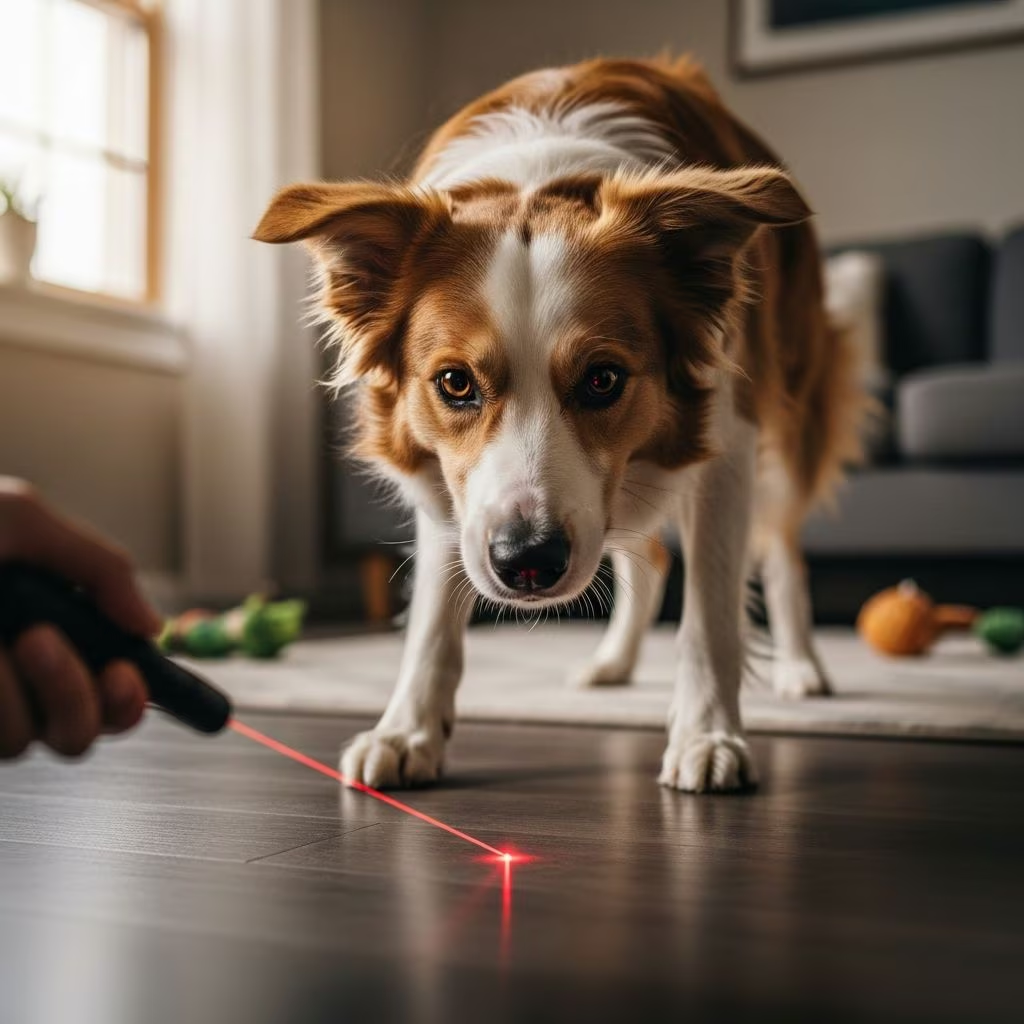
Laser pointers look like an easy way to wear out an energetic dog. A small red dot zips across the floor, your dog explodes into action, and everyone laughs. But for many dogs, this game can quietly create serious behavioral problems often referred to as laser pointer syndrome (LPS).
Laser pointer syndrome describes an OCD-like pattern of obsessive, compulsive behavior that some dogs develop after playing with light-based toys like laser pointers. Instead of being a harmless game, it can trigger long-term anxiety, frustration, and fixation on lights or shadows.
This article explains what laser pointer syndrome is, why it happens, which dogs are most vulnerable, how to recognize early warning signs, and safer ways to play that protect your dog’s mental health.
What Is Laser Pointer Syndrome in Dogs?
Laser pointer syndrome is a behavioral condition in which a dog becomes fixated on chasing lights, reflections, or shadows, often to the point that it interferes with normal daily life. The behavior may begin with laser pointer games but can spread to any moving light source.
Experts describe it as an obsessive–compulsive–like disorder, because the dog shows repetitive, persistent behaviors that are difficult to interrupt and not clearly tied to a useful goal.
The broken prey cycle
To understand laser pointer syndrome, it helps to look at the normal canine prey sequence:
- See or detect prey
- Chase
- Catch
- Bite, eat, play, or carry the object
When a dog completes this sequence, its brain receives a sense of satisfaction and closure. Laser play triggers the chase stage intensely, but the dog can never actually catch the target. Over time, this “always chasing, never catching” pattern can create ongoing frustration and stress.
Key features of laser pointer syndrome
- Triggered by light-based games: Often begins with laser pointer play or chasing other moving lights.
- Obsessive patterns: The dog becomes preoccupied with lights, shadows, or reflections, even when no game is happening.
- Compulsive behaviors: Repetitive, hard-to-interrupt actions such as pacing, spinning, staring, or pouncing at invisible stimuli.
- Anxiety and distress: The dog may seem restless, anxious, or unable to relax away from light cues.
Why Laser Pointers Can Be Risky for Dogs
Laser pointers are popular because they are convenient for humans. But they do not meet a dog’s mental and emotional needs in a healthy way. Several factors make them risky for many dogs.
1. No reward, no closure
With laser games, your dog’s prey drive is switched on at full power, but there is no tangible object to catch or bite. The brain expects the sequence to end in a reward, but it never does.
Research on canine and mammalian reward pathways shows that unpredictable and unresolvable stimuli can maintain high arousal and stress, rather than relief, especially when a motivated behavior is blocked. This helps explain why some dogs become increasingly frustrated with laser play instead of simply losing interest.
2. Confusion between real and unreal targets
Dogs do not naturally understand that a laser dot is “just a light.” For many, it appears like a real, moving target. When nothing is caught and there is no scent, taste, or texture, the experience can be confusing and unsettling.
Over time, some dogs start to generalize the game and react to any moving light or shadow—sunbeams on the wall, reflections off a watch, the glint from a phone screen, or headlights passing through a window.
3. Chronic stress and frustration
Repeatedly activating intense chase drive without resolution can contribute to chronic stress. Elevated stress can, in turn, increase the risk of anxiety disorders and compulsive behaviors in susceptible dogs.
Veterinary behaviorists note that canine compulsive disorders often emerge when strongly motivated behaviors are blocked or when animals face persistent, uncontrollable stimuli. Laser pointer play fits this pattern: the dog is highly motivated to chase and catch, yet can never succeed.
Dogs Most at Risk for Laser Pointer Syndrome
Any dog can develop problematic behaviors from laser play, but some dogs are more vulnerable than others.
High-risk characteristics
- High prey drive: Dogs that are naturally driven to chase moving objects.
- Working or herding background: Breeds developed for intense focus and task completion.
- History of anxiety or compulsive behaviors: Dogs already prone to repetitive or worry-based actions.
- Chaotic or low-enrichment environments: Limited outlets for natural behaviors can increase risk.
Breeds commonly mentioned as vulnerable
While any individual dog can be affected, trainers and veterinarians often report higher rates of LPS-like behavior in:
- Border Collies and other herding breeds
- Terriers (e.g., Jack Russell Terriers)
- Retrievers
- Dobermans and other working breeds
These dogs were bred to notice movement, focus intensely, and complete tasks—traits that, when misdirected at an unwinnable target like a laser dot, can backfire.
Common Signs and Symptoms of Laser Pointer Syndrome
Laser pointer syndrome develops over time. Early warning signs can look playful or harmless, but they may gradually intensify. Being able to recognize these signs early is key to preventing more serious problems.
Behavioral warning signs
- Chasing lights or shadows outside of play: Darting after sunbeams, reflections, or moving shadows on walls or floors.
- Staring at specific spots: Fixating on the last place they saw the laser or a light reflection, sometimes for long periods.
- Scanning environments for lights: Appearing constantly “on alert” for small moving lights, reflections, or shadows.
- Pouncing at invisible targets: Jumping, pawing, or lunging at areas where no visible stimulus is present.
Signs of anxiety and compulsion
- Restlessness or pacing: Difficulty settling, frequently moving around as if searching for something.
- Whining or vocalizing: Sounding distressed when unable to access a light or when not allowed to chase.
- Ignoring basic needs: Skipping meals, delaying sleep, or refusing to go outside because they are too focused on light or shadow play.
- Repetitive behaviors: Spinning in circles, tail chasing, or excessive grooming unrelated to medical issues.
- Loss of interest in normal activities: Reduced engagement with toys, walks, or social interaction, as the light-chasing obsession takes over.
Potential physical risks
- Injury from frantic chasing: Slipping on floors, crashing into furniture, or colliding with people or other pets.
- Self-inflicted harm: Repeated jumping at windows or walls in pursuit of reflections can cause sprains or bruises.
How Laser Pointer Syndrome Is Related to Canine OCD
Laser pointer syndrome is not an official diagnostic label, but it closely resembles behaviors seen in canine compulsive disorders.
| Feature | Laser Pointer Syndrome | Canine Compulsive Disorder |
|---|---|---|
| Trigger | Light-based play (laser, reflections, shadows) | Varied (stress, conflict, genetic predisposition) |
| Core behavior | Chasing, staring, or pouncing at lights/shadows | Repetitive behaviors like spinning, tail chasing, licking |
| Emotional state | High arousal, frustration, anxiety | Anxiety, tension, difficulty relaxing |
| Outcome | Little to no sense of completion or reward | Temporary relief after ritual, but behavior returns |
Veterinary behavior research indicates that compulsive behaviors in dogs are influenced by a combination of genetic predisposition and environmental stressors. Laser pointer syndrome can be viewed as one example where an environmental factor—light-based play—triggers compulsive patterns in a susceptible animal.
Should You Ever Use a Laser Pointer With Dogs?
Many veterinarians, trainers, and behaviorists recommend avoiding laser pointers entirely for dog play, especially if your dog is high energy or has a history of anxiety or obsessive behavior.
If someone does choose to use a light-based toy despite these concerns, they should do so only under careful guidance from a qualified behavior professional and with clear strategies to end every game with a real, tangible reward (for example, transitioning the dog to a physical toy they can catch and bite). Even then, the risk may outweigh the convenience for many dogs.
Healthier Alternatives to Laser Play
The good news is that there are many ways to exercise your dog’s body and brain without the risks associated with laser pointers. These games provide closure—your dog can actually catch or control something—which helps prevent frustration and obsession.
Physical play options
- Fetch with real toys: Balls, soft discs, and tug toys allow your dog to chase, grab, and carry something physical.
- Tug games: Controlled tug-of-war can satisfy predatory grab and pull behaviors while strengthening your bond.
- Flirt poles: A toy attached to a long line that you move like prey, letting the dog periodically catch and hold it.
Mental enrichment and scent-based activities
- Scent work: Hiding treats or toys for your dog to sniff out taps into their powerful sense of smell and natural hunting instincts.
- Food puzzles and slow feeders: Releasing food gradually as your dog manipulates the toy engages both mind and body.
- Training sessions: Short, positive-reinforcement sessions teaching tricks or useful skills provide mental exercise and build confidence.
What to Do If You Suspect Laser Pointer Syndrome
If your dog is already showing signs of obsession with lights or shadows, there are still many ways to help. Early intervention gives the best chance of improvement.
1. Stop laser and light-based games
The first step is to immediately discontinue laser pointer play and other deliberate light-chasing games. Removing the main trigger helps prevent further reinforcement of the compulsive behaviors.
2. Consult your veterinarian
Schedule an appointment with your veterinarian to:
- Rule out medical issues that could contribute to restlessness or unusual behaviors.
- Discuss whether a referral to a veterinary behaviorist is appropriate.
- Explore treatment options if a compulsive disorder is suspected, which may include behavior modification plans and, in some cases, medication.
3. Work with a qualified trainer or behavior professional
A certified trainer or behavior consultant experienced with anxiety and compulsive behaviors can help you:
- Identify specific triggers in your home or routine.
- Teach alternative behaviors and coping skills.
- Implement structured, predictable enrichment so your dog has healthy outlets for energy.
4. Redirect and reinforce calm behaviors
Instead of allowing your dog to stare at walls or chase shadows, gently redirect them to a more appropriate activity:
- Offer a food puzzle or chew when they begin searching for lights.
- Guide them to a mat or bed and reward them for lying calmly.
- Use scatter feeding (tossing kibble into the grass or a snuffle mat) to shift their focus to scent-based searching.
Preventing Laser Pointer Syndrome in Puppies and Adult Dogs
Prevention is often simpler than treatment. A few straightforward choices can help protect your dog from developing laser pointer–related problems.
- Avoid laser toys for dogs: Choose play that involves real, catchable objects instead of light-only targets.
- Provide daily mental and physical exercise: Regular walks, training, scent games, and interactive play reduce boredom and stress.
- Watch for early signs of fixation: If your dog seems overly interested in flashes of light or shadows, redirect them early and talk to a professional if it continues.
- Maintain predictable routines: Consistent schedules and environments can reduce anxiety, a known factor in compulsive disorders.
Frequently Asked Questions (FAQs)
Q: Is it ever safe to let my dog chase a laser pointer?
A: Because laser play offers no physical object to catch and can contribute to frustration, anxiety, and compulsive behaviors, many veterinarians and behavior experts advise avoiding laser pointers for dog play altogether, especially with high-energy or anxious dogs.
Q: My dog already loves the laser. What should I do now?
A: Stop using the laser pointer immediately and transition to games with real, catchable toys. If your dog continues to search for lights or shows signs of obsession or anxiety, consult your veterinarian or a veterinary behaviorist for guidance on behavior modification and possible treatment.
Q: Can laser pointer syndrome go away on its own?
A: Some mild light-chasing habits may fade once laser play stops and healthier activities are introduced, but more severe or entrenched behaviors often require structured behavior therapy and sometimes medical support. Early intervention greatly improves the chances of recovery.
Q: Are cats affected by laser pointers the same way as dogs?
A: Cats can also become frustrated or overly excited by laser play, but dogs appear more prone to developing pronounced, OCD-like patterns associated with laser pointer syndrome. For both species, it is safer to end any light-based game by transitioning to a physical toy the animal can actually catch.
Q: What are the best alternatives to laser play for high-energy dogs?
A: High-energy dogs benefit from a mix of fetch, tug, flirt pole play (with regular chances to catch the toy), structured training sessions, scent work, and puzzle feeders. These activities let them complete natural behaviors—chasing, catching, problem-solving—without the frustration of an unreachable target.
References
- Laser Pointer Syndrome in Dogs — Whole Dog Journal. 2016-03-01. https://www.whole-dog-journal.com/behavior/laser-pointer-syndrome-on-dogs/
- Laser Pointer Syndrome in Dogs: Hidden Mental Harm — Bark & Whiskers. 2026-01-12. https://www.barkandwhiskers.com/2026-01-12-laser-pointer-syndrome-dogs-hidden-danger/
- What is Laser Pointer Syndrome? — WagWell. 2023-10-11. https://wagwellpet.com/blogs/wagwell-blog/what-is-laser-pointer-syndrome
- What is Laser Pointer Syndrome in Dogs? — Sit Now Stay Dog Training. 2022-07-15. https://www.sitnowstay.com/what-is-laser-pointer-syndrome-in-dogs
- Laser Pointer Syndrome — Prosper Trail Animal Hospital. 2021-09-09. https://www.prosperanimalhospital.com/post/laser-pointer-syndrome
- Laser Pointer Syndrome — Butte Humane Society. 2020-06-05. https://buttehumane.org/dog-health-laser-pointer-syndrome/
- Laser Pointer Syndrome — Ask Dr. Caryn Self-Sullivan. 2022-03-20. https://www.askdrcaryn.com/post/laser-pointer-syndrome



