

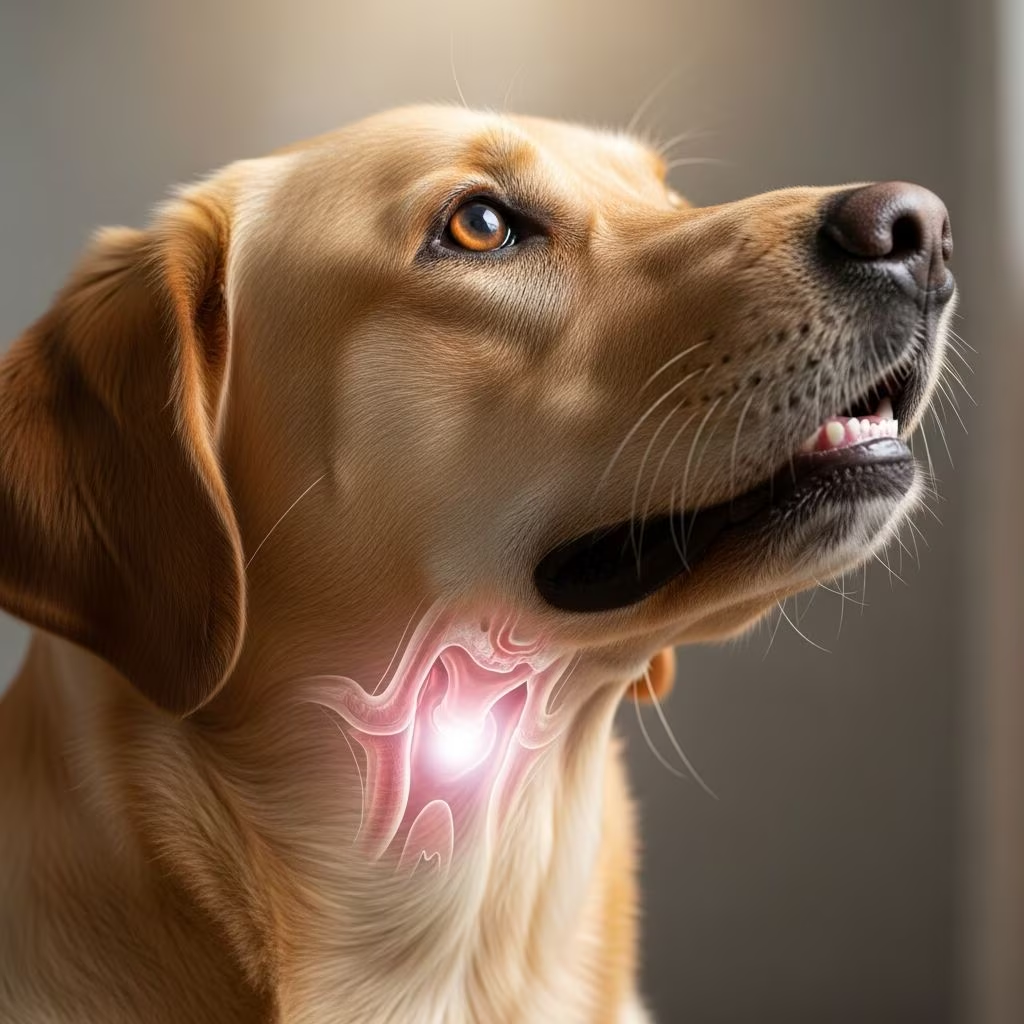
Laryngeal paralysis occurs when the muscles controlling the larynx fail to function properly, impeding a dog’s ability to breathe effectively. This condition primarily affects larger breeds and can progress from mild respiratory noise to life-threatening airway obstruction if untreated.
Understanding the Larynx and Its Role in Canine Respiration
The larynx, often called the voice box, consists of cartilage plates that open to allow air into the trachea during inhalation and close to prevent food or water from entering the lungs. Specific throat muscles, controlled by nerves, regulate these movements. When these nerves weaken or become paralyzed, the cartilage collapses inward, narrowing the airway and causing breathing difficulties.
In healthy dogs, the larynx expands fully during deep breaths or panting, aiding temperature regulation. In affected dogs, this mechanism fails, leading to inefficient cooling and increased risk of overheating.
Recognizing the Signs: From Subtle to Severe
Early symptoms of laryngeal paralysis are often mistaken for normal aging. Dogs may exhibit:
- Altered bark tone, sounding hoarse or raspy
- Excessive or noisy panting, especially after mild activity
- Exercise intolerance, with reluctance to play or walk
- Coughing or gagging, particularly during meals or drinks
As the condition advances, symptoms intensify. Inflammation from labored breathing further obstructs the airway, potentially causing:
- High-pitched wheezing or stridor on inhalation
- Respiratory distress with rapid, shallow breaths
- Bluish gums or tongue (cyanosis) indicating oxygen deprivation
- Sudden collapse, heatstroke, or even fatality in extreme cases
Owners of older large-breed dogs should monitor for progressive fatigue or voice changes, as these can signal the onset.
Risk Factors: Breeds, Age, and Underlying Conditions
Acquired laryngeal paralysis predominantly strikes middle-aged to senior large and giant breeds. Labrador Retrievers, Golden Retrievers, St. Bernards, Irish Setters, and Newfoundlands face elevated risks.
Congenital forms appear in younger dogs of breeds like Bouvier des Flandres, Siberian Huskies, Bull Terriers, Dalmatians, and Rottweilers.
| Breed Type | Common Form | Typical Onset Age |
|---|---|---|
| Large/Giant (Labs, Goldens) | Acquired/GOLPP | Middle-aged to senior |
| Bouviers, Huskies, Dalmatians | Congenital | Young (under 1 year) |
Many cases link to geriatric onset laryngeal paralysis polyneuropathy (GOLPP), a neuromuscular disorder causing nerve degeneration akin to ALS in humans. GOLPP may also involve hindlimb weakness, megaesophagus (dilated esophagus hindering swallowing), and regurgitation.
Other triggers include neck trauma from collars or bites, tumors, hypothyroidism, Cushing’s disease, or post-surgical complications.
Diagnosis: Confirming the Condition
Veterinarians diagnose laryngeal paralysis through physical exams and laryngoscopy, visualizing the larynx under light sedation. This reveals paralyzed cartilages failing to abduct during inhalation.
Additional tests rule out differentials like bronchitis or heart disease:
- Chest X-rays for tumors or megaesophagus
- Bloodwork for hormonal imbalances
- Neurological exams for GOLPP indicators like gait issues
Early detection via these methods prevents crises.
Treatment Options: Medical Management and Surgery
Mild cases may respond to conservative care:
- Weight reduction to lessen airway strain
- Harness use instead of collars
- Cool environments and limited exercise
- Anti-inflammatories for swelling
Surgery is the definitive treatment for moderate to severe cases, with ‘tie-back’ procedures (arytenoid lateralization) holding one cartilage open permanently. Success rates exceed 90%, improving breathing and quality of life, though risks include aspiration pneumonia.
Post-surgical care emphasizes monitoring for regurgitation and megaesophagus.
Long-Term Management and Prognosis
Post-treatment, dogs often regain activity levels but require lifelong precautions:
- Elevated food/water bowls to reduce gagging
- Bailey chairs for megaesophagus cases to aid digestion
- Avoid heat, obesity, and stress
Prognosis is excellent with surgery; untreated severe cases risk death from asphyxiation or heatstroke. GOLPP progression may introduce new challenges like mobility loss.
Preventive Measures and When to Seek Help
No full prevention exists for idiopathic cases, but minimizing neck trauma via harnesses helps. Consult a vet immediately for breathing changes in at-risk breeds.
Frequently Asked Questions (FAQs)
What breeds are most prone to laryngeal paralysis?
Large breeds like Labrador Retrievers and Golden Retrievers for acquired forms; congenital in Dalmatians and Huskies.
Is laryngeal paralysis fatal?
Not with treatment; surgery greatly improves survival. Untreated severe cases can lead to collapse or death.
How does GOLPP relate to this condition?
GOLPP is a broader neuropathy where laryngeal paralysis is often the first sign, potentially adding megaesophagus and weakness.
Can medication cure it?
No, meds manage symptoms; surgery addresses the root issue.
What are emergency signs?
Blue gums, collapse, severe distress—seek immediate vet care.
This guide empowers owners to act swiftly, enhancing their dog’s comfort and lifespan.
References
- Symptoms & Treatment of Laryngeal Paralysis in Dogs — Clearlake Vet Clinic. 2024-06-15. https://www.clearlakevetclinic.com/site/blog/2024/06/15/laryngeal-paralysis-dogs
- Laryngeal Paralysis Dogs | Expert Pet Care in Gainesville, FL — CC Vet Specialists. N/A. https://www.ccvetspecialists.com/laryngeal-paralysis-larpar
- Laryngeal Paralysis in Dogs — VCA Animal Hospitals. N/A. https://vcahospitals.com/know-your-pet/laryngeal-paralysis-in-dogs
- Paralysis of the Larynx in Dogs — Merck Veterinary Manual. N/A. https://www.merckvetmanual.com/dog-owners/lung-and-airway-disorders-of-dogs/paralysis-of-the-larynx-in-dogs
- Laryngeal Paralysis and Collapse Fact Sheet — Vet Specialists. N/A. https://www.vetspecialists.co.uk/fact-sheets-post/laryngeal-paralysis-and-collapse-fact-sheet/
- Laryngeal Paralysis — Dallas Veterinary Surgical Center. N/A. https://www.dvsc.com/laryngeal-paralysis
- Guide to Laryngeal Paralysis — My Pet Nutritionist. N/A. https://mypetnutritionist.com/post/guide-to-laryngeal-paralysis/
- Laryngeal Paralysis — American College of Veterinary Surgeons. N/A. https://www.acvs.org/small-animal/laryngeal-paralysis/



