

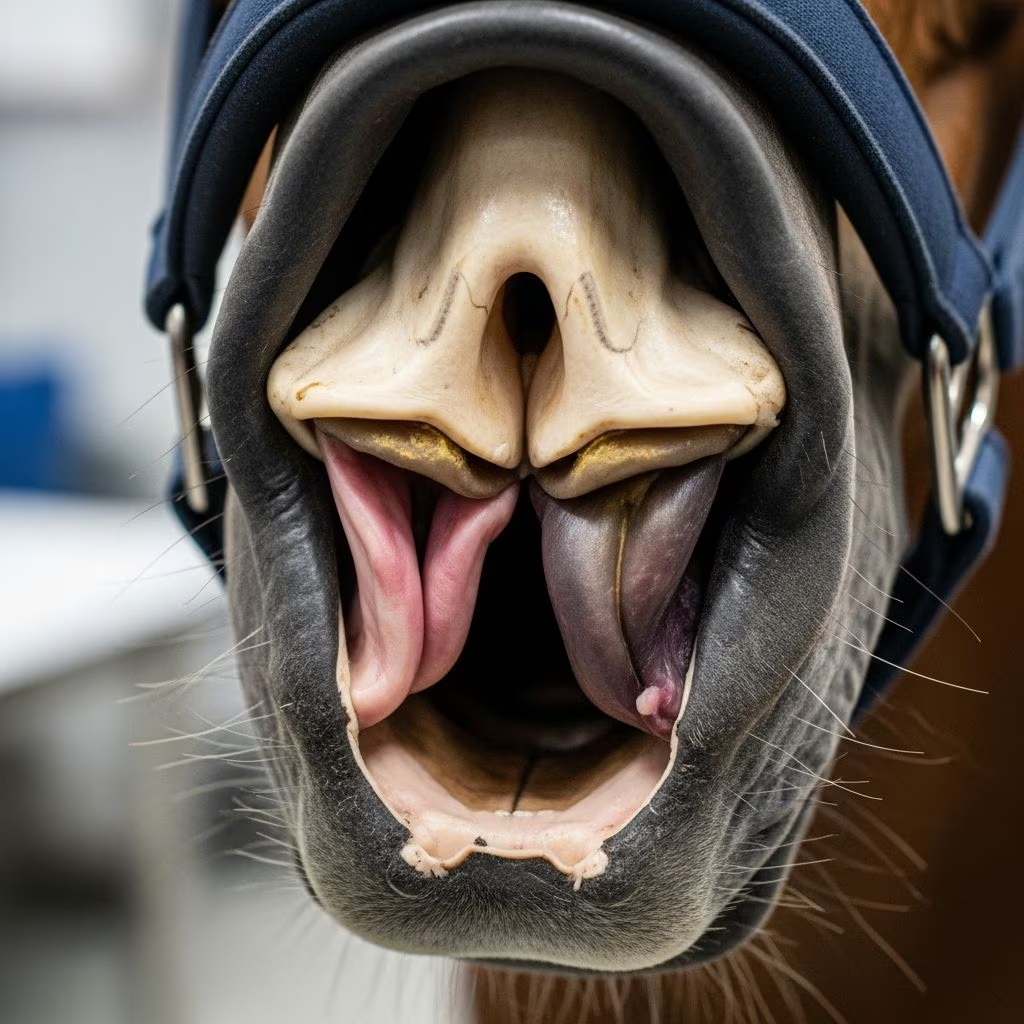
Laryngeal hemiplegia, commonly referred to as “roaring,” is a progressive neurological condition affecting the equine larynx, leading to partial or complete paralysis of one side of the airway. This disorder primarily impacts the left recurrent laryngeal nerve, resulting in muscle atrophy and impaired airflow during exercise, which manifests as distinctive respiratory noises and reduced performance.
The Anatomy of the Equine Larynx and Its Role in Breathing
The larynx, positioned at the entrance to the trachea, plays a critical role in protecting the airway, facilitating vocalization, and regulating airflow. In horses, it consists of cartilaginous structures, including the arytenoid cartilages, which are abducted by the cricoarytenoideus dorsalis muscle during inspiration to widen the rima glottidis—the opening through which air passes.
During normal respiration, especially under exertion, these muscles contract symmetrically to open the airway fully. The recurrent laryngeal nerves, branching from the vagus nerve, innervate these muscles. The left recurrent laryngeal nerve is notably longer, looping around the aortic arch, making it more susceptible to degeneration.
- Arytenoid cartilage abduction: Essential for maximizing inspiratory airflow.
- Cricoarytenoideus dorsalis muscle: Primary abductor, powered by nerve signals.
- Rima glottidis: The glottal opening, which narrows in affected horses.
Pathophysiology: How Nerve Damage Leads to Airway Dysfunction
Laryngeal hemiplegia arises from recurrent laryngeal neuropathy, characterized by the progressive loss of large myelinated fibers in the nerve. This axonal degeneration causes denervation of the laryngeal adductor and abductor muscles, with the cricoarytenoideus dorsalis being most affected. Over time, muscle fibers atrophy, leading to flaccid paralysis of the arytenoid cartilage.
In healthy horses, inspiration generates negative intraluminal pressure, pulling the pliable arytenoid cartilages outward. In diseased states, the paralyzed left arytenoid fails to abduct fully, collapsing inward and reducing the airway’s cross-sectional area. This obstruction increases respiratory resistance, promotes turbulent airflow, and induces hypoxemia—low blood oxygen levels—culminating in fatigue.
| Stage of Laryngeal Hemiplegia | Arytenoid Movement | Clinical Impact |
|---|---|---|
| Grade 1 | Full abduction | Asymptomatic |
| Grade 2 | Partial abduction (50-75%) | Mild noise at hard work |
| Grade 3 | Minimal abduction (<50%) | Obvious roar, performance decline |
| Grade 4 | No abduction (stationary at midline) | Severe obstruction, respiratory distress |
This grading system, based on endoscopic evaluation at rest, helps predict progression and guide management.
Primary Causes and Risk Factors
The etiology of laryngeal hemiplegia remains largely idiopathic, particularly in cases termed idiopathic laryngeal hemiplegia (ILH). However, the longer path of the left recurrent laryngeal nerve predisposes it to cumulative mechanical stress, ischemia, or neurodegenerative changes during growth or neck extension.
Known secondary causes include:
- Trauma: Neck injuries, jugular venipuncture mishaps, or blunt force to the throatlatch region.
- Infections: Guttural pouch mycosis, strangles, or abscesses compressing the nerve.
- Neoplasia: Thyroid carcinoma or thymic lymphosarcoma infiltrating neural pathways.
- Toxins: Organophosphate poisoning, lead, or certain plants disrupting nerve function.
- Other: Liver disease, anesthesia complications, or guttural pouch empyema.
Large breeds like Thoroughbreds, Warmbloods, and Draft horses are overrepresented, with onset typically between 2-7 years, though it can progress silently until performance demands reveal it.
Recognizing Clinical Signs in Performance Horses
Early subtle signs may include prolonged recovery after workouts or mild inspiratory stridor. As the condition advances, the hallmark “roar”—a loud, whistling noise—emerges during trotting or galloping, synchronous with inspiration. Affected horses exhibit exercise intolerance, with rapid fatigue due to impaired oxygen uptake.
Bilateral cases, though rare (<1%), cause resting dyspnea, stridor at rest, and life-threatening aspiration risks. Owners may note tail deviation or asymmetric throat movement, but these are inconsistent.
Key Symptoms Summary
- Roaring or whistling during exercise
- Reduced stamina and early fatigue
- Hyperpnea (increased respiratory rate/effort)
- Possible nasal flaring or extended head posture
Diagnostic Approaches: From Endoscopy to Advanced Imaging
Diagnosis hinges on video endoscopy, performed at rest and during maximal exercise (treadmill or over-ground). Resting endoscopy reveals asynchronous arytenoid movement or collapse, graded as above. Exercise endoscopy is gold-standard, capturing dynamic airway collapse not visible at rest.
Supplementary tests include:
- Laryngeal ultrasound: Detects muscle atrophy (cricoarytenoideus dorsalis appears hypoechoic).
- Neurological exam: Rules out generalized neuropathy.
- Hematology/radiography: Excludes infections or masses.
Differential diagnoses encompass dynamic pharyngeal collapse, dorsal displacement of the soft palate, or EIPH (exercise-induced pulmonary hemorrhage).
Management Strategies: Conservative to Surgical Interventions
Mild cases (Grade 1-2) may benefit from conservative measures: weight management, deslanoside (to enhance abductor tone), or tack adjustments like figure-8 nosebands to stabilize the larynx. However, progression is inevitable in most.
Surgical options dominate for Grade 3-4:
- Laryngoplasty (“tie-back”): Suture the arytenoid in a fixed abducted position using prosthetic materials like Ethibond. Success rates: 60-80% performance improvement, but risks include implant failure or chondritis.
- Ventriculocordectomy: Ablation of the laryngeal ventricle and vocal cord to reduce tissue mass and noise. Often combined with laryngoplasty.
- Laser ventriculocordectomy: Minimally invasive for mild cases.
- Novel techniques: Partial arytenoidectomy or nerve pedicle grafts (experimental).
Post-operative care involves antibiotics, anti-inflammatories, and 4-6 weeks rest. Complications like aspiration pneumonia (5-10%) necessitate vigilant monitoring.
Breeding Implications and Genetic Considerations
While not strictly hereditary, familial clustering in Thoroughbreds suggests polygenic predisposition. Endoscopic screening of breeding stock is recommended to avoid propagating risk. Stallion selection should prioritize bilateral normal function.
Prognosis and Long-Term Outlook
Prognosis correlates with grade and surgical timing. Untreated Grade 4 horses face retirement; post-laryngoplasty, 70% return to prior use, though full racing potential may not recover. Regular follow-ups prevent complications.
Frequently Asked Questions (FAQs)
What breeds are most prone to laryngeal hemiplegia?
Large breeds like Thoroughbreds, Warmbloods, and Drafts are predominantly affected due to nerve length and body size.
Can roaring resolve without surgery?
Rarely; it’s progressive. Mild cases may stabilize but seldom improve spontaneously.
Is bilateral laryngeal hemiplegia fatal?
It can be, due to aspiration and distress, requiring tracheostomy in severe instances.
How much does laryngoplasty cost?
Typically $3,000-$6,000 USD, varying by clinic and region (general estimate; consult vets).
Can affected horses be ridden recreationally?
Yes, post-treatment or in mild cases, but avoid intense work.
This condition underscores the importance of respiratory health in equine athletics. Early intervention preserves welfare and career longevity.
References
- Roaring (Laryngeal Hemiplegia) in Horses: Causes, Treatment — Mad Barn. 2023. https://madbarn.com/laryngeal-hemiplegia-in-horses/
- Roaring in Horses – Left Laryngeal Hemiplegia — SmartPak Equine. 2023. https://www.smartpakequine.com/learn-health/roaring-horse
- Laryngeal Hemiplegia in Horses — Merck Veterinary Manual. 2023. https://www.merckvetmanual.com/respiratory-system/respiratory-diseases-of-horses/laryngeal-hemiplegia-in-horses
- Success Story: Laryngeal Hemiplegia — University of Florida Large Animal Hospital (.edu). 2013 (authoritative clinical case). https://largeanimal.vethospitals.ufl.edu/2013/03/05/success-story-laryngeal-hemiplegia/
- Idiopathic Laryngeal Hemiplegia — Texas A&M Veterinary Medical Teaching Hospital (.edu). 2023. https://vethospital.tamu.edu/large-animal/equine-soft-tissue-surgery/idiopathic-larymgeal-hemisplasia/
- Roaring (Laryngeal Paralysis) in Horses — Vetster. 2023. https://vetster.com/en/conditions/horse/roaring-laryngeal-paralysis
- Roaring in Horses — University of Minnesota Extension (.edu). 2021. https://extension.umn.edu/horse-health/roaring-horses



