

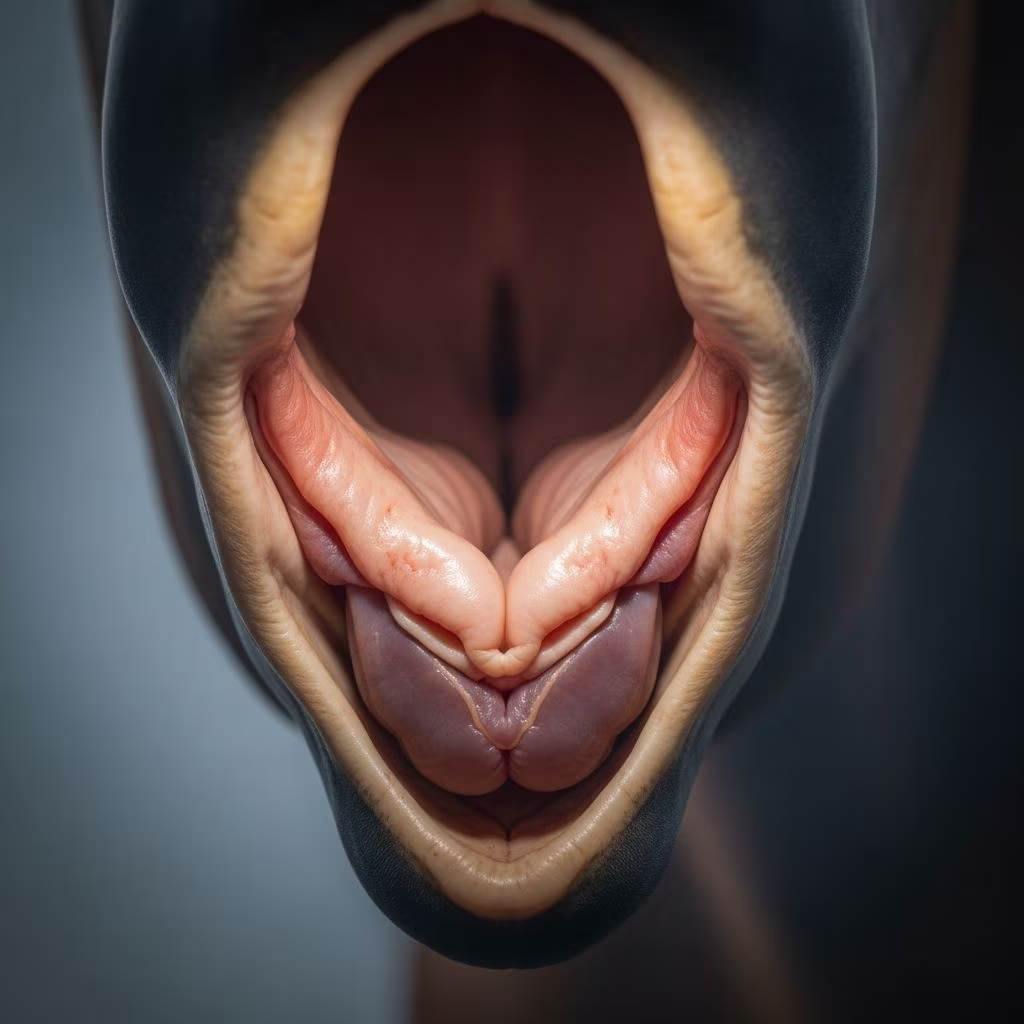
The larynx serves as a vital gateway in a horse’s respiratory system, ensuring efficient airflow while safeguarding the airway. Composed of specialized cartilages and muscles, it regulates breathing, supports vocalization, and prevents aspiration during swallowing. When disorders disrupt this balance, horses may exhibit respiratory noise, reduced stamina, and performance deficits, particularly in athletic breeds.
Understanding Equine Laryngeal Anatomy
The equine larynx bridges the pharynx and trachea, facilitating air passage while protecting lower airways. Its structure includes unpaired cartilages like the cricoid, thyroid, and epiglottis, alongside paired arytenoids. The cricoid forms a stable ring at the base, while arytenoids dynamically open and close the glottis—the airway entrance.
Key muscles drive laryngeal motion: the cricoarytenoideus dorsalis abducts arytenoids to widen the glottis during inhalation, counterbalanced by adductors like cricoarytenoideus lateralis for closure during swallowing. Innervation primarily stems from the recurrent laryngeal nerve, a vagus branch vulnerable to damage. The epiglottis, an elastic leaf-shaped cartilage, seals the airway entrance, aided by aryepiglottic folds.
Laryngeal saccules, extensions of the mucous membrane, measure about 2.5 cm deep with 5-6 mL capacity, aiding lubrication. Horses, as obligate nasal breathers, rely on precise laryngeal function for high airflow demands during exercise.
- Cricoid cartilage: Provides structural support with higher compressive stiffness (2.29 MPa) than arytenoids (0.42 MPa).
- Arytenoid cartilages: Most mobile, enabling full glottis opening or closure.
- Epiglottis: Positions over the glottis base, preventing food entry.
Common Laryngeal Conditions Impacting Horses
Several disorders compromise laryngeal function, leading to upper airway obstruction. These are prevalent in performance horses, where exercise intolerance manifests as noise or fatigue.
Left Laryngeal Hemiplegia (Roaring)
This progressive paralysis primarily affects the left arytenoid cartilage due to recurrent laryngeal nerve degeneration. The left side is impacted in up to 95% of cases, causing the arytenoid to fail abduction, narrowing the airway. Affected horses produce a whistling or roaring inhalation sound, worsening with exertion.
Grading ranges from I (subclinical) to IV (complete paralysis with static collapse). Breeds like Thoroughbreds are predisposed, with symptoms emerging at 2-5 years.
Dynamic Dorsal Displacement of the Soft Palate (DDSP)
DDSP occurs when the soft palate billows dorsally, obstructing the larynx entrance during heavy breathing. Contributing factors include nerve blocks affecting palate tone, pharyngeal lymphoid hyperplasia in young horses, and high intrapharyngeal pressure. It induces exercise-induced pulmonary hemorrhage risk and reduces performance.
Other Notable Issues
- Arytenoid chondritis: Inflammation causing swelling and asymmetry.
- Laryngeal cysts or tumors: Rare masses impeding airflow.
- Trauma or infections: Leading to temporary dysfunction.
| Condition | Primary Cause | Key Symptoms | Affected Side |
|---|---|---|---|
| Left Laryngeal Hemiplegia | Nerve degeneration | Roaring noise, exercise intolerance | 95% left |
| DDSP | Palate instability, pressure | Sudden respiratory distress, gurgling | Bilateral |
| Arytenoid Chondritis | Inflammation/infection | Hoarseness, swelling | Unilateral/bilateral |
Recognizing Symptoms and Clinical Signs
Owners notice abnormal respiratory sounds during trotting or galloping—roaring for hemiplegia or gurgling for DDSP. Additional signs include coughing, nasal discharge, throat swelling, or rapid fatigue. Severely affected horses show weight loss or reluctance to exercise.
In resting states, issues may be subtle; dynamic evaluation reveals true extent. Young horses with lymphoid hyperplasia often progress to DDSP under stress.
Diagnostic Approaches for Laryngeal Problems
Veterinarians employ endoscopy as the gold standard, inserting a flexible scope via nostrils to visualize the larynx at rest and exercise. Standing exams grade hemiplegia; treadmill or over-ground endoscopy captures dynamic collapse.
Ultrasonography assesses cartilage integrity, while radiography rules out fractures. Laryngeal ultrasound measures arytenoid symmetry. For confirmation, electromyography evaluates muscle/nerve function, though less common.
- Resting laryngoscopy: Initial screening.
- Dynamic endoscopy: Simulates exercise conditions.
- Grading system: I-IV for hemiplegia severity.
Treatment Strategies and Surgical Interventions
Management varies by condition severity and horse use. Mild cases benefit from conservative care like weight reduction and anti-inflammatories.
Surgical Options for Hemiplegia
Laryngoplasty (Tieback): Sutures anchor the paralyzed arytenoid forward, maintaining abduction. Success rates exceed 70% for returning to work, though risks include implant failure.
Laryngeal tie-forward (LTF): Repositions the larynx rostrally, increasing nasopharyngeal diameter and addressing DDSP concurrently.
Addressing DDSP
Soft palate cautery or staphylectomy shortens the palate. LTF often resolves both hemiplegia and DDSP by altering biomechanics. Prosthetic laryngoplasty combines with palate procedures for comprehensive repair.
Post-operative care includes rest (4-6 weeks), antibiotics, and gradual conditioning. Complications like aspiration pneumonia require monitoring.
Preventive Measures and Long-Term Management
Breeding away from hemiplegia lines reduces incidence. Regular veterinary checks, especially for racers, enable early detection. Air quality control minimizes irritants exacerbating inflammation.
Nutritional support with balanced diets aids muscle health. Performance horses benefit from fitness programs optimizing respiratory efficiency without overload.
Biomechanics and Research Insights
Equine laryngeal cartilage exhibits unique properties: cricoid’s straight walls and high modulus (up to 2.51 MPa rostrally) provide robust support versus softer arytenoids. Age stiffens cartilage (0.13 MPa/year). These traits underpin surgical planning, as procedures leverage natural geometry.
Ongoing studies explore nerve regeneration and minimally invasive techniques, promising better outcomes.
FAQs on Equine Laryngeal Health
What causes roaring in horses?
Primarily left recurrent laryngeal nerve damage leading to arytenoid paralysis, obstructing inspiration.
Can laryngeal disorders be cured?
Not always curable, but surgeries like laryngoplasty restore 60-80% function in performance horses.
How is DDSP diagnosed?
Via dynamic endoscopy showing palate displacement during exercise simulation.
Are certain breeds more prone?
Yes, Thoroughbreds and Draft breeds show higher hemiplegia rates due to genetics and size.
What is the prognosis post-surgery?
Good for moderate cases; 70% return to racing/training, with monitoring for complications.
Prognosis and Performance Impact
Untreated disorders halve racing careers; interventions extend them significantly. Early intervention yields best results, emphasizing routine scoping for athletes.
References
- The Larynx in Horses – Equine Research Database — Mad Barn. 2023. https://madbarn.com/research-topics/larynx/page/3/
- ANATOMY OF THE LARYNX OF THE HORSE — IHMC Public Cmaps. N/A. https://cmapspublic3.ihmc.us/rid=1RVJLBRJ9-YRZ5G6-K8X/ANATOMY%20OF%20THE%20LARYNX%20OF%20THE%20HORSE.pdf
- Lab 20 Internal Head Dissection — University of Minnesota (vanat.ahc.umn.edu). N/A. https://vanat.ahc.umn.edu/ungDissect/Lab20/Lab20.html
- The Equine Respiratory System — The Horse. 2015-01-01. https://thehorse.com/154185/the-equine-respiratory-system/
- Understanding the Equine Respiratory System — Wire2Wire Vet Products. 2023. https://wire2wirevetproducts.com/blogs/healthy-tails/understanding-the-equine-respiratory-system-structure-function-and-common-issues
- Biomechanical characterisation of equine laryngeal cartilage — PubMed (Vet J). 2011-05-01. https://pubmed.ncbi.nlm.nih.gov/21545513/



