

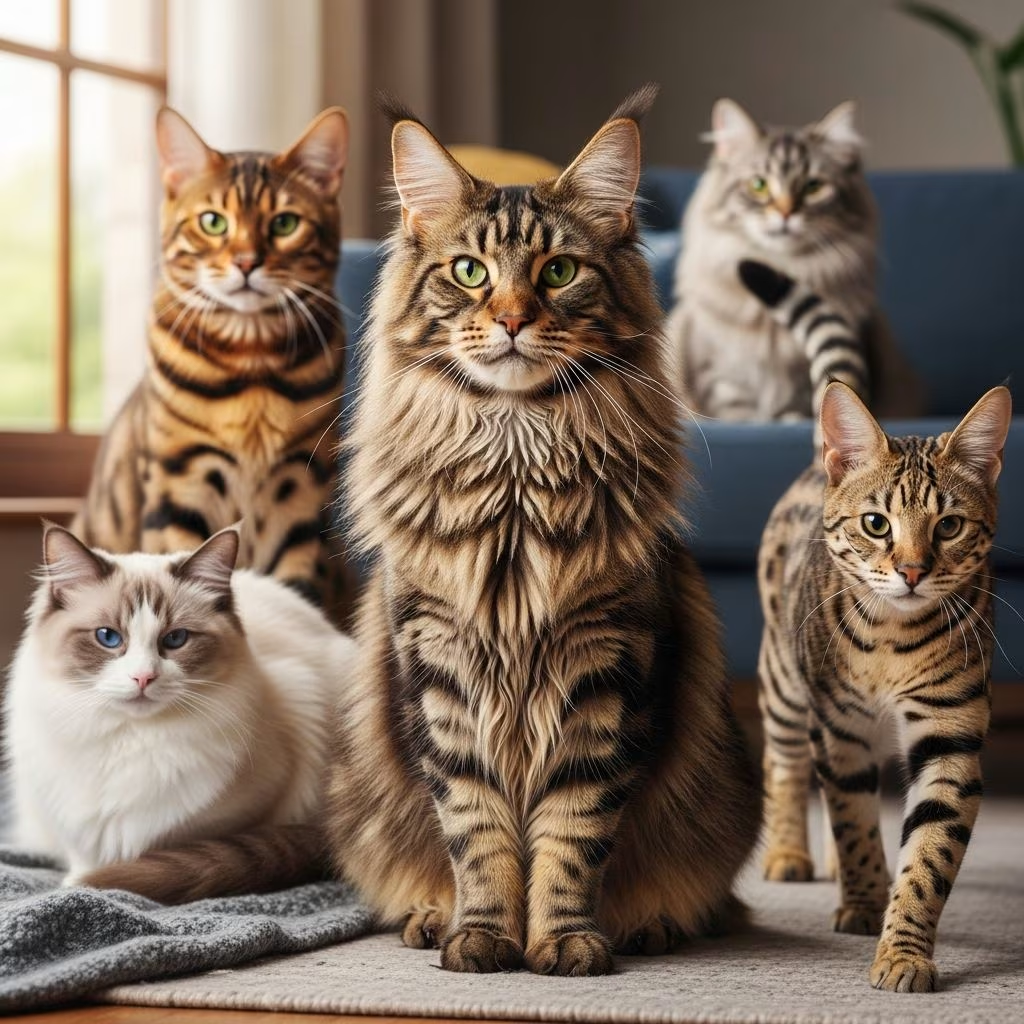
Domestic cats come in a stunning variety of sizes, but certain breeds stand out for their impressive stature and commanding presence. These large felines combine striking appearances with endearing personalities, making them sought-after companions for those prepared for their unique needs. From record-breaking lengths to robust builds adapted for harsh climates, the biggest cat breeds offer a blend of power, playfulness, and affection.
Why Choose a Large Cat Breed?
Large cat breeds often exhibit gentle dispositions despite their size, thriving in homes with space to roam and families eager for interactive pets. They typically require more food, durable scratching posts, and regular grooming to maintain their lush coats. However, their loyalty and adaptability reward owners with years of companionship. Breeds like the Maine Coon exemplify this, weighing up to 25 pounds and stretching over 40 inches long.
Top Contenders for the Title of Biggest Cat
The crown for the largest domestic cat belongs to the Maine Coon, but several others rival its dimensions. These giants mature slowly, often reaching full size between 3-5 years, allowing for gradual adaptation to their growing frames.
The Majestic Maine Coon: King of Domestic Cats
Renowned as the largest natural domestic breed, the Maine Coon hails from the rugged farms of New England. Males commonly reach 10-25 pounds, with heights up to 16 inches at the shoulder and lengths exceeding 40 inches nose-to-tail. Their water-repellent, shaggy coats, tufted ears, and bushy tails equip them for cold weather, while snowshoe-like paws aid navigation through snow.
Personality-wise, Maine Coons are “gentle giants,” sociable with dog-like traits such as greeting owners at the door and enjoying games of fetch. They bond deeply with families, including children and other pets, but demand ample playtime to channel their energy. Health considerations include hypertrophic cardiomyopathy (HCM), so screening from reputable breeders is essential.
Savannah: The Exotic Hybrid Powerhouse
Bred from domestic cats and the wild African serval, the Savannah boasts an athletic build with long legs, large ears, and spotted coats mimicking their wild heritage. Weights range from 12-25 pounds, with shoulder heights up to 17 inches, making them one of the tallest domestic breeds.
These high-energy cats crave adventure, excelling in leash walks, puzzle toys, and water play. Their intelligence demands mental stimulation to prevent boredom-induced mischief. Ideal for experienced owners, Savannahs form loyal bonds but may retain wild traits like jumping great heights. Early socialization is key for harmony in multi-pet homes.
Norwegian Forest Cat: Nature’s Climber
Adapted to Scandinavia’s harsh winters, the Norwegian Forest Cat features a thick double coat, tufted paws, and a plumed tail. Males weigh 5.4-9 kg (12-20 pounds), with lengths up to 35-40 inches. Their muscular frames and climbing prowess reflect forest origins.
Friendly yet independent, these cats enjoy outdoor access via enclosures and are gentle with children. Regular brushing prevents matting, and they fare well in cooler climates. Watch for joint issues due to their size.
Siberian Forest Cat: Hypoallergenic Hardy
From Russia’s taiga, the Siberian sports a luxurious triple coat that’s surprisingly low-allergen for many. Weighing 8-17 pounds (up to 20 pounds for males) and standing 11 inches tall, they mature slowly over five years.
Playful, agile, and affectionate, Siberians leap like acrobats and love human interaction. Their water-resistant fur sheds seasonally, requiring grooming. They’re resilient but prone to obesity without exercise.
Ragdoll: The Floppy Lap Giant
Ragdolls live up to their name by going limp when held, showcasing trust. Large and semi-longhaired, they weigh 12-20 pounds with lengths around 35 inches. Blue eyes and colorpoint patterns add allure.
Calm and cuddly, they’re perfect for relaxed households, though their size means sturdy furniture is advisable. They vocalize softly and follow owners devotedly.
Comparing Sizes and Traits
| Breed | Weight (lbs) | Height (inches) | Key Traits |
|---|---|---|---|
| Maine Coon | 10-25 | Up to 16 | Social, playful, dog-like |
| Savannah | 12-25 | Up to 17 | Energetic, exotic, intelligent |
| Norwegian Forest | 12-20 | Up to 14 | Climber, friendly, cold-adapted |
| Siberian | 8-17 | Up to 11 | Hypoallergenic, agile, affectionate |
| Ragdoll | 12-20 | Up to 10 | Relaxed, cuddly, family-oriented |
This table highlights averages; individuals vary, with record holders like Barivel the Maine Coon measuring 3 feet 11 inches.
Care Essentials for Big Cats
- Nutrition: High-protein diets support muscle mass; portion control combats obesity risks common in large breeds.
- Exercise: Interactive toys, vertical spaces, and daily play prevent lethargy. Hybrids like Savannahs need more stimulation.
- Grooming: Weekly brushing for long coats; check for matting in fluffy breeds.
- Health Screening: Test for HCM, hip dysplasia; spay/neuter at appropriate ages.
- Environment: Sturdy cat trees, wide litter boxes, and scratching posts scaled for size.
Record-Breaking Felines
Guinness recognizes Maine Coons like Barivel (Italy) at 3’11” long and others up to 22 pounds. Hybrids push boundaries, with Savannahs noted for height. These outliers underscore genetic potential in select lines.
Are Large Cats Right for You?
Big cats suit active households with space but may overwhelm apartments or novice owners. Their longevity (12-15+ years) means long-term commitment to elevated care costs. Adopting from shelters reveals mixed-breed giants too.
Frequently Asked Questions (FAQs)
What is the absolute largest domestic cat breed?
The Maine Coon, with males up to 25 pounds and over 40 inches long.
Do big cats need more exercise?
Yes, to maintain weight and muscle; daily play is crucial, especially for active breeds like Savannahs.
Are there hypoallergenic large breeds?
Siberians produce fewer allergens, ideal for sensitive owners.
Can hybrid cats like Savannahs be indoor-only?
With ample enrichment, yes, but they thrive with outdoor access.
How much do large cats eat?
More than averages; 3-4 meals daily of quality food, monitored for health.
References
- The 12 Largest Domestic Cat Breeds — Pumpkin Pet Insurance. 2023. https://www.pumpkin.care/post/largest-cat-breeds
- The Big Cat Breeds — Purina Australia. 2023. https://www.purina.com.au/the-biggest-cat-breeds.html
- Largest Cat Breeds — Omlet. 2023. https://www.omlet.us/guide/cats/choosing_the_right_cat_for_you/largest_cat_breeds/
- 10 LARGEST CAT BREEDS in the World — YouTube (Transcript). 2023. https://www.youtube.com/watch?v=t6VRjek-3vw
- Largest Domestic Cat Breeds Guide — Los Angeles Times. 2023. https://www.latimes.com/companion-animals/cats/breeds/story/largest-domestic-cat-breeds-guide
- 10 Big Cat Breeds — PetMD. 2023. https://www.petmd.com/cat/general-health/big-cat-breeds



