

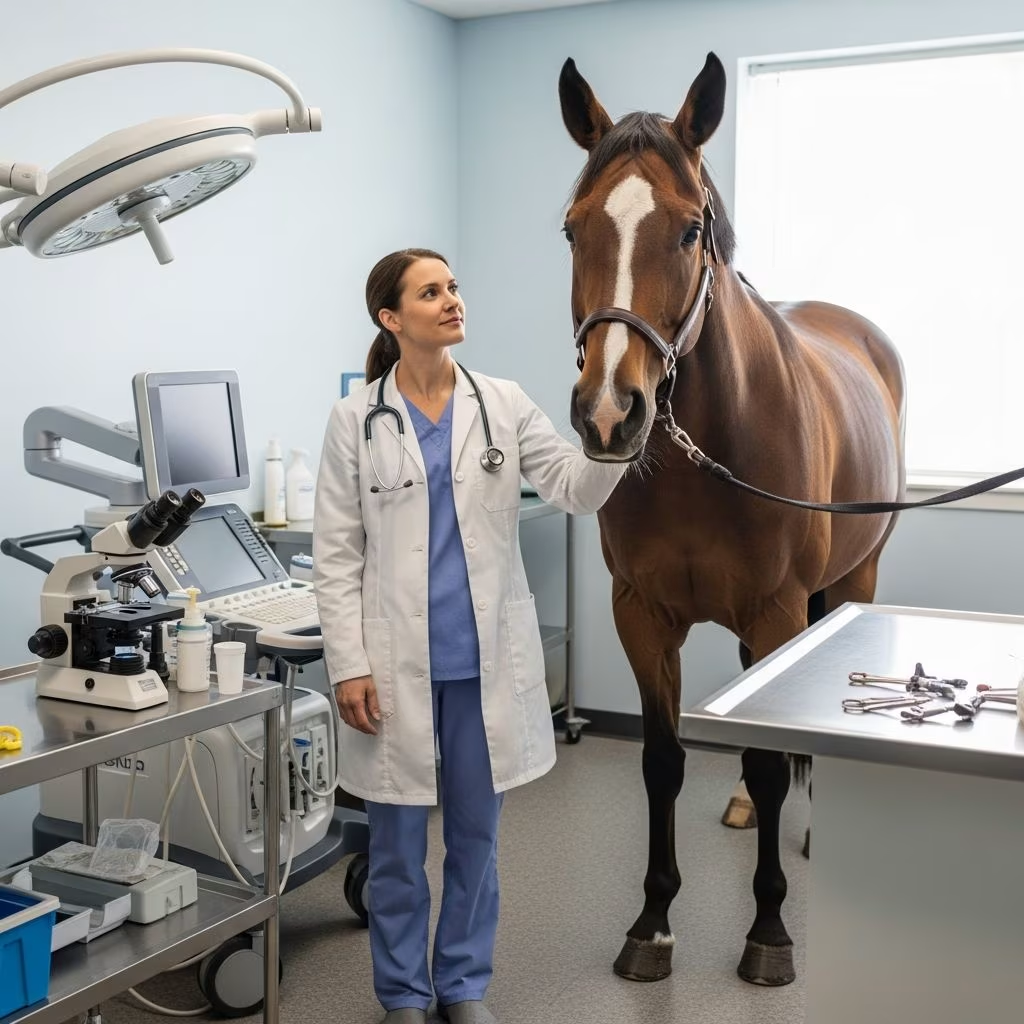
Board-certified specialists in large animal internal medicine provide advanced care for horses, cattle, sheep, goats, alpacas, llamas, and other species, focusing on complex medical conditions that exceed general veterinary practice. These experts leverage deep knowledge of anatomy, physiology, and disease processes to deliver precise diagnoses and effective treatments, ensuring the well-being of valuable livestock and performance animals.
The Critical Role of Specialists in Large Animal Health
Large animal internal medicine addresses a broad spectrum of non-surgical diseases affecting major species. Unlike general practitioners who handle routine issues, these specialists tackle intricate cases involving multiple organ systems. Their intervention is vital for animals showing persistent symptoms like unexplained weight loss, abnormal behaviors, or declining productivity, which can threaten farm operations or competitive careers.
These professionals collaborate closely with primary veterinarians, building on existing records to streamline care. This teamwork enhances outcomes by avoiding redundant tests and focusing on unresolved challenges. Owners benefit from their ability to interpret subtle clinical signs that signal serious underlying issues.
Common Medical Conditions Managed by Specialists
Specialists routinely evaluate and treat a variety of disorders. Key examples include:
- Gastrointestinal disturbances: From sudden-onset diarrhea to chronic cases potentially linked to infections, toxins, or parasites.
- Hematologic issues: Anemia, clotting abnormalities, or immune-mediated destruction of blood cells.
- Respiratory challenges: Persistent coughing, labored breathing, or nasal discharges indicating pneumonia or allergies.
- Neurological disorders: Seizures, ataxia, or weakness stemming from infections, toxins, or degenerative processes.
- Cardiovascular problems: Arrhythmias, murmurs, or congestive heart failure.
- Renal and urinary tract diseases: Kidney failure, stones, or recurrent infections.
- Hepatic conditions: Hepatitis, cholestasis, or toxin-induced damage.
- Performance-related declines: Reduced endurance in athletic horses due to metabolic or cardiac factors.
- Infectious outbreaks: Viral, bacterial, or fungal threats requiring rapid containment.
- Endocrine imbalances: Such as equine metabolic syndrome or hypocalcemia in ruminants.
These conditions often present with overlapping symptoms, demanding specialized differential diagnoses to pinpoint causes.
Rigorous Path to Board Certification
Achieving board certification through the American College of Veterinary Internal Medicine (ACVIM) demands years of dedicated training. After veterinary school, candidates typically complete a one-year internship followed by a three-year residency in large animal internal medicine. This immersive program hones clinical skills under expert supervision.
Residencies emphasize hands-on experience with diverse cases, from herd-level management in livestock to individual equine athletes. Trainees master ultrasound for abdominal and cardiac assessments, interpret advanced imaging, and perform invasive procedures like cerebrospinal fluid collection. Upon completion, they undergo rigorous exams and must publish research, ensuring only the most qualified earn Diplomate status.
| Stage | Duration | Key Focus Areas |
|---|---|---|
| Internship | 1 year | General clinical exposure, emergency care |
| Residency | 3 years | Specialty diagnostics, case management, research |
| Certification Exams | Varies | Written, oral, practical assessments |
| Publication | During residency | Original research contribution |
This structured pathway guarantees proficiency in both common and rare diseases.
Advanced Diagnostic Approaches
Equipped with cutting-edge technology, specialists employ a multi-modal strategy for accurate diagnosis. Initial evaluations incorporate detailed histories and physical exams tailored to species-specific behaviors.
- Laboratory analyses: Comprehensive blood work, including chemistry panels, complete blood counts, and coagulation profiles to detect organ dysfunction or infections.
- Imaging modalities: Radiography for lung patterns, ultrasonography for soft tissue evaluation, CT/MRI for neurological mapping.
- Cardiac assessments: Echocardiograms to measure heart function and ECGs for rhythm analysis.
- Endoscopic procedures: Visualizing airways (bronchoscopy), stomach (gastroscopy), nasal passages (rhinoscopy), or bladder (cystoscopy).
- Invasive sampling: Biopsies of liver, kidney, or tumors; bone marrow aspirates for hematologic disorders; CSF taps for brain/spinal issues.
- Molecular tools: PCR for pathogen detection, genetic testing for hereditary conditions.
Such precision minimizes guesswork and guides targeted therapies.
Treatment Strategies and Management Plans
Treatments are customized based on diagnostic findings, animal welfare, and economic considerations. Specialists integrate:
- Pharmacotherapeutics: Antimicrobials, anti-inflammatories, fluids for critical cases.
- Nutritional support: Tailored diets for metabolic diseases or recovery.
- Herd health protocols: Vaccination schedules, parasite control, biosecurity measures.
For chronic issues, long-term monitoring ensures sustained improvement. In performance animals, optimizing stamina involves addressing subtle deficiencies.
Contributions to Research and Innovation
Beyond clinical duties, specialists drive advancements through research. They investigate disease etiologies, validate new diagnostics, and trial therapies. Recent foci include genetic disorders like hydrocephalus in Friesians, West Nile Virus updates, and microbiota roles in GI health.
Participation in clinical trials offers owners access to novel interventions while advancing collective knowledge. This work translates to practical improvements, from better vaccines to refined parasite controls.
Educating the Next Generation and Supporting Peers
Specialists mentor veterinary students, residents, and interns, fostering expertise in large animal care. They deliver continuing education via lectures, workshops, and publications, keeping practitioners abreast of evolving standards.
Consultations with referring vets provide guidance on complex cases, strengthening the veterinary network. Resources like ACVIM directories help locate nearby experts.
Frequently Asked Questions (FAQs)
What species do large animal internal medicine specialists treat?
Primarily horses, cattle, sheep, goats, alpacas, llamas, and occasionally pigs or camelids.
When should I seek a specialist for my animal?
If symptoms persist despite initial treatment, involve multiple systems, or impact productivity/performance.
How do specialists differ from general vets?
They possess advanced training, specialized equipment, and expertise in rare/complex diseases.
Are clinical trials safe for my animal?
Yes, they follow strict ethical guidelines, often providing cutting-edge care at reduced cost.
Can specialists handle herd-level problems?
Absolutely, with skills in epidemiology, biosecurity, and preventive strategies.
Choosing the Right Specialist for Your Needs
Selecting a Diplomate involves verifying ACVIM credentials, reviewing case experience, and assessing facility capabilities. Proximity matters for ongoing care, but referrals ensure seamless integration. Informed owners partnering with these experts maximize animal health and longevity.
References
- Large Animal Internal Medicine — VetSpecialists.com. Accessed 2026. https://www.vetspecialists.com/specialties/large-animal-internal-medicine
- Large Animal Internal Medicine, 6th Edition — Elsevier. 2020. https://evolve.elsevier.com/cs/product/9780323554459?role=student
- Residency Program in Large Animal Medicine: Livestock Emphasis — UC Davis School of Veterinary Medicine. Accessed 2026. https://www.vetmed.ucdavis.edu/education/internships-residencies/food-animal-emphasis
- Large Animal Internal Medicine — Wiley Online Books. 1990. https://www.wiley.com/en-au/Large+Animal+Internal+Medicine-p-9780683180336
- Large Animal Internal Medicine — University of Georgia Libraries. Accessed 2026. https://galileo-usg-uga-primo.hosted.exlibrisgroup.com/primo-explore/fulldisplay?docid=01GALI_USG_ALMA71121067770002931&context=L&vid=UGA&search_scope=UGA&tab=default_tab&lang=en_US
- Large Animal Internal Medicine — ACVIM. Accessed 2026. https://www.acvim.org/resources-tools/resources-specialty/large-animal-internal-medicine



