

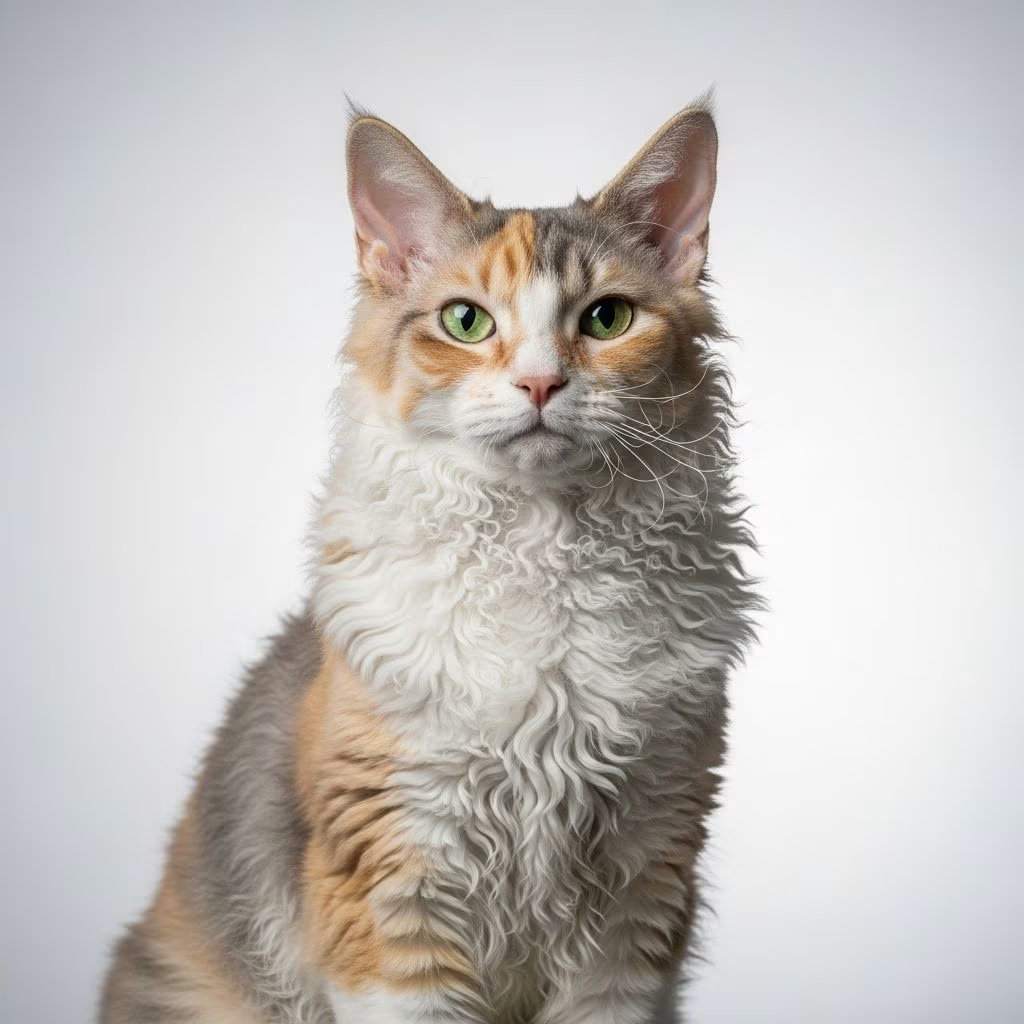
The LaPerm stands out among cat breeds due to its signature curly fur, stemming from a natural genetic mutation that sets it apart from other rex varieties. This medium-sized feline combines an elegant physique with a warm, sociable demeanor, making it a favored choice for households seeking a devoted pet.
Origins of the LaPerm Breed
The story of the LaPerm begins on a cherry farm in The Dalles, Oregon, during the early 1980s. Farm owners Linda and Richard Koehl maintained a colony of cats for pest control, and one tabby shorthair named Speedy produced a litter that included a bald kitten with tabby skin markings. Named Curly, this kitten developed a soft, curly coat as she matured, marking the breed’s spontaneous emergence.
Curly’s unique trait proved dominant, passing to her offspring, including five bald male kittens that also grew curly fur. The Koehls observed this over a decade, allowing natural breeding that yielded both longhaired and shorthaired variants in diverse colors. By the mid-1980s, they connected with cat fanciers, formalizing the breeding program. The name “LaPerm,” evoking a permanent wave hairstyle, was chosen for its fitting description of the coat’s texture.
Recognition followed milestones: The International Cat Association (TICA) advanced the breed to championship status in 2003, with Ch Dennigan’s French Maid of Shoalwater as the first champion. The Cat Fanciers’ Association (CFA) granted full recognition in 2008, highlighted by Ch Sunfall’s BC Kahaha Towanjila. The breed spread internationally, reaching the UK via imports and establishing programs there.
Distinctive Physical Characteristics
LaPerms embody balance without extremes, featuring a muscular, semi-foreign body type that’s medium in size with notably sturdy bone structure for their frame. They possess longish legs, a graceful neck, and an alert posture that conveys vitality.
The head forms a modified wedge with soft, rounded edges, a broadish muzzle, straight nose, and subtle break between almond-shaped, medium-large eyes. Ears are flared and set wide, often with curly furnishings and tufts.
| Feature | Description |
|---|---|
| Body | Medium, athletic build with surprising heft |
| Head | Modified wedge, rounded contours, broad nose |
| Eyes | Almond-shaped, expressive |
| Ears | Large, flared, with curls inside |
| Tail | Long, curled plume (longhair) or bottle-brush (shorthair) |
The Iconic Curly Coat
The coat defines the LaPerm, composed of loose waves to tight ringlets, soft like lamb’s wool. Curls peak at the neck ruff, throat, ear bases, and stomach, with seasonal shedding leading to sparser summer fur. Longhairs sport plush tails and ear muffs; shorthairs have textured, brush-like tails. Whiskers curl prominently, and no natural part mars the back fur.
Colors span solids, tabbies, points, and more, with all patterns accepted. Kittens often birth bald or sparse, developing curls by 4-8 weeks. This dominant rex gene distinguishes LaPerms genetically from other curl-coated breeds.
Temperament and Behavioral Traits
LaPerms shine in personality: affectionate without clinginess, they bond deeply with families, including children and other pets. Curious explorers, they relish interactive play, climbing, and chasing, yet remain gentle and patient.
- Outgoing and people-oriented, thriving on attention
- Playful yet composed, adapting to various homes
- Sociable with strangers, vocal when intrigued
- Intelligent, responsive to training and toys
Even blind newborn kittens respond to voices, underscoring their social bent. They suit apartments or farms, demanding moderate activity. Reputedly hypoallergenic due to loose curls trapping less dander, though not allergen-free.
Essential Care and Grooming Practices
Grooming suits the curly coat: Weekly brushing prevents mats, especially in longhairs, using slicker tools. Baths refresh curls, and seasonal molts pass quickly. Dental care, nail trims, and ear checks maintain health.
- Coat Maintenance: Gentle brushing 2-3 times weekly
- Bathing: Occasional, with curl-enhancing shampoos
- Shedding: Minimal, concentrated in spring
Diet requires high-quality, balanced nutrition supporting their dense fur. Fresh water and portion control prevent obesity in these active cats.
Health Considerations for LaPerm Owners
As a naturally developed breed, LaPerms enjoy robust health, lacking widespread genetic issues tied to extremes. Monitor for standard feline concerns like hypertrophic cardiomyopathy or polycystic kidney disease via vet screenings. Lifespan averages 10-15 years with proper care.
Breeders should test for dominant curl gene integrity. Early socialization fosters confident adults. Vaccinations, parasite prevention, and annual exams ensure longevity.
LaPerm Breed Standards and Recognition
TICA and CFA standards emphasize moderation: balanced proportions, expressive faces, and pronounced curls without extremes. Faults include straight coats or poor temperament. All colors/patterns qualify, prioritizing type over hue.
| Organization | Championship Year | Key Firsts |
|---|---|---|
| TICA | 2003 | Ch Dennigan’s French Maid of Shoalwater |
| CFA | 2008 | Ch Sunfall’s BC Kahaha Towanjila |
Bringing a LaPerm into Your Home
Acquire from reputable breeders adhering to health testing and ethical practices. Kittens develop curls post-weaning; expect bald starts. Prepare with scratching posts, toys, and vertical space for their agile nature.
Suitable for novices due to forgiving temperament, but commit to grooming and engagement. Rescue LaPerms offer rewarding adoptions.
LaPerms in Modern Cat Fancy
Today, LaPerms grace shows worldwide, prized for uniqueness. Ongoing imports bolster diversity. Their dominant gene promises breeding ease, sustaining popularity among enthusiasts.
Frequently Asked Questions (FAQs)
Are LaPerm cats hypoallergenic?
They provoke milder reactions due to coat structure, but individual allergies vary. Consult allergists.
How often do LaPerms shed?
Seasonally light, with quick molts; daily brushing suffices.
What’s the average LaPerm size?
Males 8-12 lbs, females 6-10 lbs; medium stature.
Do LaPerms get along with dogs?
Yes, their sociable nature aids multi-pet homes.
Can LaPerms be indoor-only?
Absolutely; they adapt well with stimulation.
References
- LaPerm – Wikipedia — Wikipedia. 2024-01-15. https://en.wikipedia.org/wiki/LaPerm
- History – CFA LaPerm Breed Council — CFA LaPerm Breed Council. N/A. http://www.lapermbc.org/history.html
- NZCF | La Perm History — New Zealand Cat Fancy. N/A. https://www.nzcf.com/breeds/la_perm_history.php
- LaPerm – Cat breed genetic test — Koko Genetics. N/A. https://www.kokogenetics.com/en/results/cat-dna-test-breed/laperm
- LaPerm – The Cat Fanciers’ Association — CFA. 2024-06-01. https://cfa.org/breed/laperm/



