

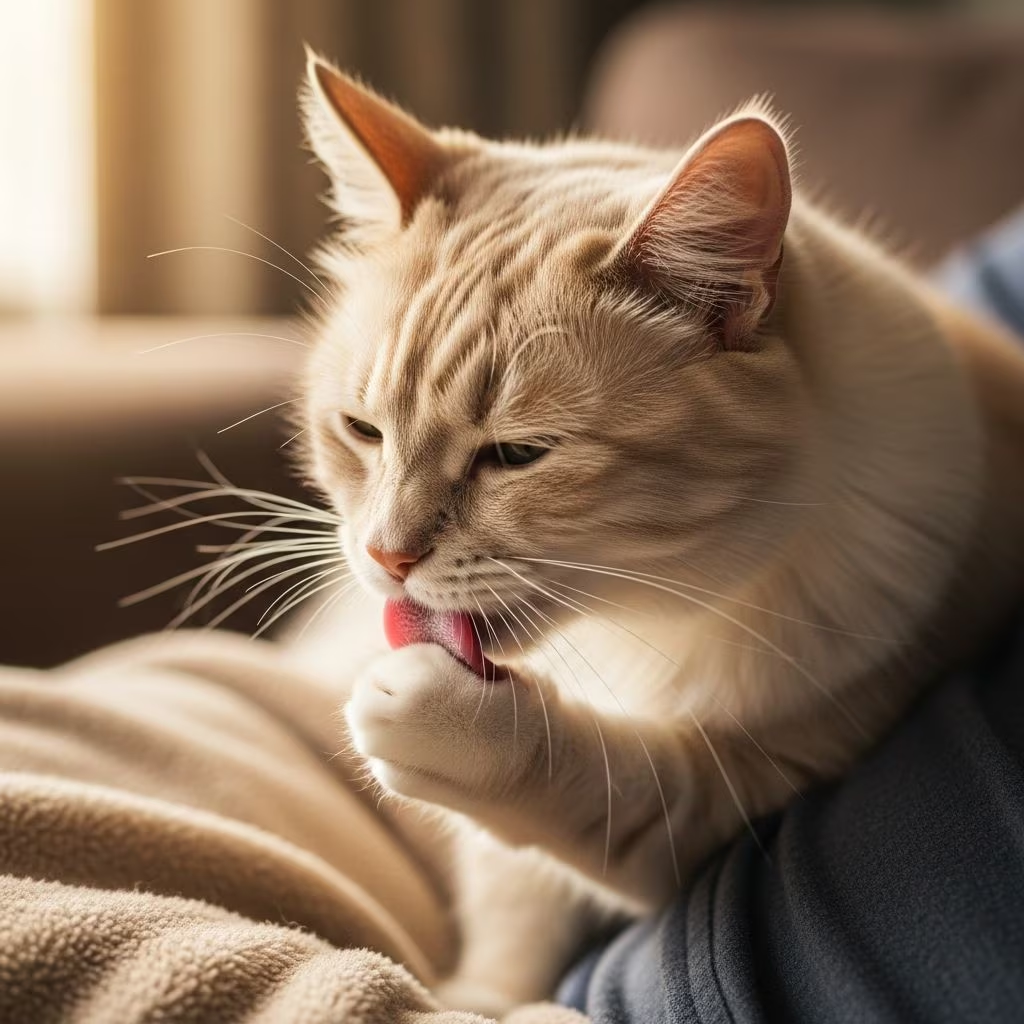
Lap Grooming Explained: 4 Vet-Verified Reasons Cats Do It
When your cat settles onto your lap and begins grooming herself, you might wonder what’s prompting this behavior. Is she content? Stressed? Trying to communicate something important? Understanding why cats groom themselves while sitting on your lap can deepen your connection with your feline companion and help you recognize important signals about her emotional and physical state. This comprehensive guide explores the four primary, vet-verified reasons behind lap grooming and what each one means for your relationship with your cat.
Understanding Cat Grooming Behavior
Grooming is one of the most fundamental behaviors in a cat’s repertoire, and it begins from the moment she’s born. Mother cats groom their kittens to keep them clean, stimulate their breathing and bodily functions, and hide their scent from predators in the wild. By two weeks of age, kittens have already learned to groom themselves, and they continue to refine this essential skill throughout their lives.
While grooming primarily serves hygienic purposes, it encompasses far more complexity than simple cleanliness. Cats use grooming as a multi-functional tool for physical health maintenance, emotional regulation, social bonding, and stress management. When your cat chooses to groom herself while sitting on your lap, she’s engaging in behavior with deeply rooted evolutionary and psychological significance.
Reason 1: Expression of Comfort and Trust
The most significant indicator that your cat is grooming herself on your lap is that she feels genuinely comfortable and safe in your presence. When cats groom while relaxing on your lap, they’re demonstrating that they trust you as a safe companion and consider your lap a secure space.
This behavior represents a considerable compliment to your bond. Cats are naturally cautious animals who only engage in vulnerable activities like grooming when they feel protected from potential threats. By grooming on your lap, your cat is essentially saying that she considers you a trusted member of her social group and that your presence doesn’t trigger any anxiety or concern.
- Grooming on your lap indicates your cat feels secure in your home environment
- This behavior demonstrates trust and affection toward you specifically
- Cats are more likely to groom when they’re in their comfort zone
- The behavior strengthens the social bond between you and your pet
Reason 2: Stress Relief and Emotional Regulation
Beyond comfort, cats use grooming as a powerful coping mechanism for managing stress and anxiety. When faced with potentially stressful situations, cats often initiate grooming sessions as a self-soothing behavior. This displacement behavior helps redirect nervous energy and provides a calming effect on the brain and neurological system.
The act of grooming produces a direct neurological response that can reduce stress levels in cats. The touch sensation and repetitive motion of licking create a soothing effect, similar to how some people find relief from stress through repetitive behaviors like nail biting or hair twirling. When your cat grooms herself on your lap, she may be using your presence and the comfort of your company to help manage whatever anxieties she might be experiencing.
- Grooming activates the parasympathetic nervous system, promoting relaxation
- Repetitive grooming motions provide a calming neurological effect
- Cats groom to redirect energy during tense or uncertain situations
- The behavior can indicate your cat is processing something emotionally
Reason 3: Physical Health Maintenance
From a purely physiological standpoint, grooming serves essential functions for your cat’s physical health and wellbeing. When cats lick their fur, they stimulate the production of sebum, an oily secretion that lubricates and waterproofs the coat, helping it shine and stay healthy. Grooming also removes loose hair, dirt, parasites like fleas, and helps prevent the formation of mats in the fur.
Additionally, grooming serves a thermoregulatory function. While cats can only sweat through their paw pads, the evaporation of saliva following grooming helps cool their bodies on warm days. Well-groomed hair stands up slightly, allowing air to circulate against the skin and further aiding temperature regulation. When your cat grooms on your lap, she’s maintaining these essential health functions while enjoying your company.
- Grooming stimulates healthy sebum production for coat protection
- The behavior removes parasites, dirt, and loose hair
- Licking helps cats regulate body temperature through evaporative cooling
- Regular grooming prevents matting and skin problems
Reason 4: Social Bonding Through Allogrooming
When cats groom themselves or each other, they’re engaging in allogrooming—a behavior with profound social significance. Allogrooming strengthens social bonds and creates a sense of group belonging among cats. Mother cats groom their kittens to establish these initial bonds, and throughout their lives, cats continue to use grooming as a way to communicate affection and establish social hierarchies.
When your cat grooms herself on your lap, she may also be performing allogrooming behavior directed at you. By grooming while physically close to you, she’s reinforcing your status as a trusted member of her social group and strengthening your relationship through this intimate behavior. Some cats will even groom their humans directly, which serves the same bonding and group-scent establishment purpose.
- Allogrooming creates and reinforces social bonds between cats and their humans
- The behavior establishes a group scent that identifies family members
- Cats extend allogrooming to humans as a sign of acceptance
- Grooming behavior strengthens the social hierarchy and relationships within the household
When to Be Concerned About Excessive Grooming
While grooming on your lap is generally a positive indicator of your cat’s emotional state, excessive grooming can signal underlying health or behavioral problems that warrant veterinary attention. If your cat’s grooming habits change dramatically or if she begins grooming to the point of causing hair loss, bald spots, or skin irritation, it’s important to consult with a veterinarian.
Excessive grooming can result from several conditions, including psychogenic alopecia (stress-induced over-grooming), hyperthyroidism in older cats, allergies, parasites, or pain from arthritis or other health conditions. Behavioral changes in grooming patterns should prompt a veterinary visit to rule out medical causes and address any underlying stress or anxiety issues.
- Hair loss or bald spots indicate problematic over-grooming
- Sudden changes in grooming frequency warrant veterinary evaluation
- Psychogenic alopecia results from stress and requires behavioral intervention
- Medical conditions like hyperthyroidism and allergies can increase grooming
- Skin wounds or irritation from grooming need professional assessment
Supporting Your Cat’s Grooming Behavior
Understanding that lap grooming is a normal, healthy behavior allows you to support and encourage this bonding activity. Most cats enjoy being brushed by their owners, which can serve as an extension of their natural grooming behavior and provide additional social time together. Regular brushing is especially important for long-haired breeds to prevent mats and reduce hairball formation.
If your cat grooms excessively or shows signs of stress-related grooming, consider evaluating her environment for potential stressors. Major changes like rearranging furniture, introducing new pets, or alterations to her routine can trigger anxiety-driven grooming. Providing a calm, predictable environment with adequate enrichment, play opportunities, and safe spaces can help minimize stress-related behaviors.
Frequently Asked Questions
Q: Is grooming a normal behavior for cats?
A: Yes, grooming is a very normal and healthy behavior for cats. It helps them stay clean, manage their scent, regulate body temperature, and even cope with stress. Most cats spend a significant portion of their day grooming themselves and other cats in their household.
Q: What does it mean when my cat grooms herself on my lap?
A: When your cat grooms on your lap, it generally indicates she feels comfortable, safe, and trusts you. It can also mean she’s using your presence to help manage stress or strengthen your social bond through allogrooming behavior. This is typically a positive sign of your relationship.
Q: When should I be concerned about my cat’s grooming behavior?
A: You should consult with a veterinarian if your cat develops bald spots, experiences hair loss, shows signs of skin irritation or wounds from grooming, or exhibits dramatic changes in grooming frequency. Excessive grooming can indicate stress, allergies, parasites, or medical conditions requiring professional evaluation.
Q: Can grooming indicate a health problem?
A: While normal grooming is healthy, excessive grooming or a complete lack of grooming can indicate allergies, parasites, stress, arthritis, or other medical conditions. Changes in grooming habits should always prompt a conversation with your veterinarian to rule out underlying health issues.
Q: Why does my cat groom me?
A: When cats groom their humans, they’re extending allogrooming behavior, which strengthens social bonds and establishes a group scent. This behavior indicates your cat accepts you as a member of her social family and trusts you sufficiently to engage in this intimate bonding activity.
Q: Should I be worried if my cat doesn’t groom on my lap?
A: Not necessarily. Different cats have different comfort levels and personalities. Some cats are more independent or less affectionate with their owners, and this is normal variation in feline behavior. However, if a previously grooming cat stops altogether, it could indicate stress or health issues worth investigating.
Q: How can I encourage my cat to groom on my lap?
A: Create a calm, comfortable environment where your cat feels safe. Spend quiet time together without forcing interaction, offer treats, and provide gentle petting if your cat enjoys it. Building trust over time through consistent, gentle interaction may encourage your cat to feel comfortable grooming in your presence.
References
- Why does my cat groom herself while sitting on my lap? — Dial A Vet. Accessed January 14, 2026. https://www.dialavet.com/vet-answers/post/cat-grooming-lap-behavior-48735
- Why do cats obsessively groom themselves and others? — Why Cat Why. Accessed January 14, 2026. https://www.whycatwhy.com/why-do-cats-groom-so-much/
- Feline Grooming Behavior | Reasons Cats Groom Themselves — The Veterinary Medical Foundation. Accessed January 14, 2026. https://www.tvmf.org/articles/grooming-behavior-of-cats/
- Why Does My Cat Lick Me? 7 Common Reasons — PetMD. Accessed January 14, 2026. https://www.petmd.com/cat/behavior/why-does-my-cat-lick-me



