

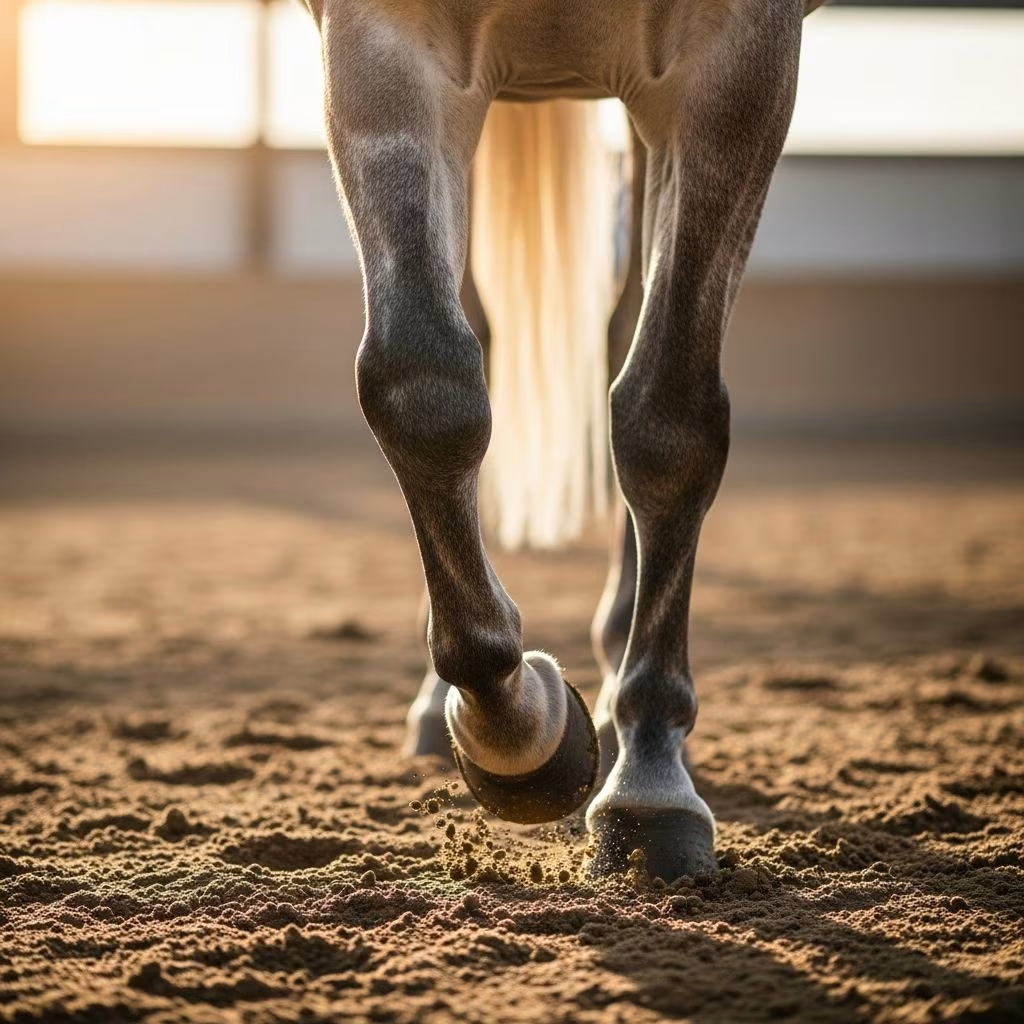
Lameness represents one of the most frequent health challenges faced by horse owners, often stemming from musculoskeletal pain that hampers normal movement. This condition can range from subtle gait irregularities to complete refusal to bear weight on a limb, affecting performance horses and pleasure riders alike. Understanding its origins and management is crucial for timely intervention and restoring your horse’s mobility.
Recognizing the Signs of Lameness
Early detection of lameness hinges on observing changes in your horse’s gait and behavior. Horses may exhibit a shortened stride, head bobbing, or uneven weight distribution during movement. Acute cases often appear suddenly, such as after a misstep, while chronic issues develop gradually, like persistent joint stiffness.
- Head nodding: The head drops when the affected limb hits the ground, a classic sign of forelimb lameness.
- Hip drop: The hindquarter on the sound side dips during the lame leg’s stance phase.
- Reluctance to turn: Favoring one direction or resisting flexion tests.
- Swelling or heat: Visible inflammation around joints, tendons, or hooves.
These indicators vary by severity, graded from 0 (sound) to 5 (non-weight-bearing) using standardized scales employed by veterinarians.
Primary Causes Behind Equine Lameness
Lameness arises from diverse sources, predominantly pain in bones, joints, tendons, or ligaments, though mechanical restrictions and neurological factors also play roles. Trauma remains a leading trigger, encompassing everything from hoof punctures to fractures.
Soft Tissue Injuries
Tendons and ligaments, vital for limb support, frequently suffer strains from overexertion or poor footing. Suspensory ligament desmitis, common in performance horses, causes heat, swelling, and lameness confirmed via ultrasound. Tendon sheath inflammation or bursal issues exacerbate mobility loss, often linked to repetitive stress.
Joint and Bone Disorders
Arthritis, particularly osteoarthritis in the fetlock, leads to chronic pain and reduced range of motion. Physitis and sesamoiditis in young horses result from rapid growth and heavy training, while subchondral bone disease erodes joint surfaces. Fractures, though less common, demand immediate attention to prevent complications.
Hoof-Related Problems
Abscesses, bruises, or imbalances in hoof angles predispose horses to lameness. Improper shoeing or uneven terrain amplifies stress on supporting structures.
| Category | Examples | Common Locations |
|---|---|---|
| Soft Tissue | Tendon strain, ligament tears | Fetlock, hock, stifle |
| Joint/Bone | Osteoarthritis, fractures | Knee, pastern, fetlock |
| Hoof | Abscess, laminitis | Hoof wall, sole |
| Neurological | Wobbler syndrome | Neck, spinal cord |
This table summarizes key lameness categories, highlighting prevalent sites for targeted examination.
Diagnostic Approaches for Accurate Identification
Veterinarians employ systematic methods to pinpoint lameness sources, starting with a thorough history and physical exam. Observing the horse in motion on straight lines, circles, and varied surfaces isolates the affected limb.
- Flexion tests: Bending limbs to provoke pain response.
- Hoof testers: Applying pressure to detect sensitive areas.
- Diagnostic blocks: Injecting local anesthetics to numb sections, narrowing down the site.
Advanced imaging elevates precision: radiographs reveal bone changes, ultrasound assesses soft tissues, and MRI or CT scans uncover subtle issues in complex cases. Thermography identifies heat anomalies, aiding early detection. Prompt evaluation prevents secondary damage and streamlines treatment.[p>
Treatment Strategies Tailored to the Cause
Effective management combines rest, medications, and rehabilitation, customized to the diagnosis. Pain relief via NSAIDs like phenylbutazone reduces inflammation but requires monitoring for gastrointestinal risks.
Conservative Therapies
Stall rest allows healing, paired with cold therapy and supportive wrapping. Corrective farriery addresses hoof imbalances, while controlled exercise rebuilds strength.
Advanced Interventions
Regenerative options such as stem cell therapy, platelet-rich plasma (PRP), and shockwave therapy promote tissue repair, especially for tendon injuries. Joint injections deliver corticosteroids or hyaluronic acid for arthritis relief. Surgery corrects fractures, removes bone chips, or releases adhesions in mechanical lameness.
Complementary approaches like acupuncture, chiropractic care, and physiotherapy enhance recovery by improving circulation and alignment.
Prevention: Keeping Your Horse Sound
Proactive measures significantly lower lameness risk. Routine hoof care by a skilled farrier maintains balance, while gradual conditioning prevents overload in athletic horses.
- Balanced nutrition with joint-supportive supplements like omega-3s and MSM.
- Appropriate footing for work surfaces to minimize concussion.
- Regular warm-ups and cool-downs to optimize muscle flexibility.
- Weight management to reduce joint stress.
Physically immature horses need controlled exercise to avoid developmental issues like weak bones.
Rehabilitation and Long-Term Management
Post-treatment rehab focuses on progressive loading. Underwater treadmills build fitness without impact, and laser therapy accelerates healing. Owners should track progress with lameness grades and adjust plans accordingly. Chronic cases may require ongoing maintenance, such as periodic injections or specialized shoeing.
Frequently Asked Questions (FAQs)
What is the most common cause of lameness in horses?
Pain from musculoskeletal issues, especially soft tissue injuries and arthritis, tops the list.
How long does lameness recovery take?
Timelines vary: acute injuries may resolve in weeks with rest, while chronic conditions demand months of rehab.
Can lameness be prevented entirely?
Not always, but proper care, fitness, and footing reduce risks substantially.
When should I call a vet for lameness?
Immediately for grade 3+ lameness, swelling, or heat to avoid worsening.
Are supplements effective for joint lameness?
They support health but aren’t cures; consult vets for evidence-based choices.
References
- Fetlock Lameness in Horses: Signs, Diagnosis & Treatment — Mad Barn. 2023. https://madbarn.com/fetlock-lameness-in-horses/
- Common Causes of Equine Lameness | Treatments and Prevention — Streamz Global. 2023. https://us.streamz-global.com/blogs/articles/common-causes-of-equine-lameness-treatments-and-prevention
- Lameness in Horses — PetMD. 2023. https://www.petmd.com/horse/conditions/musculoskeletal/lameness-horses
- Understanding Lameness in Horses: Causes, Diagnosis, and Treatment — Bluegrass Equine. 2023-09-15. https://www.bluegrassequine.com/site/blog/2023/09/15/understanding-lameness-horses
- Equine Lameness Diagnosis & Treatment — Lebanon Equine Clinic. 2023. https://lebanonequineclinic.com/services/lameness-diagnosis-treatment/
- Lameness in Horses – Horse Owners — MSD Veterinary Manual. 2023. https://www.msdvetmanual.com/horse-owners/bone-joint-and-muscle-disorders-in-horses/lameness-in-horses



