

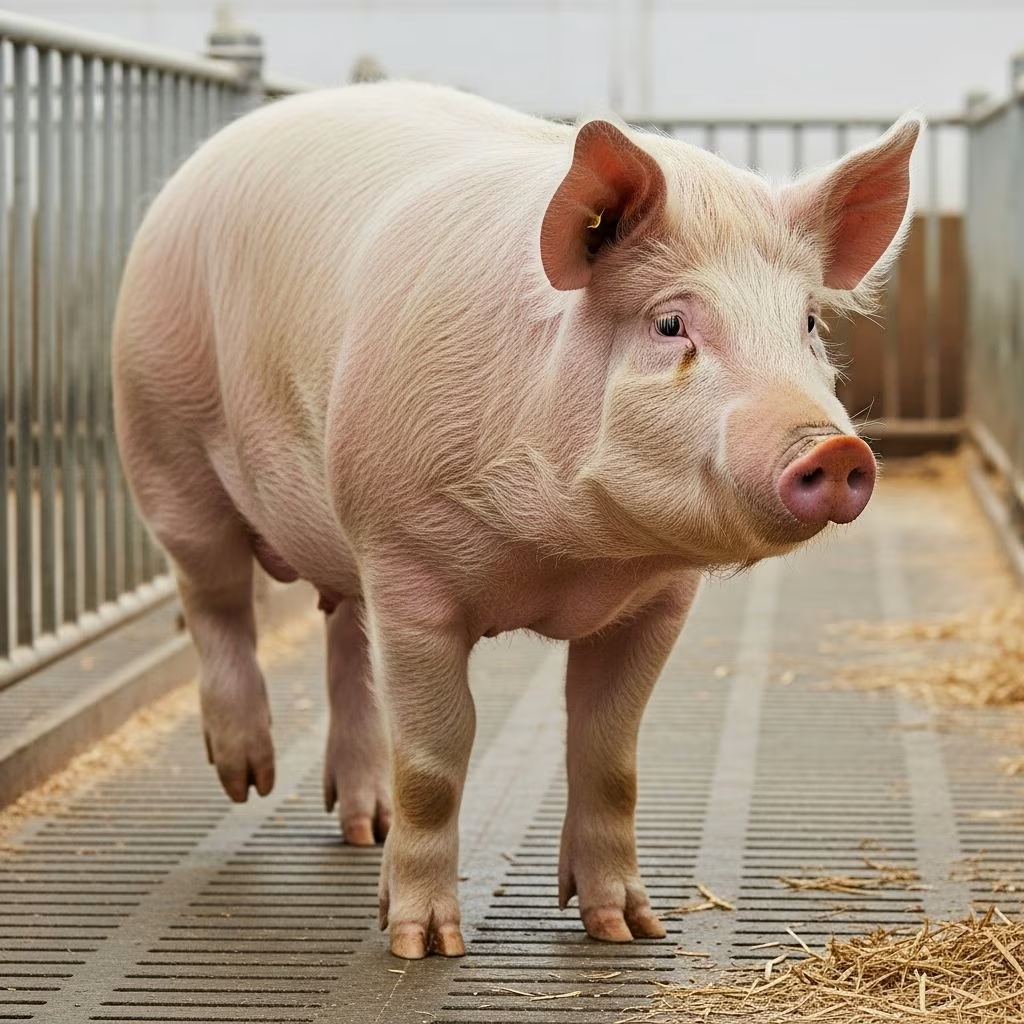
Breeding pigs, including gilts, sows, and boars, often face mobility challenges that can severely impact productivity, welfare, and herd economics. Lameness manifests as abnormal gait, reluctance to move, or complete immobility, stemming from a mix of infectious agents, nutritional shortfalls, environmental stressors, and genetic predispositions. Addressing these issues promptly is crucial for maintaining breeding efficiency and reducing culling rates.
Primary Factors Contributing to Mobility Problems
Mobility impairments in adult breeding stock arise from multiple interconnected causes. Infectious pathogens frequently invade joints, hooves, and soft tissues, while poor flooring and nutrition exacerbate structural weaknesses. Heavy body weight in mature animals amplifies stress on limbs, accelerating wear and tear.
- Infectious origins: Bacteria like streptococci and mycoplasmas target synovial structures, causing painful swellings.
- Nutritional gaps: Deficiencies in biotin or trace minerals weaken hoof integrity.
- Environmental influences: Slippery or abrasive surfaces lead to injuries and erosions.
- Genetic elements: Certain lines exhibit conformational flaws predisposing to uneven weight distribution.
Understanding these contributors allows producers to implement targeted interventions, minimizing downtime and veterinary costs.
Common Infectious Culprits
Bacterial invasions dominate lameness cases in breeding herds. Organisms such as Mycoplasma hyosynoviae and Erysipelothrix rhusiopathiae thrive in high-density settings, spreading via respiratory secretions or contaminated environments.
| Pathogen | Symptoms | Affected Sites |
|---|---|---|
| Mycoplasma hyosynoviae | Joint swelling, fever, stiffness | Hocks, stifles, elbows |
| Streptococcus suis | Lameness, anorexia, sudden deaths | Multiple joints, heart valves |
| Erysipelothrix rhusiopathiae | Rhomboid skin lesions, arthritis | Joints, skin |
Viral contributors, though less direct, weaken immunity, paving the way for secondary bacterial attacks. Conditions mimicking vesicular diseases require regulatory scrutiny to rule out notifiable pathogens.
Nutritional Influences on Limb Health
Imbalanced rations undermine skeletal and integumentary strength. Biotin shortages result in brittle hooves prone to cracking, while excess minerals in water impair absorption of essentials like zinc and copper.
- Biotin supplementation at 250–400 mcg/kg feed bolsters hoof keratin.
- Balanced calcium-phosphorus ratios prevent bone deformities.
- Vitamin D adequacy supports mineralization in weight-bearing bones.
Regular feed audits and water quality checks are foundational to prophylaxis.
Environmental and Management Risks
Housing design profoundly affects locomotion. Solid, non-slippery floors reduce trauma, unlike slotted surfaces that trap debris and foster infections. Overcrowding intensifies competition, leading to trampling injuries.
Boars, with their robust frames, suffer from prolonged standing on unforgiving substrates, while sows endure repeated farrowing stresses. Routine hoof trimming mitigates overgrowth, a precursor to cracks and abscesses.
Recognizing Clinical Signs Early
Producers must vigilantly monitor for subtle indicators: shortened strides, knuckling, or favoring one leg. Advanced cases show swelling, heat in limbs, or recumbency. Scoring systems aid objectivity:
| Score | Description |
|---|---|
| 0 | Normal gait |
| 1 | Slight limp, full weight-bearing |
| 2 | Obvious lameness, reduced mobility |
| 3 | Severe, reluctant to stand |
| 4 | Non-weight-bearing, downer |
Daily checks during feeding reveal affected individuals quickly.
Diagnostic Approaches
Accurate etiology demands multifaceted investigation. Physical exams assess joint effusion and hoof integrity. Radiographs detect osteal changes, while synovial fluid analysis identifies pathogens.
- Necropsy of culled animals reveals gross lesions.
- Cultures and PCR confirm bacterial identities.
- Bloodwork evaluates nutritional status.
Collaboration with veterinarians ensures comprehensive profiling, guiding therapy.
Treatment Protocols
Swift action preserves mobility. Antimicrobials like lincomycin penetrate tissues effectively against mycoplasmas, administered for at least five days.
- Parenteral injections in neck region avoid spinal risks.
- NSAIDs such as flunixin provide analgesia and anti-inflammation.
- Supportive care: isolation, soft bedding, assisted feeding.
Vaccines for erysipelas offer prophylaxis where outbreaks recur.
Prevention Strategies for Long-Term Success
Proactive measures curtail incidence. Gilt acclimation builds immunity, while all-in-all-out systems limit pathogen reservoirs.
- Implement foot bathing with disinfectants.
- Regular podiatry sessions every 3–4 months.
- Optimize genetics for sound conformation.
- Enhance flooring with rubber mats.
These yield healthier herds with extended productive lifespans.
Impact on Herd Productivity
Lameness erodes profitability through irregular estrus, smaller litters, and premature removals. Lame sows produce less milk, compromising piglet growth. Boars with impairments show reduced service rates.
Herd-level incidence exceeding 5% signals management flaws warranting overhaul.
FAQs
What is the most common cause of lameness in sows?
Foot lesions from infections and poor hoof care top the list, often compounded by flooring issues.
How do I treat a lame boar?
Isolate, administer antibiotics based on sensitivity, provide pain relief, and trim hooves.
Can nutrition prevent lameness?
Yes, biotin and trace minerals strengthen structures; deficiencies invite cracks and weaknesses.
When should I call a vet for lameness?
At score 2 or higher, or if multiple animals are affected.
Are vaccines effective against pig lameness?
For specific bacteria like erysipelas, yes; broad-spectrum options are limited.
References
- Overview of Lameness in Pigs — Merck Veterinary Manual. 2023. https://www.merckvetmanual.com/musculoskeletal-system/lameness-in-pigs/overview-of-lameness-in-pigs
- Sow Foot Lameness and Hoof Care — NADIS. 2022. https://www.nadis.org.uk/disease-a-z/pigs/sow-foot-lameness-and-hoof-care/
- Lameness in Growing-Finishing Pigs — MSD Veterinary Manual. 2023. https://www.msdvetmanual.com/musculoskeletal-system/lameness-in-pigs/lameness-in-growing-finishing-pigs
- What Causes Lameness in Pigs? — Pig Improvement Company (PIC) via YouTube. 2021. https://www.youtube.com/watch?v=ye9eSeybdMg
- Preventing Lameness in Show Pigs — Texas 4-H. 2020. https://texas4-h.tamu.edu/wp-content/uploads/Preventing-Lameness-in-show-pigs.pdf
- Lameness in Pigs — DEFRA via Bishopton Vets. 2016. https://www.bishoptonvets.co.uk/content/2016/Live/attachment/DEFRA%20-%20Lameness%20in%20Pigs%20PB1148.pdf



